Marsala: Diverging paths plus eight bottles worth seeking out
Marsala, one of Italy’s most historic wines, is facing a dilemma about its future. Asa Johansson uncovers the debate.


Last year I received an invitation to a round table to talk about the future of Marsala. Behind the idea was Cantine Florio, an estate established in 1833 and today part of the corporate group Illva Saronno Holding.
Due to the pandemic, the round table was cancelled but I recently visited the Sicilian west coast to try and understand more about how what was once one of Italy’s most prosperous regions is today struggling to survive.
Scroll down to see tasting notes and scores for eight Marsala wines to try
Marsala: the glorious beginning
The glory days of Marsala began in 1773 when the English trader, James Woodhouse arrived on the west coast of Sicily. Here, he discovered a wine that relied on an ageing process not unlike the solera method used to make Sherry in Spain. Woodhouse added brandy to the wines to preserve them during the journey back to England, and so Marsala as we know it was born (although until around 1830, the wines were labelled as ‘Sicily Madeira Wine’, since the Portuguese cousin was more famous at the time).
During the 19th century, the small town of Marsala became one of the richest in Italy as the popularity of its wines grew – but things would soon change. By the 1920s, its air of prestige had disappeared and its reputation declined. Phylloxera, the financial crises in the 1920s and the two world wars put Marsala in difficulty. There were also imitators making cheap versions of the original, and some of Marsala’s producers began putting out less expensive versions in order to compete.
In recent decades the production of Marsala has dropped sharply. In the 1900s, for example, around 200 producers were making one million hectolitres of Marsala, a number which compares drastically with today’s 10 producers who produce 77,000 hectolitres annually from the region’s 1,218 hectares (2019). Most of today’s production is Marsala Fine, a simple version released after just one year and sold in bulk to the food industry to enhance flavours in chocolate snacks, cakes, or canned meats.
What is the producers’ strategy to get back on track? Talking to them, it seems each has chosen a plan of their own. While the producers in Jerez are introducing new rules for Sherry (new varieties and versions of non-fortified Fino and Manzanilla) to gain new market share, the situation in Marsala seems more difficult.
Marsala wine: A quick guide
Marsala is a fortified wine from the west of Sicily. It is categorised according to sugar concentration, colour and how long it is aged.
Marsala comes in three colours: ‘ambra’ (amber), ‘oro’ (gold) and ‘rubino’ (ruby).
Additionally, there are five age categories for the wines: ’Fine’ (one year), ’Superiore’ (two years), ’Superiore Riserva’ (four years), ’Vergine’ / ‘Soleras’ (five years), and ‘Vergine’ / ‘Solera Stravecchio’ (10 years).
The sweetness of Marsala is described as ‘Secco’ (40g/L), ’Semisecco’ (40–100g/L) and ’Dolce’ (100+g/L) and includes both residual and complementary sugar content in the finished wine.
The main white grape varieties used for Marsala are Inzolia (Ansonica), Cataratto, Damaschino and Grillo, while the reds used for the rarer Rubino version are Nerello Mascalese, Nero d´Avola (Calabrese) and Perricone.
Renato de Bartoli, who runs the Marco de Bartoli winery together with his siblings Giuseppina and Sebastiano, has clear opinions on what should be done. ’We must do three things to regain credibility: introduce the ‘perpetuo’ or pre-English version into the DOC; reduce the maximum alcohol to 16% abv; and simplify the labelling terms into just Dolce or Secco. I would also change the name ‘Fine’, maybe into ‘Gastronomic’ since the former only creates confusion,’ he says.
Perpetuo
Renato’s father, Marco de Bartoli, was the one who, in 1980, created the Vecchio Samperi – a wine categorised as ’perpetuo’ or pre-English, since it followed the local production method used before the arrival Woodhouse. It is an unfortified wine, not coloured, with high natural alcohol content and the result of an assembly of various vintages with a system that recalls the Spanish soleras.
At the time, the industrial quantity-minded majority did not approve of his new project. This style of wine is today still not recognised in the DOC regulations. Marco was forced to close the winery for around five years, causing severe damage to the company – although it has now largely recovered. On his premature death in 2011, leading critics paid him all the honours, declaring that he had saved the real Marsala from extinction. Last year, he was honoured with a piazza in Marsala that now bears his name. Could Marco de Bartoli’s philosophy be the key for Marsala?
‘Today, no one makes money with Marsala except the big producers with the industrial production of Marsala Fine, but that is an economy of scale focused on quantity and not quality. Instead, we should focus on our territory and tradition,’ Renato de Bartoli declares.
Diverging paths
Other producers have chosen different paths: Cantine Pellegrino, a producer active since 1880, changed the strategy for its Marsala in 2019. ‘Today, our bottles are more similar to those you connect with spirits: the labels have strong colours to attract younger customers and the wines are less oxidative and fresher than before. We want to be an alternative to vermouth, and we think that the future of Marsala also lies in being a base for cocktails,’ says Benedetto Renda, president of Cantine Pellegrino.
Renato de Bartoli, however, disagrees. ‘Using the cocktail segment as a marketing tool is completely wrong and would only create more confusion,’ he argues.
Marsala’s biggest producer, Cantine Florio – which accounts for 90% of the region’s production – has taken yet another direction: while its primary income comes from sales of Marsala Fine to the food industry and wine tourism (pre-pandemic, Florio had over 55,000 visitors annually to its historical cellars), it has just released its new premium Marsala category with new labels, full of details regarding the ageing process, including the exact time spent maturing, the type of wood used, and even the position of the casks in the cellar; closer to the sea, the temperatures are lower and the salinity in the wines is more evident, according to head oenologist Tommaso Maggio.
‘We believe that premium Marsala is for a smaller public, close to those who fancy whiskey. Marsala is a wine which must be told, a story that is and should be complicated, for a quite sophisticated crowd,’ explains Tommaso Maggio.
Other producers have changed focus completely and put the majority of their efforts into their non-fortified wines. When I arrived at Caruso & Minini, owner Andrea Artusi had prepared the table with only one Marsala – the rest was white, red, and rosé wine.
‘We only make one type of Marsala, and we outsource the production to another winery. Marsala is hard to make, time-consuming and complicated to sell. We keep on doing it because of tradition,’ he says.
Andrea also thinks that the biggest producers must take the lead by undertaking a joint project: ‘Small producers do not have a voice. If things change, we would be glad to be part of a new project that could include both perpetuo wines, as De Bartoli makes, but also Marsala used as a base for cocktails.’
The future hangs in the balance for Marsala, but while its producers figure out what to do next, here are eight top picks to drink now.
Eight Marsala wines to try:
Related content
A guide to Etna’s diverse wine styles
Port 2019 vintage guide and what to buy
Rum renaissance
Marco De Bartoli, Vecchio Samperi, Vino da Tavola, Sicily, Italy
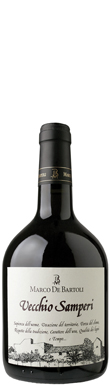

This wine was made for the first time in 1980. It is made with only Grillo and categorised as perpetuo or 'pre-English', since it followed the local production method used before the arrival of the English. It is an unfortified wine, not coloured, with high natural alcohol content and the result of an assembly carried out with various vintages with a system that recalls the Spanish soleras. Golden yellow with shades that recall old gold. Great intensity and finesse. Aromatic and oxidative aromas blend with hints of sweet spice, orange peels and balsamic notes. On the palate it is dense with great structure and softness. Slightly warm, it develops strength on the mid-palate and leaves a flavour of disarming freshness.
Marco De BartoliVino da Tavola

Marco De Bartoli, Marsala Oro Riserva 1988, Marsala, Sicily, Italy, 1988
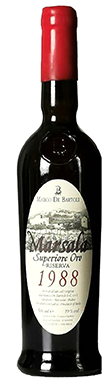
100% Grillo aged for 10 years in oak casks of different sizes in a solera system after being fortified with homemade mistella (fresh grape must and aquavit). Intense amber with copper hues. It is complex and rich on the nose; it has hints of dried figs, apricot jam, coffee, nutmeg, and candied citrus. The mouth is elegant and velvety, dominated by a decisive freshness. The finish is savoury, complex and long.
1988
Marco De BartoliMarsala
Francesco Intorcia, Marsala Riserva Vergine, Marsala, Sicily, Italy, 1980
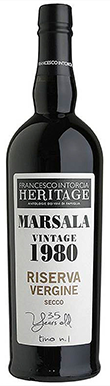
Founded in 1930, Cantine Intorcia was born from a small family business, now transformed into a winery covering an area of over 250 hectares. In 2010, Francesco Intorcia, together with his father Antonio, decided to bottle some reserves of Marsala, focusing on the 1980 harvest and choosing the types 'Vergine', 'Dolce' and 'Semisecco'. This Marsala Vergine is aged 35 years in oak casks. It has a complex nose and opens with intriguing balsamic notes, walnuts, eucalyptus, and wild mint. It then continues with acacia honey, toffee, and carob flavours harmoniously mixed with dried apricots, candied citrus fruits, and toasted almonds. The mouth is soft, full-bodied and warm but at the same time savoury and fresh.
1980
Francesco IntorciaMarsala
Florio, Marsala Vergine Riserva, Marsala, Sicily, Italy, 2003
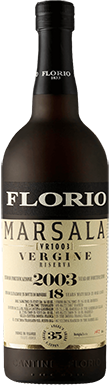
Vincenzo Florio was a merchant who, in 1832, decided to invest in Marsala. He desired to diversify his investments, so he bought a tract of land along the Marsala coast. Here he built a Baglio, a traditional Sicilian winery, in tuff stone, one of the undisputed symbols of one of the most important wineries in western Sicily. After going through the most disparate vicissitudes, also related to the events of the two world wars, the company was purchased in January 1998 by Illva Saronno Holding. This Marsala is aged 18 years in oak casks, in the historical cellars 200m from the sea. Aromas of malt, coffee beans, green olives and candied fruit. Different layers of integrated flavours with honey, salty caramel, and medicinal herbs. Full-bodied with ripe acidity to lean on, it stretches out to a long salty and nutty finish.
2003
FlorioMarsala
Rallo, Marsala Vergine Riserva, Marsala, Sicily, Italy
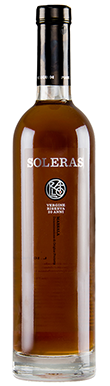
A winery initially started by the family Rallo, who today own Donnafugata. In 1889 the siblings decided to sell the Rallo company that, since 1997, has been owned by the Vesco family. They make three types of Marsala, but today the focus lies on still wines. The Marsala Riserva Soleras is produced with 100% Grillo from the natural reserve, Riserva dello Stagnone. Produced according to the solera method with three rows of overlapping barrels, it ages for 20 years before bottling. Amber in colour with an intense and refined nose, with notes of yellow flowers, candied orange peel, toasted salty almonds and dried fruit and a finish of liquorice and vanilla. On the palate, it is warm and persistent.
RalloMarsala
Cantine Pellegrino, Old John Superiore, Marsala, Sicily, Italy, 1998
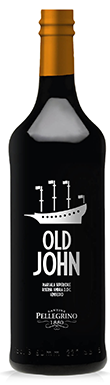
Cantine Pellegrino is a historical producer active since 1880 that has over 150 hectares in different parts of Sicily and on the Island of Pantelleria. This Marsala is bright amber. The nose is pleasant and fresh, with straightforward notes of apricot, hints of carob and thyme. The wine is full, sweet with integrated alcohol, round and generous on the palate. It is made with Grillo, Inzolia and Catarratto, ages 48 months in oak barrels and at least six months in barrique.
1998
Cantine PellegrinoMarsala
Caruso & Minini, Marsala Superiore Riserva, Marsala, Sicily, Italy
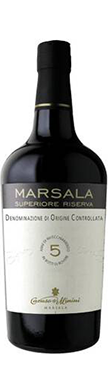
Caruso e Minini is a joint venture between two families and two different stories that merge when Stefano Caruso, the third generation of winemakers, meets Mario Minini, owner of a marketing company in northern Italy. Together, back in 2004, they built the foundations of Caruso & Minini, restored the old winery in Marsala and renewed the production. They outsource the production of their only type of Marsala to another winery. This Marsala ages for five years in cherry or Slavonian casks. It has defined aromas of chestnut honey, salty caramel, and dried walnuts; in the mouth is round and pleasant with a refreshing and well-kept acidity balancing the sweetness.
Caruso & MininiMarsala
Vito Curatolo Arini, Marsala Superiore Dolce, Marsala, Sicily, Italy
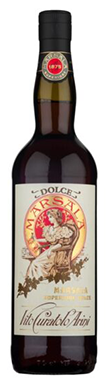
This winery was founded in 1875 and is one of few Marsala producers still owned by the original family. The labels are made by the Sicilian art nouveau architect Ernesto Basile. Curatolo Arini's Marsala Superiore dolce is a blend of Grillo, Catarratto and Inzolia grapes, with added mosto cotto (cooked grape must for colour and sweetness) and aged for four years in Slavonian oak barrels. Straightforward aromas of raisins, dates and honey. Silky and soft in the mouth with a lean acidity balancing the intense sweet notes. Honey and toffee in the pleasant finish.
Vito Curatolo AriniMarsala
