
Mas de Daumas Gassac: producer profile
At Mas de Daumas Gassac, four brothers are carrying on the work of their father and estate founder Aimé Guibert, embracing innovation while maintaining the estate’s reputation for producing a ‘grand cru of the Languedoc’.


Mas de Daumas Gassac has been the most celebrated domaine in Languedoc over the past half-century.
Its genesis can be dated back to a solitary walk around the property taken by Bordeaux geology professor Henri Enjalbert in July 1971. Returning to the mas [farmhouse], he declared to the astonished owners that they might produce ‘a grand cru from this soil – though it may be 200 years before it is accepted as such’.
Those owners were former glovemaker Aimé Guibert and his wife, a university ethnologist called Véronique de la Vaissière; they had bought the property the previous year. Aimé Guibert seized on the words – and greatly accelerated the time frame.
Scroll down to see tasting notes and scores for 15 wines from the Mas de Daumas Gassac range
Seven years later, the first vintage (1978) of the Cabernet Sauvignon-based Mas de Daumas Gassac was launched, made with a little sage consultative help from Bordeaux oenology professor Emile Peynaud.
At first, silence.
In 1981, though, the wine was declared to be ‘a grand cru of the Languedoc’ by Figaro journalist Michel Piot – and subsequently, by French restaurant guide Gault et Millau as ‘Château Lafite du Languedoc’.
Further praise (from Hubrecht Duijker, Hugh Johnson, Robert Parker and Clive Coates MW, among others) secured the wine’s fame.
Aimé Guibert continued to produce the wine from the vineyards lauded by Enjalbert, and on the lines laid down by Peynaud, until his death in 2016. Four of his five sons – Samuel, Gaël, Roman and Basile – manage the estate today.
Samuel Guibert makes the wine on behalf of the family. ‘When I took over between 2000 and 2010, my biggest challenge,’ he says, ‘was to make sure that no one said, “Wow, what a change!”.’
Much work has gone into the estate, but it’s designed to ensure that consistency and quality are maximised, while staying within existing style parameters. Cabernet, notably, is still king. ‘We’ve had a chance to compare Cabernet with all the other varieties we grow here,’ says Guibert. ‘In 20 out of the last 21 vintages, Cabernet was the best variety – by far.’
The Cabernet (70%-78%) is still blended with the fruit of up to 24 other varieties, including Pinot Noir, Tannat, Tempranillo, Baga, Nebbiolo and Saperavi.
These are picked in a state of mixed ripeness prior to the Cabernet. At the Daumas Gassac vineyard altitudes (250m-550m), this means fresh acidities and never more than 14% alcohol. The wine is steel-fermented and lightly oak-aged: 12-14 months and at most 15% new oak, with three or four Bordeaux-style rackings prior to bottling. It is never a hedonistic, lavishly fleshed, beefcake Cab; indeed, its classical reserve when young can surprise. But it ages effortlessly for two decades or more, and is invariably poised and digestible.
Mas de Daumas Gassac: at a glance
Founded Land purchased 1971; first red vintage 1978, first white vintage 1986.
Owned by The Guibert brothers: Samuel, Gaël, Roman, Basile and Amelien.
Production 86,000 bottles (red 44,000; white 35,000).
Key wines Mas de Daumas Gassac Rouge; Cuvée Emile Peynaud (pure, single-vineyard Cabernet, in the best years only, including 2015, 2020); Blanc; Vin de Laurence (sweet wine based on early-picked Sercial refermented with late-picked Muscat à Petits Grains Blancs, best years only); Rosé Frizant sparkling.
Great debate
But is it a ‘great Languedoc wine’? That’s an interesting question. Mas de Daumas Gassac is a pure and now time-honoured expression of propitious Languedoc soils, much enjoyed by its drinkers and sold en primeur and on allocation in a way in which few – if any – other Languedoc wines are. So yes, it is one of very few market-tested, auction-traded ‘great Languedoc reds’. Yet it is atypical of the present-day Languedoc in varietal and stylistic terms.
You could not, for example, find a starker contrast to Gérard Bertrand’s notion of grand Languedoc wines (as exemplified either by his IGP Aude Hauterive Cigalus or his AP Minervois La Livinière Clos d’Ora). Were it not an IGP (St-Guilhem-le-Désert Cité d’Aniane), Mas de Daumas Gassac would potentially qualify as AP Terrasses du Larzac – yet it also contrasts with Terrasses du Larzac references such as Mas Jullien, Mas Cal Demoura or neighbouring Château Capion.
Before jumping to conclusions, though, remember that Languedoc varietal choices aren’t written in stone; styles never cease to evolve. In 50 years, we may come to find the Mas de Daumas Gassac 2020 more typical of its region than the Clos d’Ora 2020. Or we may not. Only time – and you, the drinkers – will tell.
There are also developments taking place at the estate itself. ‘The biggest change,’ says Guibert, ‘is the renovation of the vineyard: my father never had to do that. But esca [a grapevine trunk disease] is a big problem here, so every year we try to replace 3ha. We wait three years; we replant (with our own massal selections); we wait again.
‘My top achievement for sure has been completing 18km of fencing to keep out the wild boar. We used to lose 10% of the crop to boar every year, so that fence saves us about €200,000 a year. We also don’t have tractors in the vineyards any more – just quad bikes, with horse ploughing and sheep grazing. We’ve gone from five people to 12 in the vineyards.’
And the winery? ‘We work by gravity now in the winery, and that has really helped in terms of elegance and finesse. It has also cut the use of SO2 by 75%. Every time you pump you bring in oxygen, so you reduce oxygen 10 times by not pumping. The next project is to increase storage space, and in the long term we’re also planning a new winery. We hope to make a Terrasses du Larzac, perhaps from new vineyards or partnerships – but we’ll have to see; that’s at least two years away.’

Creative thinking
I ask Guibert about the relationship between Mas de Daumas Gassac and the Moulin de Gassac wine range. ‘My dad,’ he explains, ‘was an entrepreneur. He loved to create things. He saw there was a glut of fruit in the Languedoc in the 1980s, with incentives to uproot. Everyone around us was in the Aniane co-op – so he offered to set up a joint venture to select the best terroirs and vinify those ourselves. Aniane said no; they still regarded us as outsiders. But the co-op at Villeveyrac said yes, and Moulin de Gassac was a fabulous success.’
It still is: 1m-3m bottles every year, coming from 300ha of Villeveyrac vines but made and blended under Mas de Daumas Gassac supervision. Some of the wines are varietals, but the most interesting are blends, sold under brand names that Aimé Guibert rescued from his old leather business (Eraus and Faune whites, Elise and Albaran reds): ‘Selections of a few parcels based on old vines and lower yields, handpicked up on the plateau where the tractors can’t go.’
The co-op at Aniane, meanwhile, has closed.
Andrew Jefford’s highlights from the Mas de Daumas Gassac range
You may also like
Mas de Daumas Gassac red wines: recent vintages tasted
The liquid novel – white Mas de Daumas Gassac
Top 30 Languedoc white wines for summer
Mas de Daumas Gassac, Blanc, St Guilhem-le-Désert Cité d’Aniane, Languedoc-Roussillon, France, 2020
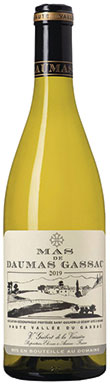

In contrast to the zesty 2019 in which the Petit Manseng and Chenin Blanc components seem to dominate, the 2020 Mas de Daumas Gassac white...
2020
Mas de Daumas GassacSt Guilhem-le-Désert Cité d’Aniane

Mas de Daumas Gassac, Blanc, St Guilhem-le-Désert Cité d’Aniane, Languedoc-Roussillon, France, 2019
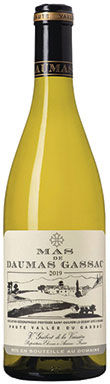
Mas de Daumas Gassac white is a complex, unwooded blend of Viognier, Petit Manseng, Chardonnay and Chenin Blanc, plus smaller quantities of other varieties. Its...
2019
Mas de Daumas GassacSt Guilhem-le-Désert Cité d’Aniane
Mas de Daumas Gassac, Blanc, St-Guilhem-le-Désert, Languedoc-Roussillon, France, 2012
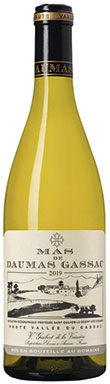
The 2012 Mas de Daumas white is light straw-gold in colour, with an aromatic richness and lushness which seems, in maturity, to hint at late-harvest...
2012
Mas de Daumas GassacSt-Guilhem-le-Désert
Mas de Daumas Gassac, Moulin de Gassac Eraus, Pays d'Hérault, Languedoc-Roussillon, France, 2020
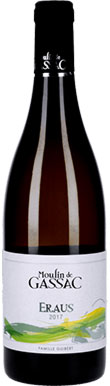
The majority Sauvignon Blanc in this blend is complemented by Vermentino, and the grapes grow in clay-limestone terraces overlooking the Bassin de Thau and its...
2020
Mas de Daumas GassacPays d'Hérault
Mas de Daumas Gassac, Moulin de Gassac Combe Calcaire, Pays d'Hérault, Languedoc-Roussillon, France, 2020
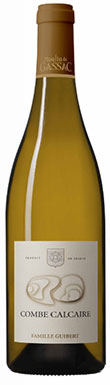
The aim behind the Combe Calcaire wines is to create more complex blends than for Moulin du Gassac, with a little more richness, complexity and...
2020
Mas de Daumas GassacPays d'Hérault
Mas de Daumas Gassac, Rosé Frizant, Languedoc-Roussillon, France, 2020
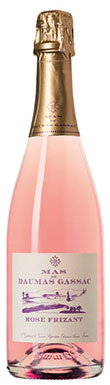
This blend of 70% young-vine Cabernet Sauvignon with the balance from Mourvèdre, Pinot Noir, Sauvignon Blanc, Petit Manseng and Muscat is a pale rose-pink, with...
2020
Mas de Daumas Gassac
Mas de Daumas Gassac, Rouge, St Guilhem-le-Désert Cité d’Aniane, Languedoc-Roussillon, France, 2018
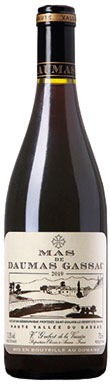
The 2018 vintage was, like 2019, a warm one in which the Cabernet (76%) excelled. This dark but not quite opaque black-red wine has outstanding...
2018
Mas de Daumas GassacSt Guilhem-le-Désert Cité d’Aniane
Mas de Daumas Gassac, Rouge, St Guilhem-le-Désert Cité d’Aniane, Languedoc-Roussillon, France, 2019
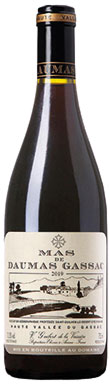
The 2019 vintage was very dry and hot, with record-breaking late June temperatures – but the 78% Cabernet Sauvignon component performed well in these relatively...
2019
Mas de Daumas GassacSt Guilhem-le-Désert Cité d’Aniane
Mas de Daumas Gassac, Rouge, Pays d'Hérault, Languedoc-Roussillon, France, 2011
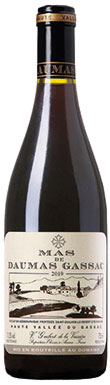
Mas de Daumas Gassac has a programme of historic releases, and the 2011 is the vintage on sale at present. This was a warm vintage,...
2011
Mas de Daumas GassacPays d'Hérault
Mas de Daumas Gassac, Rouge, Pays d'Hérault, Languedoc-Roussillon, France, 2009
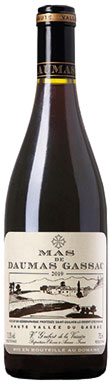
The 2009 remains (in 2021) a darkly coloured wine: brooding black-red, without a trace of brick. Aromatically, too, it is still fruit dominated and...
2009
Mas de Daumas GassacPays d'Hérault
Mas de Daumas Gassac, Rouge, Pays d'Hérault, Languedoc-Roussillon, France, 2008
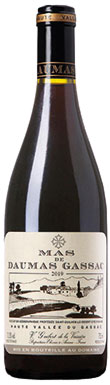
The 2008 Mas de Daumas Gassac is a little less flamboyant than some of its peers, but it remains dark and alluring. After a little...
2008
Mas de Daumas GassacPays d'Hérault
Mas de Daumas Gassac, Moulin de Gassac Tèrra, Languedoc, Languedoc-Roussillon, France, 2019
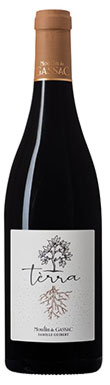
Tèrra is an organic red blend coming from higher-sited appellation vineyards (on clay-limestone soils) at St Bauzille de la Sylve. The blend brings Syrah and...
2019
Mas de Daumas GassacLanguedoc
Mas de Daumas Gassac, Rouge, Pays d'Hérault, Languedoc-Roussillon, France, 2007
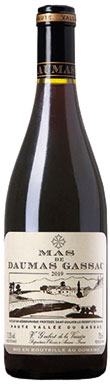
The 2007 Mas de Daumas is just beginning to show a little brick-red in its colour, and the nose, too, is relatively evolved for this...
2007
Mas de Daumas GassacPays d'Hérault
Mas de Daumas Gassac, Moulin de Gassac Combe Calcaire, Pays d'Hérault, Languedoc-Roussillon, France, 2019
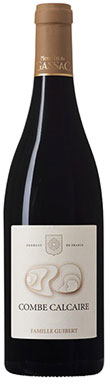
The red version of Combe Calcaire sees Syrah, Cabernet, Carignan and Merlot ‘delicately’ aged in old barrels. It’s a dark red-black in colour, and its...
2019
Mas de Daumas GassacPays d'Hérault
Mas de Daumas Gassac, Moulin de Gassac Albaran, Pays d'Hérault, Languedoc-Roussillon, France, 2019
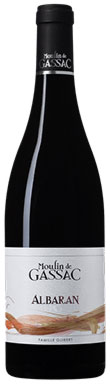
Albaran (declared by the back label to be 'powerful, virile and generous') is a blend of Cabernet and Syrah grown on poor soils over fissured...
2019
Mas de Daumas GassacPays d'Hérault
