
From the archive: Médoc 2009 and 2010 second wines – panel tasting results


An abundance of good quality fruit in these top vintages means that châteaux 'second wines' are particularly worth a look. See the top wines from this panel tasting; many of the opulent 2009s are ready to drink, while 2010 still has some way to go.
This article was originally published in Decanter magazine's December 2016 issue and is now available online in full, exclusively for Premium subscribers.
Seventy-seven Médoc second wines from 2009 and 2010 tasted with 14 Highly Recommended
The tasters: Jane Anson, Steven Spurrier, Sebastian Payne MW
Scroll down to see the wines
Introduction by Jane Anson, Decanter contributing editor
These 2009 and 2010 second wines should be a no-brainer for both buying and drinking, given the quality of both vintages. Our three-strong panel of experts, including contributing editor Jane Anson, found plenty to recommend. But which wines stood above the rest?
In the main, the wines did very well, with 14 Highly Recommended out of 77 wines tasted.
It’s a bit disappointing that none sneaked into Outstanding, although Echo de Lynch-Bages and Ségla were both pretty close. There were also no second wines of the first growths included in the line-up.
Not counting the two bottles that were faulty, only three wines didn’t make it to Commended or higher, and the vast majority were extremely good quality.
That makes this one of the strongest recent Bordeaux panel tastings we have had outside classified wines, and is a vote of confidence for the vintages.
Most interesting perhaps is that the best wines are fairly evenly matched between both years – although it’s worth noting that the 2009s have a bigger grouping at the bottom of the scale, so even if the best are evenly matched at the higher echelons, the 2010s are perhaps just nudging it in terms of numbers.
Duluc de Branaire-Ducru, Sarget de Gruaud Larose and Ségla deserve a mention here for achieving one wine Highly Recommended and a second Recommended on 89 points. And among the other Highly Recommendeds, both Les Hauts du Tertre 2010 and Diane de Belgrave 2010 looked to be relatively good value, compared to the (also brilliant) Dame de Montrose or Echo de Lynch-Bages.
At this stage of development, you would expect the 2009s to be ready to go and the 2010s still to be closed for business, and certainly in the main those stylistic differences between the two held up.
The 2009s often showed sexy, exotic and beautifully rich fruits (with some straying over into jammy), while the 2010s showed just how intense and concentrated much of the wine was in this year. But both had their charms, and there were very few wines that couldn’t be enjoyed now, in some cases with a short decanting first.
Fleur de Pédesclaux has not done too well in either vintage, but this was before the more recent renovation of the estate and integration of new, higher quality plots had fully come in to effect. You really have to wait until 2012 to see the true improvement in this château – a great example of how vintage alone is not always enough.
The scores
77 wines tasted
- Exceptional 0
- Outstanding 0
- Highly Recommended 14
- Recommended 51
- Commended 7
- Fair 4
- Poor 0
- Faulty 1
The results
Second wines are a great entry point into classed growth Bordeaux, but they still need to justify the often fairly high price-tag, said our panel. Amy Wislocki reports…
‘This tasting was pure pleasure,’ exclaimed Sebastian Payne MW. ‘Second wines of the classed growths typically represent about 40% of a château’s production and are made with just as much care as the grand vin (though clearly not from its outstanding vats). They often cost a third of the price of the grand vin, and offer real value. These are great vintages to buy in, too – 2009 is ripe and generous, and 2010 often even finer. So readers can buy with confidence.’
‘The tasting certainly confirmed that these are two very good vintages, with some excellent wines,’ commented Jane Anson. ‘And when these second wines are good, they’re better than the château’s first wine was in the 1970s and 1980s.
‘The problem is that they are not inexpensive nowadays – the châteaux are starting to charge a lot for these wines. So expectations are naturally high. And although overall quality was strong, there weren’t more than a couple of wines that blew me away. In these two vintages, wine lovers would do just as well to look at crus bourgeois, which are punching above their weight.’
Steven Spurrier also described himself post-tasting as ‘underwhelmed’, but shared his general philosophy that you should ‘buy second wines in great vintages [such as these] and great wines in lesser vintages’. The tasters were unstinting in their praise for the 2010s, which clearly had more longevity than 2009.
‘Realistically, consumers are buying second wines to drink,’ observed Anson. ‘And it was clear from this tasting that 2009 is in its drinking window – if you have any 2009 second wines in your cellar, don’t be afraid to drink them now, because they’re ready. It was a warmer year than 2010 and so you’d expect riper fruit. But some buyers may be disappointed to already find the tertiary aromas and flavours we were getting in some wines. For me, the St-Estèphes performed best, as there is cooler, clay soil here and so the wines kept their fruit more.’
Moving on to the 2010s, Anson found many ‘in their drinking window already but still with a long way to go, and she added: ‘Overall, 2010 beat 2009 hands down.’ Spurrier described the 2009s as ‘a bit blurred in many ways – lacking the precision that the 2010s have’.
He was also disappointed not to find more sense of place in these wines. ‘It doesn’t matter that they are second wines – they are still cru classé wines; you expect an expression of the commune, of the terroir. And it wasn’t always there, especially in the Margaux wines.’
Both tasters commented on how the second wines of the classed growths have evolved since they gained traction in the market, in the early 1980s. ‘Back then, the second wine was a method of using surplus production; it was a natural process,’ explained Spurrier. ‘Today it’s a brand-building exercise – it’s about the aggrandisement of the grand vin.’ ‘And it’s inflating the prices of the grands vins,’ interjected Anson. ‘Some châteaux have even introduced third wines.’
‘The key is to follow the châteaux,’ advised Spurrier. ‘If you follow a château, you know that the second wine will be a pure reflection of its grand vin.’
‘I agree with Steven that you have to trust the property when buying Bordeaux second wines,’ echoed Anson. ‘You should be getting a junior version of the grand vin, made probably from younger vines on perhaps more sandy plots of soil, with a little less time in oak, maybe. And obviously at a price that reflects this.’
To see all the wines from this tasting click here
About Médoc
Bordeaux has been mastering the art of second wines for centuries, largely because the châteaux tasted here – sizeable, well-monied Médoc estates singled out in the 1855 classification – led the charge.
In the archives you can find examples of châteaux making a ‘second selection’ of their grapes as far back as the 17th century. A second wave came along at the turn of the 20th century. Les Forts de Latour, for example, first appeared in 1906 (under a different name) until various wars and economic crises meant it was tough enough to sell the main wine, let alone a second label.
Things rebounded in the 1980s, but it has really only been over the past 20 years that Bordeaux second wines have taken their modern form; named almost invariably to promote the family resemblance and marketed as an entry point, like the diffusion line of fashion houses.
Early enjoyment
Invariably, these wines are meant to offer an earlier drinking window – so within three to 10 years of bottling rather than 10 to 20-plus. Practically, that means they may be from younger vines, or contain more of the softer Merlot grape, or aged in less new oak, or made from grapes grown in lighter, sandier soils, or a number of other choices in the cellar or vineyard.
Part of the growth in second wines has come from the expansion of available grapes, as cash-rich Médoc classed growths have bought neighbouring vineyards or replanted parts of their own that had been left fallow in the difficult years. Château Cantemerle has gone from 20ha in 1981 to 94ha now. Château Clerc Milon has gone from 15ha in the 1950s to 41ha today – the 2009 first release of its Pastourelle de Clerc Milon was tasted here.
Some châteaux put less emphasis on their second wines than others. Château Pontet-Canet for example makes very little, perhaps no more than 10% of its main estate bottling. But most acknowledge the value of second wines for both quality and brand awareness.
In theory, these two vintages should reveal all that is great about second wines. Two superb years, so at this level of winemaking skill and available resources you should have no quality worries. The character of each year was quite different, with 2009 being a fleshier, sexier and more upfront vintage, and 2010 equally turbo-charged but with higher acidities and tannins, so making wines that were all about playing the long game.
Not only that, but both 2009 and 2010 were vintages where prices for the main wines often doubled, even tripled from the prices of 2008, meaning that second wines should be the place to turn for value for money.
Second wines:
Today there are around 700 second wines in Bordeaux, with numbers continuing to grow. Around half of all Médoc estates have them – that percentage rises steeply for the more famous estates, with only Château St-Pierre in St-Julien and Château d’Armailhac in Pauillac holding out among the 1855 estates. That number drops to about one third for Right Bank properties, although this is changing fast, as St-Emilion in particular begins to see the benefits of brand extension through a second label.
Médoc: know your vintages
2015 An excellent vintage across the board, boding well for second wines.
2014 A strong vintage, particularly in northern Médoc. Careful sorting was needed in places, but there are many strong examples of second wines.
2013 Difficult year. Some attractive early-drinking wines, but often better to prioritise first over second wines.
2012 An underrated vintage: some good,classically balanced first and second wines.
2011 Reds more uneven than whites, but some good drinking wines, especially among the established names.
2010 Excellent. High tannins, alcohol and fruit; long-lasting, with plenty of good quality second wines.
2009 Excellent quality, fruit-forward, ripe character, with plenty of good quality second wines, many ready to drink now.
Top Scorers
See all of the wines tasted here
More recently published articles that you may like:
Bordeaux 1983 vs 1982: Battle of the vintages
Comparing the last five great Bordeaux vintages
Château Lynch-Bages, Echo de Lynch-Bages, Pauillac, Bordeaux, France, 2009
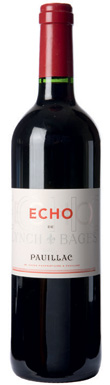

On the palate, deep red and black fruits, silky, caramel. This is a very good expression of Pauillac Cabernet fruit, with lots of flesh and...
2009
Château Lynch-BagesPauillac

Château Rauzan-Ségla, Ségla, Margaux, Bordeaux, France, 2010
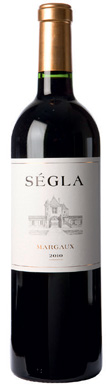
Beautifully elegant fruit is present on the nose. Supple middle palate and clear ageing ability as the tannins are still young, acidity well balanced and...
2010
Château Rauzan-SéglaMargaux
Château Léoville Poyferré, Pavillon de Léoville Poyferré, St-Julien, Bordeaux, France, 2009
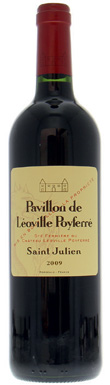
This is a young wine with aromas of red fruits and cedar on the nose. There is a lovely level of spice and precision....
2009
Château Léoville PoyferréSt-Julien
Château Grand-Puy-Lacoste, Lacoste Borie, Pauillac, Bordeaux, France, 2010
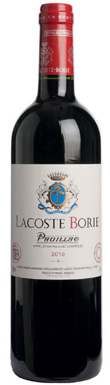
This is a smooth, rich and powerful wine with plenty of Pauillac typicity. It shows elegant Cabernet fruit with good grip, spicy character and bags...
2010
Château Grand-Puy-LacostePauillac
Château Léoville Barton, La Réserve de Leoville Barton, St-Julien, Médoc, Bordeaux, France, 2010
The nose displays aromas of tobacco leaf and smoke. It is a well-integrated wine showing balance and a juicy quality to the damson fruit. It...
2010
Château Léoville BartonSt-Julien
Château Belgrave, Diane de Belgrave, Haut-Médoc, Bordeaux, France, 2009
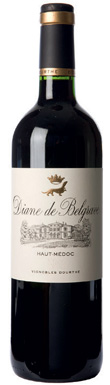
This is a youthful red with clear integrity of fruit. The tannins are firm with good depth of flavour, showing touches of blackcurrant and black...
2009
Château BelgraveHaut-Médoc
Château Montrose, La Dame de Montrose, St-Estèphe, Bordeaux, France, 2010
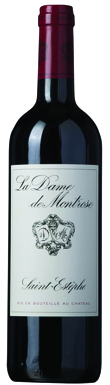
A deep, young red wine with good grip of Cabernet fruit, showing strength, length and an element of fun. It has the vigour and class...
2010
Château MontroseSt-Estèphe
Château Cantenac Brown, BriO de Cantenac Brown, Margaux, Bordeaux, France, 2010
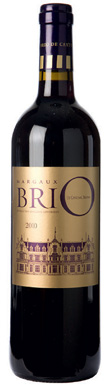
A fine Cabernet fragrance on the nose with elegant fruit on the palate, full of black fruits. The tannins are well integrated but is a...
2010
Château Cantenac BrownMargaux
