
Montefalco Sagrantino on the rise: names to know plus top wines to try


Producers in the small Montefalco Sagrantino DOCG in Umbria have developed an approachable modern style for their notoriously tannic native Sagrantino grape. Susan Hulme MW charts their progress and recommends top wines to try…
In the throwaway consumer culture of the modern world, Sagrantino is an anomaly. This thick-skinned, extremely tannic black grape is difficult to tame in both vineyard and winery. It needs five years or more in bottle to come around, but when it does, it’s a wine of great character and personality with an enviable capacity for long ageing. It is worth the wait.
Scroll down for Susan Hulme MW’s top wines from Montefalco Sagrantino
Sagrantino grows almost exclusively around the town of Montefalco, Umbria. The region is best known for its white Orvieto wines and is called the Cuore Verde (‘green heart’) of Italy, due to its central location and its very green landscape.
Having no sea access, Umbria has always been a little hidden. It is quieter and less touristy than its more famous neighbours, Tuscany to the north and Lazio to the south, but it is more mystical and somehow more authentic.
A dramatic Apennine Mountain skyline borders the region’s beautifully undulating hillsides and wide, generous valleys. Its lower valleys are shrouded in early-morning mists and dotted with olive groves. Hilltops are crowned with medieval walled towns like Todi and Montefalco, the bustling university city of Perugia and Umbria’s jewel, glimmering Assisi, birthplace of St Francis. The area is dominated by its historic connection to the church and a sense of spirituality; quiet contemplation still lingers in the stillness of the landscape.
Montefalco Sagrantino at a glance
Sagrantino di Montefalco DOCG was established in 1992 and renamed Montefalco Sagrantino in 2009
Ageing: 37 months minimum, including four months in bottle and 12 months in oak
Grapes: 100% Sagrantino (dry and passito)
Area: Montefalco and parts of Bevagna, Gualdo Cattaneo, Castel Ritaldi and Giano dell’Umbria
Minimum alcohol: dry 13% (or 13.5% for single-vineyard wines); passito 17%
Area under vine: 760ha (2017)
Production: 986,944 bottles; 6% of all Umbrian wine
Average temperatures: summer 25°C; winter 3.8°C
Average annual rainfall: 700m

Indeed, the name Sagrantino comes from the Latin word sacer meaning ‘sacred’. Its tannins were so dense and chewy that the grapes were often left to ripen late on the vine, making a sweet passito wine of dried grapes to use as a sacramental wine during mass, with the tannins giving a balancing, almost bitter finish.
Traditionally it would be paired with roast lamb at Easter celebrations, with the fatty richness of the lamb being balanced by the contrasting sweet and bitter flavours of the wine, almost like a vinous redcurrant sauce. The sweet passito version of Sagrantino makes the perfect partner for salty cheeses such as Pecorino, or dark chocolate.
Dry Sagrantino wines are a relatively recent creation. First produced experimentally in the 1970s, the style was taken more seriously in the 1980s and 1990s. For a long time, however, consumers did not take an interest in Italy’s more obscure native grapes. Montefalco Sagrantino was almost extinct; as recently as 2000 there were only 10 wineries producing Sagrantino wines, illustrated by producer Giampaolo Tabarrini trying to find another producer from just outside the zone to make up the numbers for a tasting he was organising.
A new dawn
When Sagrantino di Montefalco achieved DOCG status in 1992 (it was renamed Montefalco Sagrantino in 2009), vineyards totalled only 66ha. Since then, plantings have increased to 760ha. Although the total is still relatively small, it represents a dramatic increase.
In the same period, the number of producers has increased from 10 to 60. Some of the growth has come from existing growers becoming wine producers, such as Tabarrini and recently Bernadetti & Grigi. There are also producers who have moved in from other Italian regions, seizing the opportunity to invest in a characterful grape variety with such untapped potential, including Tuscan-based Cecchi and Trentino’s Lunelli. Foreign investors are also showing interest.
Taming the tannins
The big issue with Sagrantino has always been how to tame its rustic tannins and make the wine more approachable, without losing its character. It is famously late-ripening and in an ideal world would be harvested at the end of October. But in the past it was often picked earlier to avoid bad weather, meaning tannins could be unripe and hard. However, picking late risks raising alcohol levels to around 16%, resulting in a loss of freshness and vitality. It is a constant balancing act.
Some producers feel that climate change has had a positive effect: warmer, drier autumns mean Sagrantino can be picked when both fruit and tannins are mature, but without excessive alcohol. Factor in better vineyard management and this has all allowed producers to obtain better fruit concentration and overall ripeness plus better balance.
The story of Sagrantino’s renaissance is not complete without mentioning the Caprai family. Since taking over the running of his father Arnaldo’s eponymous winery in the early 1990s, he has been at the forefront of Sagrantino research. In collaboration with the University of Milan, he sought to identify the variety’s optimum yield, vineyard spacing, planting density and training methods. The research has also developed the best clones, three of which – Collepiano, 25 Anni and Cobra – are now commercially available.
In the winery, tannins are better managed by more careful pressing, cool fermentations, gentle extraction and larger, older oak barrels. But Sagrantino’s high tannic content brings some side benefits: it is extremely high in polyphenols, the compounds which impart colour, aroma and texture but also one of our modern health obsessions, antioxidants. ‘Sagrantino has the highest quantity of polyphenols in the world,’ explains Caprai.
Other producers do not want to overemphasise the powerful, tannic nature of Sagrantino. Giampaolo Tabarrini, who has been fervently developing single-vineyard wines, accepts the challenges of the variety.
‘I don’t see Sagrantino as a big monster… and I am not impressed by sweetness and richness. I like freshness.’ He tries to keep pH levels relatively low to achieve freshness, as well as prioritising more fundamental choices, such as selecting the right vineyard site. For Tabarrini, terroir is key. ‘Sagrantino is not something you can produce all over [the world]. You have to treat it right in the vineyard and winery to coax the best out of it.’ The fact that it does best in its homeland, rather like Nebbiolo in Barolo, only adds to its allure.
It takes great people to turn grapes into fine wine and the Montefalco Sagrantino DOCG has a dedicated and passionate group of producers who are willing to work together for the common good. Amilcare Pambuffetti, head of one of the area’s oldest estates, Scacciadiavoli, and former president of the consorzio explains: ‘Sagrantino has a characteristic of absolute originality. Once upon a time, that was a limitation. Now it is a blessing.’
Today, people are more willing to celebrate unique, individual and authentic qualities in both food and wine. As the quality of Sagrantino wines improves, it is time for Montefalco Sagrantino DOCG to take its place among the great wines of the world.
Six producers to look out for
Arnaldo Caprai
Arnaldo Caprai bought 45ha of land in Montefalco in 1971. His son Marco’s passion for Sagrantino has been instrumental in improving its quality and gaining international recognition. In 2008 he began The New Green Revolution project, focusing on environmental, economic and social sustainability – not just in his winery, but across Montefalco. His flagship wine, Spinning Beauty was made to celebrate the memory of his father.
Benedetti & Grigi
Umberto Benedetti used to sell grapes to a local co-op, but when it closed he formed a partnership with Daniele Grigi to make wine. They now own 68ha of vines. Winemaker Daniele Di Mambro heads up a young, motivated team and their Sagrantino di Montefalco won a DWWA Gold in 2018.
Perticaia
Perticaia owns 16ha in a beautiful location in Casale, south of Montefalco, producing about 130,000 bottles a year, of which about 65% is exported. The wines have scored well with international critics and I thought them very impressive at Anteprima, the consorzio’s annual new-release tasting, in 2017. The 2007 vintage was a lovely, modern and clean style, with a very smooth texture and well-managed tannins.
Scacciadiavoli
One of the oldest producers in Montefalco, founded in 1884. Its continuous production of Sagrantino was key to getting the region its DOCG status. The sand and clay soils in its hillside vineyards, Giano dell’Umbria and Gualdo Cattaneo, are perfect for the late-ripening Sagrantino. Also produces modern and appealing sparkling wines, including a delicate 100% Sagrantino rosé, which spends five years on lees.
Tabarrini
Giampaolo Tabarrini took over the family business in 1996 and made the important decision to bottle three different single-vineyard Sagrantino wines. The ebullient Tabarrini, in his spotless, cathedrallike winery is making some of the best Sagrantino in the region. He also makes some of the best dry whites from the local Trebbiano Spoletino. His exceptional dry white, Armando 2010, offers evidence of the variety’s potential for greatness.
Tenuta Bellafonte
In 2007, Peter Heilbron bought vineyards near Bevagna. He has unusual ideas about Sagrantino; unlike most producers he believes in picking Sagrantino early to avoid overripeness. The jury is still out, as the 2012 was a little too green. But if you are looking for a distinctive, lighter style from Montefalco, he is a producer to watch. He also makes a wonderful dry white Trebbiano Spoletino called Arnèto.
Susan Hulme MW is a wine writer specialising in Italian wines. Since 2016 she has written regularly for Decanter and Decanter.com
Susan’s top wines from Montefalco Sagrantino:
You may also like:
Best Campania wines from southern Italy: What to look forTen of the best Italian vineyards & terroirsBest Veneto wines: Expert picksTop wines to try from Alto Adige
Tabarrini, Colle alla Macchie, Montefalco Sagrantino, Umbria, Italy, 2013
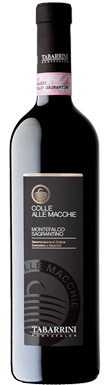

Tabarrini's 3.3ha Colle alle Macchie vineyard sits at the top of a hill on clay soil. This has distinctive mint and eucalyptus aromas, with a...
2013
TabarriniMontefalco Sagrantino

Arnaldo Caprai, 25, Montefalco Sagrantino, Umbria, Italy, 2014
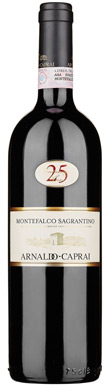
The flagship wine to mark the estate's 25th anniversary, this is rich, powerful and voluptuous, offset by the cooler 2014 vintage. Crushed rose petals, white...
2014
Arnaldo CapraiMontefalco Sagrantino
Cantina Fratelli Pardi, Montefalco Sagrantino, Umbria, Italy, 2013
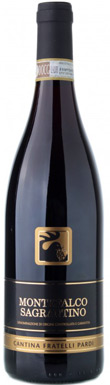
I was impressed by the Pardi family's Sagrantino at Montefalco's new release tasting in February 2018. The 2013 vintage has incense-like notes with sweet oak...
2013
Cantina Fratelli PardiMontefalco Sagrantino
Benedetti & Grigi, Montefalco Sagrantino, Umbria, Italy, 2014
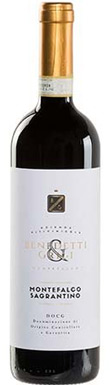
The 2014 is B&G's debut vintage, and what a great start! It's a vivid, bright, fruity style with blackcurrant and dark raspberry flavours wrapped in...
2014
Benedetti & GrigiMontefalco Sagrantino
Rocca di Fabbri, Montefalco Sagrantino, Umbria, Italy, 2013
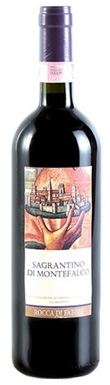
The estate was founded in 1984 by Pietro Vitali who had a background in antiques, and the family owns a wonderful country resort with rooms...
2013
Rocca di FabbriMontefalco Sagrantino
Terre de la Custodia, Montefalco Sagrantino, Umbria, Italy, 2013
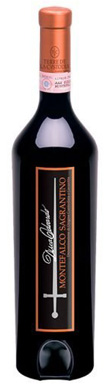
Owned by an Umbrian family who also produces oil, flour and craft beer, this is one of the larger estates, making a million bottles annually...
2013
Terre de la CustodiaMontefalco Sagrantino
Tenuta Alzatura, Montefalco Sagrantino, Umbria, Italy, 2012
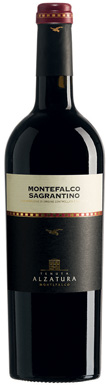
In the late 1990s the Cecchi family from Chianti Classico invested in Sagrantino di Montefalco, buying three vineyards in three different locations. Spice, black cherry...
2012
Tenuta AlzaturaMontefalco Sagrantino
Scacciadiavoli, Montefalco Sagrantino, Umbria, Italy, 2013
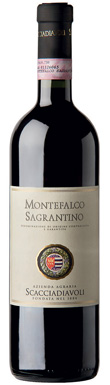
Scacciadiavoli (‘throw out the devil’) was named after a local exorcist. This wine has a traditional, structured feel to it – firm tannins and mouthwatering...
2013
ScacciadiavoliMontefalco Sagrantino
Antonelli San Marco, Montefalco Sagrantino, Umbria, Italy, 2013
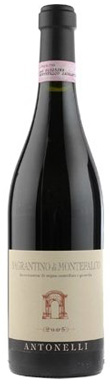
Founded in 1881 and still family run, with farm estates extending over 170ha in total. A youthful wine with lots of dark, brooding fruit, tar...
2013
Antonelli San MarcoMontefalco Sagrantino
Lungarotti, Montefalco Sagrantino, Umbria, Italy, 2014
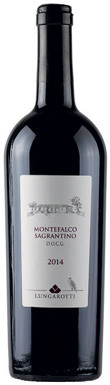
Lungarotti is well known in the UK, having helped to raise the profile of Umbrian wines. The 2014 vintage was fresh and cool vintage, and...
2014
LungarottiMontefalco Sagrantino
Bocale, Montefalco Sagrantino, Umbria, Italy, 2014
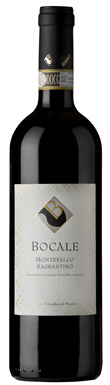
A round, smooth, friendly version of Sagrantino with a crunchy, green feel to the tannins. Owner Valentino Valentini was the youngest ever mayor of Montelfaco;...
2014
BocaleMontefalco Sagrantino
Tenuta Baiocchi, Montefalco Sagrantino, Umbria, Italy, 2011
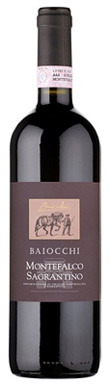
A lighter version of Montefalco Sagrantino. Light red fruit, spice aromas and flavours, medium-bodied with plenty of fine, grippy tannins. Try with roast lamb or...
2011
Tenuta BaiocchiMontefalco Sagrantino
