
The Decanter interview: Mouton Rothschild family: the new generation


After earlier careers in other fields, Baron Philippe de Rothschild’s three grandchildren have taken up roles in the family business. Jane Anson discovers how they plan to honour such a distinguished heritage...
La Grande Piece at Mouton Rothschild, with its blue and red tiled floor, 17th and 18th century chairs and artworks including Brancusi’s Bird in Space sculpture, looks almost exactly as it did in a photo shoot for Vogue in 1963.
Today, Baron Philippe’s grandson Philippe Sereys de Rothschild has chosen this room for our meeting, almost two years to the day since we first discussed his appointment as chairman of the supervisory board for the legendary Mouton Rothschild family estates.
Scroll down to see Jane’s picks of the Rothschild portfolio for drinking now
From that first meeting, on a beautifully sunny day in June 2015, I remember a clear impression forming of the serious challenge ahead in taking over from his mother, Baroness Philippine de Rothschild, who died less than a year earlier and left in her wake an indelible imprint on every part of her estate.
Two years on and Sereys de Rothschild is warm, expansive, relaxed. He seems fully grown into his role as the head of the board, working alongside his elder sister, Camille Sereys de Rothschild, and younger brother, Julien de Beaumarchais de Rothschild.
Profoundly linked
This estate has been with the Rothschilds since 1853 – one of only two classified properties in the Médoc to have remained in the hands of the same family since the 1855 ranking – and successive generations have shaped not only their immediate surroundings but the wider history of the region. So perhaps it’s no surprise that when we sit down to lunch with all three, they don’t hesitate when asked if they always knew they would return to the family business.
‘We always knew how profoundly we are linked together and to this place,’ is how Camille puts it.
They are also clear that their roles are very different from that of managing director Philippe Dhalluin and his team, who are in charge of day-to-day decision-making – and, most importantly, winemaking – across what is a large international business.
It spans the three Pauillac estates of Mouton, d’Armailhac and Clerc Milon, the Limoux-based Domaine de Baronarques, plus the branded Mouton Cadet wine – the biggest-selling in Bordeaux – and the international joint ventures Opus One and Almaviva.
‘Our different skills make it easy to work alongside each other – everyone has their own space’ Philippe Sereys de Rothschild
Strategic decisions
This year, 2017, is important for the business. For a start it is the 20th anniversary of Almaviva’s launch in Chile, a project begun under Baroness Philippine as a joint venture with Concha y Toro to create a primer orden, or grand cru classé, estate in the Maipo Valley.
It also marks the key relaunch of Mouton Cadet, the Bordeaux brand created by Baron Philippe in 1930. For the first time, through contracts with 453 Bordeaux wine-growers, the family has 100% control of the brand’s sourcing across 1,300ha of Bordeaux, overseen by seven full-time winemakers within parent company Baron Philippe de Rothschild SA.
Capitalising on this focus on quality, Mouton Cadet has taken on a fresh relevance through sponsorship of the Cannes Film Festival (where its rooftop bar overlooking the bay is a legendary draw), the Ryder Cup in golf and, from 2017, the America’s Cup in sailing.
Taking strategic decisions of this sort, and looking at the overall shape of Baron Philippe de Rothschild SA and its future direction, are quite clearly areas where Philippe Sereys de Rothschild feels at home.
‘I was lucky enough to have a bizarre career up to this point,’ he says cheerfully, referring to his previous jobs that have included heading up Générale des Eaux in Italy, running small engineering and technology start-ups, and working in private equity.
‘I have had extremely structured, process-oriented roles and others that involved analysing how businesses worked from the outside, and others that needed creativity and a more hands-off approach. The diversity helped me; I learned how to work across different things and to value people for what they are. It has not been a straight-line career but has been hugely enriching.’
This quality has also no doubt helped to establish a successful balance of tasks between the three siblings – not the easiest of things in a family business. Camille Sereys de Rothschild has returned to Mouton after raising seven children, following earlier work in art and auction houses. You can tell as soon as you meet her that she shares with her mother, Baroness Philippine, an ability to see the small details needed to set a scene and to make people feel welcome.
She is ‘open and forthcoming’ as her brother describes her, and plays a key role in communication, both internally – tellingly, Philippe says that staff often go to Camille with any issues that need resolving – and externally. She plays a key role in partnership programmes for Mouton Cadet, hosting dinners and establishing the hugely important family connection that elevates the sponsorship, emphasises the history that stretches back to Baron Philippe, and benefits both sides.
‘We always knew how profoundly we are linked together and to this place’’- Camille Sereys de Rothschild
The current Mouton generation
Camille Sereys de Rothschild
Born in 1961, daughter of theatre director and actor Jacques Sereys and Baroness Philippine de Rothschild. Attended Hurst Lodge school in Berkshire, England before returning to school in France. She began her career in the art world, first with antique dealer Philippe Laquerrière, then auctioneers Ader-Picard-Tajan. Seven children: David, Charlotte-Marie, Pierre, Nicolas, Benjamin, Kevin, Colombe.
Philippe Sereys de Rothschild
Born in 1963, son of Jacques Sereys and Baroness Philippine de Rothschild. Attended Sunningdale prep school in Berkshire, graduated business school in Bordeaux before an MBA at Harvard. Has worked as an analyst for Lazard bank in New
York and in various other roles, including chief finance officer of Dalkia Energy in Milan. Three children: Léonore, Mathilde, Nathan.
Julien de Beaumarchais de Rothschild
Born in 1971, youngest son of Baroness Philippine and author Jean-Pierre de Beaumarchais. Attended Sunningdale prep school in Berkshire, studied art history then worked for Artemis Fine Arts, a Franco-British gallery specialising in Old Master drawings, before going on to co-found Salamander Fine Arts in 2004. Also co-authored Mouton Rothschild: The Museum of Wine in Art. He now takes overall charge of choosing and accompanying the artist commissioned to illustrate
the Château Mouton Rothschild label each year.
Family traits
Their brother Julien de Beaumarchais de Rothschild, 10 years younger than Camille, has a different set of skills again. An art history graduate who partnered in the establishment of a fine art dealership in London, Julien has now taken on the mantle – formerly belonging to his grandfather then his mother – of commissioning the artist to illustrate the label for Château Mouton Rothschild. He is also responsible for the visual identity of much of the estates’ communications – a beautiful pop-up book produced to celebrate Almaviva’s anniversary, for example, and the label design for the launch of Château Clerc Milon’s new second wine, Pastourelle.
‘I never felt that the three of us working together would be difficult,’ Philippe says, ‘because we are all such different personalities. We know each other extremely well of course, and share clear values, but our different skills make it easy to work alongside each other. Everyone has their own space, even though there are no written rules.’
The idea of written rules has never been a strong suit of Mouton. This is, as I remember Philippe telling me the first time we met, ‘the side of the family that likes to do things differently’.
Formative memories
Baron Philippe was the embodiment of this – arriving at Mouton in 1922 at 20 years of age and pretty much rewriting all the rules that existed for château owners at that time. He was the first of the family to spend much of his life living in Pauillac, and was a larger-than-life figure who evolved from being a motor racing playboy to being one of the 20th century’s great historical figures.
He was a member of the Free French forces who were part of the D-Day landings, an accomplished translator and playwright, and a tireless defender and promoter of his estate – not only did he introduce château bottling and the famous wine labels, but he also spent 30 years lobbying for its promotion to first-growth status.
For his grandchildren, their memories of him are almost entirely based around childhood summers spent in Pauillac.
‘My first memory of Mouton is of walking in the vines with my grandfather when I was nine or 10 years old,’ says Camille, ‘with his huge wooden stick in one hand, and a Peruvian straw hat to guard against the sun.’
Baron Philippe taught both Camille and Philippe to drive in the vines here, and they remember clearly that he became more interested in them as they got older. ‘He wasn’t a big fan of babies,’ says Philippe.
Julien was 17 when his grandfather died in 1988, and his memories show a softer side of Baron Philippe, with childhood games of table tennis played at Mouton, although he also remembers a stern disapproval of children being allowed to eat supper with the adults.
Those suppers, however, clearly made a big impression. ‘Our grandfather didn’t necessarily make us taste wine,’ says Philippe. ‘But he always commented on every wine he drank, and that stuck in our minds. He wasn’t a teacher, but you learned through watching. Today it is hard for me to say what is my first memory of a great wine – each time you taste is such a different experience, you get to go back to step one each time with the truly great vintages, and that is what fascinates me so.’
‘I remember my mother showing Mouton 1961 to négociants and being able to taste a small amount afterwards,’ says Julien. ‘It was my first understanding of great wine. I discovered that in the best wines alcohol exists as a discreet companion and support of all the rest, never the engine but the support.’
The Rothschilds and wine
In 1853, Baron Nathaniel de Rothschild of the English branch of the family bought Brane-Mouton and renamed it Mouton Rothschild – 15 years before the French branch followed suit at Lafite.
In 1922, his great-grandson Baron Philippe (1902-1988) took over and began a series of innovations, including château bottling (1924), the building of the Grand Chai at Mouton (1926), the acquisition of Château d’Armailhac (1933) and the creation of Mouton Cadet (1933).
After 1945, he ensured the wine labels were illustrated each year by great artists and opened the Museum of Wine in Art (1962).
He bought Château Clerc Milon (1970) and oversaw the official recognition of Mouton Rothschild as a premier cru classé (1973), and the creation of the first French-Californian wine project, Opus One, with Robert Mondavi (1979).
Baroness Philippine de Rothschild created a dry white wine, Aile d’Argent, in 1991, followed by a second wine, Le Petit Mouton, in 1994. She established Almaviva in Chile in 1997, in partnership with Concha y Toro, and then Domaine de Baronarques in the Pays d’Oc, in 1998.
Assured heritage
The desire to honour this heritage is clear in how they approach their work today. Over the past two years, one of the major tasks they have accomplished has been in establishing the Fondation d’Entreprise Philippine de Rothschild.
This charitable foundation will begin by helping two local associations chosen by the employees of the company. One preserves agricultural landscapes across Aquitaine, and the other supports the restoration of the Tour de L’Honneur at Lesparre in the Médoc – the last vestiges of one of the ancient châteaux of the Médoc that dates back to the time of Eleanor of Aquitaine, when this area was a duchy of the English crown and the future first growths were in their infancy.
With 10 children between them, the next Mouton generation is assured. Camille’s eldest daughter Charlotte, 25, is already working for the company in Paris; but, as with their parents, there is no pressure on any of them to come on board. ‘I have told my children to do their own thing,’ says Philippe. ‘They should come to Mouton, enjoy forming memories here as we did, but there is no obligation to make it their career.’
At this point, Jean-Pierre de Beaumarchais, Julien’s father and Baroness Philippine’s second husband, interjects: ‘When I first met Philippine, that is exactly how it was for her. She was living in Paris and had no plans to work full-time at Mouton. She loved it, but did not know that it was to be her life.’
‘That was how I came to Mouton, too,’ says Philippe with a smile. Clearly, this place has a way of proving people wrong.
Anson’s picks: Rothschild wines to drink now
Related content:

Anson: How Bordeaux 1982 wines taste today
Jane Anson's report on Bordeaux 1982 left bank wines...

Four decades of Lafite Rothschild
Inside the sell-out masterclass...

Château Mouton Rothschild labels
Mouton Rothschild is almost as famous for its labels as for its wine...
Barons de Rothschild, Blanc de Blancs, Champagne, France, 2006
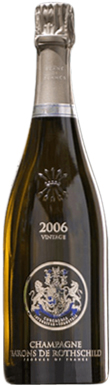

A real success for this inaugural vintage release of a Champagne that brings together all three branches of the Rothschild family - Mouton, and their...
2006
Barons de Rothschild

Château Mouton Rothschild, Aile d'Argent Blanc, Bordeaux, France, 2012
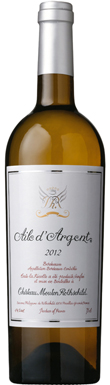
Enticingly drinkable right now. It has soft, rich apricot and white peach flavours, fleshy but with mineral overtones that prove beautifully persistent. From a blend...
2012
Château Mouton Rothschild
Domaine de Baronarques, Chardonnay, Limoux, Languedoc-Roussillon, France, 2013
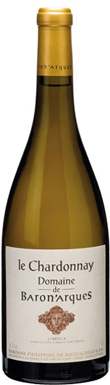
I really wanted to share this wine, as it's a great Chardonnay and should be far better known. From the Limoux region of southern France,...
2013
Domaine de BaronarquesLimoux
Château Mouton Rothschild, Pauillac, 1er Cru Classé, Bordeaux, France, 1986
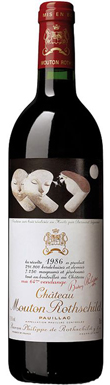
Wonderful, concentrated and still astonishingly young, this has brushes of violet aromatics rising above the tight cassis fruits and rich black truffle, and the classic...
1986
Château Mouton RothschildPauillac
Château Clerc Milon, Pauillac, 5ème Cru Classé, Bordeaux, France, 2009
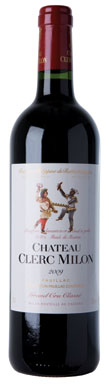
So I'm cheating a little by saying this is ready to go, but it’s the beginning of a true upward swing for Clerc Milon, and...
2009
Château Clerc MilonPauillac
Château d'Armailhac, Pauillac, 5ème Cru Classé, Bordeaux, France, 2005
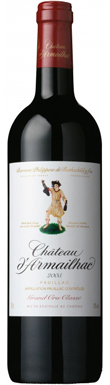
This is almost the perfect time to drink this wine, although it still needs decanting to bring out the plush strokes of fruit. Aromatically, it...
2005
Château d'ArmailhacPauillac
