
Off-piste Burgundy: Value alternatives
The two regional appellations of Coteaux Bourguignons and Bourgogne Passe-tout-grains and the white wine-only St-Bris take Burgundy beyond the pure Pinot Noir and Chardonnay classics for which it is famed. Michael Apstein explains what lies behind these under-the-radar styles – and why they could become the more reasonably priced face of Burgundy.


Even serious fans of Burgundy may be unfamiliar with St-Bris, Coteaux Bourguignons and Bourgogne Passe-tout-grains. In a region famous for its rigid devotion to vineyard sites identified by Cistercian monks eight centuries ago, these three appellations – and the wide variety of grape varieties they allow – demonstrate Burgundy’s ability to adapt to the subtleties wrought by the passage of time.
Although they may currently be harder to find than the wines from Burgundy’s long roll call of better-known appellations, these three styles offer distinctive wines at attractive prices.
It’s my belief that these wines will increasingly begin to appear on retailers’ shelves, especially as the prices of ‘regular’ Burgundy continue to escalate – so their names should be in the lexicon of all Burgundy enthusiasts.
St-Bris
Taking its name from St-Bris-le-Vineux, a tiny village in the Auxerrois to the southeast of the town of Auxerre, St-Bris is doubly unique. First, it’s the only place in Burgundy that mandates Sauvignon Blanc – before 2003, when it was promoted to AC status, its wines were labelled as Sauvignon de St-Bris. Second, the wines do not taste like Sauvignon Blanc.
They have neither the pungent nor tropical fruitiness characteristic of New World Sauvignon Blanc. They do not even bear much resemblance to Sancerre, which is also made exclusively from Sauvignon Blanc, lies only 128km west in the Loire Valley’s central vineyards, and whose soil has a similar mix of Kimmeridgian limestone and clay.
The wines from St-Bris have a unique minerality, some almost a lava-like quality, with bright acidity and an attractive bite. They are similar to Muscadet, but with more body and density, especially in recent vintages as climate change has enhanced ripening. Although meant to be drunk within a year or two of the vintage, they do show good development with a few additional years of bottle age.
‘The wines from St-Bris have a unique minerality, some almost a lava-like quality’
Guilhem Goisot, one of the top producers in St-Bris, believes the origins of Sauvignon Blanc here can be explained by economics: plant what grows. He explains that, unlike in the Côte d’Or, where the vineyards basically face in one direction – east-southeast – the vineyards in the Auxerrois are planted on hillsides with varying exposures. The south-facing vineyards are warm enough for Chardonnay and Pinot Noir. The north side of the hills are too cool for those grapes but can support Sauvignon Blanc.
Why then does Chardonnay thrive on the north-facing slopes of Chablis, barely 16km away? Hervé Tucki, the experienced and knowledgeable director of La Chablisienne, the excellent cooperative in Chablis, thinks the difference may be attributable to the precise mixture of clay and limestone in the soils, or to a subtle temperature difference between the Yonne Valley of Auxerre and the Serein Valley of Chablis. Indeed, before phylloxera ravaged the area in the late 19th century, St-Bris grew Chardonnay and was eventually included within the Chablis appellation. Tucki offers, with a Gallic shrug: ‘The origin of Sauvignon Blanc in St-Bris is a little mysterious.’ Whatever the reason, I predict we’ll see more of these riveting wines as climate change aids ripening in these northern climes.
Together, the 2017 and 2018 vintages of St-Bris provide something for everyone. The 2017s are racier, while the 2018s are a little bit rounder but maintain an invigorating bite. In addition to Goisot, other domaines I recommend include Clotilde Davenne, Félix, Philippe Defrance, PL & JF Bersan, Séverine & Lionel Jacquet, Verret and the cooperative Caves Bailly Lapierre. The notable Chablis producers, William Fèvre and Simonnet-Febvre, also make lovely St-Bris.
Apstein’s take: The alternative Burgundies
St-Bris
Profile: Fruity and minerally; great value; weekday wine
More interesting than: Varietal Sauvignon Blanc
Food pairing: Seafood, though its mineral-infused edginess also allows it to balance more substantial fare, such as roast pork or Asian-spiced dishes
Coteaux Bourguignon Blanc
Profile: Fruity and zesty; great value; weekday wine
More interesting than: Comparably priced New World Chardonnay
Food pairing: Seafood, chicken in a cream sauce
Coteaux Bourguignon Rouge & Passe-tout-grains
Profile: Fruity and savoury; great value; weekday wine
More interesting than: Comparably priced New World Pinot Noir
Food pairing: Quintessential roast chicken wine
Coteaux Bourguignons
In 2011, Coteaux Bourguignons replaced Bourgogne Grand Ordinaire, a category of wine rarely exported to either the UK or the US (how something can be both grand and ordinary is beyond me). An all-encompassing appellation, it stretches from Auxerre in the north to Beaujolais in the south. Wines can be red, white or rosé and made from a single grape variety or a blend of approved grapes (see ‘The facts’, left). In short, the wines can be made from any grape traditionally grown in any part of Burgundy.
Part of the motivation for creating this new appellation was to help growers in economically distressed Beaujolais. Coteaux Bourguignons allows them to sell wines with ‘Bourgogne’ on the label. However, notes Axel Joubert, estate manager at Château de Raousset in Chiroubles: ‘For the poorer producers, Coteaux Bourguignon is not a saviour.’ Others see unintended consequences. One well-respected producer in Morgon, who prefers to remain anonymous so as not to antagonise his neighbours, emphasises with dramatic gestures that make his opinion clear even to those who do not understand French: ‘It will kill Beaujolais.’
In contrast, Louis-Fabrice Latour, co-president of the BIVB (Bureau Interprofessionnel des Vins de Bourgogne) regional body, shows his enthusiasm for the appellation when he exclaims: ‘It will give the consumer a chance to drink Burgundy at a reasonable price.’ His venerable, Beaune-based, family-run company, Maison Louis Latour, is taking advantage of it: having planted Pinot Noir in the southern part of Beaujolais where there are limestone soils, Louis Latour is making a unique wine, Les Pierres Dorées, exclusively from that grape and labelling it under the new appellation.
Although the name sounds as though it might be the lowest level of Burgundy appellation – and indeed some supermarkets in France sell Coteaux Bourguignons for only a few euros a bottle – not all the wines fall into that price or quality category. Coteaux Bourguignons from Maison Louis Jadot, another top Beaune-based négociant, sells for as much as 50% more than its Beaujolais-Villages. Winemaker Frédéric Barnier laments the difficulty of selling it in the US and other countries where customers prefer to see a grape name or a well-known or easier-to-pronounce place name on the label.
The plethora of grapes allowed for Coteaux Bourguignons and the enormous area from which they come make it impossible to generalise about the wine’s style. That said, for red Coteaux Bourguignons, many producers use a blend of Gamay, which delivers fruitiness, and Pinot Noir, which adds needed structure.
For the whites, the combination of Chardonnay and Aligoté makes the wine ideal for current drinking. The former provides richness, while the latter keeps the wine fresh and lively. Winemakers are keen on these blends because they can even out the vagaries of a vintage by adjusting the proportion of the components. Like their white counterparts, red Coteaux Bourguignons, with their fruity flavour profile and mild tannins, are meant to be drunk young. For this broad category especially, I recommend following my time-honoured advice for selecting Burgundy: producer, producer, producer.
St-Bris: The facts
Area: 160ha
Primary grapes: Sauvignon Blanc, Sauvignon Gris
Soil: Portlandian and Kimmeridgian limestone
Wines: White only
Average production: Approximately 90,000 12-bottle cases
Coteaux Bourguignons: The facts
Area: 270ha
Primary white grapes: White Chardonnay, Aligoté, Melon de Bourgogne, Pinot Blanc, Pinot Gris
Primary red grapes: Pinot Noir, Gamay, César (a rare variety planted in the Auxerrois)
Soil: Diverse, covering all of Burgundy from the Auxerre in the north to Beaujolais
Wines: Red, white or rosé (which can also be labelled Coteaux Bourguignons Clairet)
Average production: Approximately 160,000 12-bottle cases
Bourgogne Passe-tout-grains: The facts
Area: 232ha
Primary grapes: Pinot Noir (minimum one-third), Gamay – grapes mixed before vinification
Soil: Mostly limestone/clay for Pinot Noir and granitic for Gamay
Wines: Red, rarely rosé
Average production: Approximately 130,000 12-bottle cases
Source: BIVB – area figures as of 2018; average production as five-year averages from 2014-2018
Bourgogne Passe-tout-grains
One of the first appellations established in Burgundy, Bourgogne Passe-tout-grains (also frequently seen on labels as ‘Passetoutgrain’) received AC status in 1937. Regulations require a blend of Pinot Noir (one-third minimum) and Gamay, which must be combined in the vat before fermentation, making it a blend of grapes, not of wines. The Pinot Noir comes from anywhere in Burgundy, while the Gamay usually, but not always, comes from the granitic soils of Beaujolais.
Though Philippe the Bold, Duke of Burgundy, banished Gamay from the Côte d’Or in 1395, some remained. Historically, Gamay was an important grape in Morey-St-Denis, where Stéphane Magnien, a small grower, has 50-year-old Gamay vines from which he consistently makes a winsome Passe-toutgrains. Domaine Lamarche in Vosne-Romanée has plots of 45- and 50-year-old Gamay vines and is planting new ones. And in the Côte de Beaune, Domaine Lafarge has old Gamay vines that add complexity to its Passe-tout-grains.
Passe-tout-grains presents at least three hurdles for producers: winemaking, marketing and a disappearing name. Harvesting and then fermenting two different varieties together in mandated proportions is challenging. Pinot Noir and Gamay grown in different vineyards ripen at different times. Getting the harvest date(s) correct takes enormous experience. Jeanne-Marie de Champs, one of Burgundy’s top brokers, thinks that these wines offer good value, especially from top growers. ‘We just need to explain the name and the wine to consumers.’
‘Maison Louis Latour has been making Passe-tout-grains “forever”, and intends to keep doing so’
Unintentionally, Coteaux Bourguignons may be replacing Passe-tout-grains. Louis Jadot ceased production of Passe-tout-grains in 2011 with the introduction of the flexible regulations of Coteaux Bourguignons. With the 2017 vintage, Magnien began doing the same for the same reason. Gilles Lafouge, a top Auxey-Duresses-based grower with an excellent track record for Passe-tout-grains, says he has stopped using the appellation because it’s ‘from the 1950s’, whereas Coteaux Bourguignons is ‘au courant’.
Others push on enthusiastically. Bernard Retornaz, president of Louis Latour, notes that the company has been making Passe-toutgrains ‘forever’, and intends to keep doing so. Bourgogne Passe-tout-grains, similar to red Coteaux Bourguignons, can seamlessly combine the upfront fruity aspect of Gamay with a backbone provided by Pinot Noir. Either will transform a take-out rotisserie chicken.
Michael Apstein’s top off-piste Burgundy picks
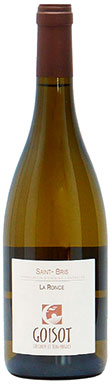
Jean Hugues & Guilhem Goisot, La Ronce, St-Bris, Burgundy, France, 2017
94
La Ronce vineyard sits on a hill that has both north and south exposures, hence both Sauvignon Blanc and Chardonnay grow there. The soil is a mixture of Kimmeridgian limestone and clay, yet there’s more power here than in Goisot’s other St-Bris. Purity and a touch of spice complement that power, while brilliant acidity keeps it fresh and lively. It’s a big-impact wine without a trace of heaviness.
2017
Jean Hugues & Guilhem GoisotSt-Bris
Domaine Séverine & Lionel Jacquet, St-Bris, Burgundy, France, 2018

Founded in 2002 with 2.8ha, based in the village of Chitry, near Chablis, and now expanded to 16ha. The Jacquets started producing St-Bris in 2011,...
2018
Domaine Séverine & Lionel JacquetSt-Bris

Jean Hugues & Guilhem Goisot, Corps de Garde, St-Bris, Burgundy, France, 2017
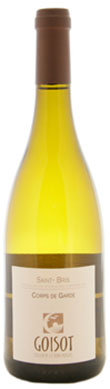
Goisot, a family-owned estate, makes fabulous wines across its range, and has farmed biodynamically for two decades. The lower-yielding Sauvignon Gris used for the Corps...
2017
Jean Hugues & Guilhem GoisotSt-Bris
Bailly-Lapierre, St-Bris, Burgundy, France, 2018
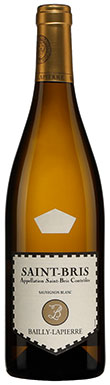
This cooperative of about 430 growers is best known for its Crémant de Bourgogne, but it also makes a lovely St-Bris. The 2018 took a...
2018
Bailly-LapierreSt-Bris
Jean Louis & Jean Christophe Bersan, Cuvée Marianne, St-Bris, Burgundy, France, 2018
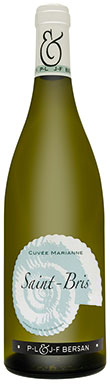
This father-and-son team’s 2018 Cuvée Marianne is from 45-year-old vines planted on both Portlandian and Kimmeridgian limestone mixed with clay. Dense, but not heavy, it...
2018
Jean Louis & Jean Christophe BersanSt-Bris
Domaine Fargues, Coteaux Bourguignon, Burgundy, France, 2017
Bénédicte and Bastien Fargues established their tiny 1.3ha estate in Bligny-lès-Beaune in 2005 and are already making notable wines. They limit yields by debudding and...
2017
Domaine FarguesCoteaux Bourguignon
Maison Fatien Père & Fils, Coteaux Bourguignon, Burgundy, France, 2017
In a small vineyard in the commune of Meursault, but outside the Bourgogne Blanc appellation, Fatien Père et Fils has Chardonnay with, as Charles Fatien...
2017
Maison Fatien Père & FilsCoteaux Bourguignon
Domaine Jean & Gilles Lafouge, Coteaux Bourguignon, Burgundy, France, 2017
This superb grower, based in Auxey-Duresses, used the flexible regulations of Coteaux Bourguignons to tweak its usual blend of consistently winsome Passe-tout-grains. The 2017 contains...
2017
Domaine Jean & Gilles LafougeCoteaux Bourguignon
Louis Jadot, Coteaux Bourguignon, Burgundy, France, 2017
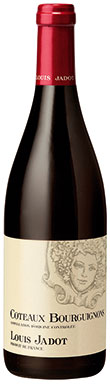
Jadot combines Pinot Noir grown in Givry in the Côte Chalonnaise with Gamay from Beaujolais and releases it after an extended time in bottle, which...
2017
Louis JadotCoteaux Bourguignon
Louis Latour, Les Pierres Dorées, Coteaux Bourguignon, Burgundy, France, 2018
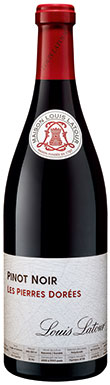
The limestone in the soil of southern Beaujolais gives the name Pierres Dorées (‘golden rocks’) to the area. A company that knows a thing or...
2018
Louis LatourCoteaux Bourguignon
Domaine Michel Lafarge, L’Exception, Bourgogne, Passetoutgrains, Burgundy, France, 2017
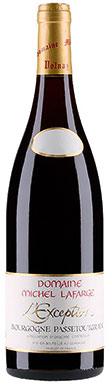
Aptly named, as this leading Volnay-based estate has 1ha of vines, almost 10% of its estate, planted to Passe-tout-grains, some older than 90 years. This...
2017
Domaine Michel LafargeBourgogne
Robert Chevillon, Bourgogne, Passetoutgrains, Burgundy, France, 2016
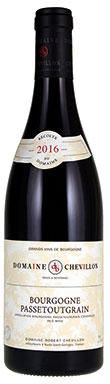
Chevillon, one of the top producers in Nuits-St-Georges, has a little more than half a hectare planted to Bourgogne Passe-tout-grains (two thirds Gamay, one-third Pinot...
2016
Robert ChevillonBourgogne
Domaine Trapet Père & Fils, A Minima, Bourgogne, Passetoutgrains, Burgundy, France, 2017
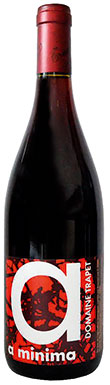
Trapet Père et Fils, a stellar producer based in Gevrey-Chambertin, blends equal parts Pinot Noir and Gamay grown in Grand Champs, a vineyard in that...
2017
Domaine Trapet Père & FilsBourgogne
Domaine Bernard Moreau, Bourgogne, Passetoutgrains, Burgundy, France, 2017
Brothers Alexandre and Benôit Moreau have run this top-notch Chassagne-Montrachet-based estate since 1999. Through their diligence in the vineyards and care in the winery, all...
2017
Domaine Bernard MoreauBourgogne
Louis Latour, Bourgogne, Passetoutgrains, Burgundy, France, 2017
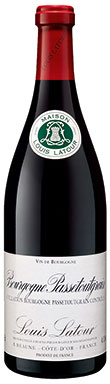
The traditional blend of two-thirds Gamay, one-third Pinot Noir makes this classically framed and easy-to-like Passe-tout-grains. The Pinot Noir comes from the Mâconnais and provides...
2017
Louis LatourBourgogne
