
Oregon: the Burgundy connection


With its Pinot Noir vines and marginal climate, Oregon has much in common with Burgundy, writes William Kelley, who explores the links between the two regions and the common search for a sense of place in this Decanter magazine feature.
When wine importer Becky Wasserman-Hone packed two bottles of Oregon Pinot Noir in her suitcase and set off for her home in France in 1979, no one could have anticipated what would happen next.
Wasserman-Hone had encountered Oregon wines while she was in the US selling barrels for Burgundian cooper François Frères; she recalls being ‘moved by their finesse and grace’.
On her return to France, she duly entered her two bottles – The Eyrie Vineyards, Pinot Noir Reserve 1975 – in an international Pinot Noir blind tasting, known as The Wine Olympics, organised by Gault Millau. The fact that the Eyrie wine placed in the top 10 in that tasting didn’t grab headlines in the way that the Judgement of Paris had done in 1976.
Quick link See William’s tasting notes and scores for 89 Oregon Pinot Noirs
But in its own way, the outcome was scarcely less momentous. A year later, Robert Drouhin of Burgundy négociant Maison Joseph Drouhin – who had taken notice of the Gault Millau result – organised a rematch in Beaune. This time, The Eyrie Vineyards 1975 came in second, trailing Drouhin’s winning 1959 Chambolle-Musigny by only one-fifth of a point.
Drouhin had already visited Oregon’s Willamette Valley himself in 1961, on a tour of his family firm’s US markets. Even then – four years before the late David Lett planted the valley’s first Pinot Noir vines at The Eyrie Vineyards – he had been struck by the climatic and topographical parallels with Burgundy’s Côte d’Or.
So the seeds of the Gault Millau tasting had been sown on fertile ground – and they would soon bear fruit. First, in 1986, Drouhin’s daughter Véronique worked a harvest in Oregon fresh out of Dijon University. Then, a year later, the Drouhins acquired 40ha (hectares) in the Willamette’s Dundee Hills. Domaine Drouhin Oregon was born, and the French had their first viticultural foothold in The Beaver State.
In 1988, Oregon’s governor even made an official visit to Burgundy. Domaine Drouhin Oregon represented an important endorsement for Oregon, bringing global recognition to what was then still a fledgling industry, as well as catalysing investment.Since then, growth has been fast-paced. In 1987, the Willamette Valley could count only 17 wineries, but today it’s home to more than 500.
Unsurpisingly, Pinot Noir accounts for more than 60% of its vineyards. What’s more, Oregon’s French connection is now stronger than ever.
Burgundy pedigree
While the bold move by the Drouhins wasn’t emulated immediately, the past decade has witnessed a slew of new Burgundian projects in Oregon. In 2005, news broke that Meursault’s Dominique Lafon was consulting for Evening Land Vineyards (he’s since moved on to join forces with sommelier Larry Stone, launching the Lingua Franca label in 2016).
A few years later, Alexandrine Roy of Domaine Marc Roy in Gevrey-Chambertin began at Phelps Creek Vineyard in the Columbia Gorge, soon becoming director of winemaking.
In 2012, Vosne-Romanée superstar Louis- Michel Liger-Belair began consulting for Chapter 24 Vineyards; while his neighbour Jean-Nicolas Méo of Domaine Méo-Camuzet partnered with long-time friend Jay Boberg to found Nicolas-Jay at around the same time, debuting with the 2014 vintage.
Bigger Burgundian players are on board too, with Louis Jadot acquiring the Résonance Vineyard in 2013, and Maisons & Domaines Henriot, owner of Bouchard Père et Fils, buying a majority stake in Beaux Frères just this year. The French, it seems, are here to stay.
‘Learning how to make Pinot Noir in a warmer region will put me 20 years ahead of everyone else,’ – Liger-Belair
How did this impressive roster come about? One reason is that vineyard land in Oregon is still relatively affordable. That’s just as attractive to Californians – such as Jackson Family Vineyards, which has lately made a series of high-profile Oregon acquisitions – as it is to Burgundians.
‘The top vineyards of the Côte d’Or sell for crazy prices and seldom come on the market, so possibilities for expansion are very limited,’ explains Thibault Gagey of Louis Jadot. ‘But in Oregon, there are a lot more opportunities.’
For many Burgundians, spending time in Oregon has proved to be a liberating experience. Jean-Marie Fourrier, today one of Gevrey-Chambertin’s most celebrated vignerons, worked a harvest at Domaine Drouhin Oregon in 1993, attracted by the chance to improve his English. ‘I was tempted to stay,’ he admits, ‘I felt so free, and everyone was so kind to me. I really fell in love with the region.’
For others, Oregon offers the opportunity to tackle new challenges. ‘After nearly a quarter-century making wine in Vosne-Romanée,’ reflects Nicolas-Jay’s Méo, ‘I wanted to apply what I’ve learned to a new region with a different climate and different soils.’
Liger-Belair of Chapter 24 confesses to another very particular motive: ‘Learning how to make Pinot Noir in a warmer region will put me 20 years ahead of everyone else if climate change continues in Burgundy!’

Exchange of ideas
It’s hardly surprising that Burgundians feel at home in Oregon. After all, it was admiration for Burgundy’s wines that led the region’s pioneer vintners to plant Pinot Noir. And they chose to plant it here instead of in balmy California precisely because its more marginal climate revealed a stronger affinity with the Côte d’Or. ‘Burgundy is our Jerusalem,’ says The Eyrie Vineyard’s winemaker Jason Lett.
Unsurprisingly, Burgundian influence is correspondingly pervasive, frequently felt in both the cellar and the vineyard. Much of the state’s Pinot Noir vine material originated in Burgundy, and barrels from Burgundian coopers are even more ubiquitous. But the rapport goes deeper. ‘From the very start, Burgundy has informed our project here in the Willamette,’ recounts Doug Tunnell, owner-winemaker at Brick House Vineyard.
‘Our decision to plant vines one metre apart was a product of research on Burgundian practice; so was our decision to eschew cultured yeasts.’ While Oregon producers are willing to testify to the importance of Burgundy’s example, sometimes the influence cuts both ways.
‘Burgundy’s philosophy of terroir mitigates against imitation’ – William Kelley
Méo has taken a trick for securing equipment during pump-overs back to France – and he’s also exhorted his French grape-pickers to harvest faster by showing them a video of stalwart Oregonians at work. But to think of Oregon as in any sense a carbon-copy of Burgundy would hardly do justice to the complex relationship between the two places. After all, Burgundy’s philosophy of terroir mitigates against imitation, premised as it is in the belief that wines from different places cannot taste alike.
Of all Burgundy’s lessons, that’s the one that Oregon’s winemakers have internalised most completely. When David Lett planted the Willamette’s first Pinot Noir vines in the mid- 1960s, he did so, his son Jason recounts, ‘with a fierce reverence for Burgundy. But he and my mother had an equally fierce conviction that the best way to pay homage to Burgundy was not by mimicry. If we’re doing our work well,’ he adds, ‘then the best descriptor of our wines is Oregonian, or Willamettian, or maybe even better, Dundee Hillsian.’
Jim Anderson, co-owner of Patricia Green Cellars, joins the Letts in paying tribute to the Côte d’Or while disclaiming any attempt at imitation. ‘We are not trying to recreate Burgundy,’ he tells me, ‘and it puts my teeth on edge when people say that “their wines are Burgundian”, or worse, “made in a Burgundian style”.’
Josh Bergström of Bergström Wines, who studied at the Lycée Viticole in Beaune and married a Burgundian, agrees: ‘We’re Oregonians making Oregon wines, inspired by the Old World but trying to define our own sense of place.’ And Burgundians-in-Oregon express the same aspiration. Lafon, for example, cites elegance and refinement as his ideals, but disclaims any desire ‘to make copies’, taking evident pleasure in the intellectual challenges posed by a process he likens to ‘transposition’. ‘By discovering original answers,’ adds Résonance winemaker Jacques Lardière, ‘we create.’
Different voices
How, then, does Oregon Pinot Noir differ from the Burgundian benchmark? Generalisations are always risky, but if anyone can make them it’s surely the Drouhin family. ‘Oregon Pinot doesn’t have the earthiness of Burgundy,’ says Laurent Drouhin. ‘It’s darker and spicy, rounder – not heavier. It’s slightly higher in alcohol. In Burgundy, we have more pronounced acidity, tannin and energy.’ His sister Véronique adds: ‘Oregon wines are more saturated in colour and broader-shouldered on the palate.’
Méo has only made two vintages in the Willamette, but he has already identified fundamental differences. ‘Great years in Oregon tend to show sweeter fruit with softer tannins,’ he analyses. ‘The wines can feel thicker and more textural on the palate if there isn’t enough acidity. They show well early thanks to their rich fruit, but they need time to fully express their sense of place. They also age differently in barrel – it’s important to respect that; not to force them into a Vosne-Romanée mould.’
Both Burgundians and Oregonians alike are also prone to drawing distinctions with their wine-producing neighbour to the south, portraying Oregon as David to California’s Goliath. But the truth is that producers who wish to can produce wines just as ample and hearty as their colleagues in the Russian River Valley: the winemaker’s intentions are critical.
Those that embrace their cooler climate, however, produce wines endowed with rare grace and transparency – hard to define, but easy to identify in the glass.
Defining terroir
Oregonians’ pursuit of the taste of place is arguably the most exciting trend in the state’s Pinot Noirs, eclipsing the questions of style that seem to dominate California’s wine conversation. That has meant looking more closely at the soil.
‘Since I began in Oregon in the early 1990s, knowledge of our geology and its impact on our vines, fruit and wines has grown tremendously,’ observes Anderson of Patricia Green Cellars. ‘It informs everything.’
The most obvious consequence has been a proliferation of single-vineyard Pinot Noirs. Bergström bottles 13, The Eyrie Vineyards five, and Patricia Green Cellars 21 (the most of any North American winery). Releasing so many distinct cuvées can be commercially complex, but it’s testimony to a sincere commitment to producing distinctive wines of place.
The petition to divide the northern Willamette Valley into six AVAs (American Viticultural Areas), made in 2002 and granted between 2004 and 2006, was ostensibly another step towards terroir-driven Pinot Noir, though the drawing of the boundaries does elicit legitimate controversy, the limits of AVAs sometimes meshing poorly with distinctions of geology and mesoclimate.
It’s possible, nevertheless, to paint the portrait of the Willamette’s AVAs with broad brush strokes. The red volcanic soils of the Dundee Hills produce silkily elegant wines with fine tannins and red fruit tones. Ribbon Ridge boasts younger geology (primarily alluvial) and tends to yield ample, full-bodied wines dominated by dark fruit. Pinot Noir grown in the thin, rocky soils of the Eola-Amity Hills is taut, soil-driven and edgy; grown in Yamhill-Carlton, it evokes spice and red fruit, framed by firm tannins. McMinnville wines are vibrant and well-balanced. Only the Chehalem Mountains, an AVA that includes all three of the valley’s principal soil types, is consistently hard to pin down.
Increasingly, however, these broad brush strokes are ceding ground to a minute geological pointillism. In some cases, intensive study and investment is doing the work of centuries of patient observation.
That’s the case at Chapter 24, where jet-setting terroir consultant Pedro Parra is collaborating with Burgundian Liger-Belair to explore the soils of recently purchased Witness Tree Vineyard in the Eola-Amity Hills. Thanks to 87 exploratory trenches and extensive geophysical surveys, the team now has a detailed understanding of the geology of the estate’s vineyards. Certainly, Chapter 24’s 2016 vintage, the first harvested in blocks defined by soil type and strikingly differentiated in the glass, suggests all that work may not be in vain.
Producers who have been in the Oregon region longer have been able to accumulate knowledge the old-fashioned way, by simply spending long days working in the vineyards; year in, year out. ‘I suppose if our wines can be called “Burgundian”,’ reflects Jason Lett, ‘it would be in the sense that we have adopted the work ethic of the Burgundians – which, even at the most famous domaines, is still a peasant philosophy.’
Oregon is still a young region. Willamette Valley’s very first Pinot Noir vines are still thriving in Lett’s South Block vineyard – despite the depredations of phylloxera – and the exploration of the region’s terroirs is really just beginning. But the last five decades are also testament to just how much has already been accomplished by muddy boots and hard work. Oregon is finding its sense of place.
Kelley’s pick: eight delicious Oregon Pinot Noirs
Related content:

Decanter travel guide: Oregon, US
Gourmet food, sensational wines and the chance to mingle with winemakers – Fiona Beckett is in heaven at Oregon’s International

Oregon Gamay: New wines to discover
Anne Krebiehl MW picks her five favourite Oregon Gamays for you to try...

Anson: Is English Pinot Noir really getting better?
Jane Anson investigates what's been happening...

Clos de Tart sold to Latour owner Pinault
Francois Pinault and family expand their luxury wine empire...
Résonance, Résonance Vineyard Pinot Noir, Willamette Valley, Yamhill-Carlton, Oregon, USA, 2014
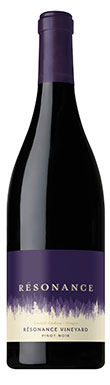

A complex bouquet of pot pourri, black cherry, orange rind, cocoa and spice is followed by a full-bodied, savoury wine framed by fine but firm...
2014
RésonanceWillamette Valley

Eyrie Vineyards, Original Vines Pinot Noir, Willamette Valley, Dundee Hills, Oregon, USA, 2013
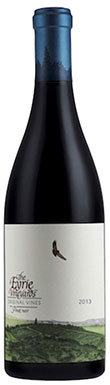
Notes of raspberries and red berries mingle with suggestions of candied peel and aromatic bark in a complex and high-toned bouquet, introducing a wine with...
2013
Eyrie VineyardsWillamette Valley
Domaine Drouhin Oregon, Cuvée Laurène, Willamette Valley, Dundee Hills, Oregon, USA, 2013
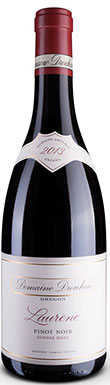
Aromas of cherry and bergamot, framed by cedar and spice, are the prelude to the most multidimensional, concentrated wine in the Drouhin portfolio in this...
2013
Domaine Drouhin OregonWillamette Valley
Lingua Franca, Mimi's Mind, Willamette Valley, Eola-Amity Hills, Oregon, USA, 2015
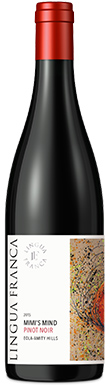
A deep-pitched bouquet of black cherry, spice and wintergreen, with a fragrant top note of violets, introduces a wine with a firm chassis of supple...
2015
Lingua FrancaWillamette Valley
Patricia Green, Estate Old Vine Pinot Noir, Willamette Valley, Ribbon Ridge, Oregon, USA, 2015
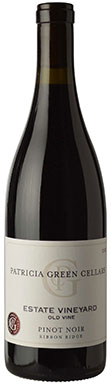
Jim Anderson has noticed that his Pinot Noir vines produce distinctly different fruit once they reach 20 years of age, hence this cuvée. Notes of...
2015
Patricia GreenWillamette Valley
Brickhouse, Evelyn's Pinot Noir, Willamette Valley, Ribbon Ridge, Oregon, USA, 2014
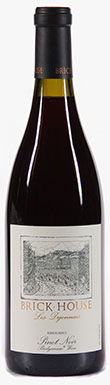
A barrel selection from Brick House, with notes of red berries, dark spice and a creamy framing of new oak introducing a full-bodied, ample wine...
2014
BrickhouseWillamette Valley
Bergström, Silice Vineyard Pinot Noir, Willamette Valley, Chehalem Mountains, Oregon, USA, 2014
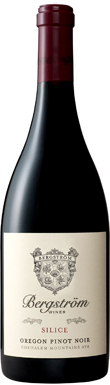
Notes of juicy berry compote and suggestions of undergrowth, fresh herbs and spice introduce a silky, expansive and supple wine with mouthwatering salinity and juicy...
2014
BergströmWillamette Valley
Nicolas-Jay, Bishop Creek Pinot Noir, Willamette Valley, Yamhill-Carlton, Oregon, USA, 2015
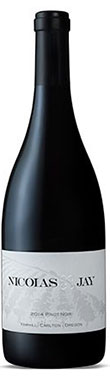
A dramatic wine with pretty notes of cherry and pot pourri, framed by notes of spice and cocoa powder from high-quality new oak: rich, supple...
2015
Nicolas-JayWillamette Valley
