
Our Italy editor tastes 20 vintages of a Super Tuscan that’s ‘never been better’
Celebrating its 40th release in 2025, Querciabella's Camartina has never been better according to Decanter's Italy editor, James Button.


Camartina is a Super Tuscan you need to know – but there’s a pretty good chance you haven’t heard of it.
While the likes of Tignanello, Ornellaia and Sassicaia have dominated this illustrious category for decades, Camartina has kept a lower profile; a kind of ‘if you know, you know’ wine rather than an international superstar – despite winning plenty of plaudits along the way.
Notes on 40 years of Querciabella’s Camartina listed below
The Tachis factor
Castiglioni brought on renowned winemaking consultant, Giacomo Tachis, who had already proved his worth elsewhere by almost single-handedly creating the new category of Italian wines which collectively became known as the ‘SuperTuscans’.
Tachis had played a leading role in commercialising Sassicaia (which had originally been a wine for private consumption by the Incisa della Rocchetta family), and developing Tignanello and Solaia during his time as head oenologist at Antinori, where he was still working while consulting for Querciabella.
Camartina’s first vintage was 1981. It was designed to capitalise on the waves being made by those early Super Tuscans, using Querciabella’s finest Sangiovese plots blended with Cabernet Sauvignon and sometimes a little Merlot.
Back then, achieving fully ripe Sangiovese was not a given, and so these international varieties helped to give the wine a richer, glossier feel.
Camartina achieved early success but Castiglioni and Tachis – not ones to stand still – began to iterate and evolve the ‘recipe’.
The development of Camartina can be split into five key ‘eras’…
1981-1998: Sangiovese sings
The first era is typified by the original blend of 70-80% Sangiovese, 20-30% Cabernet and up to 10% Merlot, as conceived by Tachis. The earliest iteration of Camartina was very similar to Tignanello in this regard, highlighting the Tachis influence.
In 1988, Querciabella became certified organic, a decision driven by Castiglioni’s vegetarian son, Sebastiano. It became one of the first wineries in Italy to gain certification.
In the late-1990s, Castiglioni retired and Sebastiano took the reins at Querciabella. What followed was a period of transformation that would set the stage for the years to come.
Italy newsletter: Sign up today
Get the best recommendations, vintage analysis, regional and cultural insights and more delivered to your inbox once a month, helping you to stay up-to-date with the latest in Italian wine.

1999-2003: Chrysalis moment

This brief but very dynamic period for the estate was marked by the end of Chianti Riserva production in 1999 – until it was brought back 12 years later – and the departure of Tachis.
Tachis’ last full vintage, 1999, saw the Sangiovese in Camartina reduced to 60% and the Cabernet increased to 35%, signalling the beginning of a ‘chrysalis moment’.
The wine emerged at the end of this era in 2003 fully formed but almost unrecognisable from its former self. Cabernet Sauvignon was now the dominant variety in the blend (70%), giving the wine a flashier, more generous character in comparison to the relative delicacy of the Sangiovese-dominant years.
A side-effect of this change was that production had to be dramatically reduced, as there just wasn’t enough Cabernet Sauvignon to maintain Camartina’s former 35,000- to 39,000-bottle production at its height. Going forward, production would be between around 10,000 and 18,000 bottles, sometimes dipping even lower, depending on vintage.
It’s easy to think that the omnipotence of the US critics at this time had a part to play in the decision to make such a drastic change towards a Cabernet-driven wine.
But Querciabella’s current winemaker, Manfred Ing, explains that the key factor was a desire to clearly distinguish Camartina from the estate’s Chianti Classico, which was undergoing a transformation of its own towards a purer Sangiovese expression by 2004.
A new millennium dawns
In 2000, Querciabella embarked on a biodynamic path. Already certified organic, and inspired by Nicolas Joly of Coulée de Serrant, Sebastiano was keen to take the next step towards a holistic wine estate, with sustainability, quality and transparency being the ultimate goals.
2000 was the maiden vintage for Palafreno, originally a Merlot/Sangiovese blend but today 100% Merlot.
Marking the end of this era, as well as the proud first phase of Querciabella’s history, founder Giuseppe Castiglioni passed away in 2003.
2004-2009: Status quo
The third era is a relatively stable period for Camartina. The new formula of 70% Cabernet Sauvignon and 30% Sangiovese proved its worth as the consistency and quality from vintage to vintage was admirable – but there was more to come.
2010-today: A fresh pair of eyes

The fourth and most recent era marked the arrival of consultant Luca Currado and winemaker Manfred Ing, both from Vietti in Piedmont. With them came a recalibration of winemaking, including the introduction of micro-vinifications, which Ing explains allows for ‘more laser focus’ on each parcel before blending.
French oak vats are utilised for the Cabernet, while the estate’s best Sangiovese, found in both the Chianti Classico Gran Selezione and Camartina, is treated to submerged-cap fermentation in cement tanks, which is, says Ing, ‘more about infusion than extraction…something I learned a lot about in Piedmont’.
Around 40-50% whole-bunch fruit is used during fermentation , ‘giving a different layer of complexity’.
Since Currado and Ing’s arrival, there has also been a gradual move towards incorporating oak tonneaux for ageing the Sangiovese, while the Cabernet remains in barriques. The percentage of new oak has also been reduced, around 20% – even for the Cabernet – and the toasting is typically medium-light to minimise oak impact.
Patience is key for Ing and his team. ‘We prefer to be more patient with our picking,’ he says, explaining that waiting for optimal phenolic maturity can be risky but they make the winemaking process much easier to follow and the results are better.
Veganism and higher plots
In 2010, Sebastiano became vegan and, in line with his personal philosophy, banned all animal products at the winery, even manure.
The team stopped using the small selection of biodynamic preparations they had been using before, and began using a diverse selection of over 30 different cover crops (‘green manure’) instead. The winery became certified vegan in 2012.
Today run by Mita Castiglioni and her children, Andrea and Selene, Querciabella retains its organic and vegan philosophies, combined with the forward-looking vision that has always characterised the estate.
In 2020, Querciabella purchased plots in high altitude Lamole and began incorporating some of its fruit into Camartina and the Gran Selezione for the first time.
As an evolution of the previous decade, it’s perhaps too early to say for sure, but the results so far look pretty spectacular.
This year marks Camartina’s 40th anniversary with the release of the 2021 vintage. And it’s never been better!

Our Italy editor’s tasting notes for 20 vintages of Querciabella’s Camartina:
Related articles
- Chianti Classico Gran Selezione: New releases rated
- Why has Tuscany’s Orcia Valley become a talent magnet?
- Our Italy editor meets Bibi Graetz, tries his latest vintages, and learns how one wine got its naughty name
Querciabella, Camartina, Toscana, Tuscany, Italy, 2021
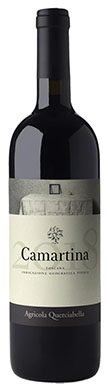

On a par with the 2016 for outright quality, this modern Camartina is a very different style, which shows just how the wine has come...
2021
QuerciabellaToscana

Querciabella, Camartina, Toscana, Tuscany, Italy, 2020
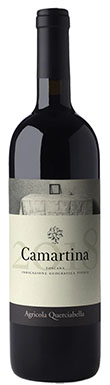
2020 is the first vintage of Camartina to incorporate fruit from high altitude vines in Lamole, and also sees less new oak than in the...
2020
QuerciabellaToscana
Querciabella, Camartina, Toscana, Tuscany, Italy, 2019
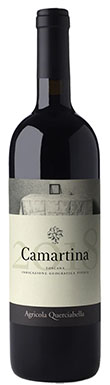
A cool, wet spring set the vines up for a hot and dry summer, while harvest saw significant diurnal temperature swings, resulting in excellent quality...
2019
QuerciabellaToscana
Querciabella, Camartina, Toscana, Tuscany, Italy, 2018
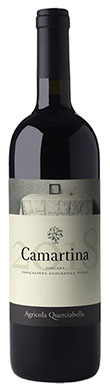
One of the most balanced vintages in recent years, with regular spring and summer and a long growing season. Slightly reductive flinty and smoky notes...
2018
QuerciabellaToscana
Querciabella, Camartina, Toscana, Tuscany, Italy, 2017
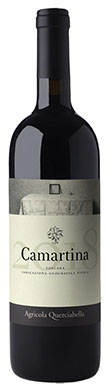
2017 was disastrous for some wineries due to the record drought and heat, but here the team were able to bring in healthy bunches when...
2017
QuerciabellaToscana
Querciabella, Camartina, Toscana, Tuscany, Italy, 2016
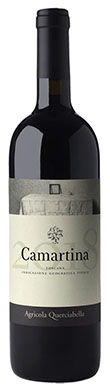
The standout wine of this tasting, Camartina 2016 is the result not only of a balanced vintage of great quality, but the process of winemaking...
2016
QuerciabellaToscana
Querciabella, Camartina, Toscana, Tuscany, Italy, 2015
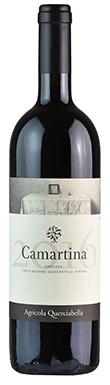
Manfred Ing calls Camartina 2015 Bordeaux in style, while he compares the 2016 to Burgundy. Creamy dark fruit and balsamic herb aromas vie for attention...
2015
QuerciabellaToscana
Querciabella, Camartina, Toscana, Tuscany, Italy, 2013
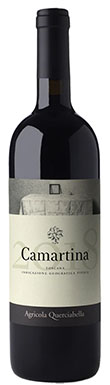
I've fallen in love with the 2013 vintage in Tuscany, and Camartina is yet another example of the quality on offer in this year. A...
2013
QuerciabellaToscana
Querciabella, Camartina, Toscana, Tuscany, Italy, 2012
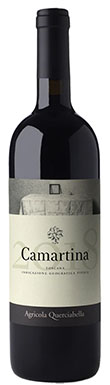
2012 saw a really hot summer with drought conditions, but the vintage was saved by significant rainfall just before harvest. Today, the wine is still...
2012
QuerciabellaToscana
Querciabella, Camartina, Toscana, Tuscany, Italy, 2011
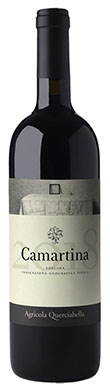
As Ing was dialling in his winemaking, he was presented with the almost perfect 2011 vintage, which saw an early flowering, a balanced summer and...
2011
QuerciabellaToscana
Querciabella, Camartina, Toscana, Tuscany, Italy, 2010
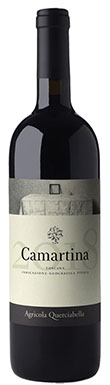
Winemaker Manfred Ing's first vintage at Querciabella – and he immediately began addressing some of the existing practices, including introducing small oak vats for fermentation, allowing...
2010
QuerciabellaToscana
Querciabella, Camartina, Toscana, Tuscany, Italy, 2008
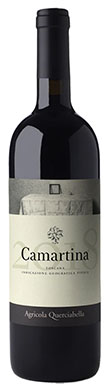
Bold dark cherry, blackberry and balsamic herb scents rise from the glass. In the mouth it's intense and saline, with well integrated slippery tannins caressing...
2008
QuerciabellaToscana
Querciabella, Camartina, Toscana, Tuscany, Italy, 2007
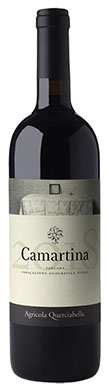
A cooler year compared to 2006, with a warm and steady summer and a long growing season. More herbal and gentle in character and lacking...
2007
QuerciabellaToscana
Querciabella, Camartina, Toscana, Tuscany, Italy, 2006
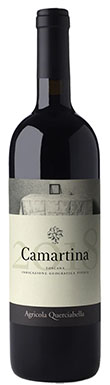
Intense, broad and strikingly vibrant, 2006 Camartina features bold dark cherry and menthol characters with a relaxed tannic structure. Drinking well today but has another...
2006
QuerciabellaToscana
Querciabella, Camartina, Toscana, Tuscany, Italy, 2005
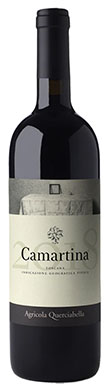
2005 was a tricky vintage and the difficult conditions show in the firm tannins which it shows no sign of shedding – and at this point...
2005
QuerciabellaToscana
Querciabella, Camartina, Toscana, Tuscany, Italy, 2004
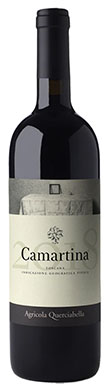
At the time, 2004 was considered one of the most successful vintages of the decade thanks to a balanced growing season and perfect grapes. But...
2004
QuerciabellaToscana
Querciabella, Camartina, Toscana, Tuscany, Italy, 2003
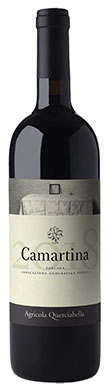
The notoriously hot 2003 vintage was dealt with admirably at Querciabella, and two decades on it is showing very well. Aromatic and generously fruited, it...
2003
QuerciabellaToscana
Querciabella, Camartina, Toscana, Tuscany, Italy, 1999
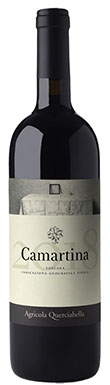
Succulent and persistent, the 1999 Camartina has good concentration and a noticeably woody background note. Ripe cherry and a herbal hint mingle with grainy, chocolatey...
1999
QuerciabellaToscana
Querciabella, Camartina, Toscana, Tuscany, Italy, 1997
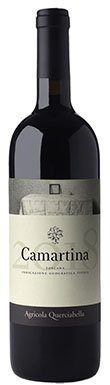
Preceded by several cooler vintages, 1997 was hot property (no pun intended) in the late '90s. Winemaker Manfred Ing describes is as ‘a show pony’....
1997
QuerciabellaToscana
Querciabella, Camartina, Toscana, Tuscany, Italy, 1996
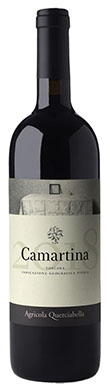
1996 retains Camartina's original Sangiovese-dominated blend. Still alive after almost 30 years, it opens with some black tea accompanying aromas of red and black berries...
1996
QuerciabellaToscana
