Anson: Petrus 2000 in space – how it tastes now
Jane Anson compares Petrus 2000 aged for 14 months in space versus a sample of the vaunted Pomerol wine that stayed behind on earth, and reports on the wider research project behind the tasting.


Tasting Petrus 2000 aged in space
Three wine glasses were set in front of us, carefully placed within differently-numbered circles.
Each contained a 112ml tasting sample of the same unmarked Bordeaux wine – but at least one of the three had spent 438 days on the International Space Station (ISS) travelling 300,000,000km in zero gravity.
We were told that half of the 12 tasters had two space wines and one earth wine in their glasses, and the other half had the reverse. And from there we were left to determine whether the journey to space could be identified by sight, smell and taste alone.
Scroll down for Jane Anson’s tasting notes on Petrus 2000 ‘space’ and ‘earth’ wines
This was the first official event related to an ambitious set of experiments called Mission Wise that has so far sent not only wines but also bud wood of vine plants up to the ISS.
The intention is to see if the stresses of elevated radiation and microgravity will help scientists learn more about dealing the lesser stresses of climate change back on Earth.
The first results emerged yesterday, three weeks after the tasting was held under strict embargo conditions, with a press conference at Bordeaux’s town hall, and an unveiling that the unnamed wine was Petrus 2000.
Wine, beer and spirits have all made their way into space over the years, with varying levels of official acknowledgment.
The Russians were famously relaxed about Cognac consumption on the Mir Space Station.
French astronaut Patrick Baudry even brought a half-bottle of Château Lynch-Bages 1975 with him on his 1985 mission on Space Shuttle Discovery, although it returned to Earth unopened.
NASA is rather more strict with its own astronauts, with Prohibition still alive and well in its programmes, and this was the first time that 12 bottles of wine had been sent up to the ISS as part of a sustained experiment.
How the Petrus wines got to space

They left Cape Canaveral in November 2019, and were joined in February 2020 by 320 vine plants, split between Merlot and Cabernet Sauvignon.
Both the wine and the vines were stored in specially-constructed containers that allowed them to withstand the extreme conditions of takeoff and re-entry.
They were stored at a continual 4°C for the vines, and 18-20°C for the wine.
The two separate parts of the project touched back down in the Gulf of Mexico in January 2021, and made their way back to Bordeaux a few weeks later.
How did this all start?
‘Wine has always been central to applied science since the time of Louis Pasteur,’ says Nicolas Gaume, co-founder of the start-up Space Cargo Unlimited that is behind the Mission Wise experiments.
‘It is an amazing study material, a living thing that contains key components of life, from yeast to bacteria, and it is no coincidence that Pasteur discovered the existence of bacteria by studying it for many years. We hope to continue that tradition of scientific exploration.’

Gaume, who was described as France’s Bill Gates when he was a 20-something tech entrepreneur in the 1990s and now is something closer to France’s Elon Musk, started the project with his long-term friend Emmanuel Etcheparre in 2014.
Getting to this point meant bringing on board experts in oenology and viticulture before even thinking about space agencies.
The late Denis Dubourdieu, of the Institue of Wine and Vine Science in Bordeaux (ISVV), was one of the first to be convinced of the project’s potential. Today his colleagues have taken over the mantle – professor Philippe Darriet for the wine, and Dr Stéphanie Cluzet for the vines.
‘In the end we assembled a team of around 15 research scientists,’ says Gaume, ‘and it was only then that we approached the French and European space agencies.
‘This is a privately-led research project, and I was fortunate to work with a number of shareholders and private investors, among them French VC firm ID Invest, and from there to agencies such as Thales Alenia Space, Space X, Blue Origin and eventually NASA.’
What is happening now?

Announcing anything definitive at this stage is impossible. This first tasting was of two bottles – one that had remained on earth as a control, and another that had been in space.
It is now being followed over the next few months by further tasting and analysis to better understand the impact of space on structure and composition of tannins, anthocyanins, polyphenols, sugars, acids and alcohol.
‘A wine of this quality has hundreds of different chemical components to it,’ says Professor Darriet.
‘Our work will look at perhaps 100 different molecules connected to flavour, colour, structure. We will be analysing both the composition and sensory perception.’
To date, this research is at an early stage, with only the difference in colour having been confirmed through analysis.
But the majority of tasters in the room found a clear difference – my own tasting notes are below, but it’s worth underlining that until further research has confirmed that this is not just individual bottle variation, we should resist making any conclusions.
This is true for the vines also, although the temptation to claim a successful result is already strong.
Vines in space

I visited the Mercier Vine Nursery in the Loire Valley a few weeks ago to meet up with Olivier Zekri, head of research and development and the man whose job it is to nurture the vine canes into fully grown plants.
‘After returning from 10 months in space the canes were rehydrated and then planted,’ says Zekri.
‘Within a week they were showing root growth, and the first shoots appeared. The first flowers appeared soon after that, visibly faster than might be expected.
‘I had to cut the leaves and flowers back because it is important that young vines don’t grow too fast – the energy needs to go into the rooting process. But certainly it is a good sign as to their ongoing health.’

Zekri cautions that no conclusions can be reached until they have been through an entire growth cycle, and that we will need another few years from then until grapes and wine can be produced.
But the intention is to track whether they will be more resistant to disease or to stresses, such as low water availability in the soil, as can be an increasing possibility with climate change.
Zekri says, ‘We have a private breeding programme at Mercier and produce around 20 million vines per year. Much of our research focuses on genetics to help build resistance to disease. The potential of this experiment is an important part of that.’
Gaume adds, ‘Viticulture is a canary in the coalmine of climate change. The fact that Bordeaux wines in the 1980s were on average 12% abv where today they are closer to 14% abv shows that we have a pressing need to find options. We hope to play a part in that conversation.’
Petrus 2000 in space vs Petrus 2000 on earth
Grape Variety: Merlot
Alcohol: 13.5% abv
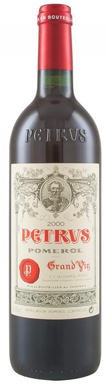
Petrus 2000 – remained on earth
Concentrated plum colour, medium-full intensity and star bright. Powerfully complex aromatically with waves of dark berry fruits – blackberry, black cherry and bilberry.
Still fairly young in expression, although it slowly unrolls to show campfire smoke and liquorice notes. With time in the glass, a more animal, liquorice bud note arrives, and the retro olfaction brings waves of violets.
Exceptionally good quality and nuanced, finishing with black pepper and a hit of spice alongside black chocolate shavings. The tannic structure remains muscular and closed, suggesting this is just at the beginning of its drinking window and will age for many decades to come.
From previous experience of this wine, this particular bottle seems entirely in-keeping with a Petrus 2000 and is a beautiful example of this particular vintage and estate. Tasted as part of the Space Cargo Unlimited experiment, this bottle remained on earth while another sample was tasted that had returned from space.
Score: 98/100
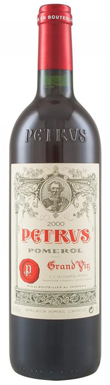
Petrus 2000 – returned from space
Traces of sediment at the bottom of the glass, but still star bright in colour with no cloudiness, though there is a little more noticeable brick around the edges.
Immediately the smoke campfire aspects are more present than in the Petrus that remained on earth. The autumnal blackberry and bilberry fruit is still evident, but the floral aspects are heightened, with rose petal, rosebuds, again campfire and burnished leather with a finer, softer tannic frame.
The floral/truffle aspects to the aromatics are heightened on the retro-olfaction, rose petal/peony/violets, with lingering smoke on the finish. Neither wine is overly high in acidity, but here a lilting freshness is emphasised on the savoury and mouthwatering finish.
From previous experience of this wine, this particular bottle seems more evolved than I would expect from a 21-year-old bottle of Petrus 2000 – it is beautiful and nuanced, with fine tannins and a sense of energy, but has a clear difference in expression from the first wine.
I would place it as having two to three years more of evolution (bearing in mind this was only one bottle, so could be normal variation between the two). Tasted as part of the Space Cargo Unlimited experiment, this bottle returned from space while another sample was tasted that had remained on earth.
Score: 98/100
See Jane Anson’s tasting notes and scores for Petrus Earth 2000 and Petrus Space 2000
See also
Petrus revealed as Bordeaux wine aged in spaceBordeaux wine returns from space mission
Petrus, Space, Pomerol, Bordeaux, France, 2000

<p>Traces of sediment at the bottom of the glass, but still star bright in colour with no cloudiness, though there is a little more noticeable brick around the edges.</p><p>Immediately the smoke campfire aspects are more present than in the Petrus that remained on earth. The autumnal blackberry and bilberry fruit are still evident, but the floral aspects are heightened, with rose petal, rosebuds, again campfire and burnished leather with a finer, softer tannic frame. </p><p>The floral/truffle aspects to the aromatics are heightened on the retro-olfaction, rose petal/peony/violets, with lingering smoke on the finish. Neither wine is overly high in acidity, but here a lilting freshness is emphasised on the savoury and mouthwatering finish. </p><p>From previous experience of this wine, this particular bottle seems more evolved than I would expect from a 21-year-old bottle of Petrus 2000 - it is beautiful and nuanced, with fine tannins and a sense of energy, but has a clear difference in expression from the first wine. </p><p>I would place it as having 2-3 years more of evolution (bearing in mind this was only one bottle, so could be normal variation between the two). </p><p>Tasted as part of the Space Cargo Unlimited experiment, this bottle returned from space while another sample was tasted that had remained on earth.</p>
2000
PetrusPomerol

Petrus, Pomerol, Bordeaux, France, 2000
<p>Concentrated plum colour, medium-full intensity and star bright. Powerfully complex aromatically with waves of dark berry fruits - blackberry, black cherry and bilberry. </p><p>Still fairly young in expression, although it slowly unrolls to show campfire smoke and liquorice notes. With time in the glass, a more animal, liquorice bud note arrives, and the retro olfaction brings waves of violets. </p><p>Exceptionally good quality and nuanced, finishing with black pepper and a hit of spice alongside black chocolate shavings. The tannic structure remains muscular and closed, suggesting this is just at the beginning of its drinking window and will age for many decades to come. </p><p>From previous experience of this wine, this particular bottle seems entirely in keeping with a Petrus 2000 and is a beautiful example of this particular vintage and estate. </p><p>Tasted as part of the Space Cargo Unlimited experiment, this bottle remained on earth while another sample was tasted that had returned from space.</p>
2000
PetrusPomerol
