
Pintia Toro: Tasting the changes
Sarah Jane Evans MW tastes through six vintages of Bodegas Pintia, Vega Sicilia's estate in Toro...


Gonzalo Iturriaga, technical director of winemaking for the Tempos Vega Sicilia group, recently hosted a vertical tasting of Pintia at Berry Bros & Rudd in London. It was a chance to compare six vintages between 2001 and 2014, during which time there have been some big changes at the Toro estate.
According to Iturriaga, the continental climate in Toro has some Mediterranean aspects. ‘It’s a region with huge personality, though the wines need time in bottle. That’s why we release them with five years of age’, explains Iturriaga.
The estate instituted an 11-year programme of massal selection, choosing the best vines as the basis for new plantings. Currently, Pintia owns 100 hectares but is looking for another 10ha, in specific zones. The intention is to produce 250,000 bottles a year.
‘We like to produce 25% more wine than we will ultimately need.’
In this hot climate, grapes ripen fast and acidity can fall rapidly. ‘We need to pick when the fruit is “al dente”. In fact the most complicated task in Toro is choosing when to harvest’, says Iturriaga.
A changing style
In the cellar, the winemaking style has changed. ‘In 2001 we used to produce huge wines. From 2008 we started to make more elegant wines, with less extraction and some American oak [around 25%] which works well in Toro.’
But according to Iturriaga, it’s relatively slow work: ‘every project you work with needs 8-10 years to discover what works best.’
In 2018 a further change was the refurbishment of the Pintia winery, following similar changes at Vega Sicilia winery. Iturriaga says this will allow him to work towards greater refinement.
At harvest the grapes are put into a cool chamber and cold-macerated for soft extraction. The oaking regime has changed in recent years. ‘We used to overdress Pintia with oak in the warm vintages’, says Iturriaga. Now in hot years they use less new oak and reduce the toast of the barrels.
Iturriaga has around 40% of the barrels he needs ready before harvest, and then commissions the rest later to suit the style of the wine. ‘From September the cooper at Vega Sicilia is working like crazy’.
Tasting Pintia Toro
About Toro
Toro is a small appellation in Castilla y Leon, situated on the Duero River, not too far from the border with Portugal. It was awarded DO status in 1933.
Producers 61
Hectares under vine 5,642
Main grape variety Tinta de Toro (a clone of Tempranillo) accounts for 99% of plantings. White grapes are just 350ha of the total
Top producers Campo Eliseo, Mauro, Numanthia, Pintia, Teso la Monja
About Tempos Vega Sicilia group
Vega Sicilia Founded in 1864 in Ribera del Duero by Don Elcoy Lecanda. It has been owned by the Alvarez family since 1982. 210 hectares.
Pintia was the third acquisition of the Alvarez family after Alion (1991) and Oremus in Tokaji (1993). The first commercial wine was launched in 2001.
Macan (2016) The group’s latest project, a joint venture with the Rothschilds in Rioja.
You may also like:
First taste: Vega Sicilia’s new releases, including Único 2009
Spain’s top 40 Tempranillo wines
Toro wine top buys: 30 to try
Vega Sicilia, Pintia, Toro, Castilla y Léon, Spain, 2014
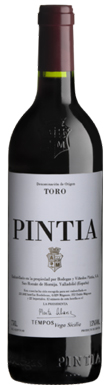

2014 was a good vintage, not excessively hot, and this is a really elegant expression of Toro that will continue to develop - Pintia showing...
2014
Vega SiciliaToro

Vega Sicilia, Pintia, Toro, Castilla y Léon, Spain, 2012
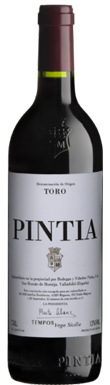
This is a more structured style, well built and full-bodied. It's aged 75% in French oak and 25% in American oak, 100% new, made to...
2012
Vega SiciliaToro
Vega Sicilia, Pintia, Toro, Castilla y Léon, Spain, 2010
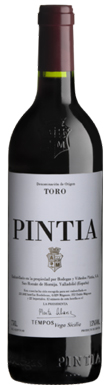
‘This is in great shape at 10 years: a Toro that you don’t have to wait 15 years before it’s at its best’, says Gonzalo...
2010
Vega SiciliaToro
Vega Sicilia, Pintia, Toro, Castilla y Léon, Spain, 2008
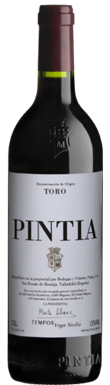
‘2008 is one of Toro’s great vintages. It was a cool year with big berries, as we also found in 2018, a vintage which is...
2008
Vega SiciliaToro
Vega Sicilia, Pintia, Toro, Castilla y Léon, Spain, 2006
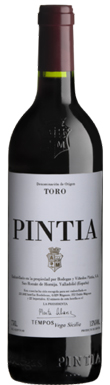
Aromatically there’s a fine mature character here, with cedar, forest floor and red berries. There's a grandeur to this vintage: it's ripe, firm, and old-school,...
2006
Vega SiciliaToro
Vega Sicilia, Pintia, Toro, Castilla y Léon, Spain, 2001
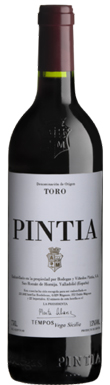
The first commercial vintage of Pintia, though the then-winemaker Mariano Garcia had already vinified 1998, 1999 and 2000. Historically, this is very interesting for what...
2001
Vega SiciliaToro
