
Polkadraai Hills: Regional profile and 10 top wines rated
Polkadraai Hills, a lesser-known corner of South Africa’s Stellenbosch region is starting to turn heads, thanks to its special soils and a close-knit community of talented young winemakers.


Soon after he bought his 2 hectare farm in the Polkadraai Hills, renowned South African winemaker Bruwer Raats got talking to another well-known producer on the Helderberg, widely considered one of Stellenbosch’s most prestigious sub-regions. His interlocutor was incredulous. ‘You’re kidding me, right? If the Simonsberg is the head of Stellenbosch and the Helderberg its heart, then the Polkadraai Hills are its arse.’
That conversation took place just 20 years ago. At the time, full-bodied reds were the dominant style in Stellenbosch, preferably based on or made entirely from Cabernet Sauvignon. South Africa was still in its ‘bigger is better’ phase, although new-wave winemakers were beginning to do other things.
Scroll down to see notes and scores for Tim Atkin MW’s top 10 wines from the Polkadraai Hills
Raats saw the potential of the Polkadraai Hills. ‘You can’t make powerful wines on granite,’ he says, referring to the sub-region’s dominant soil type. ‘What I was after was purity, freshness and lower alcohol levels.’ If anything, the region’s poor reputation worked in his favour. ‘It was the cheapest agricultural land in Stellenbosch. I got it for a song.’
Even further ahead of the curve was Jacques Borman. In 1993, he was the distinguished winemaker at La Motte and looking to develop his own brand. The original idea was to buy a piece of land in Franschhoek, near his place of work, but he changed his mind when he tasted a Cabernet Sauvignon from five-year-old vines on the Reyneke farm in the Polkadraai Hills. The grapes were so good that Borman purchased a nearby property and wisely changed its name from the hard-to-pronounce Goedgelegen to Boschkloof.

Today, his son Reenen makes one of the world’s greatest Syrah wines, Epilogue, from that very site. Strictly speaking, Boschkloof is just outside the Polkadraai Hills ward, as it was defined in 2008 when the founder members established its borders, but it’s so close as to be cut from the same stylistic cloth. ‘If we were 500 metres further west, we’d be inside the boundary,’ says Reenen Borman. ‘It’s the same, but different, apparently.’ The good news is that Borman also makes a Syrah under the Sons of Sugarland label that falls within the boundaries of the Polkadraai Hills.
History old & new
Also in the early 1990s, Adrian Bührer, the comparatively new owner of the historic Saxenburg estate, took another brave decision. He planted 33ha of Syrah – thought to have been roughly 10% of South Africa’s entire plantings of Syrah at the time – because he saw the variety’s potential on granite soils in this comparatively cool corner of Stellenbosch. ‘People thought he was crazy,’ says his daughter Fiona. ‘But he planted according to the terroir he saw, not current winemaking trends.’
People have been farming grapes and other things in the Polkadraai Hills for centuries. Jozua Joubert and Danie Carinus, two of the region’s best growers at Karibib and Bluegum Grove respectively, are representatives of the third and sixth generations of their families; the aforementioned Saxenburg planted its first vines in 1707. But in another sense, this is a new and exciting area.

Polkadraai Hills at a glance
Location: West of the town of Stellenbosch, a series of mostly south-facing, undulating hills; False Bay, 14km away, is a significant cooling influence, especially in summer
Elevation: 120m-300m
Appellation: Received ward status in September 2006 – now one of eight officially recognised wards in Stellenbosch
Soils: Predominantly decomposed granite
Area under vine: 800ha (according to Vinpro), of which 140ha are farmed organically or biodynamically
Grape varieties: Mainly Chenin Blanc, Cabernet Franc, Syrah, Cabernet Sauvignon. Smaller plantings of Cinsault, Malbec, Merlot, Petit Verdot, Pinotage and Sauvignon Blanc
Producers: 18
Despite its modest size – just 380ha of Stellenbosch’s 12,198ha (SAWIS, 2022) – it’s a key part of the region’s renaissance; a counterpart to the dynamism of the Swartland Revolution at the turn of the millennium, when a group of young winemakers turned a cereal-focused rural backwater into one of the most exciting wine regions in South Africa.
Several of the Cape’s most celebrated winemakers are involved with projects here: Chris Alheit at Carinus Family Wines, Reenen Borman, Jean Smit of Damascene, Rudiger Gretschel at Reyneke, Lukas van Loggerenberg and Bruwer Raats. Throw in other, small projects such as Angus Paul, B Vintners, Bein, Craven and Illimis, and larger ones such as De Toren, Saxenburg and Zevenwacht, and you can understand why the ward is attracting such praise.
Another Cape superstar, Duncan Savage of Savage Wines, is establishing a very densely planted 2.5ha block of Syrah in the upper part of Joubert’s Karibib farm that will produce its first grapes this year. ‘It’s a phenomenal part of Stellenbosch,’ he says. ‘I can’t wait to see what this site gives me. We’ll ferment a demijohn or two and see where we are.’

Elemental exposure
What makes the Polkadraai Hills so special? The decomposed-granite soils for one, but also the cooler climate compared to most other parts of Stellenbosch. ‘We are definitely exposed to every type of element,’ Jozua Joubert told me, as we stood 300m up on a windy slope at the top of his property, looking down towards False Bay.
‘Every afternoon during the growing season, you can feel the southeaster wind pick up. We never go over 40°C in summer. Our winters are moderate, too.’ And then there’s the surrounding renosterveld and fynbos, South Africa’s equivalent of France’s garrigue, whose aromas distinguish some of the region’s best wines, especially its Syrahs.
The quality of the grapes is important, too, not just from the growers who sell to wineries, but from the larger estates that farm their own vineyards. De Toren is organically certified, while Reyneke, run by the charismatic Johan Reyneke, is among the world’s leading biodynamic producers.
In addition, the Polkadraai Hills are what Reyneke calls a ‘hub of all things regenerative and sustainable’. There is also, it must be said, an engaging camaraderie about this small area. I was privileged to do the first-ever group tasting from the Polkadraai Hills and the atmosphere was warm and mutually supportive.
The region is now established as one of Stellenbosch’s eight recognised wards, which is more than can be said for the Helderberg. ‘For all that stuff about being the heart of Stellenbosch, they can’t agree among themselves,’ laughs Bruwer Raats.
Know your vintages: Polkadraai Hills
2021: The closest recent Stellenbosch vintage to the mythical 2009 in terms of weather conditions. Good winter rains, moderate growing-season temperatures, long hang time. An outstanding year for both whites and reds. A Cape classic, highly collectible. Keep.
2019: A game of two halves. Very good for whites and early-ripening red varieties, particularly Cabernet Franc; less good for late-picked ones, most notably Cabernet Sauvignon, because of heavy rains in late March. A vintage to drink selectively. Keep the reds.
2017: A brilliant Cape vintage, despite being produced in the middle of a five-year drought. The lack of water notwithstanding, temperatures remained below 30°C in the main. Balanced red wines with polished tannins. Whites are also ageing very well. A vintage to cellar.
2015: Regarded as one of the best vintages of the last decade, although the reds were generally better than the whites. Warmer than 2009, but benefited from the very wet 2014 winter. Reds with very good structure, purity and potential longevity. Drink now or keep.
2009: One of the great vintages in Stellenbosch. A wet winter led to good water reserves. The growing season was moderate, with no heat spikes. Diurnal variation was significant. Good colour in the reds, which have aged well, and acidity in both reds and whites. Drink now
Eight Polkadraai Hills names to know
Angus Paul
Born in South Africa but brought up in Scotland (hence a slight accent), Angus Paul came to Stellenbosch to study. The youngest winemaker in the Polkadraai Hills, he released his first reds and whites as recently as 2021. Working out of the communal Karibib Wine Craft cellar, in his core range he makes five understated, low-intervention wines (as well as a secondary range called Mesas), including one – the intriguingly named On a Flight of Furious Fancies Chenin Blanc – produced with Jozua Joubert’s Karibib grapes from a block planted in the 1980s. anguspaulwines.com

Carinus Family Vineyards
The Carinus family arrived in South Africa from Germany in 1809. Today, cousins Hugo and Danie Carinus are top-quality grape growers with farms in Devon Valley and the Swartland, as well as the Polkadraai Hills. As well as selling to other small winemakers, they produce a range under their own label. Their superb Heuwels Chenin Blanc is made for them by Chris Alheit, arguably the best exponent of the variety in South Africa. carinusvineyards.co.za

De Toren Private Cellar
De Toren is among the Polkadraai Hills’ most prestigious names, thanks in particular to Fusion V, its five-way Bordeaux blend. Using grapes from 22ha of organically certified vineyards, it’s modelled along the lines of a very smart Bordeaux château, blending grapes from 15 soil types. Traditionally among the later pickers in the ward, with corresponding levels of ripeness, the winery has shifted towards a more refined style since 2019 under Martin Fourie and Charles Williams. de-toren.com

Raats Family Wines
The man who has done more than anyone to establish the Polkadraai Hills as a ward of Stellenbosch, Bruwer Raats has also been a key figure in the promotion of Chenin Blanc and Cabernet Franc, as well as half of the team behind the icon red MR de Compostella. Alongside his own range (look out for the high-density planted Eden wines from his back garden), Raats makes three further Polkadraai Hills wines under the B(ruwer) Vintners label with his cousin Gavin Bruwer Slabbert. raats.co.za

Reyneke
Johan Reyneke grows some of the best grapes in South Africa, working alongside his beloved cows. He’s a self-styled ‘vine hugger’ who works with biodynamics on 70ha of Demeter-certified vineyards split across the 40ha family farm and adjacent 80ha Vinimark-owned estate, which is devoted entirely to growing grapes for the Reyneke brand (including animal pasture and biodiverse wilderness). Some of the vines date back to 1974. Ably assisted in the cellar by Barbara Melck and Rudiger Gretschel, Reyneke produces balanced, layered, intensely flavoured wines from Sauvignon Blanc, Chenin Blanc and Syrah, as well as a Bordeaux blend called Cornerstone. Everything in the winery’s range is first class. reynekewines.co.za

Saga Vineyards
This newly launched umbrella brand currently includes the wines of Patatsfontein and Sons of Sugarland, and is a joint venture between winemaker Reenen Borman and two of his old college friends, Henk Kotze and Fritz Schoon. Borman also makes wine at Boschkloof, which is owned by his family and produces the Cape’s best Syrah from a vineyard just outside the Polkadraai Hills. Sons of Sugarland Syrah is wunderkind Reenen’s less expensive, unwooded expression from Jozua Joubert’s celebrated Karibib block. It makes a very interesting comparison with the other two wines from the same parcel, most notably his friend and former roommate Lukas Van Loggerenberg’s Graft. sagavineyards.co.za
Saxenburg Wine Estate
One of the biggest vineyard owners in the Polkadraai Hills, with 60ha under vine, Saxenburg is one the oldest properties in Stellenbosch. Located in a cooler part of the ward (the winery also makes an Elgin-style Sauvignon Blanc), Saxenburg specialises in Cabernet Sauvignon and especially Syrah, of which it was a bold pioneer. Vastly improved of late under second-generation owner Fiona Bührer and winemaker Brendan Smith, its Syrah Select is one of the best in the region. saxenburg.co.za

Van Loggerenberg Wines
Since his first vintage in 2016, Lukas van Loggerenberg has rapidly established himself as one of the most exciting Cape producers, making brilliant Chenin Blanc, Cabernet Franc and Syrah. Only one of his 10-product range comes from Polkadraai Hills, but what a wine it is – the Graft Syrah hails from the same Karabib parcel that produces Patatsfontein’s Sons of Sugarland Syrah and most of the Stellenbosch Syrah by Damascene. Graft is a stunning expression of the grape that has rightly drawn positive comparisons with the best of the Rhône valley. vanloggerenbergwines.co.za

See notes and scores for Tim Atkin MW’s top 10 wines from the Polkadraai Hills
Related articles
- The sommelier suggests… Cabernet Sauvignon by Keize Mumba
- South Africa’s Hemel-en-Aarde: A Chardonnay paradise
- Blank Bottle: Producer profile plus 13 wines to seek out
Reyneke, Reserve White, Polkadraai Hills, Stellenbosch, South Africa, 2021
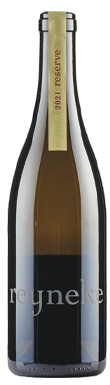

Showing prominent quince and passion fruit flavours and top notes of wild flowers. Complex, nuanced, layered stuff. A pair of warmer, south-facing, biodynamically farmed parcels...
2021
ReynekePolkadraai Hills

Carinus, Heuwels Chenin Blanc, Polkadraai Hills, Stellenbosch, South Africa, 2021
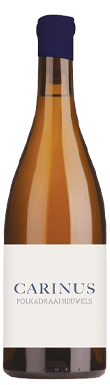
Leesy and textured, with jasmine aromas, a sappy, saline palate and flavours of camomile, green tea and waxed lemon. Fermented and aged in a 75/25...
2021
CarinusPolkadraai Hills
Angus Paul, On a Flight of Furious Fancies, Polkadraai Hills, Stellenbosch, South Africa, 2022
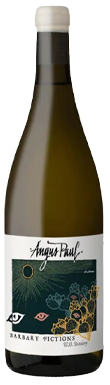
Taut, tight, chiselled and yeasty, it's a wine that won't be hurried in bottle, all wet stone, oatmeal, pear and citrus flavours, savoury grip and...
2022
Angus PaulPolkadraai Hills
Lukas van Loggerenberg, Graft Syrah, Polkadraai Hills, Stellenbosch, South Africa, 2021
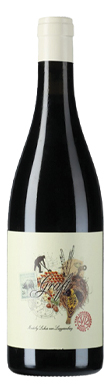
Focused, spicy and hauntingly perfumed, with clove and rosemary aromas, tapenade and blackberry fruit, fine tannins and the focus and freshness that are features of...
2021
Lukas van LoggerenbergPolkadraai Hills
De Toren, Fusion V, Polkadraai Hills, Stellenbosch, South Africa, 2019
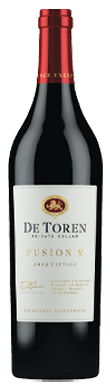
Fresher and less oaky than it used to be, with just 50% new wood, this has blackcurrant leaf and red cherry fruit, succulent tannins, understated...
2019
De TorenPolkadraai Hills
Saga Vineyards, Sons of Sugarland Syrah, Polkadraai Hills, Stellenbosch, South Africa, 2022
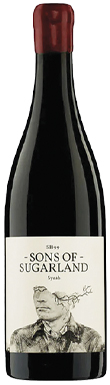
Sons of Sugarland showcases the superb grapes from Jozua Joubert's Karibib farm. Lavender, thyme and white pepper perfume, sappy bramble and blackberry fruit and a...
2022
Saga VineyardsPolkadraai Hills
Raats, Family Cabernet Franc, Polkadraai Hills, Stellenbosch, South Africa, 2020
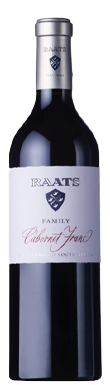
Gloriously perfumed and intense, this textbook Cabernet Franc is a delightful expression of the Polkadraai Hills. Smartly wooded in 25% new oak, with 35% whole...
2020
RaatsPolkadraai Hills
Craven Wines, Cabernet Sauvignon, Polkadraai Hills, Stellenbosch, South Africa, 2022
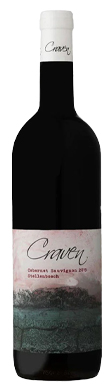
Flirting with greenness, it's a pithy, minty, very lightly wooded Cabernet with notes of cranberry and blackcurrant leaf and a mineral core. This is the...
2022
Craven WinesPolkadraai Hills
Illimis, Pinotage, Polkadraai Hills, Stellenbosch, South Africa, 2022
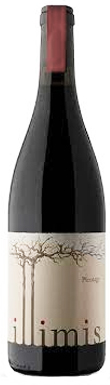
Delicate, ethereal and hauntingly perfumed, it's a bright, focused, low-intervention style that only sees older oak, showing pomegranate and goji berry flavours and a top...
2022
IllimisPolkadraai Hills
B Vintners, Red Blend, Polkadraai Hills, Stellenbosch, South Africa, 2021
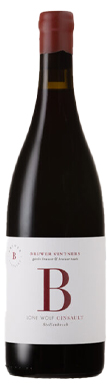
Juicy, fresh and stony with fynbos and garrigue aromas, pepper, clove, bramble and red cherry flavours and layered, understated tannins. Bruwer Raats call this first...
2021
B VintnersPolkadraai Hills
