
Bordeaux 1989 vs 1990: Battle of the vintages


How has one of the greatest vintage double-acts of all time fared over the past three decades? Find out below, following Jane Anson's re-tasting of both vintages from several prominent estates, held at 67 Pall Mall in London and including Mouton Rothschild and Cheval Blanc.
It was good to be Bordelais in the 1980s.
Something shifted with the brilliance of the 1982 vintage; a quickening of interest from international consumers, a confidence from château owners to leave grapes longer on the vines and increasingly to drop fruit and cut yields. Volumes were risked in search of ripeness, concentration and quality.
The continued run of good vintages in 1985, 1986, 1988 and 1989 got money flowing into the châteaux on a regular basis for the first time in decades, and made itself felt through investments in château repairs, better cellars and the employment of wine consultants.
Scroll down for Anson’s tasting notes on Bordeaux 1989 and 1990 wines
The first vintage of the new decade seemed to continue the good run, with 1990 again delivering the conditions needed to produce exceptional wine. But that year was where the good times stopped, pretty much until 1995.That four-year gap added further mystique to the 1980s vintages, but especially to the final flourish of 1989 and 1990, which today is viewed as one of the greatest vintage pairings of all time.And if there’s one thing that Bordeaux loves more than proclaiming a vintage of the century, it’s being able to declare the one-two knockout of a vintage pair.
From 1928 and 1929, right through to 2015 and 2016, pitting one vintage against another encourages interest, drives passion, provokes arguments, and no doubt does nothing to hurt sales.
Watershed era
The fascinating thing about Bordeaux 1989 and 1990 is that they don’t follow the usual pattern. Typically, when you are comparing two vintages in Bordeaux, they are opposing pairs: the solar 2009 against the cooler 2010, for example, or the hot and dry 2000 against the fresher, more elegant 2001.
It begs questions like, which year favoured the Left Bank, which the Right Bank? How did Merlot stand up against Cabernet Sauvignon?
These two vintages, rather than being opposites, in fact had many similarities. Both 1989 and 1990 had hot and dry growing seasons that saw a good-sized crop of small berries with rich tannic structure and fairly low acidity.
They are the kind of years that Bordeaux loves, and that can deliver wines of longevity, which just seem to power through the decades. Both were seen as exceptional from the start, even if 1990 was overshadowed for a few years by its older sibling.
At the same time, Bordeaux was undergoing one of its periodic shifts in the late 1980s. Consultants Jacques Boissenot and Pascal Ribéreau-Gayon were taking over from Emile Peynaud, who had done so much to revolutionise winemaking from the 1960s through to the 1980s.
The more generous budgets of these years meant that temperature control was widespread in the cellars – unlike in 1982 and 1983 – and the more careful grape sorting meant it was easier than ever to make the most of the good conditions.
Given all of these factors, it’s definitely worth digging out any old bottles that you have, or can track down, because the chances are you’re going to find some great surprises. But is one of these two vintages holding up better than the other? And where exactly should you be looking to increase your chances of enjoyment?
Vintage 1989
The Bordeaux oenology school opened its yearly summary with the words: ‘1989 will leave an unforgettable memory for most winemakers’.
At the time, 1989 was the warmest vintage of the 20th century, with sunshine levels second only to 1961 and heat equal to 1947. April was pretty much the only difficult month in the entire growing season, and it gave way to a summer and autumn that were warmer, drier and sunnier than the previous 30-year average.
Budding was 10 days earlier than average, flowering 15 days earlier, and by mid-August vineyards were showing the earliest colour change for 40 years. The harvest was the earliest since 1893.
Negatives included the drought that affected young vines and any over-loaded vines. There were also touches of hail, and some blockages meant slow phenolic ripeness, so châteaux needed to be careful with picking dates, although the very high sugars were less of a threat than in the past because of the all-important temperature control.
Vintage 1990
Some frost on 27 March particularly affected St-Emilion (made worse by an early bud break after a warm February), but was compensated by lots of secondary budding, meaning this was the second year running with a generous crop.
1990 had a less even flowering and a more drawn-out colour change than 1989, which meant a later harvest. But look deeper and there were a lot of superlatives. July and August were drier and hotter than in 1989, and grape ripening in the continued heat of September was helped hugely by two short bursts of rain on 14-15 September and again on 22-23 September.
Alcohol levels were often higher in 1990 than 1989 as a result of the hot summer, and there were also some stuck fermentations, but generally the wines were showing powerful, mature tannins and rich fruits right from the start.
Then and now
I recently presented a horizontal of 1989 and 1990 wines at 67 Pall Mall – a private members’club in London that has a cellar with more than 4,000 wines on the list and access to plenty of bottles with great provenance.
We tasted through a fascinating line-up of 10 wines, five from each year of:
- Cheval Blanc
- Figeac
- L’Evangile
- Léoville Barton
- Mouton Rothshchild
And to round out the tasting with another pairing, I have added in the same two years of Léoville Poyferré that I opened in the same week.
One of the interesting things we found, looking back on them with almost 30 years under their belt, is that having two exceptional and similar years of similar age shows that Bordeaux is far more complicated than just vintage alone.
Terroir, choice of grape, vineyard personality, viticultural choices; all of these things come into play and are easier to discern when comparing vintages where many of the conditions were similar.
These were also fascinating years for the individual estates.
1989 saw the introduction of a second wine at L’Evangile, and 1990 was its first vintage under 70% ownership by Domaines Barons de Rothschild (Lafite) – full ownership came only in 1998 (see ‘Producer profile’, p84).
1989 was also the first vintage at Mouton made entirely under Baroness Philippine de Rothschild, following the death of her father Baron Philippe the year before.
Thierry Manoncourt was over at Figeac and Anthony Barton was getting into his stride at Léoville Barton, having taken over from his uncle Ronald in 1983, but he was still keeping things traditional with no green harvesting – unlike neighbouring Léoville Poyferré, where crop thinning and green harvesting had been in place since the mid-1980s.
Cheval Blanc was still with the Fourcaud- Laussac family, until the Albert Frère/Bernard Arnault purchase in 1998. They introduced second wine Le Petit Cheval in 1988 (selling off a third selection in bulk), then green harvesting in 1990.
Coincidentally or not, the Cheval Blanc 1990 is a legendary bottle that today sells for about double the price of any of the other wines we tasted (a case would set you back £10,000 or more – if you can find one).
Relative merits
And what of the bottles we opened and tasted? For a start, so many of them proved exactly why people love old Bordeaux. They retained a freshness and a firm but yielding tannic structure, even at 30 years, and played with the classic signature notes of ageing clarets, revealing by turn menthol, eucalyptus, cedar, melted black fruits.
The 1990 seemed more steady perhaps, with stunning density and rich texture, while the 1989 had more moments of brilliance, with both the Cheval Blanc and the Mouton Rothschild right up there. Perhaps the 1990 is tasting marginally better on the Left Bank today, and 1989 still delivering over on the Right Bank (where Figeac and L’Evangile deserve a special mention).
These are wines that are very much in their drinking window, although there is no great rush to drink them up if you have them in your cellar. Both vintages have enough fruit and structure that they should remain at this level for another decade at least, with perhaps the 1990 having the slight edge in terms of future development.
If I had to pick out one château from the six on display, it would have to be Cheval Blanc – a reminder that while Cabernet Franc is seen as a blending grape, in the shadow of Merlot and Cabernet Sauvignon across much of Bordeaux, in the right hands it can blossom into something utterly exceptional.
Price and value
At the time of initial market release, 1989 was priced significantly higher than 1990, because of the widespread feeling that it was the new 1982.
Using Liv-ex as a guide, current prices range from £1,160 for 12 bottles of Léoville Barton 1989 to around £10,000 for Cheval Blanc 1990. Both vintages of Mouton can be found for between £4,000 and £5,000 – and both offer beautiful drinking, although the 1989 tipped it on the day.
The best value of this line-up, I would suggest, is the L’Evangile – both vintages are available for under £3,000 per dozen, and both blew us away, although particularly the 1989. The Léoville Bartons are available at less eye-watering prices – although many times more than on release, when the 1989 came out at £132 per case in London – but they have softened more over time than the L’Evangile.
All in all, Bordeaux 1989 and 1990 are two years that have lived up to the hype.
See Anson’s tasting notes for Bordeaux 1989 and 1990 wines
The full version of this article will also be appearing in the Decanter 2018 issue of Decanter magazine, on general sale from Wednesday 7 November.
You may also like:
Top Bordeaux 2016 wines: Re-tasted in the bottle
Bordeaux 2018 red wines: Balance key amid high alcohol levels
St-Emilion satellites 2015: Panel tasting results
Château Cheval Blanc, St-Émilion, 1er Grand Cru Classé B, Bordeaux, France, 1990
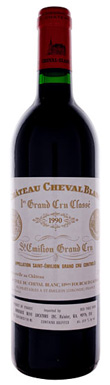

The standout wine of the entire tasting. Powerful, smooth, mouthfilling sweetness, still deeply coloured. You will find it hard to track down this wine on...
1990
Château Cheval BlancSt-Émilion

Château Cheval Blanc, St-Émilion, 1er Grand Cru Classé A, Bordeaux, France, 1989
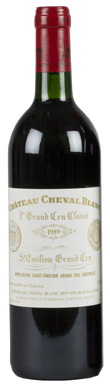
I tasted this at a separate 67 Pall Mall event a few months ago, and it has delivered just as well this time around -...
1989
Château Cheval BlancSt-Émilion
Château L'Évangile, Pomerol, Bordeaux, France, 1989
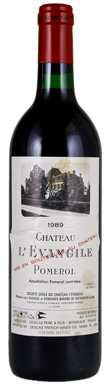
Utterly gorgeous, wonderful white truffle notes coming through the fruit, alongside leather, liquorice and tobacco and pure, juice-filled black cherries. The last year with just...
1989
Château L'ÉvangilePomerol
Château L'Évangile, Pomerol, Bordeaux, France, 1990
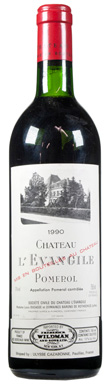
1990 was a very good vintage, although a bit more difficult to manage than the 1989. Flowering was uneven and as crop thinning was not...
1990
Château L'ÉvangilePomerol
Château Mouton Rothschild, Pauillac, 1er Cru Classé, Bordeaux, France, 1989
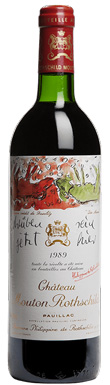
An extremely early year for the property, with harvest from 6-25 September. One to savour, it has the signature smoked, toasted glamour of Mouton, with...
1989
Château Mouton RothschildPauillac
Château Mouton Rothschild, Pauillac, 1er Cru Classé, Bordeaux, France, 1990
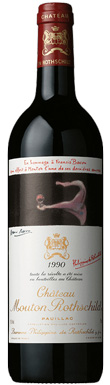
A time of serious changes at Mouton, with Baron Philippe de Rothschild passing away in 1988 after having overseen seven decades worth of harvests, and...
1990
Château Mouton RothschildPauillac
Château Figeac, St-Émilion, 1er Grand Cru Classé, Bordeaux, France, 1990
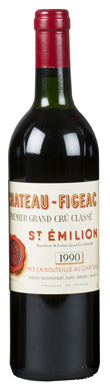
One-third each of Merlot, Cabernet Sauvignon and Cabernet Franc, 100% new oak, with a harvest that lasted from 17 September to 6 October. Still deep...
1990
Château FigeacSt-Émilion
Château Figeac, St-Émilion, 1er Grand Cru Classé B, Bordeaux, France, 1989
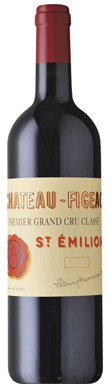
Saffron, cigar box and gentle white pepper spice - beautiful secondary aromatics that come in waves inside the mouth. Gently whispering tannins, white truffles and...
1989
Château FigeacSt-Émilion
Château Léoville Poyferré, St-Julien, 2ème Cru Classé, Bordeaux, France, 1990
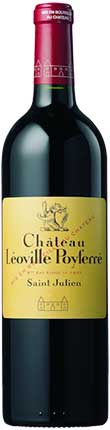
The nose lifts right out of the glass and reminds the world how Bordeaux can age. You’ll find chocolate, hazelnut, plum, soft liquorice root; a...
1990
Château Léoville PoyferréSt-Julien
Château Léoville Poyferré, St-Julien, 2ème Cru Classé, Bordeaux, France, 1989
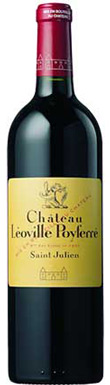
The colour remains a deep ruby, with burnt caramel arriving midpalate. Not quite as luscious as the 1990 vintage at this stage of the game,...
1989
Château Léoville PoyferréSt-Julien
Château Léoville Barton, St-Julien, 2ème Cru Classé, Bordeaux, France, 1990
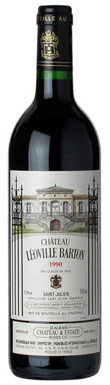
Damien Barton-Sartorius was born in 1990, and he’ll be happy to hear that this vintage stands up well against the 1989. It has clearer tannins,...
1990
Château Léoville BartonSt-Julien
Château Léoville Barton, St-Julien, 2ème Cru Classé, Bordeaux, France, 1989
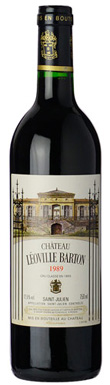
A lovely, classic example of a fully mature St-Julien, replete with ripe berry fruits and tannins that whisper rather than shout. You’re pulling up a...
1989
Château Léoville BartonSt-Julien
