
Premium white blends of Friuli and Alto Adige
The two scenic, northeastern areas of Trentino-Alto Adige and Friuli-Venezia Giulia are at the forefront of Italy’s top-level white wine scene. Both regions produce characterful blends that celebrate their diverse terroir and get the best from local plantings.


Trentino-Alto Adige and Friuli-Venezia Giulia make up Italy’s very northeastern tip, and their most renowned vineyards lie near the national frontiers with Austria and Slovenia.
In Alto Adige, the main growing areas form a ‘Y’ shape with the city of Bolzano at its intersection and the conjoining valleys of the Adige and Isarco stretching outwards and upwards to the north, towards Austria.
In Friuli (as it’s commonly called) the key denominations of Colli Orientali, Rosazzo, Collio, Isonzo and Carso run right up to the border with Slovenia.
Scroll down to see tasting notes and scores for 10 top white blends from Friuli and Alto Adige
The influence of the shared heritage as part of the old Austro-Hungarian empire is still evident today: Alto Adige (an autonomous region since 1972) embraces its links with Austrian culture and German is still the first language for many; but while surnames over to the east often reveal Slavic origins, most of Friuli feels distinctly Italian.
The two areas spearhead Italy’s burgeoning fine white wine scene: according to the regional consorzi, 68% of wine production in Alto Adige is white and in Friuli almost 75%.
Both regions are probably best known for their single-varietal wines produced from many of the same grape varieties: Chardonnay, Gewürztraminer, Pinot Bianco, Pinot Grigio and Sauvignon [Blanc or Vert]. The growing tendency, however, is to place greater emphasis on distinctive and often unique ‘top-end’ blends that are designed to show off the character of their local terroir.
The idea has been gathering momentum since the 1970s in both areas. The release of Jermann’s Vintage Tunina – a blend of Sauvignon, Chardonnay, Malvasia Istriana and Ribolla Gialla (2017, £45.55-£47.76 Field & Fawcett, The Drink Shop) – in 1975 was a milestone for white wine production in Friuli. In the same year, Terlano was recognised as a separate sub-zone of Alto Adige and granted its own denomination, specifying for the ‘cuvée’, or white blended wine, a minimum of 50% Pinot Bianco along with smaller proportions of other grapes, in practice usually Chardonnay and Sauvignon.
The ‘international’ white varieties were introduced in the latter half of the 19th century into both areas through their Dual Monarchy ancestry and the necessary replanting of vineyards following phylloxera. Nowadays, many wineries are following in the footsteps of Jermann and Cantina Terlano, and clear patterns of production are beginning to emerge.
In Alto Adige, producers have adopted the classic Terlano mix of Pinot Bianco, Chardonnay and Sauvignon, while Friuli has seen a major shift towards varieties considered as autochthonous: Friulano [Sauvignon Vert], Malvasia Istriana and Ribolla Gialla. They often form the backbone of Collio Bianco and Colli Orientali Bianco wines, and, alongside Chardonnay, Sauvignon and Pinot Bianco, are permitted constituent parts of Rosazzo, a former sub-zone of Colli Orientali that was granted its own DOCG in 2011.
Alto Adige
The vineyards of Alto Adige share a bewildering mixture of soil types, elevations, altitudes and microclimates, and understanding them is key to knowing which variety works best in each locale.
Pinot Bianco-Chardonnay-Sauvignon blends are mainly produced from vines planted on the limestone-based soils of the hillsides along the right bank of the Adige as it flows southwest (between Bolzano and the southern boundary with Trentino), much the largest expanse of vineyard in the province. They are often ‘personalised’ with the addition of smaller proportions of other grapes – for example, in the village of Tramin, local hero Gewürztraminer gives a real sense of place to Stoan, Cantina Tramin’s proprietary blend (2019, £23.95 Fintry Wines). A few kilometres up the road, Hans Terzer, oenologist at Cantina St Michael-Eppan, adds Pinot Grigio to his premium white blend Appius.
Pinot Bianco, the region’s iconic white grape, remains the heart and soul of Terlano, the village sitting on the left bank and higher up the Adige river, just to the northwest of Bolzano, in an area where the soils are of volcanic origin (mainly porphyry). Cantina Terlano’s superpremium Rarity leans heavily on the variety; the current vintage (2008) is a cuvée of 85% Pinot Bianco, 10% Chardonnay and just 5% Sauvignon Blanc. ‘Sauvignon can dominate if you’re not careful,’ maintains Terlano’s sales and marketing director Klaus Gasser. ‘In any case, Pinot Bianco is the variety we always come back to.’
Towards the more extreme limits of the vineyards, producers look to other varieties for their inspiration. Conrad Pixner’s Bergkellerei Passeier sits high up in the Passeier valley, north of Merano, at St Martin in Passeier. His Giovo blend is made from equal parts Chardonnay grown at Tirolo just above Merano, and Solaris from vineyards close to the winery, the highest of which sits at 1,100m. Solaris, a disease-resistant variety originally bred at the Freiburg Institute in Germany in the 1970s, is finding favour in this area as its short growing season enables it to flourish at high altitudes. ‘When it ripens fully up here,’ says Pixner, ‘Solaris can accumulate enough sugars to achieve about 14% alcohol and still maintain 10g/L of acidity.’
At the southern tip of the area, the Franz Haas winery sits on the left bank of the Adige, across from Tramin. Back in the mid1990s, Haas put together an eclectic blend of Riesling, Chardonnay, Gewürztraminer and Sauvignon called Manna, from vineyards at up to 800m in nearby Aldino, Egna and Montagna. His idea was to create a wine versatile enough to match a wide range of foods. In recent vintages he has cut back on the proportions of Riesling and Gewürztraminer in favour of Kerner, sourced from the Valle Isarco where this Trollinger/ Riesling cross seems to perform at its best.
Andreas Huber, winemaker at Pacherhof, blends Kerner with Sylvaner and Riesling high up above Bressanone, northeast of Bolzano, where these more aromatic varieties come into their own. His Private Cuvée epitomises the fresh, fragrant, mineral-toned wines with racy acidity that the Valle Isarco excels at.
Friuli-Venezia Giulia
Almost 10% of Friuli’s registered vineyards are planted to Friulano, the main grape behind most of the region’s premium blends. Blending with Malvasia Istriana and Ribolla Gialla is the favoured option in the Collio and Colli Orientali DOC and Rosazzo DOCG areas, though Chardonnay, Pinot Bianco and Sauvignon Blanc are also frequently used. Ribolla is not, however, authorised for DOC wines in Isonzo and Carso.
Collio and the premium areas of Colli Orientali (including Rosazzo) are made up of low-lying hillside sites of marl and sandstone soils known locally as ponca, and growing conditions are much more homogenous than in Alto Adige. The varying proportions of grape varieties used and individual choices made by the winemaker thus have a more obvious bearing on style – for example, fermentation with extended skin contact is a popular way of maximising aroma, flavour and texture.
On his small family estate at Pradis between Cormons and Capriva, Roberto Picéch uses a relatively high proportion of Ribolla (40%), ferments Friulano on the skins and then ages his Collio Bianco Jelka in barrel, cement and bottle before release some five years after the harvest.
A little to the east, towards San Floriano del Collio, Robert Princic’s Gradis’ciutta blend is composed of 50% Friulano, 30% Malvasia and 20% Ribolla. He ferments in wood and the wine spends one year in barrel followed by 18 months in stainless steel before bottling; the extra ageing allows him to market Gradis’ciutta as an example of the rarely seen Collio Riserva.
Using that same mix and proportions of grapes, Ivan Muzic ferments his Collio Stare Brajde, a Decanter World Wine Awards Best in Show winner in 2021, in tonneaux followed by a year in bottle, for a style built on purity and freshness of fruit.
The legendary Picolit, the grape behind one of Italy’s rarest but very finest dessert wines thanks to its exceptional sugar/acid balance, also has a part to play here. A healthy percentage can transform a dry white blend into something really quite distinctive according to Marco Sara, one of a small group of producers at Savorgnano del Torre in the northern Colli Orientali, north of Udine, who have come up with the idea of creating a unique blend of Friulano and Picolit to best define their territory. ‘Using 30% of Picolit really sweetens up the slightly herbaceous fruit that can characterise Friulano in slightly cooler areas like ours,’ he notes. Usually playing more of a bit-part in blends (mostly at about 20%), Ribolla Gialla, as in Jermann’s Vinnae, can also perform extremely well as the dominant variety.
Best of the best
Though overshadowed by the rise in popularity of varietal wines over the past few decades, the blend is now back with a bang. Historically, vineyards throughout Italy were planted to an uvaggio, or a mix of grapes, and these ‘field blends’ are behind many of today’s premium blends.
However, another interpretation of the idea is designed to scale new heights. ‘With Nama, we wanted to create a wine that is the very essence of Nals Margreid,’ insists Gottfried Pollinger, CEO of Cantina Nals Margreid in Alto Adige. Homing in on vineyards from two of their top growers – a plot of Chardonnay at Magré, northeast of Trento, and small blocks of Pinot Bianco and Sauvignon at Nalles further north – oenologist Harald Schraffl came up with the Nama blend to express the character of their terroir in such a way as to appeal to international taste. The concept of ‘the best of the best’ allows the premium blend to take its place alongside the top varieties in a winery’s range. Nama captures that combination of ripe, succulent fruit, racy acidity and silky texture that represents the quintessential characteristics of the best Alto Adige wines.
Similarly, in Friuli, the premium blend typifies the white wine of real substance, majestically rich in aroma, flavour and texture that has earned the region its stripes. In both areas, these wines are built to last: a lifespan of 10 years or more in the best vintages is certainly realistic.
Garner’s selection: 10 white blends from Friuli and Alto Adige that demonstrate the best of the northeast
Related articles
Cantina Terlano: crafting white wines for ageing
Versatility of Vermentino: top dry white picks from across Italy
Franciacorta travel: how to visit this top sparkling wine region near to Milan
Cantina Terlano, Rarity, Alto Adige/Südtirol, Terlaner, Trentino-Alto Adige, Italy, 2008
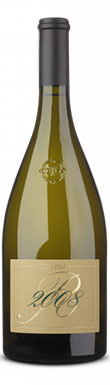

2008 was a difficult year with unpredictable weather patterns but an Indian summer ensured the reduced crop was harvested in good condition. Bottled after 11...
2008
Cantina TerlanoAlto Adige/Südtirol

Gradis'Ciutta, Riserva, Collio, Friuli-Venezia Giulia, Italy, 2016
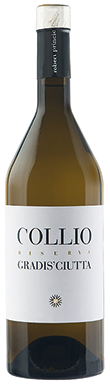
Broad and ripe with a clear stony edge, fragrant lemon peel, white pepper, evening primrose and a touch of seasoned oak. Full and juicy with...
2016
Gradis'CiuttaCollio
Muzic, Stare Brajde, Collio, Friuli-Venezia Giulia, Italy, 2019
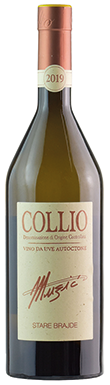
The archetypal Friulano, Malvasia, Ribolla Gialla blend, this is broad fresh and limey with notes of pink grapefruit, aromatic herbs and light floral tones: tremendous...
2019
MuzicCollio
Roberto Picech, Jelka, Collio, Friuli-Venezia Giulia, Italy, 2016
Understated skin contact influence here is most impressive. Broad, ripe and full with scented floral, citrus and a hint of seasoned oak. Ripe, round and...
2016
Roberto PicechCollio
Cantina Nals Margreid, Nama, Alto Adige/Südtirol, Trentino-Alto Adige, Italy, 2016
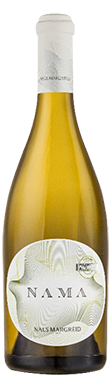
A blend of three top vineyards for the three separate varieties: Chardonnay, Pinot Bianco and Sauvignon. Fresh and candied fruit aromas are joined by notes...
2016
Cantina Nals MargreidAlto Adige/Südtirol
St Michael Eppan, Appius, Alto Adige/Südtirol, Trentino-Alto Adige, Italy, 2016
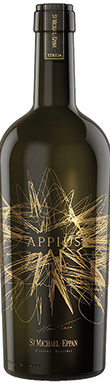
Fermented and aged in wood plus a further three years on its fine lees in stainless steel, this is oaky but full of ripe, floral-toned...
2016
St Michael EppanAlto Adige/Südtirol
Marco Sara, Monte della Guardia, Friuli, Colli Orientali, Friuli-Venezia Giulia, Italy, 2019
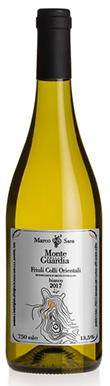
Broad and full with lurking power, this has scented notes of citrus blossom, angelica and yellow peach with hints of seasoned oak and spice. Full,...
2019
Marco SaraFriuli
Bergkellerei Passeier, Giovo 18, Vino da Tavola, Trentino-Alto Adige, Italy, 2018
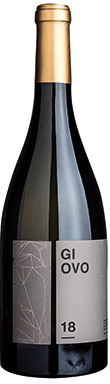
An unusual mix which works really well: the steely and limey notes of Solaris combine beautifully with the rich, ripe and buttery Chardonnay. Broad and...
2018
Bergkellerei PasseierVino da Tavola
Franz Haas, Manna, Vigneti delle Dolomiti, Trentino-Alto Adige, Italy, 2019
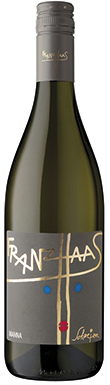
Very Alto Adige: a kaleidoscope of fruit flavours yet understated structure. The touch of Gewurztraminer is evident on the very ripe and perfumed nose, displaying...
2019
Franz HaasVigneti delle Dolomiti
Jermann, Vinnae, Friuli-Venezia Giulia, Italy, 2020
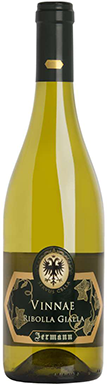
Clean, floral-toned with the slightest note of oak and an intriguing hint of white pepper. Lively palate with great freshness and acidity; lean but shapely...
2020
Jermann
