
Producer profile: Domaine du Vieux Télégraphe plus 15 wines tasted
This family-owned and run estate has been making wine in the southern Rhône for over a century, now producing some of the most elegant and long-lived of all Châteauneuf wines, Matt Walls explores its history and tastes a selection of their flagship red and white produced from the privileged plateau vineyard La Crau...


With his short, grey, curly hair and deep crow’s feet, Daniel Brunier has a patrician, Roman air as he stalks the winery. Cellar staff hush and busy themselves as he passes. Along with his brother Frédéric, he has built an empire that stretches from Châteauneuf-du-Pape, to Gigondas, all the way to Lebanon.
Daniel has just turned 60, and the brothers are gradually relinquishing control to their sons, Edouard and Nicolas, who represent the sixth generation.
Scroll down for Matt Walls’ Domaine du Vieux Télégraphe tasting notes and scores
Lessons will no doubt be strict; Daniel has strong opinions and is convinced of the primacy of their soils. But in time they’ll inherit an estate that makes some of the most elegant wines in Châteauneuf.
Fierce independence
It was Henri Brunier who laid the first stone in 1891. He bought some land to the east of Châteauneuf-du-Pape and gave it to his son, Hippolyte. ‘Why did he buy it? We don’t know,’ says Daniel. ‘It wasn’t even vines, it was woods.’
At this time, Châteauneuf was already internationally recognised for the quality of its wine, so even if clearing the land was hard work, deciding what to plant was less of a challenge. Hippolyte’s son Jules extended the domaine to 17ha and named it after a nearby stone tower that was used to transmit messages by semaphore.
The following generation, another Henri, enlarged the estate to 55ha before bequeathing it to current owners Daniel and Frédéric. Under their command, expansion has been rapid. They’ve grown their Châteauneuf holdings to 100ha, bought 20ha in and around Ventoux, acquired Domaine les Pallières in Gigondas with US importer Kermit Lynch, and created Massaya estate in Lebanon’s Beqaa Valley with partners Sami and Ramzi Ghosn.
Family members each have their own area of responsibility. Daniel’s duties are principally commercial, and his son, Edouard, 27, now manages their three Rhône wineries. Frédéric and his son Nicolas, 30, concentrate more on the vineyards, and Frédéric’s daughter Manon works in the offices. When it comes to winemaking, however, everyone is involved. ‘The goal is that you don’t know who made it,’ says Daniel.
The use of winemaking consultants has become increasingly prevalent in Châteauneuf-du-Pape over the past few decades, but Daniel stresses that there is no outside influence over the winemaking at Vieux Télégraphe. Theirs is a fiercely independent estate. ‘It’s important to be ourselves,’ says Daniel, ‘and not to try to copy others.’
At a glance
Location: Châteauneuf-du-Pape, Southern Rhône, France
Winemakers: Daniel, Frédéric, Edouard and Nicolas Brunier
Vineyard area: 56ha
Viticultural approach: Organic, not certified
For the Vieux Télégraphe rouge:
Grape varieties: 65% Grenache, 15% Mourvèdre, 15% Syrah; remaining 5% comprised of Cinsault, Clairette and other local varieties
Average vine age: 60 years old
Average production: 200,000 bottles
For the Vieux Télégraphe blanc:
Grape varieties: 40% Clairette, 25% Grenache Blanc, 25% Roussanne, 10% Bourboulenc
Average vine age: 45 years old
Average production: 20,000 bottles
Timeline
1891 Henri Brunier I bequeaths a parcel of land on La Crau to his son, Hippolyte Brunier
1915 Jules Brunier, son of Hippolyte, names the estate Vieux Télégraphe
1928 Original winery built on La Crau
1945 Henri Brunier II, son of Jules, joins the estate
1979 Construction of modern, gravity-fed winery
1980 Frédéric Brunier, son of Henri Brunier II, joins the estate
1981 Daniel Brunier, son of Henri Brunier II, joins the estate
1986 Purchase of Domaine la Roquète vineyards
1998 Purchase of Domaine les Pallières, Gigondas; creation of Massaya, Beqaa Valley, Lebanon
2002 No Vieux Télégraphe red made due to floods; first vintage of ‘Télégramme’
2011 Construction of current winery
2011 First vintage of ‘Piedlong’
2015 Nicolas Brunier, son of Frédéric, joins the estate
2016 Edouard Brunier, son of Daniel, joins the estate
2018 Manon Brunier, daughter of Frédéric, joins the estate
La Crau, La Crau, La Crau
When I ask which three things all wine lovers need to know about Vieux Télégraphe, Daniel’s answer is immediate: ‘La Crau, La Crau, La Crau!’ This plateau of galets roulés to the east of the village is one of the highest in the appellation, and it has long been considered one of the best sectors for making wine in Châteauneuf. Their holdings are among the largest in the appellation.
To the naked eye, these endless fields of fist-sized, rounded, beige stones appear callously inhospitable. But it’s what’s underneath that counts – deep, water-retaining clays which nourish the vine during the hot, dry summers. ‘The vines need to suffer a little,’ says Daniel, but hydric stress arrives relatively late here, which ensures steadier ripening, creating finer tannins.
Irrigation is allowed in Châteauneuf-du-Pape, but only to aid ripening during the growing season, and only when officially sanctioned. This was once only sporadic, but due to the increasingly parched summers, growers now get the go-ahead almost every year. Some producers believe irrigation is now crucial to making balanced wines. But Daniel Brunier is not a fan. ‘You could turn it on at night – who’s going to check?’ says Daniel. ‘I’m not saying it should be banned, just managed. And for now, it’s not.’
Either way, he wouldn’t use it for mature vineyards, as he believes it rubs out the expression of terroir. In this sense, avoiding irrigation is even more important than working organically for Daniel (they work organically but aren’t certified). Avoiding irrigation is so important to him, that he believes non-irrigated wines deserve to be authenticated in the same way organic viticulture is certified.
With such a vast vineyard area under their control, one cumbersome challenge they face is replanting. Vines die for many reasons, whether it’s young vines that don’t survive the summer, disease, vineyard accidents, or old age. Every year they need to replant the equivalent of 3.5ha of vines, and they favour time-consuming mass-selection where possible, as opposed to buying clones. ‘It’s a colossal job,’ says Daniel, and one that needs addressing every year.
‘No pumps, no pipes, no screws’
On the day I visited the winery, the small wooden vats had all been drained to blend the contents before further maturation. The little door at the base of each one was wide open, and the air was heavy with black cherry jam and sweet cedar. We stuck in our heads and took deep nosefuls of the narcotic fug.
‘Grenache is fragile, it oxidises easily,’ says Daniel. The winery moves grapes and must by gravity and vibration, ‘so no pumps, no pipes, no screws’. The oldest vines on La Crau are 110 years old, and these bunches keep their stems during fermentation. Other parcels are destemmed, and they ferment with natural yeasts; 60% in stainless steel, 40% in vat. Wines are matured for two years before bottling, the first year in wooden vats of various ages, the second year in large foudres.
‘What we look for is the tannic structure,’ says Daniel, ‘the most elegant and the most adapted to the vintage. Aromatically speaking, what matters is that the aromas come from the terroir, not the vinification; that they are created outside, not inside.’
Most of the production is red, but they produce 10% white Châteauneuf, more than the average. They’ve been making white wine since the beginning, and these grapes are also grown on La Crau. It’s a blend of Clairette, Roussanne, Grenache Blanc and Bourboulenc that’s matured for a year in barrels of various sizes, with a minimal use of new oak.
They do not make a cuvée spéciale, neither do they intend to (their bottles state ‘La Crau’ on the label, but this is not a cuvée name as such.) They do however make some other Châteauneufs since purchasing another domaine.
‘Piedlong’ is a blend of old-vine Grenache from lieu-dit Pied Long with 10% old-vine Mourvèdre from lieu-dit Pignan.
‘Clos la Roquète’ is a fine and mineral white from lieu-dit la Roquète, a third each Roussanne, Clairette and Grenache Blanc. Both can rival Vieux Télégraphe in quality, if not ageing potential.
‘Télégramme’ is a destemmed red cuvée from other parcels and young vines. You may have heard a whisper of the legendary ‘Cuvée Hippolyte’ – it does exist. It’s an experimental cuvée, different each year, made in reasonable quantity – but not sold commercially.
For the cellar
All these wines can be drunk straight away, but when it comes to Vieux Télégraphe, try to hold on to the reds for at least 10 years before drinking. This isn’t because it’s particularly robust or tannic when young; in fact, the opposite is true. It’s so silky and welcoming straight after bottling means that a lot gets drunk on release. At this stage, although delicious, it can lack complexity. Although he loves drinking it young, Daniel admits ‘to know it, you have to age it.’ To ensure more drinkers get to experience Vieux Télégraphe at its peak, he is currently overseeing the construction of a new cellar specifically for bottle ageing.
It will be the next generation who benefit from this. The 1990s and 2000s were a period of prosperity for Châteauneuf, but Daniel and Frédéric didn’t take it for granted; they invested in the firm and have created an empire. His son Edouard is ready to grasp the baton. ‘Our main objective is to follow the family line,’ he says, ‘respecting the raw materials. The grapes of La Crau, without mask or make-up.’
See Matt Walls’ Domaine du Vieux Télégraphe tasting notes and scores
You may also like
Rare vertical tasting: Domaine les Cailloux’s Cuvée Centenaire 1989-2016Rhône Wine CrosswordTop five Northern Rhône vintages ready to drink nowTop five Southern Rhône vintages ready to drink now
Domaine du Vieux Télégraphe, Châteauneuf-du-Pape, Rhône, France, 2017
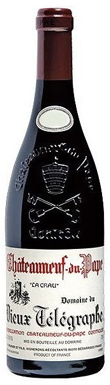

Complete and harmonious, this is a glassy, almost naked depiction of Châteauneuf fruit. Very smooth, lithe tannins, it's sunny in style but not overly 'solaire'....
2017
Domaine du Vieux TélégrapheChâteauneuf-du-Pape

Famille Brunier, Piedlong, Châteauneuf-du-Pape, Rhône, France, 2017
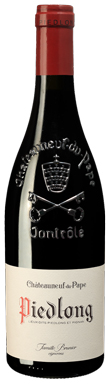
From lieux-dits Pied Long (75-year-old Grenache) and Pignan (50-year-old Mourvèdre). It may only be medium-bodied, but its searching and concentrated. Wild cherry, and a pleasing...
2017
Famille BrunierChâteauneuf-du-Pape
Domaine du Vieux Télégraphe, Télégramme, Châteauneuf-du-Pape, Rhône, France, 2017
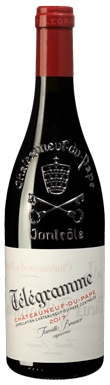
Very open, with transparent red fruits: strawberry, raspberry, violet and sage. Medium to full-bodied, not complex, but certainly Châteauneuf. Sunny but well balanced with a...
2017
Domaine du Vieux TélégrapheChâteauneuf-du-Pape
Domaine du Vieux Télégraphe, Châteauneuf-du-Pape, Rhône, France, 2015
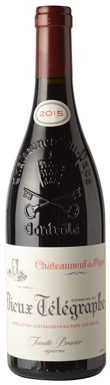
A sunny year, but this isn't as deep in colour as some other recent vintages. Distinctly eucalyptus, fresh thyme, rosemary and liquorice. It's full-bodied but...
2015
Domaine du Vieux TélégrapheChâteauneuf-du-Pape
Domaine du Vieux Télégraphe, Châteauneuf-du-Pape, Rhône, France, 2012
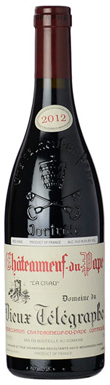
Brilliantly coloured, transparent. A little grilled note to the cherry, berry fruits with a salty, savoury finish. Medium-bodied, fresh, long and all very harmonious....
2012
Domaine du Vieux TélégrapheChâteauneuf-du-Pape
Domaine du Vieux Télégraphe, Châteauneuf-du-Pape, Rhône, France, 2010
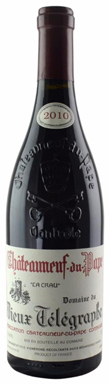
The lightest in colour of the 2010 quartet, and a wine of outstanding aromatic complexity (bramble, strawberry, thyme, orange blossom, lavender and honey emerge with...
2010
Domaine du Vieux TélégrapheChâteauneuf-du-Pape
Domaine du Vieux Télégraphe, Châteauneuf-du-Pape, Rhône, France, 2001
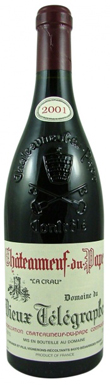
Firmly into its mature phase now. Polished wood, cedar and black cherry jam - sweet on the palate, a very fine and elegant vintage. It's...
2001
Domaine du Vieux TélégrapheChâteauneuf-du-Pape
Domaine du Vieux Télégraphe, Châteauneuf-du-Pape, Rhône, France, 1998
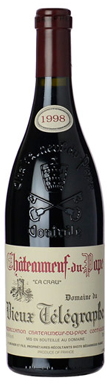
Pure transparent ruby still. There's a menthol streak on the nose, reminiscent of Germolene alongside hay, flowers and red cherry, it really leaps out of...
1998
Domaine du Vieux TélégrapheChâteauneuf-du-Pape
Domaine du Vieux Télégraphe, Châteauneuf-du-Pape, Rhône, France, 2013
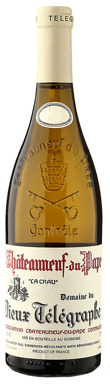
Still vibrantly green/silver in colour. Fresh and floral with lovely intensity and aromatic impact. Great length, very bright and mineral. Not as complex at the...
2013
Domaine du Vieux TélégrapheChâteauneuf-du-Pape
Domaine du Vieux Télégraphe, Châteauneuf-du-Pape, Rhône, France, 2014
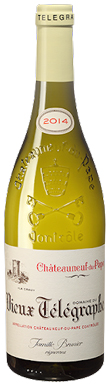
This is beginning to take on some oxidative notes, it's honeyed with a touch of quince and crème brûlée on the finish. Starting to show...
2014
Domaine du Vieux TélégrapheChâteauneuf-du-Pape
Domaine du Vieux Télégraphe, Châteauneuf-du-Pape, Rhône, France, 2015
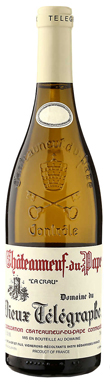
Aromatically a little more diffuse than the 2016, not as direct. Pear, gently floral, very full-bodied, rich and generous. Acidity is on the low side,...
2015
Domaine du Vieux TélégrapheChâteauneuf-du-Pape
Domaine du Vieux Télégraphe, Châteauneuf-du-Pape, Rhône, France, 2016
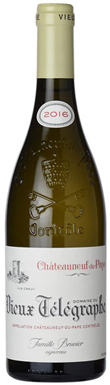
Breezy, blossomy style with citrus pith. Full-bodied with good concentration but good acidity, fresh and lively. There's lovely balance between vibrant fresh fruits, acidity and...
2016
Domaine du Vieux TélégrapheChâteauneuf-du-Pape
Domaine du Vieux Télégraphe, Clos La Roquète Blanc, Châteauneuf-du-Pape, Rhône, France, 2018
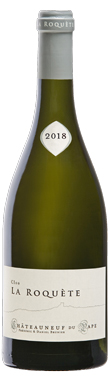
Citrussy on the nose with grapefruit and a touch of banana on the palate, rich in body but no heaviness. Very well balanced, with vanilla...
2018
Domaine du Vieux TélégrapheChâteauneuf-du-Pape
Domaine du Vieux Télégraphe, Châteauneuf-du-Pape, Rhône, France, 2018
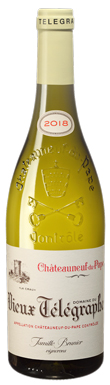
It's a richer, more exotic style than La Roquète, more pineapple on the nose. Fuller in body with a little brown sugar dusting, but it's...
2018
Domaine du Vieux TélégrapheChâteauneuf-du-Pape
