
Rating the Barolo vintages of the noughties
In more than one way a decade of epochal change for the world, the Noughties also heralded 10 years of up and down fortunes for Piedmont’s best-reputed wine region – our expert picks the wine highlights from each year.


From 9/11 and Barack Obama to the rise of social media with the birth of YouTube, Facebook and Twitter, the first decade of the new millennium saw the world entering a new, for-better-or-for-worse era.
The James Cameron movie Avatar (2009) allegorised numerous themes of the day; Al Gore’s An Inconvenient Truth (2006) elucidated climate change concerns specifically; and dark-horse film Sideways (2004) had a lasting impact on wine, most notably in the US.
As the decade progressed, the ‘modern versus traditional’ debate became outdated as the divide between the two schools of winemaking thought blurred.
As the late, great Nicolas Belfrage MW pointed out in the 2004 edition of his Barolo to Valpolicella book: ‘The majority of producers today, including some of the greatest, tend to settle for a middle of the road between the two extremes.’
Scroll down for Michaela Morris’ Barolo highlights from 2000-2009
Formative period
With better-quality, cleaner wines, Barolo gained traction globally thanks to lauded vintages like 2001 and 2004.
And, as prices were already soaring for the three ‘big Gs’ – Giacomo Conterno, Bruno Giacosa and Gaja – aficionados started seeking out treasures among (then) lesser-known estates such as Cavallotto, GD Vajra and GB Burlotto: all highly regarded today.
Barolo went through an enormous growth spurt as planted area increased by more than 40% during the decade to 1,880ha in 2010, according to the regional consorzio’s technical director Emanuele Coraglia.
It was also during this time that the final groundwork was laid for the denomination’s MGAs (menzione geografica aggiuntiva: delimited production zones comparable to a climat in France), which were officially introduced with the 2010 vintage.
The Noughties weren’t without their bumps in the road, as the effects of climate change became undeniable and the decade concluded with the 2008 global financial crisis and resulting economic recession. Barolo, however, managed to weather these and has continued its steady rise.
2000 – 3.5/5
‘Now is the time to open 2000 Barolo. Top wines have aged well, though few will continue to improve. Lesser ones are in decline.’
After the intensity of the 1999 build-up to ‘Y2K’, the uneventful start to the new millennium was almost a let-down. Likewise, Barolo’s 2000 vintage was perhaps overhyped. The region experienced record temperatures in August and the wines were shaped by the heat that lasted until midSeptember.
On my inaugural trip to Barolo in 2004, the nascent 2000s seduced with a sweetness of fruit and rich, full structure.
Today, the most successful show mature but not necessarily overripe aromas and are still vigorous. Others have disappointed, with oxidised fruit punished by massive tannins suggesting miscalculated winemaking.
Nevertheless, Chiara Boschis’ Cannubi defies any judgement that wines of the so-called modernists can’t age harmoniously. Towards the opposite end of spectrum, Cappellano’s Otin Fiorin Piè Rupestris (US$550 The Cellar d’Or) is gorgeously expressive, and Elio Grasso’s Ginestra Vigna Casa Matè (US$120 Fine Liquors) is in a wonderful holding pattern.
2001 – 5/5
‘Just like Wikipedia (launched in January of this year), Barolo’s legendary 2001 vintage has outlasted the iPod (unveiled by Apple that October). Intricate, vibrant wines are gratifying now but the elite should age effortlessly into their forties.’
Ideal conditions during summer with cooler weather in September allowed for slow, even maturation. The resulting wines boasted balanced ripeness with deep, earthy complexity and firm, ample structure.
Across communes and price points, they impressed upon release, though they weren’t necessarily easy going. Now they are very satisfying in their classic architecture – with the exception of the most enthusiastically oaked wines.
One of the vintage’s greatest wines, Bruno Giacosa’s Rocche del Falletto has consistently offered immense pleasure since age 18. Conversely, I wouldn’t touch Giacomo Conterno’s Monfortino (in bond £994-£1,167 Appellations, Brunswick, Corney & Barrow, Cru) for another five years.
Better to crack open wines like Azelia’s Voghera Brea Riserva, which recently proved to be in its sweet spot. Even many of the region’s most accessibly priced wines such as Manzone’s Le Gramolere have stood the test of time. All the same, I would drink these soon.

2002 – 1/5
‘Other than a couple of remarkable exceptions, wines from 2002 are past their prime.’
The most demoralising vintage of the 21st century thus far, 2002 was unseasonably cool, cloudy and rainy. Then, severe hailstorms in the second week of September devastated vineyards throughout the zone, most notably in the west.
Barolo production volumes were down approximately one third compared to 2001, and many producers declassified what grapes they could salvage as Langhe Nebbiolo DOC.
In more fortunate locations, such as Monforte and Serralunga, fresh and sunny autumn conditions allowed a few to coax out healthy grapes with sufficient ripeness. The vintage yielded just two Riserva wines of note: Conterno’s legendary Monfortino (£1,325-£1,600 Berry Bros & Rudd, Nemo Wine Cellars) and Massolino’s Vigna Rionda.
When I asked Franco Massolino if I might taste the latter, he graciously acquiesced. It represents a remarkable lesson to never completely dismiss a vintage.
2003 – 3/5
‘Already peaked; drink sooner rather than later.’
With record heatwaves across Europe, 2003 was the polar opposite of 2002. Beyond relentless, sweltering temperatures, the Langhe recorded a mere 265mm of rain between January and August. Vines shut down due to water stress, and uneven ripening led to an early harvest. Careful selection was essential due to sunburnt or shrivelled grapes.
Upon release, the wines largely lacked Nebbiolo’s signature aroma precision and were marked by drying tannins. With age, that astringency has been exacerbated in the vintage’s more oxidative wines.
Better examples – and there were some – aged more congruently. Nonetheless, for my palate, these reached their apogee at 10 to 15 years old.
At Giuseppe Mascarello’s estate last year, the fully evolved Monprivato (in bond £120 Hatton & Edwards) wasn’t necessarily thrilling but exhibited impressively managed tannins. Less elegant but also hanging on well was Marchesi di Barolo’s Sarmassa.
Perhaps unsurprisingly, Conterno’s Cascina Francia has defied the vintage – at least in terms of ageability.
2004 – 4.5/5
‘Most have aged gracefully and are in a lovely, leisurely drinking window. The best is yet to come for the cream of the crop.’
After two challenging vintages, 2004 brought welcome reprieve. The long, moderate growing season and late harvest under ideal conditions allowed for ideal phenolic ripeness and development of Nebbiolo’s full spectrum of complex nuances. The only niggle was the abundant crop, which resulted in the occasional diluted wine.
I vividly recall the excitement and energy when I visited at harvest. Once released, four years later, the wines were characterised by a crunchy, mouthwatering quality; balanced, though not yet accessible.
Over the years most have lived up to that initial promise. At a recent Barolo dinner, Giuseppe Mascarello’s savoury, racy and almost fragile Monprivato (in bond £125-£213 Berry Bros & Rudd, Bordeaux Index, Bowes Wine, VinQuinn) was barely surpassed by Cavallotto’s Bricco Boschis Vigna San Giuseppe Riserva.
Alas, Domenico Clerico’s wood-driven Ciabot Mentin Ginestra spoke of a bygone era.
2005 – 3.5/5
‘Not necessarily fading quickly, yet most wines are best enjoyed within the decade.’
Considered by several producers to be undervalued, 2005’s reputation as a cool, rainy vintage and the global recession simultaneous with its release (following the 2008 crash) resulted in sluggish sales. It also faced stiff competition from 2004 and 2006.
I would describe 2005 as inconsistent. Early October storms rendered picking times and fruit selection particularly crucial. Warmer, well exposed sites were favoured. Slightly angular wines sport lean fruit, and prominent acidity exaggerates tannin friction.
While they will never be round, gracious wines, some have improved over the years.
Staunch traditionalist Bartolo Mascarello died aged 78 in March 2005, passing the torch on to his daughter Maria Teresa. Their Barolo (in bond £292-£440 Berry Bros & Rudd, Crop & Vine, Justerini & Brooks) was balletic at age 10.
Five years later, Aurelio Settimo’s Rocche dell’Annunziata revealed its old-school timelessness, Brezza’s firmly vertical Sarmassa was in ascent, and Paolo Scavino’s Bric dël Fiasc (US$320/magnum Chateau Cellars) exhibited a friendlier side of the vintage.
Tasted earlier this year, Aldo Conterno’s Cicala is a wonderfully evocative rendering.

2006 – 4/5
‘There is no rush to open top-flight wines, and some demand further cellaring.’
From the start, 2006 fluctuated between warmer-than-average and unseasonably cool temperatures. Rainfall (or lack of) was similarly extreme. Bruno Giacosa, who suffered a stroke in 2006, decided not to bottle any Barolo or Barbaresco, citing the erratic conditions. Yet other producers compare it to the revered 1996 or 1999.
Austere, muscular and bracing, the wines were difficult to assess in their youth. Some, like Fratelli Alessandria’s Monvigliero (£100 in bond to £150 Mann Fine Wine, Nemo Wine Cellars) and Ettore Germano’s Cerretta promised accessibility a handful of years ago.
While the vintage’s less successful wines are starting to dry out, the better wines possess significant fruit intensity to back up that formidable structure. I have relished several rousing specimens, from Elio Grasso’s fiercely tannic Gavarini Chiniera and Oddero’s rustically characterful Vignarionda Riserva (US$190-$230 Eataly Vino, Wine Exchange), to Aldo Conterno’s haunting Granbussia Riserva (£394 Justerini & Brooks), which was one of my favourite wines of 2023.
Caressing rather than commanding, Giuseppe Mascarello’s Monprivato may very well be among my top picks in 2024.
2007 – 4/5
‘Won’t live on to a great age, but very pleasing at present and if drunk before long.’
Warm rather than excessively hot, with moderate rainfall, 2007 was in advance throughout. Even with below-average temperatures in August, harvest was early. Still, the vines had ample time to develop healthy, ripe, sugar-rich grapes.
Fragrant and charming in their youth, the wines revealed their plush, fleshy nature from the start. Even more traditionally austere offerings were quite flashy to begin.
Up to this point, the 2007 wines have evolved in a correspondingly precocious manner. At 10 years old, both GD Vajra’s Bricco delle Viole and Elvio Cogno’s Ravera had arrived at a beautiful drinking window, demonstrating that the vintage also allowed Barolo’s cooler sites to shine.
And last year, an attractive pair of Riservas from Casa E di Mirafiore (US$188-$225 Bourbon Central, Park Avenue Liquor) and Marchesi di Barolo captured 2007’s generous but mature nature.
2008 – 5/5
‘Estates’ entry-level Barolos are ideal in the near term, whereas higher-tier examples will continue ageing with a dignified gait.’
The cool and rainy 2008 growing season saw fungal disease pressure persisting well into July. More than one producer has reminisced that they thought they wouldn’t harvest. Fortunately, mild, sunny weather towards the end of the summer changed growers’ fortunes.
Initially underrated, 2008 wasn’t as overtly seductive as 2007, but over time the elegantly structured, brilliantly focused wines have proven themselves and just keep blossoming. Tasted on several occasions, Vajra’s Bricco delle Viole is a stunning illustration.
The vintage also revealed the welcome transition away from a heavily oaked style, which, unlike Y2K’s low-rise jeans trend, is thankfully not poised to make a comeback.
I now seek out 2008s and have enjoyed plenty recently, such as Ciabot Berton’s silky Roggeri, Luigi Baudana’s diamond-in-the-rough Baudana, and even Voerzio’s more oak-inflected Case Nere Riserva (US$400 Vintage Wine Merchants). Earlier this year, Borgogno’s Riserva was the highlight at a 10-year release retrospective.
2009 – 3.5/5
‘Drink 2009s soon, before the fruit fades.’
Along the lines of 2003 but not as extreme, 2009 was neither among the region’s superlative vintages, nor a write-off, and previous experience with dry, hot vintages served producers well.
A retrospective last year demonstrated that the wines are ageing quite quickly. In some, surly tannins poked through and fruit was starting to oxidise. Others, such as Fratelli Alessandria’s Monvigliero were evolving more harmoniously.
I have thoroughly appreciated plenty of 2009s. Cogno’s Ravera showed the advantage of a cool site; however, Oddero’s Vignarionda Riserva (in bond £147-£179.33 Cru, Ideal Wine Co, Lady Wine, VinQuinn) also achieved exquisite balance. Azelia’s Voghera Riserva (in bond £87.50 Berry Bros & Rudd) and Ceretto’s Cannubi San Lorenzo (in bond £919-£945/magnum Crop & Vine, Ideal Wine Co, VinQuinn) made a strong case for old vines in difficult years.
Cannubi lived up to its lofty reputation, as evidenced by Giacomo Fenocchio, Brezza, and above all GB Burlotto (£313 in bond to £495 Crop & Vine, Crump Richmond Shaw, Wine Raks).
Barolo highlights from 2000-2009
Related articles
- Etna Rosso: Panel tasting results
- Italy’s future greats: 10 wineries from Piedmont to Campania nominated by their peers
- Super Tuscans 2.0: Meet the innovators behind the stylish new wave
E Pira & Figli, Barolo Cannubi, Barolo, Piedmont, Italy, 2000
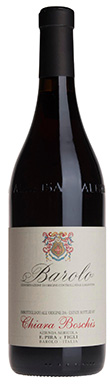

At 24 years old, this still demonstrates its 100% new barrique regime. An initial bouquet of coffee and sweet spice is matched by a dense...
2000
E Pira & FigliBarolo Cannubi

Bruno Giacosa, Riserva, Barolo Rocche del Falletto, Serralunga d’Alba, Piedmont, Italy, 2001
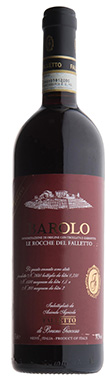
Irony minerals, pressed violet and dark cocoa are at the fore with sweet moist earth and mace on the palate. It has filled out and...
2001
Bruno GiacosaBarolo Rocche del Falletto
Azelia, Voghera Brea Riserva, Barolo, Serralunga d’Alba, Piedmont, Italy, 2001
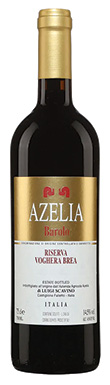
From neighbouring communes Voghera and Brea, this is silky, smooth, seamless and refined, with well-defined sweet fruit and intriguing tertiary notes lurking. At peak but...
2001
AzeliaBarolo
Massolino, Riserva, Barolo Vigna Rionda, Serralunga d’Alba, Piedmont, Italy, 2002
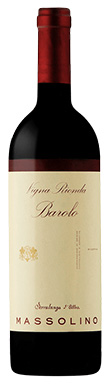
Massolino produced small amounts of the estate’s three Serralunga cru bottlings in 2002, including this Riserva. A crumbly, hard to extract cork heightened anticipation, but...
2002
MassolinoBarolo Vigna Rionda
Giacomo Conterno, Cascina Francia, Barolo Francia, Serralunga d’Alba, Piedmont, Italy, 2003
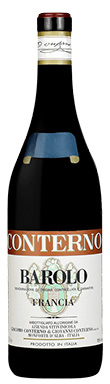
The Conterno family waited until early October to harvest and decided against a Monfortino selection, instead reserving the best grapes for Cascina Francia. At a...
2003
Giacomo ConternoBarolo Francia
Cavallotto, Vigna San Giuseppe Riserva, Barolo Bricco Boschis, Castiglione Falletto, Piedmont, Italy, 2004
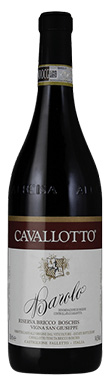
When I tried this in 2020, I was taken by its graceful power and ample capacity for ageing. Four years later, it continues to develop....
2004
CavallottoBarolo Bricco Boschis
Aldo Conterno, Cicala, Barolo Bussia, Monforte d’Alba, Piedmont, Italy, 2005
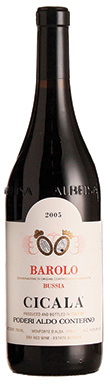
After passing up Barolo production in 2002 and 2003, and losing Cicala to hail in 2004, the Conterno family crafted the 2005 from grapes picked...
2005
Aldo ConternoBarolo Bussia
Giuseppe Mascarello, Monprivato, Barolo, Castiglione Falletto, Piedmont, Italy, 2006
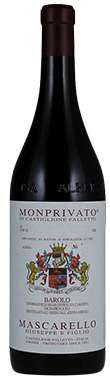
At an alfresco dinner party with friends, this was the unequivocal wine of the night. It captures both greatness of site and singularity of producer,...
2006
Giuseppe MascarelloBarolo
Elio Grasso, Gavarini Chiniera, Barolo, Monforte d’Alba, Piedmont, Italy, 2006
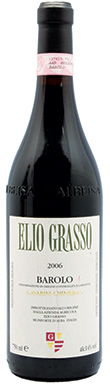
Tasted from magnum, this single-vineyard offering is gorgeously fragrant but still ferociously tannic and in need of time.
2006
Elio GrassoBarolo
Marchesi di Barolo, Riserva, Barolo, Piedmont, Italy, 2007
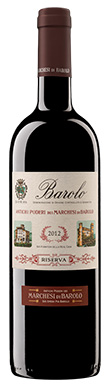
A selected blend from the estate’s top holdings in the Barolo and Monforte d’Alba townships, the 2007 Riserva is constructed around a backbone of the...
2007
Marchesi di BaroloBarolo
Borgogno, Riserva, Barolo, Barolo, Piedmont, Italy, 2008
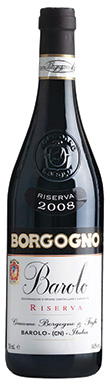
Since 2008, when the Farinetti family acquired the historic Borgogno estate, the Riserva has been crafted from specific parcels within the Cannubi, Liste and Fossati...
2008
BorgognoBarolo
Fratelli Alessandria, Barolo Monvigliero, Verduno, Piedmont, Italy, 2009
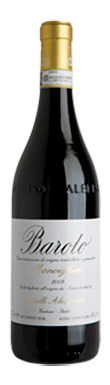
Now revered as one of Barolo’s top sites, the Monvigliero MGA was certainly less known in the noughties. Fratelli Alessandria was also considered an up-and-comer...
2009
Fratelli AlessandriaBarolo Monvigliero
