
Dual identity: Rebula vs Ribolla plus 9 of the best to try


Grown in a region that straddles Italy and Slovenia, the Rebula, or Ribolla, grape has a dual identity. But, argues Stephen Brook, whatever you call it, this versatile grape is worth seeking out...
In the 1980s I would stand in the vineyards of Collio in Italy and gaze across the patrolled border into Slovenia, which was visible but scarcely visitable. Collio, the core appellation of Friuli, adjoins the Slovenian region called Goriška Brda. The topography is much the same, the varieties planted are identical, and many of the Collio producers are ethnic Slovenians. Hardly surprising, as until the late 1940s this was a single region, and in 1991 the border was removed.
Scroll down for Stephen Brook’s top Ribolla / Rebula picks from Italy and Slovenia
At the Zanut winery in Goriška Brda, the Kocijancic family dreams of a single appellation uniting Collio and Goriška Brda. ‘But it won’t happen,’ they add realistically, ‘as there are too many bureaucratic obstacles to allow producers from two countries to follow identical rules.’ Many producers remark on how unusual it is for grape varieties such as Sauvignon Blanc, Chardonnay and Ribolla / Rebula all to be grown within the same region. That’s because Goriška Brda lies approximately 20km from the Adriatic shore in one direction, and 20km from the Alpine foothills in the other, giving a complex cluster of microclimates.Rebula is the most treasured variety here, and growers believe the striking quality of the best wines derives from soils known as opoka. This is sedimentary marl with sandstone and clay; it’s layered and friable. It’s low in organic matter but has a high mineral content, which combined with the climate can give the wines a saline character. A variety that loves heat, Ribolla / Rebula thrives on the area’s sunny hilltops.
Ribolla / Rebula at a glance
Collio DOC: 1,500ha, of which 435ha are planted with Ribolla Gialla (94ha of that declared as DOC)
Goriška Brda: 1,800ha, of which 381ha are planted with Rebula
Dominant soil: opoka (sedimentary marl with clay and sandstone)
Elevation: Collio (80-200m); Brda (60-250m)
In some respects Goriška Brda – which is slightly hillier than Collio and has 1,800ha of vineyards – reminds me of Barolo, with vines planted on a range of expositions and altitudes. Zanut, for example, has Cabernet Sauvignon planted in two locations, with a gap of 10 days in ripening and harvest.What unites the top estates in both regions is a respect for the grape that’s known as Rebula in Slovenia or Ribolla in Collio. (To avoid confusion, the variety will be referred to as Rebula hereafter.)
Celebrated Collio producers such as Gravner and Radikon are in awe of Rebula, and their Goriška Brda counterparts share that view. It’s late ripening. Indeed, I saw Chardonnay being picked in late August 2018, while Rebula vines had at least a month more to go. It gives rich, textured wines that are not especially aromatic, but if cropped low, can have remarkable longevity in bottle.
Rebula styles
Rebula comes in various guises, which is a strength but can also be a source of confusion. Briefly summarised, it can be made in a ‘classic’ style, almost always unoaked though often aged on the fine lees; or as a lightly macerated wine, in which there is extensive skin contact; or as a wine with long maceration, which is then given long ageing either in wood or amphorae. Rebula’s structure and extract give it sufficient robustness to survive long macerations and ageing, the result often being an archetypal ‘orange’ wine. In addition, there is an expanding production of sparkling Rebula, and a tiny production of passito sweet wine.
The classic style shouldn’t be underrated. Ribolla / Rebula’s acidity beautifully balances its weight of fruit. Good examples abound on both sides of the border, and arguably Jermann’s Vinnae, first made in 1983, is the finest example, thanks to its energising vibrancy. It’s not a pure Ribolla, as it includes 10% of Riesling and Friulano, with part of the wine aged in 750-litre Slavonian oak barrels. From Slovenia, excellent classic-style producers include Dolfo, Erzetic, Ferdinand (for its barrique-aged Epoca), and Edi Simčič, now run by his son Aleks Simčič. The Simčič Rebulas are aged in 15% new barriques for about 10 months, which gives the wine its texture, elegance and structure. Aleks doesn’t practise prolonged maceration, for a simple reason: ‘I find the technique can rob the wines of finesse.’ It’s a question of priorities.
There is a middle way between the purity of the classic style and the full-on tannic, macerated style. The Edi Keber winery is a Collio estate that produces a single Collio Bianco blend, but since 2012 Edi’s son, Kristian Keber, has created a separate winery in Goriška Brda to vinify a Rebula (plus a dash of Friulano) from 40-year-old vines. This is macerated for four weeks with, unusually, 50% of stems, fermented with natural yeasts, and then aged for two years in older 700-litre barrels. It’s deep straw rather than orange in colour. Although the aromas echo the maceration, the palate is full of rich, broad fruit: mandarins and apricots, principally, and with the lift of acidity that Rebula effortlessly contributes. With its texture, vibrancy and complexity, I wouldn’t describe this as an orange wine, although it’s remote in aroma and body from the classic style.
Winemaker Marjan Simčič produces three Rebulas: a Classic, the old-vine Cru Selection, and the single-vineyard Opoka. His winemaking is nuanced. The Cru Selection is fermented on the skins for six days, then spends 12 months on lees in 3,000-litre oak barrels, followed by six months in 500-litre barrels. The Opoka has a slightly longer maceration, but in recent vintages this has taken place in concrete eggs. The wine is also aged for 12 months in concrete eggs, which Simčič believes give a better micro-oxygenation and softer tannins. These are splendid wines, with opulent stone fruit and orange aromas, plus a creamy concentration on the palate, some dried fruit flavour and a texture that shows grain and extract.

Simčič says: ‘My aim is to bring Rebula up to a more prestigious level. Before 1991 all the grapes went to the cooperative and quality was low. After independence, producers jumped onto the barrique bandwagon, but that didn’t seem the right approach to me. I want wines that age well. After 10 years, my macerated Rebulas develop some secondary aromas, but the flavour remains fresh.’
Orange wines
For the full orange wine experience, you need to seek out the wines from Gravner and Radikon. Josko Gravner and the late Stanko Radikon opted for the maceration route in the mid-1990s, the major difference between them being that Gravner would age the wines in clay amphorae, whereas Radikon preferred to use large casks.
Saša Radikon, Stanko’s son, recalls: ‘My father was allowed to take over the property by my grandfather on the condition that he planted more Rebula, which he did. He had used Rebula to make orange wines in the past. In the late 1980s new presses were introduced and they gave less extraction. The wine was still good but lacks the typicity of Rebula. The difference was the maceration, which is what makes a great red wine too. So my father tried it in 1995, and Gravner was on a parallel course. This was helpful as otherwise my father would have been seen as just one crazy guy. He tried many experiments and eventually decided that the right period was two to four months.’
Gravner took a more extreme view, with almost puritanical single-mindedness. He picks Rebula very ripe, often at yields of 12hl/ha. The maceration and preliminary ageing in amphorae lasts up to year, and there is a further ageing in large casks for up to six years. ‘I tried a shorter maceration,’ he once told me, ‘but I found that a longer period sweetens the wine.’ The wines are majestic and sumptuous, yet fully dry, but not to everyone’s taste. Some fellow winemakers say that they admire Gravner’s Rebula, but don’t usually feel inclined to drink a second glass.

The drawback of the long-maceration method is evident. Steeping the wine on the skins for so long can extract magnificent flavours and assertive tannins, but those tannins need to be softened by very long ageing. This is costly for the producer – and hence the consumer. Simčič speeds up the process by using concrete eggs, but then he only gives the wines a moderate maceration in the first place.
It’s not just Rebula that demands long ageing in order to become harmonious. Some red wines of the region, such as Marjan Simčič’s Merlot, are aged for four to six years in wood to soften the tannins, and even then they don’t always succeed.
Growers explain that in this region the red grapes are high in tannin and acidity, which does make one wonder whether they are an ideal choice for planting. Rebula, in contrast, can be made in a fresh and fruity style, and only a stalwart band of wine lovers is seeking out the brazenly concentrated ‘orange’ wines of Radikon or Gravner.
It also requires great skill to risk such long ageing. Erzetic produces an amphora-aged Rebula, which is good but lacks some flair and vigour. Ferdinand’s Brutus Rebula spends a year on the skins in 500-litre barrels, but I greatly prefer the winery’s unmacerated Epoca bottling (and so, I think, does the winery’s owner Matjaž Cetrtic).
One unresolved issue in the region is how to handle wines that are blended from sites in both Italy and Slovenia, as quite a few estates have vineyards in both. The rules are complicated, and wineries such as Edi Keber and Jermann have established separate wineries across the border to allow them to claim the appellation. Saša Radikon shrugged off the bureaucratic tangles: ‘Italian growers are not allowed to bring in Goriška Brda grapes – but we always find a way.’
What matters more is that both regions are thriving, their tourism and gastronomy are flourishing, and wine lovers are spoiled for choice in selecting a style of Rebula that suits their palate.
See Stephen Brook’s top Rebula picks from Italy and Slovenia
You may also likePinot Bianco: Italy’s northern star plus 12 top wines to tryExpert’s Choice: Puglia WinesItaly’s best white wines with foodA wine lover’s guide to Sardinia
Gravner, Ribolla Anfora, Friuli Venezia Giulia, Italy, 2008
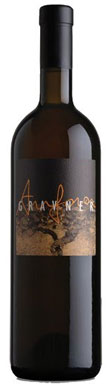

After 12 months in amphorae buried underground and six years in casks, it’s not surprising that the wine has a dull orange straw colour. But...
2008
Gravner

Marjan Simcic, Ribolla Opoka, Goriska Brda, Slovenia, 2013
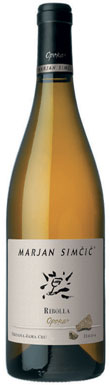
A single-vineyard macerated wine, aged in oak vats. Splendid nose of rich mandarin and a suave, very concentrated palate that is still assertive and forceful....
2013
Marjan Simcic
Edi Simčič, Rebula, Goriska Brda, Slovenia, 2015
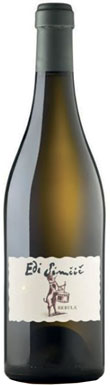
Although barrique-aged, the oak is barely discernible, other than in a light smokiness on the nose, with its rich lime and apple aromas. Full-bodied, creamy...
2015
Edi Simčič
Gravner, Ribolla Anfora, Friuli Venezia Giulia, Italy, 2007
Deep orange-bronze colour, complex nose of barley sugar, oranges and dried apricots. Sumptuous, creamy, very concentrated and pungent, with complexity and persistence. But the alcohol,...
2007
Gravner
Radikon, Ribolla, Friuli Venezia Giulia, Italy, 2010
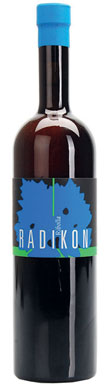
Long maceration gives a deep straw colour. Marmalade on the nose, which is robust yet perfumed. Full and creamy, with a grainy texture, ample body...
2010
Radikon
Marjan Simcic, Ribolla Cru Selection, Goriska Brda, Slovenia, 2015
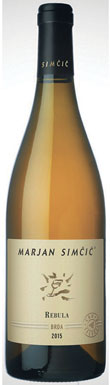
Maceration on the skins gives a full straw colour. The nose has heady stone-fruit aromas, while on the palate it’s rich, fleshy and concentrated, and...
2015
Marjan Simcic
Ferdinand, Rebula, Goriska Brda, Slovenia, 2017
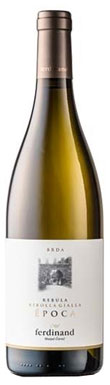
An unoaked, classic style. Breezy apple aromas and a good attack that’s fresh with lively acidity. It has weight without heaviness, and while concentrated, shows...
2017
Ferdinand
Marjan Simcic, Ribolla Classic, Goriska Brda, Slovenia, 2017
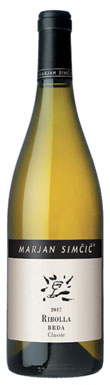
An exuberant nose of ripe apple, pear and quince. A full-bodied and plump wine, it is a touch soft and broad as the acidity is...
2017
Marjan Simcic
Zanut, Rebula, Goriska Brda, Slovenia, 2015
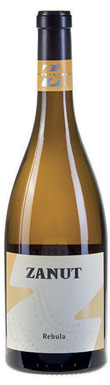
Classic, fresh lime aromas. Quite rich and rounded, from extended lees-ageing, and breadth of fruit is countered by some spice and bite. Decidedly ripe, with...
2015
Zanut
