
Regional profile: Nuits-St-Georges & 22 wines tasted
Nuits-St-Georges lacks the cachet enjoyed by some of its more exalted neighbours, a state of affairs which continues to mystify Charles Curtis MW, who argues its wines warrant far more appreciation.

‘The forgotten beauty of the Côte,’ says Thibault Liger-Belair of the town, Nuits-St-Georges. Without a doubt, he is right. Despite its prime location, it is often overlooked — or at least underestimated — by Burgundy lovers today.
And yet, Nuits-St-Georges is a marvellous destination for staggeringly good red wines from the Côte de Nuits that still offer value even in today’s overheated Burgundy market.
Scroll down to view tasting notes and scores of 22 wines from Nuits-St-Georges
The vineyards of Nuits are perhaps overshadowed in prestige by those of Vosne-Romanée (known as ‘the Pearl of the Côte’), even though they adjoin each other.
The working, somewhat gritty, town of Nuits also lacks the prestige and the touristic charm of Beaune to the south. In fact, before appending ‘Les St-Georges’ to its name, the town was called Nuits-sous-Beaune, yet the vines here are today producing wines that offer very respectable competition for even the greatest sites in Burgundy.
Writing in the early 19th century, author André Jullien lists the Nuits premier cru Les St-Georges just after La Tâche, commenting: ‘The wine of this clos has a great resemblance to that of Chambertin, to which it is inferior in quality. It has more colour, flavour, body and even density, but the former is preferred for its finesse and delicacy.’
This has, in fact, long been the judgement of the discerning: substantial, powerful wines, but somewhat rustic. 18th century sources such as Claude Courtépée relate that the wines of Nuits were not highly regarded until the end of the 17th century when they were prescribed by the physician of Louix XIV as a tonic.
Nuits-St-Georges at a glance
Grapes Pinot Noir, Chardonnay, Pinot Blanc, Pinot Gris. Co-plantation of up to 15% white grapes is permitted in the red wines
Area under vine Pinot Noir: 298.59ha, Chardonnay: 9.87ha
AOC established 1936
Soil Bathonian and Comblanchien limestone with varying proportions of clay and marl.
Number of producers 141
Average annual production Red: 11,514hl (including 4,890hl of premier cru), White: 400hl (including 259hl of premier cru)
A complex patchwork quilt
Despite their ‘rustic’ reputation, however, there is great diversity in the wines of Nuits. To understand the terroir, it is necessary to consider each of its various parts, which are each very distinctive. These include the area north of town on the Montagne de Vosne, the cool areas in the Combe de la Serrée, the area south of town, the portion known as the Combe des Vallerots and the vineyards in Prémeaux-Prissey at the southern end of the appellation.
North of the town there is a wide swathe of vines that tumbles down from the heights of the Montagne de Vosne. The top of the slope here is limestone, the bottom is clay. The vines face east and then south as the slope wraps around into the valley of the Meuzin, known as the Combe (or Gorge) de la Serrée.
At the very top of the slope, the vines are mostly village-level and a thin layer of soil covers the solid limestone bedrock. The topsoil is deeper at mid-slope with more clay and a high calcium content, and those at the base of the slope are heavier clay with a higher moisture content.

It is often said that the wines north of the village partake of the elegance of their neighbour Vosne-Romanée. Indeed, premier cru Aux Boudots directly adjoins the well-regarded Vosne premier cru Aux Malconsorts, and just down the slope from Boudots, Au Bas de Combe borders Vosne premier cru Les Chaumes.
All authorities agree that the centre of this band provides top quality vineyards, including the premier crus Boudots south to Aux Cras, Le Richemone, Aux Murgers, Aux Vignerondes and Aux Chaignots, which all face due east.
The wines produced in the north of Nuits are characterised by great finesse and elegance. Today’s premier cru classification, however, may be a bit generous, since it includes portions in cool terroirs fairly high on the slope and into the valley of the Meuzin that have not always been so well-regarded.
This valley, the Combe de la Serrée, leads back to the higher elevations of the region known as the Hautes-Côtes. The erosion since the last ice age washed a large amount of alluvial matter into the plain of the Saône, making the soil at the base of the slope very deep and somewhat heavy. All of the vineyards here are classified as village level.
The same is true of the vines on the other side of the Meuzin – all the vines surrounding the town itself are inclined slightly to the north and are thus less highly esteemed.
Recent vintages
2021 A year of frost damage and incessant rainfall, but talented growers managed to produce wines that are perfumed, elegant and structured, if somewhat light in colour and body. Yields generally were disastrously small but some growers, such as Thibault Liger-Belair, made nearly as much in some sites, while still sorting rigorously for quality.
The wines in general were lighter, fresher, less concentrated and more based on finesse than power. In short, a ‘classic’ style, almost a throwback to the ’80s or ’90s, and a refreshingly different style that is very distinct from recent ‘global warming’ hot years.
2020 The third of three hot years produced very rich wines in Nuits-St-Georges but not over the top according to local sources; pH levels remained refreshingly low considering the ripeness of the fruit. The area around Nuits suffered less from the dry conditions than the Côte de Beaune, helping the wines to achieve elegance despite the torrid conditions. This was still a powerful year and wineries could easily fall into the rustic, concentrated style for which Nuits is known.
2019 The summer of 2019 was almost as hot as that of 2018, but a confluence of factors conspired to reduce yields. There was a bit of frost damage in April, poor weather at flowering and heatwaves that led to sunburn and caused some vines to shut down during the worst of the heat.
Louis-Michel Liger-Belair estimated that the combined effect reduced yields by nearly 30%, concentrating the acidity as well as the sugar in the grapes, leading to wines of structure and balance. This vintage is now emerging — here as elsewhere — as the greatest of the Burgundian trio of 2018, 2019 and 2020 that have so delighted wine lovers.
2018 The first of three hot vintages, 2018 was the hottest since the landmark vintage of 2003. Fortunately for growers, the winter preceding the harvest was one of the wettest on record, so the vines had sufficient reserves of water, making 2018 an abundant harvest.
The torrid temperatures drove ripeness (and alcohol levels) to new highs, and in retrospect, the wines seem lush, concentrated and velvety, although they sometimes lack the incisive freshness that the lower yields of 2019 provided.
2017 Following a difficult year with serious frost damage, 2017 was a study in contrast. The spring was warm and mild, and flowering took place under ideal conditions. The vines were ready to yield abundantly after the low yields of the preceding year, and nature did not stand in the way.
The wines do not have the concentration of the 2016s or the ripeness of the three years that followed, but they are eminently pleasant and even the best should open at a fairly young age.
The band of premier crus begins again with climat Rue de Chaux as the slope again turns to face due east. This central portion of Nuits has some superb terroirs, from Pruliers to Roncière and Les Porets, which includes the monopole clos that owner Domaine Henri Gouges calls the Clos des Porrets St-Georges.
Up the slope from Rue de Chaux lies Les Crots, whose steep slopes shelter Château Gris, where Bichot farms a 3.5ha clos. The upper portion of this climat is planted in terraces and produces one of the relatively rare white wines from Nuits.
Further along the same slope to the south at a similar elevation lies the premier cru La Perrière, where Domaine Henri Gouges produces another white wine, this one from a special clone of Pinot called Pinot Gouges, which is a mutation of Pinot Noir that gives white grapes.

La Perrière lies at the beginning of the section of Nuits known as the Combe des Vallerots. Unlike the Combe de la Serrée that continues to the Hautes-Côtes, the Combe de Vallerots is closed at the top, yet it nonetheless delivers a gently cooling influence to the vines from above.
The southern side of the Combe des Vallerots harbours what many call the finest terroir in Nuits, Les St-Georges. This vineyard was already planted to vines in the 10th century when it was the property of the Archdeacon of Autun.
Today, the largest proprietor is Thibault Liger-Belair, who refers to the specific microclimate as Le Creux St-Georges, (the St-Georges hollow), noting that there is a fault line that crosses Les St-Georges that provides a vein of calcite in the soil.
Liger-Belair points out that there is another fault that separates the premier crus from the village-level wines here, explaining that while the premier crus have in general just 50cm of soil over the limestone bedrock, there are four to five metres of soil on the other side of the fault underlying the village-level wines.
Although the premier crus of Les Cailles and Les Vaucrains that lie north and east respectively of Les St-Georges are often considered nearly as good, this was not always true. The name Vaucrains is thought to originate with ‘(ne) vaut riens’ – literally meaning ‘isn’t worth anything’, a reference to the thin soils here.

Even today, it is not surprising that only Les St-Georges has been proposed for elevation to grand cru status.
Given the long history and acclaim of Les St-Georges, many have wondered why it was not promoted in 1936 when the appellation system began. A number of reasons have surfaced: some have said it was because the growers of the day wanted to avoid taxation. Others posit that the powerful négociants of the day wanted to avoid having their branded wines eclipsed by the elevation of Les St-Georges.
Les St-Georges lies on the southern border of the town of Nuits itself. To the south lies the town of Prémeaux-Prissey. The wines of Prémeaux begin with Les Didiers, which adjoins Les St-Georges and serves as a transition from the Combe de Vallerot to the vines of Prémeaux.
The vineyard is a monopole of the Hospices de Nuits. It is undoubtedly because the charitable sale here is less well-known than the older one for the Hospices de Beaune that this climat is not as well-known as it might be, yet it is superb. No less an authority than Dr. Lavalle, writing in 1850, remarked: ‘The footpath that separates Didiers from Saint-Georges is not, as it is in so many places, a limit beyond which everything suddenly changes.’
After Les Didiers, the band of premier crus comes down to the N74 road, beginning the portion of the Nuits appellation that one might call the Côte de Prémeaux. The vines here are relatively homogeneous and the slope becomes progressively less steep as the slope approaches the town of Comblanchien.
In this section of the Nuits appellation, one walled clos succeeds another, many of them under a single owner (known as a monopole).
To the south of Les Didiers lies the 7.11ha Clos des Forêts St-Georges, owned by Clos de l’Arlot. South of lieu-dit Les Forêts is the lieu-dit Aux Corvées, which includes both the Clos des Corvées (a monopole of Domaine Prieuré-Roch), and the Clos des Corvées Pagets, which is not a monopole.

Just up the slope from Aux Corvées is Aux Perdrix, which is almost a monopole – the Domaine des Perdrix owns 99% of the vineyard.
Even further up the slope is the premier cru Les Terres Blanches. This vineyard was promoted to premier cru fairly recently. It had been classified as Côte de Nuits-Villages, and the growers had requested promotion to village level, but the INAO (National Institute of origin and quality) promoted them directly to premier cru.
There are two distinct parcels of Terres Blanches, separated by a slice of forest. Most of this lieu-dit is planted to Chardonnay and Pinot Blanc, although Domaine des Perdrix makes a red as well.
South of the Clos des Corvées Pagets is the Clos St-Marc. This was produced for years by Bouchard Père et Fils, but is today the monopole of Domaine Michèle et Patrice Rion.
Confusingly, some authorities refer to all three as a part of the lieu-dit Aux Corvées, but official French sources refer to the Clos St-Marc as a separate site. The Clos des Argilières (not a monopole) surrounds the Clos St-Marc and the Clos des Corvées Pagets to the east and south.
To the west of these two, on the ‘wrong’ side of the road, lies the only premier cru west of the N74 in all of Burgundy, the Clos des Grandes Vignes, which is a monopole of the Domaine du Comte Liger-Belair. There is also a portion of the lieu-dit Les Grandes Vignes that is not included in the clos.
South of the Clos des Argillières is the Clos de l’Arlot, a monopole owned by AXA Millésimes. It was originally the property of Charles Vienot, whose venerable firm was founded in 1735. Finally, to the south of the Clos de l’Arlot is the Clos de la Maréchale, which is the monopole of Domaine Jacques Frédéric Mugnier in Chambolle.
Given its length and the extremely varied nature of its terroir, the vineyards of Nuits-St-Georges richly deserve more renown than history to date has accorded them.
Nuits-St-Georges: 10 names to know
Domaine de l’Arlot

The origins of the Domaine de l’Arlot date to the 18th century entrepreneur Jean-Charles Vienot, who purchased a house in Prémeaux built the century before and enclosed the vineyard with a wall. At the end of the 19th century, Vienot’s heirs sold the estate to local négociant Jules Belin, whose other nearby holdings included the Clos des Forêts St-Georges and other properties.
The expanded property remained in the Belin family until it was purchased in 1987 by a joint venture between AXA Millésimes and accountant Jean-Pierre de Smet, who had learned winemaking from Jacques Seysses at Dujac and ran the estate until his retirement in 2006. The wines are currently made by Geraldine Godot, who continues to farm the organic-certified vineyards using biodynamic methods and vinifies the wines with restraint and elegance.
Ambroise Frère et Soeur
François Ambroise makes the wine today at this fairly large Nuits-St-George estate, which he runs with his sister Ludivine. The family farms 20ha spread over 26 appellations from their base in Prémeaux. François began to work with his father Bertrand in 2009 and farms the estate using organic methods, although it is no longer certified.
The fermentations are done with native yeasts after a cold soak that can last five to 10 days; there is also a maceration after the fermentation. The wines are aged in cask, with a proportion of new oak that can vary from 30%–100%. The style is robust, concentrated and conforms well to the image of a classic Nuits-St-Georges.
Domaine Georges Chicotot

Chicotot is a historic estate, founded by Lucien Chicotot shortly after the appellation was established. His son, Georges, took over in 1971 and made the wine for 37 years, retiring in 2008 to be replaced by his wife, Pascale.
Although she is still very present at the domaine, the baton has been passed to their passionate, youthful son Clément. The domaine farms 7.2ha spread over more than 50 parcels, nearly all of them located in Nuits-St-Georges.
The work in the vines is certified organic with biodynamic methods, and Clément is now beginning to train the vines with tressage – weaving the shoot tips to avoid cutting them. After a rigorous sorting, the grapes are fermented gently with a large percentage of whole clusters, moistening the cap bucket by bucket to avoid pumping the wine to deliver supple, voluptuous wines.
Domaine Jean-Jacques Confuron
This domaine was founded in 1926 by Jean Confuron, whose son Jean-Jacques married Andrée Noëllat, bringing impressive vineyards to the domaine. Jean-Jacques was succeeded by his daughter Sophie and her husband Alain Mugnier; their son Louis has been doing the winemaking since 2016.
The estate farms 10ha in total and the work has been certified organic since the early 1990s. Their pride is in their old vines, fortunately little affected by the degeneration of the 161-49 rootstock.
Louis describes his winemaking as ‘traditional and non-interventionist’; he believes in a cold soak prior to the fermentation and then regular extraction of the must. Elevage is typically done in 20% new casks for regional and village-level wines; between 50%–80% for the premier crus, and up to 80% for grand cru.
Edouard Delaunay

Laurent Delaunay has a long history in Nuits-St-Georges, where his great-grandfather founded a merchant house in the late 19th century before moving to Dijon.
The once-flourishing house distributed top Burgundy wines worldwide between the two World Wars, but by the time Laurent joined his father in 1989, the heirs had encountered difficulties and the house was sold in 1993.
Laurent pursued his winemaking dreams in the south of France, founding Badet Clément and acquiring merchant firm Domaines et Vins de Propriété in 2003. Business flourished, and he was able to repurchase the family business in 2017 along with the family estate Château de Charmont in the Hautes-Côtes. Today, he ably leverages his contacts as a merchant to produce an admirable range of solid Burgundy wines, and is the co-president of the BIVB (Bourgogne Wine Board).
Domaine Faiveley

Domaine Faiveley was founded in 1825 and is today directed by Erwan Faiveley, the seventh generation of this family and the son of François Faiveley.
Erwan took over from his father in 2005 and began to expand the business almost immediately with a raft of acquisitions: Domaine Annick Parent in Pommard and Domaine Matrot-Wittersheim were both purchased in 2007; in 2008, Faiveley purchased Domaine Jean-Pierre Monnot in Puligny and its 5ha of vines (including parcels in Bâtard-Montrachet and Bienvenues-Bâtard-Montrachet).
In 2013, the acquisition of Domaine Dupont-Tisserandot brought their holdings in Gevrey-Chambertin to approximately 30ha, and in 2014 they acquired Domaine Billaud-Simon in Chablis along with approximately 20ha.
Today, the domaine consists of 140ha of vines in total, evenly split between the Côte d’Or and the Côte Chalonnaise, where the operations are based in Mercurey. Since 2007, the wines have been ably made by head winemaker Jérôme Flous.
Domaine Henri Gouges

Henri Gouges founded his eponymous domaine in the years following the First World War and was instrumental in crafting the regulations for the appellation in the 1930s. This estate possesses nearly 15ha, all but one parcel located south of the town of Nuits before the border with Prémeaux.
The domaine works with a gravity-fed winery where fourth generation Grégory and Antoine combine old and new techniques. The grapes are mostly destemmed, but an effort is made to leave the grapes whole so that there is a bit of semi-carbonic fermentation. The ferments are done in concrete tanks after a cold soak. The wines are aged over two winters in cask.
Hospices de Nuits

The hospital in Nuits dates to the 13th century. As with the Hospices de Beaune, the institution soon began to garner donations of vineyards and began to make wine at an early date.
Today, the Hospices owns 12.4ha, concentrated in Nuits-St-Georges and Prémeaux-Prissey, with a few plots in Vosne-Romanée and Gevrey-Chambertin. Fully 60% of the vines are in the premiers crus of Nuits.
The domaine of the Hospices owns nearly a hectare of Les St-Georges, the monopole of the adjoining premier cru Les Didiers, and other prime parcels including plots in Vignerondes, Aux Murgers, and Aux Boudots.
The wines are made by Jean-Marc Moron, who destems the grapes completely and ferments in stainless steel tanks on native yeasts, punching down at the beginning of the process and pumping over gently at the end.
Domaine Lécheneaut
This domaine was founded after the Second World War by Fernand Lécheneaut from Morey, who married a girl from Nuits and established his winery there. In 1985, he was joined by his sons Philippe and Vincent.
Over time, the domaine has grown from 4.5ha to 12ha that stretches the length of the Côte de Nuits. The vines are farmed using organic techniques although they are not certified. In the winery, the grapes are mostly destemmed, but in some years up to 50% whole clusters can be used.
Fermentation is on native yeasts after a cold soak with shorter and gentler fermentations in recent years to preserve freshness. Sulphur use is kept to a minimum and the ageing is done in cask (one third new).
Thibault Liger-Belair

The family inheritance of Thibault Liger-Belair included some very impressive vineyards such as parcels in Richebourg and the Clos Vougeot.
He is a descendant of Napoleonic general Louis Liger-Belair and the cousin of Comte Louis-Michel Liger-Belair. Despite these illustrious holdings, he remains particularly attached to his vineyard in Les St-Georges, where he is the largest landowner, with more than 2.1ha.
He was an early convert to organic farming and now uses biodynamic principles throughout his vines, which spread over 7.25ha. He vinifies carefully, refusing to apply the same ‘recipe’ for all of the different cuvées.
He is (understandably) a strong advocate for the elevation of Les St-Georges to grand cru status. In addition to the parcels he owns and rents, he runs a négociant business called TLB Successors, where his team does the vineyard work from debudding to the harvest. In 2008, he purchased 3.5ha in Moulin à Vent and is now trying to make more impact in Beaujolais.
See Charles Curtis MW’s notes and scores of 22 sublime wines from Nuits-St-Georges
Related articles
Burgundy 2022: What to expect
Mâconnais: Value heroes of Burgundy plus the 20 wines to seek out
Value Burgundy: Top 30 reds and whites under £20
Hospices de Nuits, Cuvée Pierre de Pême, Nuits-St-Georges, 1er Cru Terres Blanches, Burgundy, France, 2022
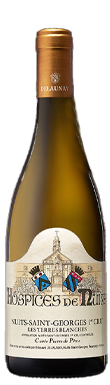

The Hospices produces red and white from the premier cru Terres Blanches, but I give the nod to the white. There are notes of ripe...
2022
Hospices de NuitsNuits-St-Georges

Château Gris, Les Terrasses, Nuits-St-Georges, Burgundy, France, 2020
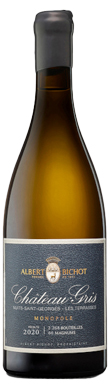
The village-level white from the Bichot monopole has a surprisingly ripe apricot fruit with a marvellous lemony edge and a pronounced hint of mineral to...
2020
Château GrisNuits-St-Georges
Domaine Thibault Liger-Belair, Nuits-St-Georges, 1er Cru Les St-Georges, Burgundy, France, 2015
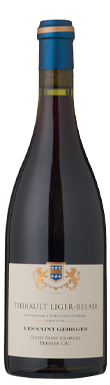
This is beginning to open up and show its immense potential and mass. The rich plum and mulberry fruit aromas are still youthful, and edged...
2015
Domaine Thibault Liger-BelairNuits-St-Georges
Domaine Georges Mugneret-Gibourg, Nuits-St-Georges, 1er Cru Chaignots, Burgundy, France, 2020
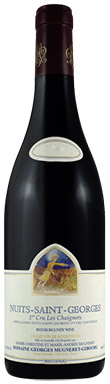
This emblematic cuvée is produced from the parcel purchased by Georges Mugneret in 1971. Marie-Andrée notes that in 2020, it suffered from the heat and...
2020
Domaine Georges Mugneret-GibourgNuits-St-Georges
Domaine Chicotot, Nuits-St-Georges, 1er Cru Pruliers, Burgundy, France, 2022
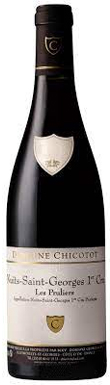
This charming wine showcases the delightful combination of freshness, ripe fruit and depth of flavour that Clement Chicotot can coax from these vines. The initial...
2022
Domaine ChicototNuits-St-Georges
Domaine Georges Mugneret-Gibourg, Nuits-St-Georges , 1er Cru Aux Vignes Rondes, Burgundy, France, 2020
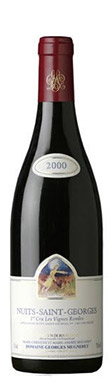
This Nuits from just below Chaignots provides an interesting contrast. The soil is heavier here and delivers a denser, more powerful, if somewhat less elegant...
2020
Domaine Georges Mugneret-GibourgNuits-St-Georges
Domaine Lecheneaut, Nuits-St-Georges, 1er Cru Pruliers, Burgundy, France, 2021
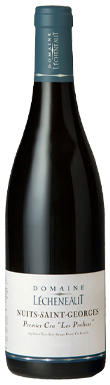
This classic, elegant style of Nuits features a lovely black cherry fruit with notes of liquorice, spice and just a hint of smoke. The texture...
2021
Domaine LecheneautNuits-St-Georges
Domaine Pierre-Olivier Garcia, Les Grandes Vignes, Nuits-St-Georges, Burgundy, France, 2021
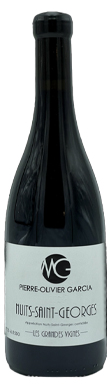
This dedicated young vigneron is among the bright new stars of his generation. Here he has crafted a ravishing village-level wine from vines a few...
2021
Domaine Pierre-Olivier GarciaNuits-St-Georges
Domaine Bertrand Ambroise, Nuits-St-Georges, 1er Cru Vaucrains, Burgundy, France, 2021
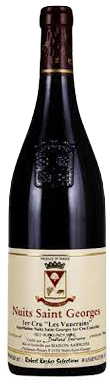
This seductive wine has pleasantly forward, ripe blackberry fruit aromas with a hint of violets and sweet oak spice. The slightly richer soils in Vaucrains...
2021
Domaine Bertrand AmbroiseNuits-St-Georges
Domaine du Comte Liger-Belair, Nuits-St-Georges, Burgundy, France, 2020
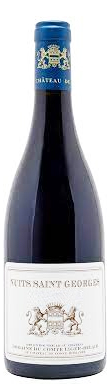
This hedonistic wine is immensely approachable and easy to drink, boasting a deep, almost black colour and effusive aromas of ripe plum and fig, with...
2020
Domaine du Comte Liger-BelairNuits-St-Georges
Domaine Lecheneaut, Nuits-St-Georges, 1er Cru Argillas, Burgundy, France, 2021
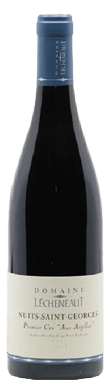
Crisp red pomegranate and cherry fruit with a floral edge and a hint of minerality are the highlights of the engaging aromas of this wine....
2021
Domaine LecheneautNuits-St-Georges
Domaine Pierre-Olivier Garcia, La Petite Charmotte, Nuits-St-Georges, Burgundy, France, 2021
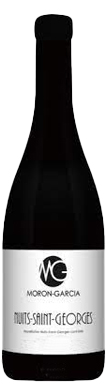
This wine is striking for its super-ripe, dense blackberry and violet aromas accented with earth and mineral notes. The texture is dense and supple, with...
2021
Domaine Pierre-Olivier GarciaNuits-St-Georges
Hospices de Nuits, Cuvée Fagon, Nuits-St-Georges, 1er Cru Didiers, Burgundy, France, 2022
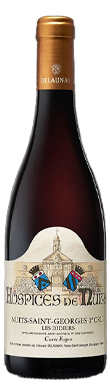
A majestic, classic Nuits with a dense, powerful black cherry fruit showing notes of wood spice, mineral and earth. It is a wine of impressive...
2022
Hospices de NuitsNuits-St-Georges
Domaine Aurelien Verdet, Nuits-St-Georges, Burgundy, France, 2021
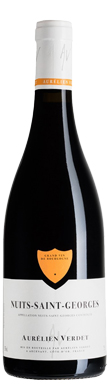
With its abundant black plum fruit aromas touched with earth, smoke and leather, this draws attention from the start. There is full body, firm, slightly...
2021
Domaine Aurelien VerdetNuits-St-Georges
Domaine de l’Arlot, Nuits-St-Georges, 1er Cru Clos des Forêts St-Georges, Burgundy, France, 2020
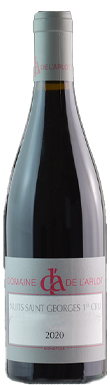
This accomplished wine has effusive aromas of lush ripe plum and mulberry, with an edge of star anise and violets. There is an abundant richness...
2020
Domaine de l’ArlotNuits-St-Georges
Domaine JJ Confuron, La Vignotte, Côte de Nuits-Villages, Burgundy, France, 2021
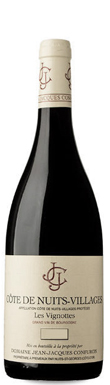
Bright aromas of cherry with notes of floral, mint and noticeable oak spice now (but this should resolve). The texture is light and fresh, but...
2021
Domaine JJ ConfuronCôte de Nuits-Villages
Edouard Delaunay, Nuits-St-Georges, 1er Cru Les Crots, Burgundy, France, 2021
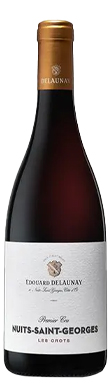
This charming wine boasts fresh, high-toned strawberry and pomegranate fruit aromas with a floral edge and a substantial, almost saline minerality. It is produced from...
2021
Edouard DelaunayNuits-St-Georges
Domaine Bertrand Ambroise, En Rue de Chaux, Nuits-St-Georges, 1er Cru, Burgundy, France, 2021
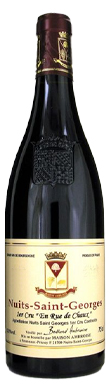
Initially closed and slightly reductive, this is not initially the most generous of wines, but with time the aromas open on the palate to show...
2021
Domaine Bertrand AmbroiseNuits-St-Georges
Domaine de l’Arlot, Cuvée Mont des Oiseaux, Nuits-St-Georges, 1er Cru, Burgundy, France, 2021
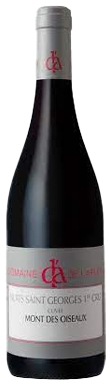
Domaine de l'Arlot makes no less than four cuvées from their vines in the Clos de l'Arlot (two red and two white). This 'second' red...
2021
Domaine de l’ArlotNuits-St-Georges
Edouard Delaunay, Nuits-St-Georges, Burgundy, France, 2021
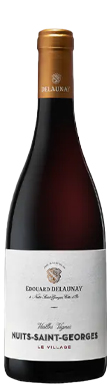
This wine is a particular focus for Delaunay, and it delivers well on its promise, with a medium to deep garnet colour, and a pronounced...
2021
Edouard DelaunayNuits-St-Georges
Domaine Faiveley, Nuits-St-Georges, 1er Cru Les Porrets-Saint-Georges, Burgundy, France, 2021
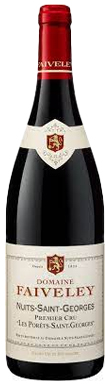
This holding is the largest for Faiveley in the village where they are based, totalling 1.69ha, with the oldest vines planted in 1945. In 2021...
2021
Domaine FaiveleyNuits-St-Georges