
Rioja Alavesa: Six names to know and the wines to buy
Small but influential Rioja Alavesa is home to some of Spain’s most forward-thinking, terroir-driven winemakers. The passionate producers profiled here are among those helping to make it such a special place.


When the story of modern Rioja is written, Alavesa will have an outsized role to play. The smallest of Rioja’s three production zones has been by far the most influential in shaping Rioja’s new, terroir-focused incarnation, and its small producers are among Rioja’s best and most passionate exponents of wine as an expression of land and place rather than time and oak.
That it is also at the centre of an ongoing sub-plot with the potential to bring far more radical change to the region only adds to the sense that little Alavesa is the main character in Rioja’s 21st-century narrative.
Scroll down to see tasting notes and scores for 12 wines from six leading Rioja Alavesa estates
We should probably deal with that sub-plot first, since, somewhat ironically, it is how many wine-drinkers have come to understand that Rioja is not the culturally homogenous, single zone that they had always thought it was. It’s a story that cuts right to the heart of modern Spain’s neuroses about the relationship between its constituent regions (or, as some prefer, nations), drawing as it does on Alavesa’s Basque identity: the Rioja Alavesa zone (300km2) is part of the Basque autonomous region north of the Ebro river.
A new appellation
In 2016, members of the Association of Rioja Alavesa Producers (ABRA) began to develop a new, rival DO under the ‘Viñedos de Alava’ name (Basque name Araba). The move was the last frustrated roll of the dice by producers fed up with the slow progress made by the Rioja DOCa in bringing in legislation to acknowledge single-vineyard wines – a controversial subject in Rioja as a whole, where bigger producers making wines that blend across the region hold most of the power.
The project was put on hold when the Rioja DOCa finally brought in its reforms, which included the introduction of single-vineyard, single-village and single-zone wines in 2018. But by the end of that year, the plan had come back to life, with ABRA claiming that the reforms didn’t go far enough.
Cut to autumn 2022, when the Viñedos de Alava embryonic DO took an enormous step forward after the Basque autonomous government gave it the legal go-ahead. EU ratification is expected to follow shortly, and in January this year an interim Viñedos de Alava regulatory council was formed. This could mean the appearance of the first wines in the new appellation later this year. How many producers will be prepared to take the plunge is up for debate, however.
Proudly independent
The Rioja DOCa has continued to challenge the move in the courts, as well as introducing strict rules preventing wineries from using the same facilities to make wines in both appellations. Anecdotally, Decanter understands that very few (most likely in single figures) are likely to bottle under the Viñedos de Alava proposed DO in the foreseeable future, either because they have been put off by the legal uncertainty, or because they still have a residual affection for – or commercial need to trade under – the Rioja DOCa.
Speaking to winemakers – both from Alavesa and the wider region – at the annual gathering of Rioja producers in London at the end of last year, I got the impression that many were tired of the politicking. What isn’t in doubt, however, is that Alavesa producers are proud of their cultural, geographical and viticultural distance from the rest of Rioja.
It’s a difference that is immediately palpable for the visitor, too. The vineyards of the 23 villages of Rioja Alavesa are a patchwork of tiny plots in terraces – on iron-rich clay and limestone soils – that run up into the craggy peaks of the Sierra de Cantabria, providing a dramatic backdrop. Alavesa is where Rioja becomes a high-altitude wine region: vineyards are planted at 400m-1,200m, and the climate (with a strong Atlantic influence) is considerably cooler here. As a result, the wines have a life-giving breath of freshness, a pulse of bright acidity.
It’s the producers, though, who perhaps do most to make Alavesa such a special and distinctive place. This article includes just six, chosen to represent some of the variety in style and approach. But it could happily have included such notable players as Artadi, Eguren Ugarte, Bodegas Las Orcas, Luberri, Marqués de Riscal and many more, all of them worthy of attention – no matter how their home region is officially named.
Artuke

The snappy moniker – a portmanteau formed from brothers Arturo and Kike de Miguel’s first names – has become a byword for ‘terroiriste’ Rioja, and Artuke is a leader of the new-old way of doing things in the region. Their wines are very much a part of the youthful, ‘natural-adjacent’, ‘new fine wine’ scene that has shaken up Spanish winemaking over the past decade.
The brothers are all about making wines that express their vineyards, which, in their case, include plots in some of the very best sites in Rioja Alavesa. Based in the village of Baños de Ebro, they make a selection of superb single-vineyard wines including two that represent the apex of the range: the slinky yet profound El Esolladero (from a tiny 70-year-old plot at 600m in the village of Abalos) and the supremely elegant La Condenada (a field blend of Tempranillo, Garnacha Tinta, Graciano and Palomino from a 100-year-old vineyard at 520m).
But the brothers are no less adept at another of Alavesa’s specialities: the compulsively drinkable carbonic or semi-carbonic-macerated red. Their Artuke Rioja is a paradigmatic, vividly fruity example of the form aged in concrete and sold at a remarkable price. Value, too, is very much apparent in Pies Negros, a blend of fruit from three sites running up into the Sierra de Cantabria in Avalos.
Sierra de Toloño

Sandra Bravo was born in Rioja, and her winemaking style was shaped by her initially peripatetic wine career, which took her to Bordeaux, California, Tuscany and, ultimately, back to Spain, where she put in a long stint working in Priorat. It was the Catalan region, with its radically terroir-driven approach based on small plots of old vines, often at high altitude and often in steep slopes that are difficult to farm, which seems to have played the biggest role in influencing her decision to set up shop high up on the foothills of the Sierra de Toloño on her return to Rioja in 2012.
Since then, her ascent to the forefront of winemaking has been rapid, and entirely deserved. Her collection of Rioja Alavesa vineyards includes Terreseño, with its Garnacha planted in the foothills of the Sierra in 1944 and benefiting from a consistent northerly wind. She also has a 650m-high plot in Rivas de Tereso, and a collection of tiny parcels of co-planted indigenous local varieties (aged over 80 years) in Villabuena de Alava.
Winemaking is hands-off in the modern way, with amphora, concrete and neutral oak to the fore. The wines, starting with her estate red and white Rioja, and moving up through village wines, an astonishing 100% old-vine Garnacha and finally to her tiny- production single-vineyard bottlings, are unfailingly transparent, pure, full of life and energy – and very much the future of Rioja Alavesa and Rioja.
Sierra de Toloño, Nahikun Blanco 2019
Sierra de Toloño, La Dula Garnachas de Altura 2020
Telmo Rodríguez

(Remelluri / Bodegas Lanzaga / Yjar)
Telmo Rodríguez’s remarkable vinous career has taken him to all parts of Spain, producing wines of arresting beauty from Alicante to Valdeorras. But for many, this writer included, it is the wines he makes at the family estate in Rioja Alavesa that are perhaps the most exciting of all.
Rodriguez’s Alavesa winemaking has two strands. Bodegas Lanzaga is part of the Compañia de Vinos Telmo Rodríguez operation that he set up with partner Pablo Eguzkiza to seek out old vines and indigenous varieties around Spain. It is based on vineyard parcels the duo have bought up and restored around the villages of Lanciego and Labastida. Remelluri, meanwhile, is the Rodríguez family estate, bought by Rodríguez’s father Jaime Rodríguez in the late 1960s, and taken on by Telmo and his sister Amaia in 2010.
Working with both sites has allowed him to pursue his belief that Alavesa is the true historical locus of Rioja fine wine. It also allows him to make wine that he feels captures the small-producer spirit and varietal diversity that defined Alavesa before the centre of gravity shifted to the famous bodegas of Haro and Rioja Alta in the late 1800s.
The approach, which features numerous single vineyard cuvées, as well as a pulsating ‘négociant’ village red, Corriente, reaches its apotheosis with Yjar, a blend of Tempranillo, Graciano, Garnacha, Granegro and Rojal from a 3.8ha site on the slopes of the Sierra de Toloño. This acclaimed wine was launched in 2021 with the 2017 vintage.
Remelluri, Granja Remelluri Gran Reserva 2014
Luis Cañas/Amaren

For almost two centuries, the Cañas family had been making wines to sell to négociants, but that all changed in 1970, when the ambitious Luis Cañas went against the prevailing local custom and wisdom, deciding to bottle wines under the family’s own name.
The winery that still carries Luis Cañas’ name is now run by his son, Juan Luis Cañas, and it has played an enormous role in shaping Alavesa’s – and Rioja’s – modern incarnation. The company has some 350ha of vineyards spread across the Alavesa zone, and these are divided into a further 870 plots, all sustainably farmed by a large vineyard team. It’s a resource that the bodega uses to make some of Rioja’s most consistently good-value wines, with the winemaking focusing on cleanliness, ripe, healthy fruit, and new oak (barrels have an average of three years).
It’s a recipe that also applies to the spin-off project, Amaren, run by Luis Cañas’ grandson, Jon Cañas. Using some of the family’s – and Alavesa’s – best and highest old-vine plots, Amaren is proudly of its place, with the words ‘Rioja Alavesa’ prominent on all the wine labels.
Abel Mendoza

Abel Mendoza and his partner in life and wine, Maite Fernández, have always stood somewhat apart from the Rioja mainstream. In part, it seems to be a matter of temperament: there’s little of the limelight-chasing that preoccupies some of their more ostensibly glamorous peers. Geography also has its say.
From their base in San Vicente de la Sonsierra, the pair work organically with some 37 plots spread across 18ha on the left bank of the Ebro around San Vicente de la Sonsierra, Abalos and Labastida. These high-altitude plots are recognised as prime sites today; rather less so when the winery began in 1988.
There is also the fact that white wine has always been a significant focus here. This is the place to come if you want to know what Rioja’s indigenous white grape varieties taste like, with barrel-fermented varietal cuvées made from Viura, Malvasía, Garnacha Blanca, Torrontés and Tempranillo Blanco – as well as an assemblage of all five varieties.
While these are easily among the best white wines in Spain, the reds also demand attention; characteristically, they are as difficult to pigeonhole as everything else at this estate. Mendoza is certainly no traditionalist, but the ‘modernist’s’ choice of French oak is used with precision rather than as a crutch, and always in service to the beautifully ripe but unforced, fresh Tempranillo. It is also used with Graciano, in the case of the gorgeously polished Grano a Grano.
Abel Mendoza, Viura Blanco 2021
Abel Mendoza, Jarrarte Crianza 2018
Remírez de Ganuza

Another highly individualistic star winery in the Alavesa firmament, Remírez de Ganuza emerged in the late 1980s as the project of Fernando Remírez de Ganuza – a wine broker who decided to turn his intimate knowledge of the region’s vineyards into an exclusive focus on upper-end Rioja.
De Ganuza’s idea was to cherry-pick sites in the Sierra Cantabria, from the villages of Samaniego, Leza, Elciego, San Vicente de la Sonsierra, Laguardia and Abalos. But he also brought a touch of innovation and experimentation to the winemaking at the sensitively developed cellar in Samaniego.
De Ganuza was an early adopter of sorting tables in Rioja; he also introduced a balloon press for gentler, more sensitive pressing, and instituted a process of using grapes only from the shoulders of the bunches for his best wines, leaving out the tips. Elevage, meanwhile, was in French rather than American oak, although one of the hallmarks of the Ganuza style is the harmonious integration of the oak with fruit that is, from vintage to vintage, always on the exquisite point of ripeness where the grapes still retain some crunch and vivacity.
That, of course, is the advantage of having access to some of the best vineyards in Rioja Alavesa, the legacy of de Ganuza’s previous career and still very much apparent since ownership passed to the Urtasun family in 2019. Today, de Ganuza is still on hand as a consultant, but it’s José Urtasun who is in charge of winemaking, and who has introduced the subtle changes that have kept the winery at the forefront of Alavesa and Rioja, while maintaining the highest of standards.
Remírez de Ganuza, Blanco Reserva 2019
Remírez de Ganuza, Reserva 2014
See tasting notes and scores for 12 wines from six leading Rioja Alavesa estates
Related articles
- Rioja gran reserva: my top 20
- Rioja’s rising stars: the winemakers to watch out for
- Decanter’s Dream Destination: Marqués de Riscal, Rioja, Spain
Amaren, Malvasia, Rioja, Alavesa, Northern Spain, Spain, 2016
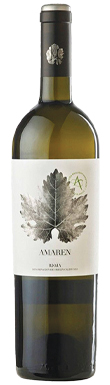

This is seriously impressive stuff from Jon Cañas – a white made from old-vine Malvasia planted in 1912. Fermented and aged in concrete egg, it...
2016
AmarenRioja

Abel Mendoza, Viura, Rioja, Alavesa, Northern Spain, Spain, 2021
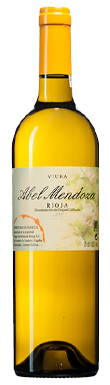
A standout wine from a significant player in the recent renaissance of Rioja white wines. This is a beautifully judged balance of oak and ringingly...
2021
Abel MendozaRioja
Sierra de Toloño, Nahikun Blanco, Rioja, Alavesa, Northern Spain, Spain, 2019
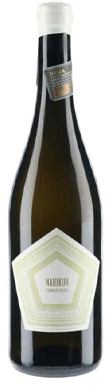
A field blend of Viura, Malvasia, Calagraño and Rojal, from five parcels of vines aged 80+ years, this is an incredibly evocative dry white with...
2019
Sierra de ToloñoRioja
Remírez de Ganuza, Blanco, Rioja, Alavesa, Northern Spain, Spain, 2019
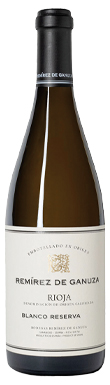
A 60/30/10 blend of Viura, Malvasia and Garnacha Blanca, fermented and aged for eight months in French oak, this is a lovely rich mouthful of...
2019
Remírez de GanuzaRioja
Remelluri, Granja Remelluri, Rioja, Alavesa, Northern Spain, Spain, 2014
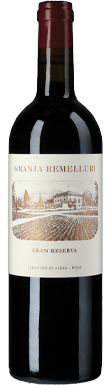
This still-youthful top wine from Remelluri's oldest vines has the quintessential Telmo Rodriguez-era combination of freshness, silkiness of tannin and aromatic detail, with purring power...
2014
RemelluriRioja
Sierra de Toloño, La Dula Garnachas de Altura, Rioja, Alavesa, Northern Spain, Spain, 2020
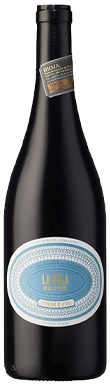
From an old-vine Garnacha plot at 700m altitude, this is highland Rioja Alavesa winemaking in its most graceful and elegant form. It's sculpted and pure,...
2020
Sierra de ToloñoRioja
Abel Mendoza, Jarrarte, Rioja, Alavesa, Northern Spain, Spain, 2018
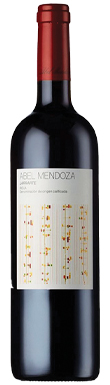
A 100% Tempranillo from vines with an average age of 35 years, this has had 12 months in French oak, but it's the quality of...
2018
Abel MendozaRioja
Bodegas Lanzaga, Lanzaga, Rioja, Alavesa, Northern Spain, Spain, 2018
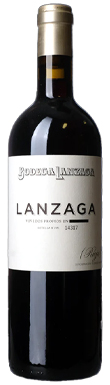
Terrific value for an authentic expression of Alavesa fruit, which in this instance is sourced from old bush vines at between 480m-650m altitude around the...
2018
Bodegas LanzagaRioja
Remírez de Ganuza, Rioja, Alavesa, Northern Spain, Spain, 2014
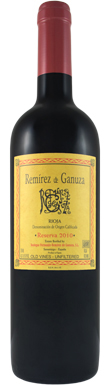
The Remírez de Ganuza flagship has had 24 months in a mix of French and (20%) American oak, and a portion of Malvasia and Viura...
2014
Remírez de GanuzaRioja
Artuke, Pies Negros, Rioja, Alavesa, Northern Spain, Spain, 2019
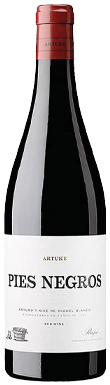
Decidedly suave and smooth in feel, this Tempranillo with 10% Graciano has had a 12-14-month sojourn in a mix of French and (20%) American oak,...
2019
ArtukeRioja
Luis Cañas, Rioja, Alavesa, Northern Spain, Spain, 2018
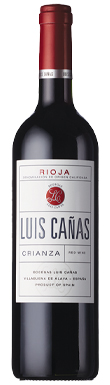
Year in, year out, the Luis Cañas range is one of the most consistent set of wines in Rioja (and Spain), and this Crianza is...
2018
Luis CañasRioja
Artuke, Rioja, Alavesa, Northern Spain, Spain, 2021
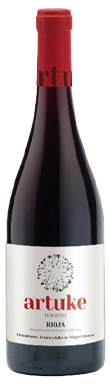
Supple, juicy, red-fruit tangy and endlessly drinkable, Artuke's everyday Rioja is about as far from the old and oaky Rioja stereotype as it's possible to...
2021
ArtukeRioja
