
Rioja renegades: 10 producers writing their own rules


In this sneak preview of the latest Decanter magazine issue, Sarah Jane Evans MW selects the 10 most influential free spirits of Rioja...
Rioja, Spain’s most famous wine region, is surely too classical and altogether too famous to have renegades.
Yet depending on how you define the term, Rioja certainly does have its fair share. ‘A person who deserts and betrays an organisation, country or set of principles’ sounds a rather harsh descriptor of those producers who choose to follow their own path along the winding banks of the river Ebro.
Yet the departure of Juan Carlos López de Lacalle from the Denominación at the end of 2015 aroused strong feelings among winemakers in the region – though none has yet followed him.
Scroll down for Sarah Jane Evans MW’s top wines from 10 of Rioja’s free-spirited producers
The producers featured here have diverse reasons for qualifying as renegades.What unites them is their approach to regulation. It’s worth noting that most of the wines here are ‘generics’ – that’s to say they declare a vintage but are not aligned with the traditional barrel-ageing categories from crianza to gran reserva.These producers are choosing to make wines according to their own rules. In this way they’re one step ahead of regulatory body the Consejo Regulador, as they were with village wines and single vineyards. More tweaks to the rules are likely to come from the practices of these producers.
Juan Carlos López de Lacalle – Artadi
A textbook renegade, for sure, given his departure from the DOCa. It’s easy to see why such an established producer might ‘go it alone’ and leave an organisation which permits the product of Spain’s most famous wine regions to be sold for not much more than £5 in UK supermarkets.
Bodegas y Viñedos Artadi’s departure would not have won so much attention were it not for the quality of the wines. The winery’s beginnings were humble – founded in 1985 from a collective of wine-growers.
They were blessed with a producer of the vision and intensity of Juan Carlos López de Lacalle. He grew the business, with Benjamín Romeo – who went on to set up on his own at Contador – working alongside him as winemaker for a number of years. The prices of Artadi have risen dizzily, but with reason.
The quality of the single-vineyard wines is exceptional. Riojan through-and- through, despite what it says on the label.
Alvaro Palacios – Palacios Remondo
Alvaro Palacios is so much part of the modern international establishment of wine that it may seem odd to include him here.
After all, he has been a leader in building the reputation of Priorat and Bierzo and, through them, of Spain as a pre-eminent wine nation. Yet the reason is clear: wherever he goes he defends the best interests of the vineyard, and the wine, even in cases where established practice or local regulation may suggest otherwise.
Thus it was when he returned to the family winery in Rioja Baja/Oriental. His father’s focus was mainly on Tempranillo, as was usual at the time.
In his short time in charge, the profile of the wines has changed and Garnacha is being restored to its rightful place at the top of the hierarchy. In the process, he has cheerfully put the village name (Alfaro) on the front label of his wines, even before the DOCa Rioja permitted it.
María José López de Heredia and family – López de Heredia
One of the great families of Rioja, this centenarian bodega follows winemaking practices that remain loyal to the history of the early Riojas.
In recent years it has been hijacked by a storm of attention for its exceptionally long-aged wines – and it is this loyalty to tradition that makes the winery a renegade. Nor will María José López de Heredia be obedient to modern corporate job titles.
She simply signs herself ‘Biznieta’ (‘great granddaughter’ of the founder). Earlier this year Carlos Echapresto, sommelier at Rioja’s Michelin-starred Venta Moncalvillo, gave me a glass of an absolutely exceptional Rioja to taste blind.
It transpired that it was a wine selected by María José and her sister Mercedes, in a small batch of 3,000 bottles for a private project commissioned by Telmo Rodriguez.
It’s a blend of Tempranillo and Graciano that was not bottled as a gran reserva at the time, and it’s totally different again from the existing portfolio. Proof of the glories and surprises of this particular family cellar.
Abel Mendoza – Abel Mendoza Monge
Although the business bears Abel Mendoza’s name, he is the viticulturist and his wife Maite Fernández is the winemaker.
The single-minded clarity of their range explains their presence here as renegades. For instance, they make no fewer than five different single-varietal white wines: Viura, naturally enough, plus Torrontés, Tempranillo Blanco, Garnacha Blanca and Malvasía. These are fascinating bottles for the wine lover.
The wines speak equally clearly of the villages from which they come – and the single vineyards. These single-origin concepts are now being defined by the Consejo Regulador, but Mendoza got there first, and arguably has done it better, driven by his understanding of the vineyard and the vine.
His wines are at odds with the style of Rioja that focuses on blends, often across sub-regions. But there is room for both, even though noisy fashion is currently on the side of Mendoza and the single vineyard.
Jorge Navascués Haba – Contino
In one sense it is too soon to know if Jorge Navascués Haba will prove to be a renegade. He has been at Contino for just over a year, taking up the reins from the longstanding Jesús de Madrazo Mateo, so he hasn’t yet put his stamp on the production of any single wine here.
Madrazo built Contino’s reputation for the Graciano variety, its single-vineyard Viña del Olivo, its rosado, and more recently a Garnacha – significant, as Navascués comes from Aragón, Garnacha country, and is among the new generation of ‘Garnachistas’.
He is a family man and great company. Does he have the vision, or contrariness, to be a renegade? His extensive experience as a consultant suggests he does, with clients including Pago Aylés at Zaragoza, Viña Zorzal in Navarra and others across Spain, and his own personal project too, making Cutio and Mas de Mancuso.
Germán Blanco – Lively Wines
This relatively new arrival to Rioja is surely altogether too likeable to be a renegade. Dimple-cheeked, smiling Germán Blanco made his name in Ribera del Duero with Quinta Milú, based in the quality village of La Aguilera, making lighter, fresher wines from Tinto Fino.
He repeated this search for freshness further north in Bierzo, with the brands Casa Aurora and San Esteban. It’s his very single-minded passion that qualifies him as a renegade in Rioja.
His project here is based in Navarra, where he works with local winemaker Javier Colio. Their first vintage was 2015. Currently they make one wine, a Tempranillo with some Viura in the blend, from vines aged between 20-50 years old. The wine is unoaked and organically farmed, according to his philosophy.
Rodolfo Bastida – Ramón Bilbao
Riojano Rodolfo Bastida oversees the production of many millions of bottles of wine across Spain, from Rioja to Rías Baixas and Rueda. Consistency and commercial appeal have to be key features of his work for Ramón Bilbao, so it may seem odd to be including him in a list of (fairly) small production creatives.
However, Bastida firmly qualifies as a renegade as his focus often takes him outside the narrow straitjacket of his successful brand.
While both company management and wine drinkers may not want him to deviate from the established path, Bastida is busily studying vineyards at altitude in the Monte Yerga zone of Rioja Baja/Oriental, to determine their soils and fruit profiles.
He and his team are also developing their investment in Garnacha, as that variety becomes increasingly fashionable.
Sandra Bravo – Sierra de Toloño
Rioja can often seem a megalith, producing vast quantities of satisfactory wines, but with little that’s new and exciting on the horizon. Sandra Bravo, a young Riojana and member of the Rioja ‘n’ Roll marketing group, is proof that there are individuals making distinct and fascinating wines in the DOCa.
After working in Bordeaux, Tuscany, New Zealand and California, she came back to Villabuena de Alava with plenty of experience and clear ideas.
Bravo’s preference is for cool wines from cool climates. The Sierra de Toloño (which gives her project is name) is an excellent source for the style she seeks, its cold winds giving a lively freshness.
Her huge old winery down by the river had the benefit of amphoras already in situ, which she used for La Dula. Worth seeking out is her white Nahi (pronounced ‘nai’), which is a co-fermentation of Viura, Malvasía, Calagraña and Rojal.
Telmo Rodríguez – Compañía de Vinos Telmo Rodríguez
Telmo Rodríguez initially made his mark in Rioja, where at the family bodega of Remelluri he created a unique and delicious white wine that was a blend of nine varieties.
He subsequently travelled and worked across Spain, setting up a series of projects in very different regions, which earned him the profile of an archetypal renegade, ready to break new ground. Yet his success risked transforming him into an establishment figure.
On his return to Rioja, he could have settled into a confident, comfortable routine. But that has never been his way. The result of his strict focus on single parcels, on viticulture and growers, has resulted in some exceptional single-vineyard wines. A new arrival to look out for is Tabuerniga, beside the Remelluri vineyards.
It’s a companion to the very elegant and refined Las Beatas. Keep an eye on this particular renegade – there is more to come.
David González – Gómez Cruzado
One of the centenarian bodegas in Haro’s Barrio de la Estación station district. David González is the front man for the Gómez Cruzado business and he is rapidly transforming it, with help from his viticulturist partner Juan Antonio Leza.
The duo are less renegades and more innovators. As they have no estate vineyards, they are able to seek out a range of fruit from distinctive sites.
Honorable is their classic Rioja, but keep an eye out for exciting new releases from them, which focus on terroir wines. These include the cool, higher-altitude Garnacha-Tempranillo blend Pancrudo.
Their white wines are particularly interesting: notably Montes Obarenes, named after its chilly mountain origin, the 2015 a blend of Viura with 25% Tempranillo Blanco, which is partially fermented and aged in concrete eggs.
Sarah Jane Evans MW is co-Chair of the Decanter World Wine Awards and author of The Wines of Northern Spain.
See Sarah Jane Evans MW’s top wines from 10 of Rioja’s free-spirited producers
You might also like:
Top rated red Riojas under £30
5 great value white Rioja wines
Mature Rioja: Panel tasting results
R López de Heredia, Matador Parreno, Rioja, Northern Spain, Spain, 2001
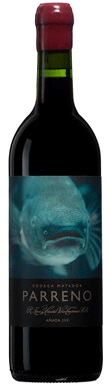

Glorious, and impossible to fault. The aromas are all mature Rioja, while the palate reveals an elegant, memorable tapestry of fruit. Vivid and fresh, polished...
2001
R López de HerediaRioja

Bodegas Bhilar, Phinca La Revilla Sexto Año, Rioja, Northern Spain, Spain, 2011
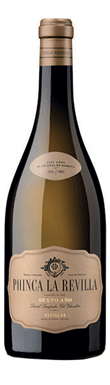
Fascinating: a contemporary homage to a Rioja classic. Single vineyard, biodynamic viticulture; foot-trodden and aged for six years in oak barricas. No hint of fruit....
2011
Bodegas BhilarRioja
Artadi, Viñas de Gain, Northern Spain, Spain, 2015
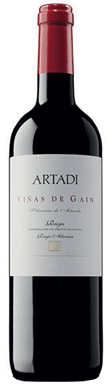
Just Tempranillo, organic viticulture, a blend of village plots. This has all the polish and expertise that goes into Artadi’s single vineyards, and it’s more...
2015
Artadi
Abel Mendoza, Guardaviñas, Rioja, Northern Spain, Spain, 2015
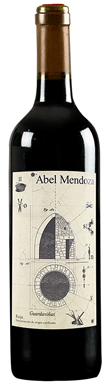
92
No added sulphur; only lightly oaked (just 40% of the wine); biodynamic viticulture. Limpid, vivid expression of Tempranillo from San Vicente de la Sonsierra, a wine that is all about the expression of the place.
2015
Abel MendozaRioja
Telmo Rodriguez, LZ Viñedos de Lanciego, Rioja, Northern Spain, Spain, 2016
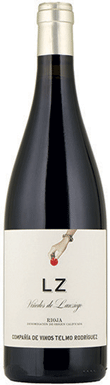
Rodríguez also produces wines like this accessible blend of Tempranillo, Garnacha and Graciano from Lanciego: joyous, unoaked youth.
2016
Telmo RodriguezRioja
Gomez Cruzado, Honorable, Rioja, Northern Spain, Spain, 2014
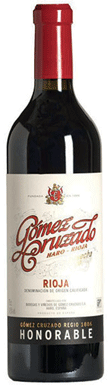
Honorable is the revived Gómez Cruzado’s most traditional Rioja. A classic blend of varieties from the estate’s oldest vineyards gives a dense, succulent wine, that’s...
2014
Gomez CruzadoRioja
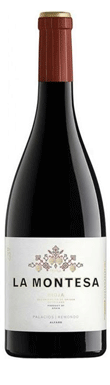
Bodegas Palacios Remondo, La Montesa Crianza, Rioja, Northern Spain, Spain, 2015
92
Spot-on: La Montesa is now in its right place. Ripe, polished Garnacha, with notes of herbs and spice, and a slight seasoning of Tempranillo. Long, confident, finely integrated oak, full-flavoured finish.
2015
Bodegas Palacios RemondoRioja
Sierra de Toloño, La Dula, Rioja, Northern Spain, Spain, 2016
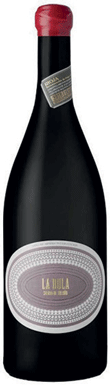
Sandra Bravo’s Garnacha vineyard is located at a chilly and windy 650m above sea level. Fermented and aged in 300-litre amphoras. This is Garnacha with...
2016
Sierra de ToloñoRioja
Lively Wines, La Bicicleta Voladora, Rioja, Northern Spain, Spain, 2015
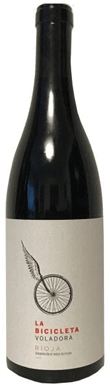
A new project, with grapes sourced from the small part of Rioja that’s in Navarra. Tempranillo, organic viticulture, aged in concrete tanks and Flextank eggs....
2015
Lively WinesRioja
Bodegas Ramón Bilbao, Viñedos de Altura, Rioja, Northern Spain, Spain, 2014
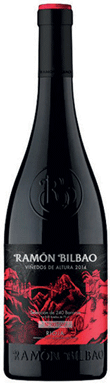
A special project at Ramón Bilbao, produced in search of higher altitude, cooler climates and clearer vineyard expression. The bright cherry fruit is overlaid by...
2014
Bodegas Ramón BilbaoRioja
