
Ruchè di Castagnole Monferrato: A DOCG to know
This obscure Italian DOCG has a big US following thanks to one Randall Grahm.


Don’t feel bad if you haven’t heard of Ruchè di Castagnole Monferrato before. One of the newest and smallest of Italy’s DOCGs, this treasure is made from a rare and somewhat mysterious red grape, Ruchè, tucked away in the Monferrato hills in the Piedmont province of Asti.
Scroll down to see tasting notes and scores for 15 Ruchè di Castagnole Monferrato wines
There are only 30 growers and 27 winemakers operating here but you could say locals are protective of Ruchè: it’s illegal to use the varietal name on any wine label outside of the DOCG, although you’d be hard-pressed to find any growing outside of the seven towns which make up the zone’s 190ha of vines.
History
The grape’s origins are lost in the mists of time. One theory is that its name, Ruchè, originates from ‘Convento delle Rocche’, a Benedictine monastery which once stood close to Castagnole Monferrato, where monks cultivated the variety. If this is the case, the grape’s monastic past is echoed in Ruchè di Castagnole Monferrato’s ecclestiastical genesis in the 1960s.
It was the pastor of Castagnole Monferrato, Don Giacomo Cauda, who was the first to vinify and sell dry Ruchè wine. Even into the 1970s, it was more often than not a sweet red wine made in tiny quantities for local consumption during times of celebration. When Don Cauda arrived in 1964, he was given a few rows of Barbera, Grignolino and Ruchè, semi-abandoned, as his parish dowry.
In the second year of making wines from these grapes, he produced a batch of 28 bottles. One, accidentally uncorked, proved to be an epiphany: ‘Sipped in moderation, it frees the spirit and opens the mind,’ he noted. Encouraged, Don Cauda purchased one hectare of land and planted 4,000 young Ruchè vines, which went on to provide the grapes for his ‘Ruché del Parroco’ (‘Ruchè of the Pastor’), depicting an angel with open wings on the label.
‘God forgive me for having sometimes neglected my ministry to devote my energies to the vineyard. After celebrating the Mass, I used to change my clothes quickly, and climb on the tractor. But I know that God has forgiven me, because with the money earned from the wine I created the oratory and renovated the rectory.‘ – Don Giacomo Cauda
By the 1980s, a number of other producers had begun bottling and selling Ruchè following Don Cauda’s success and in 1987, Ruchè di Castagnole Monferrato was officially recognised as a DOC.
Today, 65% of the one million bottles of Ruchè di Castagnole Monferrato produced annually never make it further than the local tavernas, where it is known as ‘the red prince of Monferrato’. A large proportion of the remaining bottles end up in liquor stores and on wine lists in the USA – particularly in New York.
An American adventure
The success of this obscure variety in small pockets of the USA, far from its home in northern Italy, is a direct consequence of Bonny Doon founder Randall Grahm’s involvement in the early 2000s. ‘Before Randall, some producers sold well in the US anyway,’ explains Luca Ferraris, who runs Ferraris Agricola (founded in 1921 by his great-grandfather) and is today president of the Ruché Producers’ Association – officially recognised in 2015 but originally founded back in 2001 – which represents the vast majority of producers in the DOCG. ‘But Randall pushed the variety and now it’s easier for everyone.’
Grahm met Ferraris by chance at the Vinitaly trade show in Verona in 2002. After tasting his wines, Grahm struck a deal to import 8,000 cases to the USA to sell under his ‘Il Circo’ label. This investment not only introduced American drinkers to the Ruchè variety; it also gave Ferraris the impetous and financial stimulus to continue making wine.
Grahm ceased importing Ferraris’ Ruchè di Castagnole Monferrato in 2006 as he wound down many of his winery operations and labels, but he has since planted Ruchè vines in his experimental vineyard, ‘Popelouchum’ in San Benito County. Ruchè di Castagnole Monferrato’s transatlantic success has continued, however, with Ferraris proudly pointing out that ‘some New York restaurants have several Ruché labels on their winelists!’
Ruchè di Castagnole Monferrato’s terroir
The 190 hectares of Ruchè di Castagnole Monferrato DOCG vineyards are spread across seven villages in Monferrato just northeast of Asti: Grana, Montemagno, Portacomaro, Refrancore, Scurzolengo, Viarigi and Castagnole Monferrato. It was granted DOCG status in 2010, having previously been a DOC since 1987.
The vineyards of Ruchè di Castagnole Monferrato are situated on west- southwest-facing slopes between 120 and 350 metres above sea level. The soils are predominantly calcareous marl, rich in sandstone and marine fossils with varying amounts of clay, sand and silt. Located between the Alps and the coast, the climate here is mild and rainfall is 600-700mm annually.
What is Ruchè di Castagnole Monferrato?
Ruchè is a semi-aromatic red grape indigenous to Piedmont, with naturally high sugar levels meaning that it’s capable of producing wines with high alcohol, typically ranging from 13.5% to over 16%. The variety has high levels of polyphenols, which give the wines plenty of substance and grip despite the seemingly innocuous colour.
In its simplest form, Ruchè di Castagnole Monferrato is a delightful medium-bodied red wine bursting with fragrant raspberry, sweet earthy notes and balsamic freshness. The wines must consist of at least 90% Ruchè, with up to 10% of Barbera and/or Brachetto allowed. Some producers include a portion of (or even 100%) late-harvest fruit in their wines for more concentration and depth of flavour.
Ruché is fairly early ripening by the standards of other red varieties in Piedmont, typically harvested by the end of September. Ferraris describes it as ‘completely different from Nebbiolo – all hot vintages like 2017, 2015 and 2003 have good maturation with good health of the grapes. 2017 was very good.’
Since March 2020, producers have been able to bottle wines under the ‘Riserva’ nomenclature, which stipulates a minimum ageing of 24 months with at least 12 of those spent in wood. These Riserva wines can be almost Porty in their richness and intensity but it’s allied to impressive florality and freshness – a signature of the variety.
A recent study (S Raimondi et al, 2020), ‘the first systematic analysis concerning northwestern Italy,’ according to the authors, shows that Ruchè’s parentage is two local grapes: Malvasia Aromatica di Parma and Croatina, which contradicts some claims that the grape orginated in Burgundy or Spain.
Ruchè: Know your vintages
2017
A very hot, dry vintage growing season which aided the quality and health of the grapes, which were harvested at the beginning of September. A very good vintage.
2018
A good vintage with good quality and good yields.
2019
As with 2018, 2019 enjoyed good quality and very similar yields.
2020
A difficult vintage in terms of vineyard disease. A mostly dry summer but with five or six rainfalls which made it difficult to maintain the condition of the grapes. Overall a very good vintage.
2021
Hail and frost in April resulted in a reduction of the crop of around 50%. Alcohol levels were a problem, with even the basic wines hitting over 15%.
Tasting Ruchè di Castagnole Monferrato: 15 wines worth seeking out
Related content
A guide to Chianti Classico’s new sub zones
Alto Piemonte revival plus 12 wines to try
Ferraris Agricola, Opera Prima Riserva, Ruché di Castagnole Monferrato, Piedmont, Italy, 2017
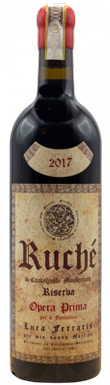

From the estate's Bricco della Gioia vineyard, the flagship Opera Prima Riserva is matured in 500L French oak tonneaux for up to 36 months. The...
2017
Ferraris AgricolaRuché di Castagnole Monferrato

Caldera, Prevost, Ruché di Castagnole Monferrato, Piedmont, Italy, 2020
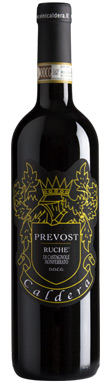
Fourth-generation Fabrizia Caldera, along with her husband and son, has been vinifying Ruchè at this property since 1997. This wine sees no wood and consequently...
2020
CalderaRuché di Castagnole Monferrato
Cantine Sant'Agata, Genesi Riserva, Ruché di Castagnole Monferrato, Piedmont, Italy, 2016
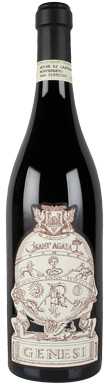
Spending a minimum of 48 months in barrel, this is a woody, red fruited wine, Porty in its fullness and richness and imbued with spices...
2016
Cantine Sant'AgataRuché di Castagnole Monferrato
Cantine Sant'Agata, Pro Nobis, Ruché di Castagnole Monferrato, Piedmont, Italy, 2018
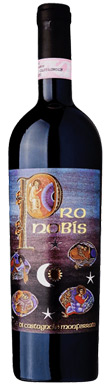
The Cavallero family have been making wine in the village of Scurzolengo for over a century but only planted its first hectare of Ruchè vines...
2018
Cantine Sant'AgataRuché di Castagnole Monferrato
Ferraris Agricola, Vigna del Parroco, Ruché di Castagnole Monferrato, Piedmont, Italy, 2019
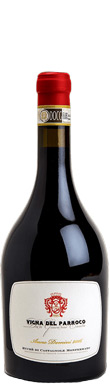
Made from Don Cauda's original plot, the first monovarietal Ruchè vineyard, planted in 1964. Matured for nine months in 20% tonneaux and 80% stainless steel,...
2019
Ferraris AgricolaRuché di Castagnole Monferrato
Montalbera, Laccento, Ruché di Castagnole Monferrato, Piedmont, Italy, 2020
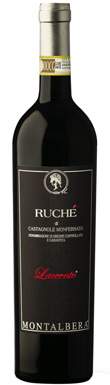
Montalbera occupies 110 hectares of vines in Monferrato and the Langhe, including approximately 60% of the entire Ruchè di Castagnole Monferrato DOCG! This wine...
2020
MontalberaRuché di Castagnole Monferrato
Cantine Sant'Agata, Na Vota, Ruché di Castagnole Monferrato, Piedmont, Italy, 2019
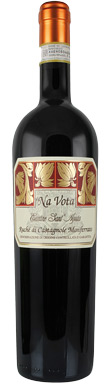
A blend of four vineyards - three to the north giving more acidity and structure, and one to the south giving more alcohol and body....
2019
Cantine Sant'AgataRuché di Castagnole Monferrato
Ferraris Agricola, Clàsic, Ruché di Castagnole Monferrato, Piedmont, Italy, 2020
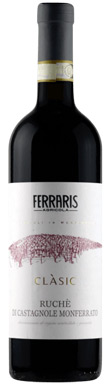
Oak aged for six to nine months, Clàsic is a traditional Ruchè in the best sense. A fairly inexpressive nose of boozy hedgerow berries and...
2020
Ferraris AgricolaRuché di Castagnole Monferrato
Poggio Ridente, San Marziano, Ruché di Castagnole Monferrato, Piedmont, Italy, 2020
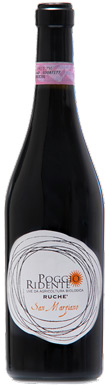
From vineyards in Viarigi d’Asti, this organic Ruché di Castagnole Monferrato is a full 2.5% lower in alcohol than the highest ABV wine in the...
2020
Poggio RidenteRuché di Castagnole Monferrato
Tenuta Montemagno, Invictus, Ruché di Castagnole Monferrato, Piedmont, Italy, 2020
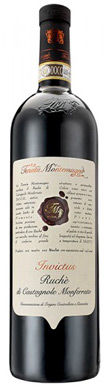
A response to the introduction of the Riserva category in March 2020, Invictus is a late-harvest Ruchè which uses barrels to accentuate the grape's structure....
2020
Tenuta MontemagnoRuché di Castagnole Monferrato
Tenuta Montemagno, Nobilis, Ruché di Castagnole Monferrato, Piedmont, Italy, 2019
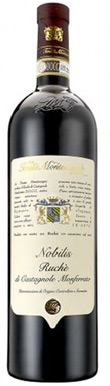
With less richness and dry extract than Invictus, this minimal intervention Ruchè has a light nose of blackberry, blackcurrant leaf and red berries. In the...
2019
Tenuta MontemagnoRuché di Castagnole Monferrato
Bosco, Oltrevalle, Ruché di Castagnole Monferrato, Piedmont, Italy, 2020
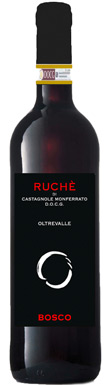
Tommaso Bosco started out buying vineyards in 2014 but in 2017 he restored his grandparents' old farm, planting 7.5 hectares of new vineyards and 14ha...
2020
BoscoRuché di Castagnole Monferrato
Esse Erre, Ruché di Castagnole Monferrato, Piedmont, Italy, 2020

A delicious if somewhat simplistic expression with a fragrant waft of tarmac, black cherry, red fruits and savoury herbs. Broad, soft and juicy but not...
2020
Esse ErreRuché di Castagnole Monferrato
Prediomagno, Ruché di Castagnole Monferrato, Piedmont, Italy, 2019
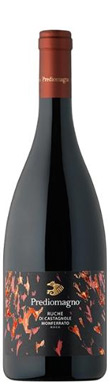
Prediomagno was only founded in 2016, and 2019 was the estate's second year of production. From vines grown in Grana at 250-270 metres above sea...
2019
PrediomagnoRuché di Castagnole Monferrato
Livio Amelio, Primordio, Ruché di Castagnole Monferrato, Piedmont, Italy, 2020

Amelio Livio is today run by fourth-generation winemakers, Arianna and Daniela, who produce several different wines from the estate's seven hectares. This light, floral red...
2020
Livio AmelioRuché di Castagnole Monferrato
