
How to pick the best Sancerre wine
What makes Sancerre special? Find out what makes it tick, which producers to seek out and the wines our experts rate the highest in this guide to the famous Loire appellation.


Originally written for Decanter magazine in 2007 and updated in 2019.
Sancerre is easily the most spectacular – and largest –vineyard in the Loire. The steep rolling countryside with its arc of vineyards around the dominating hill of Sancerre is unique to the region. With one or two exceptions, vineyards elsewhere in the Loire are gently sloping. The area is justly famous for its aromatic Sauvignons, but is also capable of some delicious reds from Pinot Noir.
Sancerre is particularly beautiful in the autumn when the hills are a mass of gold. As you follow the river Loire towards the coast, this is the first appellation in the region– along with neighbouring Pouilly-Fumé – you reach that has an international reputation.
A red history
There are now approximately 2,800ha of vines planted here, meaning Sancerre accounts for more than half the central Loire’s total of 5,000ha. While the vast majority is Sauvignon Blanc, about 25% is Pinot Noir. In fact, before phylloxera devastated these vineyards at the end of the 19th century, red varieties dominated – principally Pinot Noir and Gamay. Until appellation contrôlée was introduced, some of these grapes went north to be used for making Champagne. It was only after phylloxera that Sauvignon Blanc took over.
Since the mid-1990s there has been a revolution in the quality of red Sancerre. Historically, most red has been made in a light, easy-drinking style from high yields. Although the majority of red Sancerre is still made in this style, a small group of the top producers, such as Alphonse Mellot, Vincent Pinard and the Vacherons are now making serious, ageworthy Pinots from low yields. This means hand picking and sorting tables in both the vineyard and the chai – especially important in difficult vintages.
Scroll down to see our experts’ pick of the best Sancerre wines
Increasingly those producers using wood are opting for larger barrels – 400, 500 and 600 litres rather than 225-litre barriques. ‘We want to avoid the taste of wood in our wines,’ is a common refrain.
Sancerre rosé makes up about 5% of overall production. It is generally pale in colour, as most are made by pressing the grapes immediately, which only extracts a little colour. A few are rosés de saigné, running off some of the juice from the red vats, which helps to concentrate the reds as well as giving the rosés more colour and structure.
The Sancerre terroir
Of course, Sancerre remains renowned for its whites, which are derived from three distinct soil types – silex (flint), caillottes (limestone) and terres blanches (clay and limestone). They produce three very different styles of wine.
The band of flint is found in the most easterly part of the vineyard around Sancerre: St-Satur, Ménétréol-sous-Sancerre and Thauvenay. It accounts for about 20% of the appellation, and the wines tend to be mineral, often with a slightly smoky nose.
About 40% of the vineyard is limestone. Here the soil is very thin – in places virtually non-existent – with the vines struggling straight into the white rocky soil. ‘Wines from les caillottes are always the most aromatic when they are young and are ready to drink first,’ explains Jean-Marie Bourgeois. These are ready to drink in the spring after the vintage, although there has been a tendency among some producers to bottle too early – in January or February following the vintage – and not give their wine enough time to develop any complexity before bottling.
‘The longest-lived wines and those that need most time before being ready to drink are those from the terres blanches,’ continues Bourgeois. Most of the terres blanches, which accounts for 40% of the appellation, are in the western part of the appellation with many vineyards planted on steep hills. Le Clos de la Poussie (above Bué), Les Monts Damnés and Côte de Beaujeu (both above Chavignol) are some of the best-known terres blanches vineyards. Many of the best wines come from here.
Sancerre has benefited from a succession of dynamic producers, such as Jean-Marie Bourgeois, Alphonse Mellot, Jean-Max Roger and the Vacheron family. They have led both by example and also by encouraging other vignerons. The Sancerre appellation has the advantage of being compact, with the small town of Sancerre and its attractive old houses providing a clear focus.
Over the last five or six years there has been a noticeable move away from using weedkillers and towards grassing down, which both combats erosion and reduces vine vigour, as well as working the soil. Prior to 2000, heavy rain often caused serious erosion in the vineyards, as the hard, bare soil absorbed little water, so there would be torrents of mud coursing down through the steep slopes. ‘In 20 years virtually all the Sancerre vineyards will be organically farmed,’ predicts Denis Vacheron.
‘More and more producers are moving to organic or biodynamic viticulture. We are now seeing the progressive disappearance of vignerons in their 60s and 70s who refuse to change.’
Another sign of the Sancerrois working together is the opening last year of the Maison de Sancerre, which has a very interesting series of audio-visual displays of the history of the vineyard and explanation of the work in the vineyards through the year.
The Key Players
Henri Bourgeois, Chavignol
Over the years the dynamic Bourgeois family, originally under the leadership of Jean-Marie Bourgeois, has come to dominate the small village of Chavignol with their winery, various cellars, a retail shop and a fine restaurant, La Côte des Monts Damnés. The family also has a vineyard in Marlborough, New Zealand, growing Sauvignon Blanc and Pinot Noir. The Sancerre whites tend to be stronger than the reds, and the top cuvée is Le Chêne St-Etienne.
Cave de Sancerre
With 130 members, this is the only cooperative in Sancerre and is responsible for 10% of the appellation’s production. It is a big supplier to supermarkets. The quality of the whites is considerably higher than the reds, which tend to be rather thin and stalky.
Chateau de Sancerre
The Marnier-Lapostolle family owns the château that tops the hill of Sancerre. The present château was built in 1874 in the style of Louis XII, and Louis-Alexandre Marnier-Lapostolle bought it in 1919. Today the vineyards are managed by Gérard Cherrier. ‘Rather than use chemical treatments, it is important that the vines develop their own immunity and that we respect the environment,’ says Cherrier. The white Cuvée du Connétable is the top wine.
Lucien Crochet, Bue
This estate, which has long been run by Lucien’s son, Gilles Crochet, has a deservedly high reputation. ‘We pick entirely by hand,’ says Crochet. ‘I sign up 60 pickers, knowing 45 will turn up on the day.’ Crochet is keen that his whites have a mineral character, so restricts the amount of lees stirring.
Fournier, Verdigny
Starting from just 5ha in 1950, Fournier Père & Fils has become a serious producer and négociant. They also have substantial holdings in Pouilly-Fumé and Menetou-Salon with a total production of around 1.5 million bottles a year. None of the wines see any wood. The top cuvée is the reasonably priced Cuvée Chaudouillonne.
Domaine Fouassier, Sancerre
This family company is run by Pierre and Jean-Michel and they have vines across the three types of soil in Sancerre, as well as a négociant business. Their top wines come from a single soil type – Les Romains is from flint and the Clos Paradis from the terres blanches.
Alphonse Mellot, Sancerre
Alphonse Mellot (senior) is one of the great characters of Sancerre. His enthusiasm and passion for quality are legendary. The arrival of Alphonse junior in the early 1990s raised the quality still further. The Mellots abandoned their négociant business to concentrate all their efforts on their own 46ha of vines and, in particular, to improve the quality of their reds. Here they have made remarkable progress.
Joseph Mellot, Sancerre
Joseph Mellot is both a producer and négociant. Along with Henri Bourgeois, Mellot is the largest producer in Sancerre. The company also has vineyards in all the central Loire ACs except for Châteaumeillan, and was the first producer in Sancerre to have a bottling line equipped for screwcaps.
Vincent Pinard, Bue
This domaine has long made wines – both white and red – of impeccable quality. Vincent has now been joined by his two sons. Back in 1989 Pinard was one of the first to ferment his white in new wood. ‘The practice was then frowned on,’ says Pinard, ‘so I called the cuvée Harmonie.’
Jean-Max Roger, Bue
Jean-Max Roger has often been ahead of his time. For instance he was one of the first to grass over his vineyards in 1990. ‘When I started back then to grass over some of our vineyards and till the soil in the rest people thought I was mad!’ Roger’s whites and reds age well.
Vacheron, Sancerre
The Vacherons are a long-standing top-quality wine family with cellars in the centre of Sancerre. The older generation – Jean-Louis and Denis – is in the process of handing over the reins to the younger – Jean-Dominique and Jean-Laurent. The entire estateis now biodynamic, and the top wines – Les Romains (white) and Les Belles Dames (red) will easily last 10 years.
Francois Crochet, Bue
After work placements with Bruno Clair in Burgundy, Château Angélus in St-Emilion and one in New Zealand, Crochet set up in 1998 with 2000 as his first vintage. Grapes are picked by hand, and he invested in a sorting table in 2004. His whites and reds have concentration and wonderful balance. The whites age on their lees and are mineral rather than exuberantly aromatic. His top wines are Le Chêne Marchand and Les Amoureuses (white) and Réserve de Mareigoué (red).
The best Sancerre wines:
These top-scoring wines have been reviewed by our experts on separate occasions
You may also like:
Celebrating Sauvignon Blanc: A global guide
Loire vs Marlborough Sauvignon Blanc: Can you tell the difference?
Top Loire Cabernet Franc: Panel tasting results
François Cotat, Les Monts Damnés, Sancerre, Loire, France, 2016
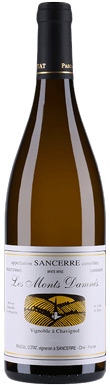

From old vines on steep, south-facing slopes, like all of François Cotat’s wines this is produced in tragically small quantities (the total domain covers only...
2016
François CotatSancerre

Domaine Vacheron, L'Enclos des Remparts, Sancerre, Loire, France, 2016
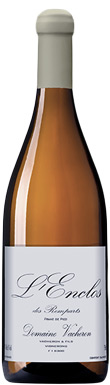
Produced from ungrafted vines, this wine has a nose of remarkable mineral-like purity. Pear, white peach and white pepper all come together in a complex...
2016
Domaine VacheronSancerre
Henri Bourgeois, Les Côtes aux Valets, Sancerre, Loire, France, 2015
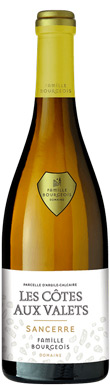
Made from a single 1.06ha parcel of west-facing, old vine Sauvignon on the clay-limestone soils of the ‘Bannon’ lieux-dit, close to the village of Vinon...
2015
Henri BourgeoisSancerre
Domaine Vacheron, Les Romains, Sancerre, Loire, France, 2017
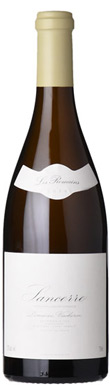
This is sourced from the domain’s oldest vines, located on west-facing flinty silex soils. The exuberant result is a more complex expression of white fruit...
2017
Domaine VacheronSancerre
François Cotat, Les Culs de Beaujeu, Sancerre, Loire, France, 2016
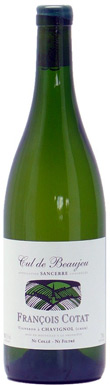
Green-white in colour, the complex orchard fruits draw you into the glass. Those apple and pear notes contrive, at least aromatically, to evoke other Loire...
2016
François CotatSancerre
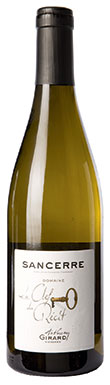
Anthony Girard, La Clef du Récit, Sancerre, Loire, France, 2015
95
Biscuity aromas and a fresh, peachy, vivacious palate. Depth and polish, not too fruit-driven, relying on that flinty edge and an appealingly stony finish.
2015
Anthony GirardSancerre
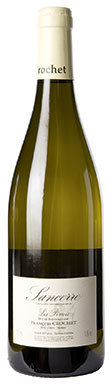
Domaine François Crochet, Les Perrois, Sancerre, Loire, France, 2015
95
Delicate citrus and grapefruit aromas. Toasted almond notes on the palate with grilled white peach and orange pith. Crisp, but no trace of greenness. Focused, very rounded and complete.
2015
Domaine François CrochetSancerre
Henri Bourgeois, Les Ruchons, Sancerre, Loire, France, 2015
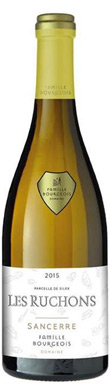
Formerly part of the D’Antan cuvée, this is the latest addition to the single vineyard range - a 1.03ha parcel of vines planted in 1970...
2015
Henri BourgeoisSancerre
Domaine François Crochet, Le Chêne Marchand, Sancerre, Loire, France, 2018
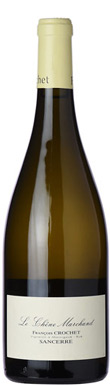
This white, the best of the line-up from this domain, comes from a 27ha lieu-dit on limestone soils. Pear notes combine with compelling menthol and...
2018
Domaine François CrochetSancerre
Domaine Vacheron, Le Pavé, Sancerre, Loire, France, 2016
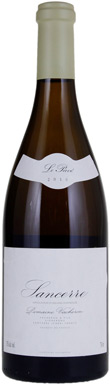
Le Pavé comes from an east-facing vineyard planted on Cretaceous marl soils. The effects of its élevage are still perceptible, with spices on the exuberant...
2016
Domaine VacheronSancerre
Domaine Vacheron, Chambrates, Sancerre, Loire, France, 2017
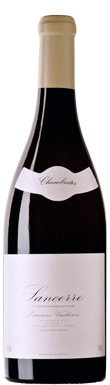
<p>This outstanding white comes from vines on a plateau of limestone and red clay soils. The pure and complex nose combines pear fruit with white...
2017
Domaine VacheronSancerre
Domaine François Crochet, Le Chêne Marchand, Sancerre, Loire, France, 2017
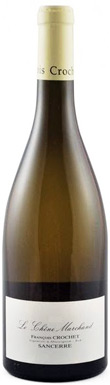
This site-specific white always remains extremely expressive, even after bottling. Exuberant but sharply focussed aromas of pear and other white fruits mark this out as...
2017
Domaine François CrochetSancerre
Dominique Roger, Domaine du Carrou, Sancerre, Loire, France, 2015
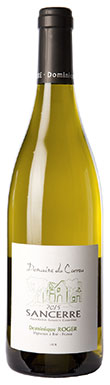
94
Citrus and peach aromas with a little box tree and gooseberry and some smoky, flinty seams. A good ripeness of plum and yellow peach fruit. Not overdone, this is a classy and expressive Sauvignon that has the capacity to age for several years.
2015
Dominique RogerSancerre
Domaine du Nozay, Sancerre, Loire, France, 2015
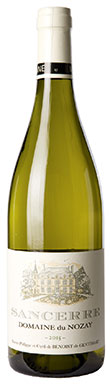
94
Ripe grapefruit aromas which are also very limestone and flinty in character. Attractive mouthfilling texture with real substance and breadth. Quite a serious style here which shows in the finish, charged with zippy, crunchy structure.
2015
Domaine du NozaySancerre
Domaine Serge Laloue, Sancerre, Loire, France, 2015
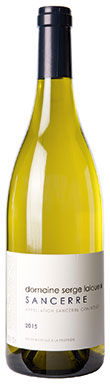
94
Light citric notes and a smoky, bright nose with a reserved, mineral vein. This has a lean and grippy style. The palate is pure and nicely polished, showing white stone fruit and white peach freshness, with an energetic balance of fruit and acidity. Deliciously fine example.
2015
Domaine Serge LaloueSancerre
François Cotat, Les Monts Damnes, Sancerre, Loire, France, 2002
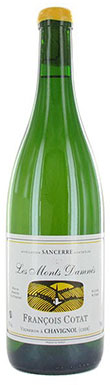
<p>The chance to get to taste mature Sauvignon is rare – and in many locations justly so, as the wines simply don’t repay storing. This,...
2002
François CotatSancerre
Alphonse Mellot, Satellite, Sancerre, Loire, France, 2016
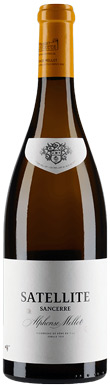
From a set of old vine sites in Chavignol, this is stonier and tauter than Les Romains, with quiet woodland flower scents over a base...
2016
Alphonse MellotSancerre
Pascal Jolivet, Rosé, Sancerre, Loire, France, 2015
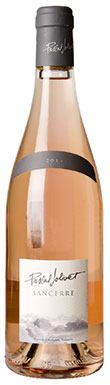
93
There is some peach and ripe red berry fruit here, but it seems a more serious, less fruit driven style with some distinctive mineral characters on the palate. The extremely appetising fresh leafy acidity adds to the elegance and delicacy, finishing very clean and fresh on the palate.
2015
Pascal JolivetSancerre
François Cotat, Chavignol, Loire, France, 2014
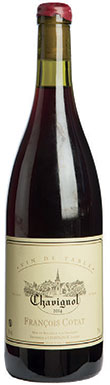
Cotat’s iconic, ageworthy white Sancerres are considered atypical but produced using very traditional methods. The red is similarly unorthodox and extremely rare, yet also has...
2014
François Cotat
Vincent Gaudry, Les Garennes, Sancerre, Loire, France, 2016
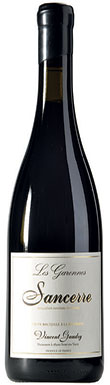
Vincent Gaudry has biodynamics in his veins; I don’t think anyone is more connected to the life of their vines. After taking the organic route...
2016
Vincent GaudrySancerre
Vincent Pinard, Vendanges Entières, Sancerre, Loire, France, 2012
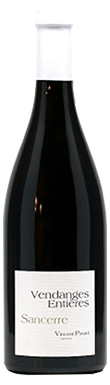
95
<p>The same grapes as with Charlouise but mainly whole bunches were used here. The aromas leap from the glass: Turkish Delight, marshmallow, floral hints and ripe cherries. It’s tight and grippy with impressive fruit purity and firm tannins. Will benefit from cellaring.</p>
2012
Vincent PinardSancerre
Vincent Pinard, Charlouise, Sancerre, Loire, France, 2013
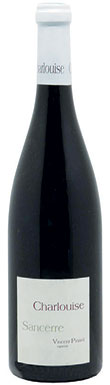
This is sourced from a 1.5ha vineyard of 50-year-old vines grown on clay-limestone. A combination of extremely low yields, hand-harvesting and strict sorting results in...
2013
Vincent PinardSancerre
Domaine Vacheron, Belle Dame, Sancerre, Loire, France, 2014
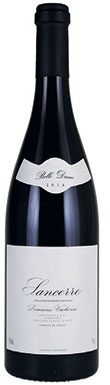
The Vacherons are Sancerre pioneers. Third generation Jean-Dominique and Jean-Laurent Vacheron run the 43ha estate, which has been certified biodynamic since 2004. From a single...
2014
Domaine VacheronSancerre
Domaine Vacheron, Belle Dame, Sancerre, Loire, France, 2015
Produced with low yields from a small plot of just over 1.5ha on silex soils, this wine is aged in barrels already used for just...
2015
Domaine VacheronSancerre
Domaine Claude Riffault, La Noué, Sancerre, Loire, France, 2015
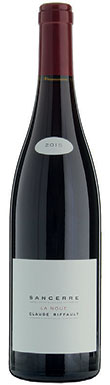
Since taking over his father’s 13ha in late 2000, Stéphane Riffault has adopted the Burgundian approach, creating micro-cuvées based on soil types. This comes from...
2015
Domaine Claude RiffaultSancerre
Pierre Morin, Sancerre, Loire, France, 2013
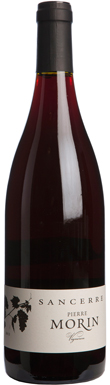
93
There are excellent aromas here: a lovely surge of refined cherry making it graceful, pure and enchanting. Smooth, lively and curranty on the palate, with some tannin support for table use, and very true to its origins; that northerly freshness is very Sancerre. Really outstanding work here.
2013
Pierre MorinSancerre
Domaine Vincent Delaporte, Chavignol, Sancerre, Loire, France, 2015
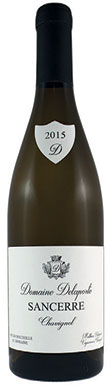
Located in Chavignol, this domaine has been handed down from father to son since the 17th century. Today Vincent’s grandson, Mathieu Delaporte, is in charge...
2015
Domaine Vincent DelaporteSancerre
Domaine Fouassier, Iconoclaste, Sancerre, Loire, France, 2016
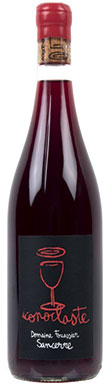
Domaine Fouassier has a winemaking history that spans 10 generations. Jules Fouassier was the first grower to use copper and sulphur to combat disease and...
2016
Domaine FouassierSancerre
Vincent Pinard, Sancerre, Loire, France, 2014
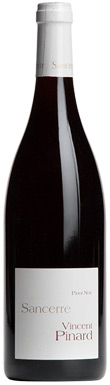
92
Since brothers Florent and Clément joined forces with their father, their domaine has enjoyed a renaissance. Made in a similar way to big brother Charlouise but from younger vines, this cuvée is equally as graceful. The palate boasts lifted and refreshing pure red cherry fruit, silky tannins and a chalky mineral cut. It’s delicious now but also has enough structure and complexity to age.
2014
Vincent PinardSancerre
Millet Roger, Sancerre, Loire, France, 2015
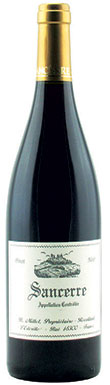
Hailing from one of the best Sancerre villages, Bué, this smartly packaged wine is towards the brighter, sweeter, red cherry fruit end of the Pinot...
2015
Millet RogerSancerre
Lucien Crochet, La Croix du Roy, Sancerre, Loire, France, 2014
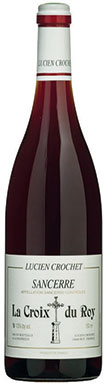
Sourced from several estate-owned plots of Pinot Noir on limestone, this wine is aged in a combination of barrels (70%) and stainless steel (30%). It...
2014
Lucien CrochetSancerre
Joseph Mellot, Le Rabault, Sancerre, Loire, France, 2012
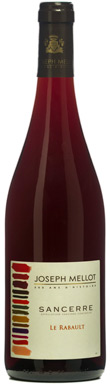
91
Until phylloxera ravaged Sancerre's vineyards in the 1860s, the region was more famous for its reds than its whites. The reds are making a comeback though, and this is a fine example, showing bright crunchy red cherry fruit – tart and fresh – on a smoothly textured palate with fine fruit tannins.
2012
Joseph MellotSancerre
Joseph Mellot, Le Rabault, Sancerre, Loire, France, 2014
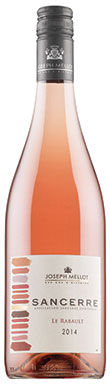
91
100% Pinot Noir – more like a light red. Fresh berry fruit with smooth, creamy weight and a hint of tannin.
2014
Joseph MellotSancerre
