
Santa Rita replanting – a clean sweep


What would lead Santa Rita, one of Chile’s biggest and most famous names, to pull up hundreds of hectares of its vines? Amanda Barnes reveals the wisdom behind the Casa Real producer’s radical next steps, and picks out five wines from their diverse portfolio...
Change is afoot in Alto Jahuel. First planted in 1850, the roots of Santa Rita’s historic 600ha wine estate run deep. This is a site of both viticultural heritage and cultural importance for Chile: it was once a hideout for 120 soldiers during the independence wars, and it was in this same vineyard that Carmenère was first identified, hidden away between Merlot vines, in 1994. Alto Jahuel is part of Chile’s vinous patrimony and it is the main artery for Santa Rita’s 100 million-litre production – including its Carmen brand and Casa Real, one of Chile’s foremost icon wines.
Long though its history may be, there is a seismic shift underway in Santa Rita. Cecilia Torres, winemaker for Casa Real since its inception in 1989, stepped down in 2017, handing the reins to Sebastian Labbé (who joined Viña Carmen in 2005). Labbé is also taking over Santa Rita’s premium wines from Andrés Ilabaca, who after 20 years is now downscaling to consultant winemaker. There may be new faces in the barrel room, but the big change is going on in the vineyards.
Scroll down to see Amanda’s tasting notes
Grand-scale renewal
Santa Rita is in the middle of an unprecedented replanting programme, called WiSe (Wine & Seeds). One of Chile’s most ambitious to date, it is costing £15 million and involves the replanting of two-thirds of Santa Rita’s Maipo estate – 380ha over five years. That’s the equivalent of half the appellation of Pomerol in Bordeaux. ‘I don’t think anyone has done a replanting project of this size in Chile before – certainly not in Maipo,’ Labbé tells me in an assured tone that veers towards excitement rather than anxiety.
From an outsider’s point of view, this may appear quite a gamble. Maipo is Chile’s most prestigious wine region: a grand cru, if you will. Deep alluvial terraces, clay and gravel soils, low humidity and a Mediterranean climate provide perfect conditions for Cabernet Sauvignon.The region is the breeding ground for Chile’s most revered wine labels, including Almaviva, Chadwick, Don Melchor and Santa Rita’s own Casa Real. Since its inaugural 1989 vintage, Casa Real has come to be considered one of Chile’s first icon wines. Few others carry such gravitas in the New World, and Santa Rita has built its reputation on this, and its other Alto Jahuel wines.
Chile may famously be one of the few wine countries untouched by phylloxera, but there is a different plague affecting its vineyards: margarodes. These tiny, subterranean insects attack the roots of the vine, reducing the vigour of the plant, and can ultimately lead to vine death for certain rootstocks – including the ubiquitously planted 101-14 Mgt.
‘Our production was decreasing steadily,’ confides Labbé. ‘In the worst-affected vineyard blocks, production was down by 60%. Margarodes are a big problem in Maipo; almost everyone’s vineyards are affected in some way.’ And, he adds, margarodes aren’t the only problem affecting Chilean viticulture today. ‘Eutypa dieback, leafroll and fanleaf viruses have all moved through the country indiscriminately,’ he explains.
This combination of leaf and wood diseases with margarodes has left the vines very weak. In 2005, the winemaking team started making a masterplan for the future and found that most of its vineyards were not up to standard. Thus the seed was planted for WiSe, the viticultural overhaul that involves the 380ha replant.

Working with US consultant Phil Freese, WiSe readdresses Santa Rita’s entire viticultural approach – learning from the mistakes, and successes, of the last two centuries. The company plans to remedy the historic over-use of vineyard treatments by going herbicide-free by 2020, favouring cover crops and an army of sheep instead. Mismanaged irrigation and undue water-stress are other past gaffes it will be rebalancing.
The approach to margarodes will be one of co-existence, rather than extermination as previous generations unsuccessfully attempted to do. ‘We are replanting with a combination of more resistant rootstocks – including vinifera roots of País vines,’ explains Labbé. ‘There’s something about País that can resist margarodes – you find very old and very healthy País vineyards in Chile.’
The rootstocks are being grafted with a massal selection of Cabernet Sauvignon from Santa Rita’s wealth of old vines – including the old Casa Real blocks – and other international clones are being brought in. While this is potentially the simplest piece of the puzzle, getting hold of clean material in Chile has proved one of the greater challenges.
‘The nurseries in Chile do a mediocre job,’ laments Labbé. ‘We’ve been testing all the supposedly clean material we’ve bought, and through our analysis we were rejecting up to 25% of the plants at first, because they were infected with viruses. I don’t mind rejecting the plants, but it brings more delays.’
Although costly, getting the right material for such a large replant is worth the wait: ‘Whatever we are planting will be the future of Chile for many years to come,’ says Labbé.
Steady progression
Looking out over a horizon of saplings, the change looks radical. But Labbé thinks the transformation in the glass will be more gradual: ‘It’s a five-year transition, during which we will be making less wine in order to allow our new vines the time they need to establish their root systems well.’ By 2020, consumers should begin to notice the difference in entry-level wines such as Medalla Real, which will be ‘brighter and more vibrant, with better-balanced fruit’.
What won’t change for the time being is the old-vine component of Casa Real. ‘We are going to make sure that the new vineyards we are planting now have consistency and maturity before we replant the oldest blocks,’ reveals Labbé. ‘We may never replant the oldest blocks, in fact! But we will start incorporating the new blocks to a greater extent than we have done previously. Since the 2014 vintage, Cecilia [Torres] has already been including between 6% and 8% from the newer hillside vineyards.’
Blending isn’t just a case of necessity – the Casa Real blocks only yield 3.5 tonnes/ha – but also choice. ‘The fragmented rocks in the colluvial hillside soils give you reactive tannins. You get lots of structure and dark fruit, which can be very important in the blend and has a more modern wine profile, but you don’t get the delicacy and creaminess of the older Casa Real vineyards. I have to be careful not to be aggressive in changes, because Casa Real is a wine that has a history and fans,’ says Labbé.
As with all noble wines of the world, he sees his role as a steward of the brand – ushering it into the next era while remaining loyal to its established fan base. During the wine’s 29-year history, Torres herself experimented with fermenting in concrete, stainless steel and barrel, reflecting the ebb and flow of winemaking tendencies in Chile.
The constant was the provenance. And the elegant Alto Jahuel fruit is what continues to shine through today – layers of red and black berries with a trademark note of cedar.

Innovative instinct
In the passing of the Casa Real torch, Labbé and Torres spent the 2017 vintage together, tasting grapes from each individual plant. ‘Cecilia explained to me how each plant behaves,’ says Labbé. This inheritance of knowledge is fundamental to the transition. ‘We have all the conductivity maps and soil studies that you can imagine but, in the end, knowing the individual vines and blocks is just as important. It is a mixture of history, technology and tasting the grapes.’
That feels like an understatement, given the huge amount of work that’s going into the WiSe project. But while the scale of Santa Rita’s replant might be shocking, this is a company that hasn’t shied away from bold moves in the past. It was the first to sell a Chilean ‘Carmenère’ following its unexpected – and controversial – discovery of the grape; it also established the country’s first organic wine brand. Both of these are commercial norms in Chile today.
This radical replant too seems like a carefully measured move, and one that reflects modern Chilean winemaking at its best – a courageous blend of inheritance, innovation and, ultimately, intuition.
Santa Rita – a timeline
- 1850 Carmen, Chile’s oldest winery, is founded
- 1880 Santa Rita founded in Alto Jahuel
- 1983 Cecilia Torres starts at Santa Rita
- 1987 Santa Rita acquires Viña Carmen
- 1989 First Casa Real vintage released
- 1994 Carmen produces Chile’s first organic wine
- 1996 Andrés Ilabaca starts at Santa Rita
- 1996 Carmen becomes first Chilean winery to label and sell Carmenère
- 2005 Sebastian Labbé joins Carmen
- 2014 WiSe replantation in Alto Jahuel starts
- 2017 More than 230ha replanted so far
- 2017 Torres retires; Ilabaca becomes director of technical research; Labbé becomes premium winemaker; Emily Faulconer joins as Carmen winemaker
- 2018 The final replanting of 150ha planned
- 2020 First harvest of new vines expected
Amanda Barnes is a wine and travel writer who has been based in South America since 2009
Santa Rita old and new:
Santa Rita, Casa Real, Alto Jahuel, Maipo Valley, Chile, 2010
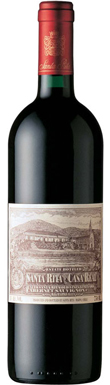

Just coming of age, this is a show-pony vintage; flamboyant floral notes and fragrant red fruit are underpinned by cedar, cacao and spice. Elegant but...
2010
Santa RitaAlto Jahuel

Santa Rita, Casa Real, Alto Jahuel, Maipo Valley, Chile, 2014
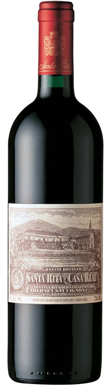
A glimpse into the future of Casa Real. here's a fine spine of tannin from some hillside fruit, with notes of black fruit, cassis, cedar...
2014
Santa RitaAlto Jahuel
Santa Rita, Casa Real, Alto Jahuel, Maipo Valley, Chile, 1998
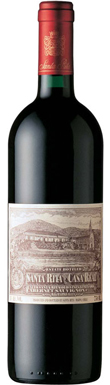
Now 20 years old, savoury notes of dried sage, black tea, cigar and underbrush are layered over stewed red fruit aromas. A delicate lacing of...
1998
Santa RitaAlto Jahuel
Carmen, Quijada #1 Semillon, Apalta, Colchagua Valley, Chile, 2016
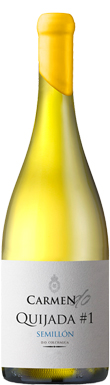
A Semillon field blend balancing delicacy and structure. Coming from granitic soils, and made with extended lees-ageing, the nose has delicate dried chamomile and citrus...
2016
CarmenApalta
Santa Rita, Floresta Carmenère, Apalta, Colchagua Valley, Chile, 2017
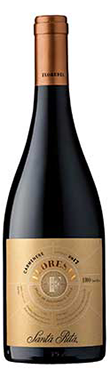
A vibrant approach to old-vine Carmenère. It was harvested six weeks early, but there’s no hint of green in this fresh wine made in amphorae...
2017
Santa RitaApalta
Carmen, La Cancha Malbec, Colchagua Valley, Chile, 2016
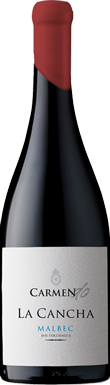
A bright Malbec from coastal Colchagua with an abundance of dark fruit notes and violet. Part of the exciting Carmen DO series, rediscovering old vine...
2016
Carmen
