
Sauternes: A fresh debate
What determines freshness in Sauternes? Is it down to terroir? Vintage perhaps? Or maybe it’s the winemaker’s influence? James Lawther MW considers the relative impact of each of these factors…


My first Sauternes love was Château Lafaurie-Peyraguey 1983. I was so enamoured with its vibrancy and citrus and tropical fruit fragrance that I bought two cases for what today seems a very derisory price.
Thirty-six years on and the colour may have changed to amber and the aromas become more confit, but there’s still a wonderful tangy tension. Good Sauternes wines may be rich in residual sugar, but an important part of its beguiling quality is the balance brought by perceived freshness.
Scroll down for James Lawther’s top 10 wine picks from Sauternes & Barsac
To this day I am unaware of the residual sugar content and total acidity in the Semillon-based wine, which is probably just as well. What goes down on paper as statistical analysis does not always correspond to the gustatory and aromatic sensation.
You can have what appears to be good acidity and lower residual sugar in a wine that seems less fresh. The opposite can also be the case. Other factors also come into play, namely terroir, vintage and, in particular, the quality and quantity of botrytis cinerea, or noble rot, and the aromatic complexity that stems from it. ‘The notion of freshness is brought by the aromatics, not technical data,’ declares François Amirault, winemaker at Château de Fargues for more than 25 years.
In terms of terroir, all agree that the lower-lying limestone soils of Barsac offer an extra edge of minerality and freshness. ‘A wine may have the same residual sugar content as a Sauternes, but on the palate the Barsac will seem less sweet and have more tension,’ explains consultant oenologist Marie-Pierre Lacoste-Duchesne, who also runs the family property Château La Clotte-Cazalis in Barsac. For wine lovers, it’s a point to bear in mind.

If this is the blanket case for Barsac, in the rest of Sauternes, where the soils are varied (sand, gravel, clay), the results can be subtly nuanced. It’s what helps, for instance, with the complexity at 100ha Château d’Yquem. ‘The clay and gravel soils around the château definitely impart freshness due to the early ripening nature of the site and subsequent onset of botrytis,’ says Yquem winemaker Sandrine Garbay. ‘On the north-facing slope, in contrast, there’s more clay and it’s cooler, so the botrytis generally arrives later, providing the rich heart of the blend but less freshness.’
Acid test
At this point, it is probably worth underlining the distinction between acidity in a wine and the perception of freshness. The former is a constant that can be measured and, of course, it imparts vivacity; the latter is purely a sensation that’s provoked by a mix of factors – in this case terroir, botrytis and individual vintage conditions.
In certain vintages, total acidity can be quite marked, something both measurable and perceptible in the wine. Even in the case of a wine such as Château d’Yquem 2014, where residual sugar is as much as 146g/l, it is clearly evident. As a whole, 2014, due to a cooler summer, is a vintage where acidities are exceptionally strong but residual sugar is also generous. So, if a nervier Sauternes or Barsac is your preference – as opposed to one that is rich and powerful like those of 2009 – then this is a vintage to seek out. Other readier-to-drink vintages where a heightened acidity can be perceived are 2008 and 2002, although they are lighter in weight and intensity.
By contrast, there are vintages where acidities are lower and the wines bountifully rich, but the sensation of freshness is still maintained. Two of the recent greats, 2015 and 2011, are perfect examples. Acidities are lower than in 2014 and there’s greater volume and concentration, but the wines remain vibrant and elegant in style. Both vintages had a couple of notable aspects that contributed to this condition: an early and rapid flowering, and a wave of very pure noble rot that arrived in early September. The purity and complexity of the aromatics with fresh fruit and floral notes is what has helped heighten the sensation of freshness in these years.
The key element to note is the rapid onset of noble rot. ‘When the botrytis arrives soon after the grapes have reached full maturity, you get an amplification of aromas due to the interaction between the two,’ explains Xavier Planty, co-owner of organically certified Château Guiraud. ‘Whereas grapes that are overripe, and that wait several days for the botrytis to be present, will provide concentration but offer less aromatic complexity – and consequently less of a sensation of freshness,’ he adds.
Vineyard management
When it comes to the production of Sauternes, ‘technique’ is a questionable word. ‘Contrary to dry white and red wines there’s no technical solution to modify what nature offers,’ states Frédéric Nivelle, technical director of biodynamically run Château Climens in Barsac. Even so, since the 1980s, producers have refined techniques that help prepare the vineyard for botrytis and later on protect the fresh fruit character in the wine.
With most châteaux producing less than the 25hl/ha appellation limit, excessive yields are not a problem. The main thrust has been in managing the vineyard so that the Semillon and Sauvignon Blanc come to full maturity before the onset of the first wave of botrytis, normally in early September, when alternating heat and humidity provide the right conditions. ‘We work the soils to encourage the roots downwards, manage vine vigour and do leaf plucking to assist maturity so the botrytis can arrive on ripe fruit and not green,’ says Jean-Jacques Dubourdieu of Château Doisy-Daëne.
Another tip has been to avoid or limit spraying for disease during the flowering period, as it has been demonstrated that botrytis is already present on the vine but dormant. Organic or biodynamic cultivation has also been a solution for some. ‘You need to link acidity and maturity so I’ve rectified the trellising, adopted some biodynamic practices, and in the last four years have had a lower pH and higher acidities,’ declares Daniel Alibrand of tiny 6ha Domaine de l’Alliance in Fargues.
Clearly, the harvest period is critical, the windows of opportunity dependent on the weather and concentration of botrytis, and the level of competence of the pickers is more important than for dry white and red wine. ‘I prefer to pick with a little less concentration to help keep the vivacity, and with our experienced team we can react quickly and do a trie in a day,’ explains Laure de Lambert, owner of Château Sigalas Rabaud. Residual sugar content for most vintages at the 14ha estate hover between 120 and 130g/l. With an early harvest, another possibility is to pick both fully botrytised grapes and those at a less botrytised stage, raisins dorés, which also contributes to complexity and freshness.
Balancing act
Having completed the harvest, the next critical phase is to preserve fruit and freshness in the cellar. Here again, considerable advances have been made over the past 15 years. Generally speaking, additions of sulphur dioxide have been reduced; some estates now prefer the fermentation to be completed naturally at an ambient temperature rather than stopping it by lowering the temperature. Blending the different lots is also an important and skilled moment, but perhaps the biggest change has been in barrel ageing.
‘Oak ageing has one fault: it makes the wine seem heavier and less digestible,’ says Alibrand. He has chosen to use older and larger (350-litre) barrels with a lighter toast. At Château d’Yquem, where oak ageing is important for structure, maturation time used to be three-and-a-half years, but since 2005 this has been reduced to two. The number of rackings has also been cut to five over that period, down from 12. At Château Lafaurie-Peyraguey, the new ownership (since 2013) has also reduced time in barrel and adopted a lighter toast. ‘A heavier toast emphasises sweetness, vanilla and caramel; a lighter toast underscores the citrus and fresh fruit,’ says cellarmaster Christophe Navarro.
When it comes down to it, there is no fixed recipe for creating freshness in Sauternes. Terroir has first say in the matter, followed by vintage, the latter more strongly felt in contrasting ways in vintages like 2014 and 2009. Thereafter there is the stylistic fine tuning at individual châteaux and the efforts made to preserve purity and freshness through successful blending and barrel maturation. In the end it’s all a question of balance, each factor adding something to the perception of freshness in the wine.
Based in Bordeaux, James Lawther MW is a contributing editor to Decanter and the author of The Finest Wines of Bordeaux
See James Lawther’s top 10 wine picks from Sauternes & Barsac:
You may also like
Best Sauternes 2018 wines: Where to look in a mixed yearTop 20 Bordeaux dry whitesChâteau Lafaurie-Peyraguey opens Sauternes vineyard retreatSauternes second wines: Why they’re worth a look
Château Climens, Barsac, 1er Cru Classé, Bordeaux, France, 2009
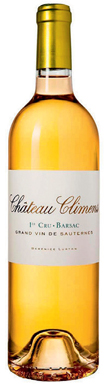

Rich and opulent, but the Barsac terroir keeps it reined in. Exotic fruit notes, baked apple and confit fruit. Pure, velvety and unctuous but with...
2009
Château ClimensBarsac

Château d'Yquem, Sauternes, 1er Cru Classé Superieur, Bordeaux, France, 2014
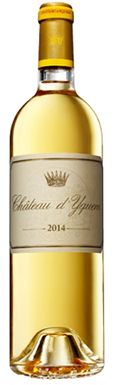
Lively, pure and fresh aromas, pear and citrus notes. So rich and concentrated on the palate but with a flare of acidity that provides tension...
2014
Château d'YquemSauternes
Château Guiraud, Sauternes, 1er Cru Classé, Bordeaux, France, 2010
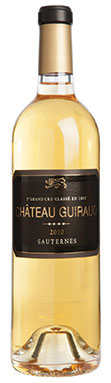
Lively and expressive, with floral and citrus notes – there’s even a touch of lemon sherbet. Round, full and textured with bitter orange freshness and...
2010
Château GuiraudSauternes
Château de Fargues, Sauternes, Bordeaux, France, 2009
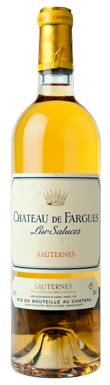
Opulent and dense with all the power of the vintage. Round and luxurious on the palate. There’s less perception of freshness but zesty, botrytised notes...
2009
Château de FarguesSauternes
Château Suduiraut, Sauternes, 1er Cru Classé, Bordeaux, France, 2013
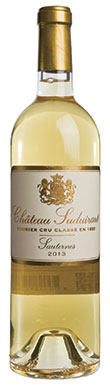
93
Fresh and zesty with an almost minty-herbal edge. Deceptively rich as well (150g/L RS). Sweet attack on the palate, then long and linear on the finish. The acidity is present but wrapped in fruit.
2013
Château SuduirautSauternes
Château Doisy-Daëne, Sauternes, 2ème Cru Classé, Bordeaux, France, 2014
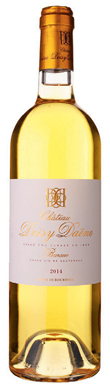
Classic Barsac citrus aromatics and freshness. Marked acidity but the palate is surprisingly rich too (143g/L RS). Pure, long, precise.
2014
Château Doisy-DaëneSauternes
Château Lafaurie-Peyraguey, Sauternes, 1er Cru Classé, Bordeaux, France, 2017
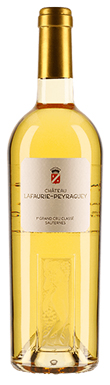
Pure, round and compact. Lower acidity but the persistent floral and mandarin citrus aromatics offer charm and freshness. Gentle, bitter orange finish.
2017
Château Lafaurie-PeyragueySauternes
Château Sigalas Rabaud, Sauternes, 1er Cru Classé, Bordeaux, France, 2016
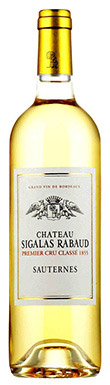
Lighter weight but elegant in style. Floral and citrus notes. Round and soft on the palate but pure fruit freshness behind. Harmonious.
2016
Château Sigalas RabaudSauternes
Domaine de L'Alliance, Sauternes, Bordeaux, France, 2016
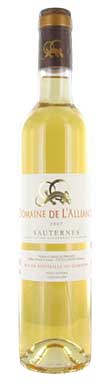
Lovely fruit and balance on display here. The palate is round and lush with evident botrytis, but freshness and vigour as well.
2016
Domaine de L'AllianceSauternes
Château La Clotte-Cazalis, Sauternes, Bordeaux, France, 2015
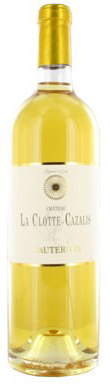
Rich but more discreet aromatically. A gentle honeyed note. Appears lighter than its 140g/L RS. Freshness and tension.
2015
Château La Clotte-CazalisSauternes
