
Schloss Gobelsburg: Tasting five decades of Heiligenstein Riesling
Stephen Brook records the history behind 17 wines spanning five decades from the 'most celebrated' vineyard in Austria's Kamptal wine region.


Austria is still rich in monastic estates, many of which own extensive vineyards. The Cistercian order of Stift Zwettl, now celebrating its 850th anniversary, is no exception. But a pious monk is not necessarily an expert winemaker, so most monastic estates lease out their vineyard holdings.
The monks of Gobelsburg made their own wines until 1995, when the retirement of Father Bertrand, who oversaw wine production, meant that they had to find a new solution.
Scroll down to see tasting notes and scores for 17 Schloss Gobelsburg Heiligenstein Rieslings
They negotiated a 60-year lease with the highly experienced local wine producer, Willi Bründlmayer, and with Michael Moosbrugger, who was still in his twenties.
The negotiations were completed in a mere six weeks, at which point, in January 1996, Moosbrugger moved into the Schloss, where he has remained ever since.
Bründlmayer is a kind of sleeping partner, so in practice, the 75-hectare estate is run by Moosbrugger and his team.
Today Schloss Gobelsburg produces over forty wines in a range of styles, but its most esteemed wine is the Riesling from Zöbinger Heiligenstein. This is the most celebrated vineyard in the Kamptal, lining the terraced slopes of a south-facing hill that rises from 240 to 350 metres.
About 100 growers produce wine from here, but some of the holdings are very small. Gobelsburg owns three hectares in two parcels.

Terroir
The soil here is known as Zöbinger Perm, which forms a geological island in an area dominated by both primary rock and loess soils. It’s a weathered sandstone, often reddish in colour, with volcanic elements.
The soil structure allows roots to descend easily through it in search of nutrients. Cool winds from the north maintain acidity in the grapes, while warm Pannonian breezes from the east help to ensure good ripening.
The Gobelsburg sites are planted with massal selections of Riesling. The grapes are whole-cluster pressed, then fermented with indigenous yeasts in large casks, though the team will add selected yeasts if a stuck fermentation should occur.
The wine stays on the fine lees until February and is only bottled in the second spring after the harvest.

As part of the anniversary celebrations, this vertical tasting of Heiligenstein Riesling spanned fifty years of production. It’s clear from the notes below that some of the vintages produced by the monks’ winemakers were disappointing. One can only speculate about an explanation, but it’s probable that grape selection is stricter now than in the past. Moreover, cellar hygiene may have been less rigorous.
Style
Another striking difference between the monastic and later styles of wine is the alcohol level.
To a large extent, this must be the consequence of global warming, but it’s clear there was also a tendency to pick earlier during the monastic era, whereas Moosbrugger and his contemporaries are prepared to take the risk of delaying harvest (weather permitting) to deliver riper and more complex fruit.
Moosbrugger explained that there are two stylistic approaches to white wine production in Heiligenstein (and indeed in the Wachau too).
With harvests often stretching well into November, some botrytis infection is far from unusual. Some growers remove any botrytised fruit from the vineyard so as to maintain the purity conferred by entirely healthy fruit. Others will tolerate a small proportion of botrytis in the wine, believing it adds texture and complexity.
Moosbrugger is instinctively in the former camp, but fully understands why other producers take a different view.
Whatever the stylistic variations, in top vintages the magnificence of the site comes shining through in a brilliant fusion of taut Riesling fruit with a striking minerality. Such a tasting could probably be replicated in the Wachau, with its primary rock soils, but not in the Kamptal, where Heiligenstein is a unique site.
See tasting notes of 17 Schloss Gobelsburg Heiligenstein Rieslings
Wines are listed in score order. A Heiligenstein 1971 wine was also tasted but was corked.
Related content
Alsace Riesling: panel tasting resultsGerman Grosses Gewächs 2021 releases: the top winesZweigelt homeland: Neusiedlersee DAC regional profile and wines to try
Schloss Gobelsburg, Heiligenstein Erste Lage, Kamptal, Niederösterreich, Austria, 2019
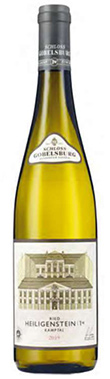

Hot weather in the early summer gave way to a cooler August, so the wines had a welcome balance of fruit and acidity. This shows...
2019
Schloss GobelsburgKamptal

Schloss Gobelsburg, Heiligenstein Erste Lage, Kamptal, Niederösterreich, Austria, 2016
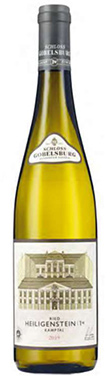
A variable summer resulted in a late harvest with low yields. Yet the nose displays rich appley aromas and ample lift. Broad and juicy on...
2016
Schloss GobelsburgKamptal
Schloss Gobelsburg, Heiligenstein Erste Lage, Kamptal, Niederösterreich, Austria, 2014
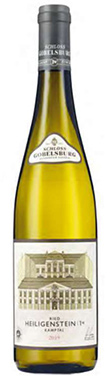
Ceaseless rain in September dashed hopes for a great vintage, though scrupulous work in the vineyard resulted in some decent wines. It's austere on the...
2014
Schloss GobelsburgKamptal
Schloss Gobelsburg, Heiligenstein Erste Lage, Kamptal, Niederösterreich, Austria, 2010
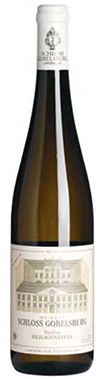
A cool wet summer resulted in wines of high acidity, and the harvest was extremely late. Often criticised when young, the wines have developed impressive...
2010
Schloss GobelsburgKamptal
Schloss Gobelsburg, Heiligenstein Erste Lage, Kamptal, Niederösterreich, Austria, 2009
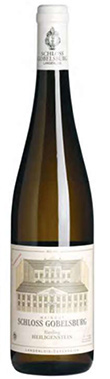
Summer storms led to some rot and botrytis, but a fine autumn saved the day. The nose is rich and broad with lush apricot aromas....
2009
Schloss GobelsburgKamptal
Schloss Gobelsburg, Heiligenstein Erste Lage, Kamptal, Niederösterreich, Austria, 2008
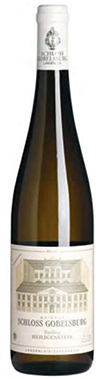
Cold and wet patches through the summer led to downy mildew. There were some green wines, despite a late harvest, but not here. The nose...
2008
Schloss GobelsburgKamptal
Schloss Gobelsburg, Heiligenstein, Kamptal, Niederösterreich, Austria, 2004
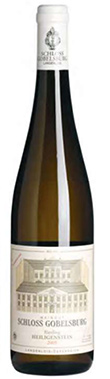
A cool year, and only a small crop of Riesling, but there were some elegant wines with fine acidity. This is starting to show some...
2004
Schloss GobelsburgKamptal
Schloss Gobelsburg, Heiligenstein, Kamptal, Niederösterreich, Austria, 2001
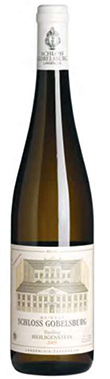
A wet September caused problems, and it was not easy to produce balanced wines. Medium straw in colour. The nose is mellow, with apple compote...
2001
Schloss GobelsburgKamptal
Schloss Gobelsburg, Heiligenstein, Kamptal, Niederösterreich, Austria, 1999
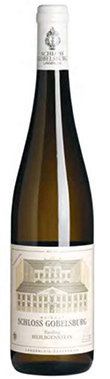
A great vintage, thanks to a fairly cool August followed by a sunny September. The nose offers elegant stone-fruits aromas that are floral and heady....
1999
Schloss GobelsburgKamptal
Schloss Gobelsburg, Heiligenstein, Kamptal, Niederösterreich, Austria, 1998
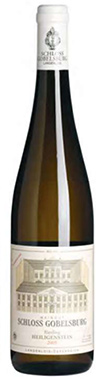
Rain at harvest meant that botrytis was hard to avoid, and it makes its presence felt here. Full straw in colour, this has a hothouse...
1998
Schloss GobelsburgKamptal
Schloss Gobelsburg, Heiligenstein, Kamptal, Niederösterreich, Austria, 1997
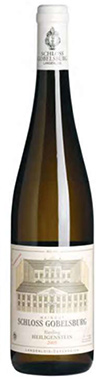
After a rainy July, summer and autumn were perfect. Stewed apricots mark the nose, which is rich but lacks some lift and verve. The palate...
1997
Schloss GobelsburgKamptal
Schloss Gobelsburg, Heiligenstein Spätlese, Kamptal, Niederösterreich, Austria, 1992
The summer was hot and dry, leading to an early harvest with low acidity. Bright straw in colour. The nose is lively and lifted, with...
1992
Schloss GobelsburgKamptal
Schloss Gobelsburg, Heiligenstein, Kamptal, Niederösterreich, Austria, 1983
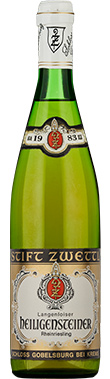
This was a warm year that delivered healthy ripe grapes. The nose is reserved but there are aromas of stewed apricots in the background. The...
1983
Schloss GobelsburgKamptal
Schloss Gobelsburg, Heiligenstein Spätlese, Kamptal, Niederösterreich, Austria, 1983
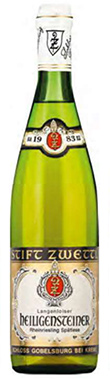
Full straw colour. There's generosity on the nose, with its broad stone-fruits aromas. Rich and plump, this is now at its peak. It still shows...
1983
Schloss GobelsburgKamptal
Schloss Gobelsburg, Heiligenstein, Kamptal, Niederösterreich, Austria, 1979
Slightly musty nose, wet wool. This lacks freshness as well as concentration. The aftertaste is bitter and the wine as a whole seems unclean and...
1979
Schloss GobelsburgKamptal
Schloss Gobelsburg, Heiligenstein Spätlese, Kamptal, Niederösterreich, Austria, 1974
A late harvest with rain. The nose is subdued, with muted aromas of pureed peaches. There's attractive juiciness on the palate, which is otherwise rather...
1974
Schloss GobelsburgKamptal
Schloss Gobelsburg, Heiligenstein, Kamptal, Niederösterreich, Austria, 1973
A great year, with a perfect August and September. On the nose, this remains robust and far from tiring, with firm apple and stone-fruits aromas....
1973
Schloss GobelsburgKamptal
