
Sicily report 2023: Latest releases tasted from this extraordinary island
Southern Italy’s best-known island is a hot destination, in more ways than one. The wine scene is constantly shifting and evolving, but it’s worth keeping up with what’s happening, as these are exciting wines that truly reflect their origins. James Button visits the island and tastes more than 300 wines to give Decanter readers a current snapshot.


A complex melange of cultures which folds in elements from its past occupants –ancient Greeks, Romans, Normans and Arabs – Sicily today is one of the most dynamic wine scenes in Italy. Its cuisine, language, architecture and wines are unique.
Scroll down to see tasting notes and scores for eight brand-new wines from Sicily to discover
There’s plenty for a wine lover to delve into on a visit to this extraordinary island: its huge vineyard area – the largest in the country, with 119,268ha of registered vines in 2022 (Istat, 2023) – encompasses more than 70 indigenous grape varieties as well as a healthy percentage of international varieties, planted throughout a multitude of microclimates.
The native varieties especially are incredibly well adapted to Europe’s hottest location, parts of which are further south than Tunis. In the face of relentlessly rising temperatures, Sicily’s indigenous vines are flourishing.
2023: Quality not quantity
Around the coasts, Sicily’s climate is typically Mediterranean, but inland its well-ventilated conditions help to reduce susceptibility to disease. As a result, organic farming is becoming the norm: according to Sicila DOC president and Donnafugata CEO Antonio Rallo, the island’s vines represent 30% of Italy’s organic viticulture by surface area. Due to adverse weather conditions in 2023, however, producers have faced a variety of challenges.
‘The 2023 harvest will be one of the most difficult of recent years,’ commented Arianna Occhipinti in Vittoria in August. ‘Beside the summer heat wave, we had heavy rains in May and June, an important time for the flowering of our grapes. The incidence of downy mildew may impact our upcoming production by about 30%-35%; the sulphur and copper treatments (the only treatments we carry out in the vineyard) in higher concentrations, were not enough to contain the problem. The 2023 harvest will be lower in quantity, but higher in quality.’
‘Due to the heat in the past weeks, we lost about 40% of the upcoming production,’ noted Cantine Settesoli’s viticultural technician Filippo Buttafuoco in August. ‘Since the temperatures dropped back, the unburned grapes are starting to regain strength so the overall loss could be lower. We are satisfied with how we managed the downy mildew issue, thanks to the help of weather huts that have the ability to electronically indicate the chances of the disease occurring, thereby avoiding irreparable damage.’
Benjamin Franchetti of the Passopisciaro winery in Castiglione di Sicilia, on Mount Etna’s north slope, commented to Decanter in July: ‘We have had severe issues of peronospora [downy mildew], unseen in the past 20 or more years. We expect production to be almost halved for 2023. After months of rain we are now experiencing extremely high temperatures.’
Over 300 wines tasted for this report: see the full table of scores
Indigenous interest
As demand for Marsala’s historic fortified wines has reached crisis point, producers have had to innovate to make use of the vast vineyard area in the west planted to Catarratto (Sicily’s most abundant variety by far, approaching 29,000ha in total in 2021), Grillo (a 19th-century crossing of Zibibbo and Catarratto) and Inzolia (Ansonica).
Grillo is the flagship variety of Marco De Bartoli, which has been instrumental in restoring the fortunes of the ailing grape following the introduction in the 1980s of Vecchio Samperi (£63.50 Les Caves de Pyrene, Sip), which recalls the traditional ‘pre-British’ unfortified Marsala. The winery also bottles a delicious metodo classico sparkling and, since 2013, a fresh, modern style of still Grillo, Vignaverde.

The Grillo revival has gained traction thanks in part to its stylistic versatility, and plantings have quadrupled in the past 20 years (from 2,141ha in 2000 to 8,579ha in 2021, says Sicilia DOC/SIAN). Tasca d’Almerita’s lemony Mozia Grillo (2022, £33.50 NY Wines) – from the small island of San Pantaleo in the Marsala lagoon – was joined in 2012 by the intensely fresh, high-altitude Cavallo delle Fate (2022, £19.75 Hic, Vinvm) from the producer’s Tenuta Regaleali estate in central-west Sicily.
Elsewhere, Florio this year launched a small-production dry Grillo capturing all the glorious salinity and depth found in Marsala’s fortified wines. New-wave producer Caruso e Minini embraces dry Grillo as well as a late harvest version, Tagós (£17.50/50cl Veeno), while Donnafugata – 30km north of Menfi – added a second Grillo, the stony, tropical Passiperduti to its range last year (2022, £22 Tannico).
Harnessing elegance
In the island’s east, producers focus attention on Nero d’Avola and Frappato. Nero d’Avola is Sicily’s most widely planted red variety (15,387ha in 2021, according to Sicilia DOC), but the finest examples tend to derive elegance and directness from areas with limestone soils, such as Menfi, Noto and Vittoria.

Frappato is a late-ripening, low-yielding relative rarity almost completely constrained to the area of Vittoria, where, like Nero d’Avola, it thrives in the warm, sandy, calcareous soils and baking African heat borne by the Sirocco winds – yet paradoxically, Frappato produces super-fresh, light and perfumed reds. Occhipinti and COS (2022, £25.35-£27.50 Highbury Vintners, Joseph Barnes, Noble Green, Seven Cellars) take the grape to another level, demonstrating incredible purity and expression. COS even makes a funky, long-aged metodo classico version.
This part of the island is home to Cerasuolo di Vittoria – the island’s only DOCG – a balancing act of the rich ness and power of Nero d’Avola with the brighter fragrance and red fruit sapidity of Frappato.

Etna
The fiery belches of the island’s famous volcano give life to some of Italy’s most breathtaking wines. Etna’s now-official contrada system defines 142 crus which, in combination with Nerello Mascalese’s delicate yet powerful Nebbiolo-like qualities, gives Etna a quasi-Piemontese identity.
Carricante is the key white variety for Etna Bianco (minimum 60%), while a host of other varieties are occasionally used in smaller percentages, such as Catarratto, Minnella and Visparola. There’s also a separate Etna Superiore DOC (minimum 80% Carricante) for wines made from grapes grown at up to 900m on the eastern slope around Milo, where it’s cool, wet and humid. These are, however, ideal conditions for late-ripening Carricante, and the wines made here are among the variety’s finest expressions.
Etna producers to know

Girolamo Russo
Giuseppe Russo dedicated the name of his winery – founded in 2005 in the commune of Passopisciaro – to his father, Girolamo, and was one of the first wave of producers to start making wine on the north side of Etna. Girolamo Russo has since become a flagbearer for the volcano’s wines, offering a purity of expression seldom experienced elsewhere; transparent wines which champion the roles of minor varieties. Organic farming, micro-vinifications, and barrique and tonneaux ageing produce poised, Burgundian-style reds from Nerello Mascalese and Nerello Cappucio, a complex contrada bianco from Carricante, Catarratto and Grecanico, and a deliciously succulent, sapid rosato.
Pietradolce
Founded by Michele Faro in 2005, Pietradolce’s north-side reds are structured and complex; the whites rich and floral. The estate consistently produces some of Etna’s finest wines from some of its most picturesque sites, utilising long macerations in conical cement tanks or stainless steel, and a maximum of 10% new tonneaux for ageing.
Eduardo Torres Acosta
Tenerife born Eduardo Torres Acosta interprets Etna’s landscape through old vines, concrete tanks and liberal use of minor varieties. His small range of wines – including some intriguing skin-contact whites – are precise, expressive and great value for money.

Graci
Alberto Graci takes purity and expression to the next level. His Arcuria Bianco 2011 was the first Etna white wine to be labelled under the official contrada system. Alberto favours stainless steel vinification for his whites, concrete tanks for his Etna rosso, and long macerations in tini (large, upright oak casks) for his contrada reds. ‘When I bought the vineyard here [Sopra il Pozzo, in Contrada Feudo di Mezzo] I bought a vineyard where they have never used chemicals…we can say we are biodynamic but it doesn’t matter, we go with the flow,’ he modestly commented during a visit to see the vines. Graci teamed up with Piedmont stalwart, Gaja in 2016 to create the IDDA label, from vines near Biancavilla on the southwest slope.
Tenuta delle Terre Nere
Italian-American importer and influential Barolo modernista, Marco di Grazia discovered the potential of the northern slopes of Etna while searching for a holiday property, and subsequently founded Tenuta delle Terre Nere in 1999. He boasts an enviable portfolio of 15 top-class wines from 32 plots in nine different contrada, all of which demonstrate impeccable elegance and transparency combined with fine structure – not unlike the finest Barolo.
Passopisciaro
Passopisciaro is the Etna project of the late Andrea Franchetti, now overseen by his son, Benjamin and his capable team. Founded in 2000, Andrea’s no-holds-barred attitude to quality combined with his renown as a producer in Tuscany helped to catapult the volcano’s wines into the international sphere. In addition to the benchmark range of contrada wines (labelled as IGT Terre Siciliane since the vineyards extend just over the DOC boundary), the gorgeous Franchetti – a very non-Aetnean blend of Petit Verdot and Cesanese d’Affile – exemplifies Andrea’s unwavering need to experiment.
Frank Cornelissen
Frank Cornelissen could easily be considered the ‘Joško Gravner of the south’. The Belgian-born winemaker was one of the first to discover the potential of Etna when he arrived in 2001. His natural wines made in Georgian amphorae offer a taste of the volcano with a twist.
Sicily’s ever-changing scene: eight brand-new wines to discover
Over 300 wines tasted for this report: see the full table of scores
Related articles:
Discover Perricone: An indigenous red variety from Sicily, with eight wines to try
Cerasuolo di Vittoria: 50 years of Sicily’s only DOCG wine
Marsala: Diverging paths plus eight bottles worth seeking out
Florio, Vino, Sicily, Italy
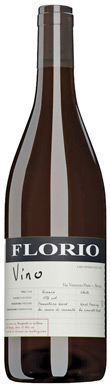

The first release of a still wine from established but forward-looking Marsala producer, Florio, is a 100% Grillo from a single vineyard of 60-year-old vines...
Florio

Tenute Foti Randazzese, Gagà, Etna, Sicily, Italy, 2021
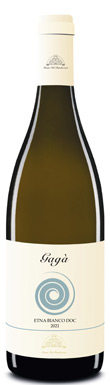
This winery was only founded in 2021, and so this white is from their first year of production. And it's a great start! Sourced from...
2021
Tenute Foti RandazzeseEtna
Serafica, Versante Sud Macerato, Terre Siciliane, Sicily, Italy, 2021
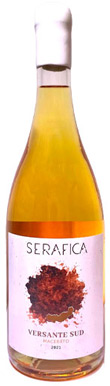
This is the first vintage of this skin-contact wine, made from Carricante with other minor varieties such as Minnella, Insolia, Coda di Volpe and Bianchetta....
2021
SeraficaTerre Siciliane
Pietradolce, Feudo di Mezzo, Etna, Sicily, Italy, 2019
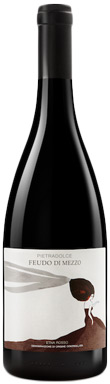
A brand new release from Pietradolce with this 2019 vintage, Feudo di Mezzo is from vines located at 650m near Passopisciaro. Rich and earthy with...
2019
PietradolceEtna
Tornatore, Calderara, Etna, Sicily, Italy, 2019
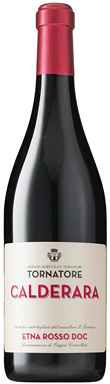
Undergoing partial whole-bunch fermentation, followed by 18 months in 25hl oak casks, this knockout Etna Rosso has a reserved but alluring nose of crunchy red...
2019
TornatoreEtna
Blindspot Vineyard, Punto Cieco Amphora, Etna, Sicily, Italy, 2022
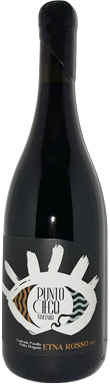
An interesting new project situated at 850-900m above sea level in the Panella-Petto Dragone contrada in Linguaglossa, on Etna's north slope, is Blindspot Vineyard, founded...
2022
Blindspot VineyardEtna
Le Due Tenute, Cantonè, Sicilia, Sicily, Italy, 2020
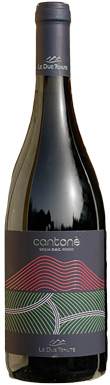
A new project by Giuseppe Tomasello and Raffaele Neri at 900-950m in Biancavilla on the south side of Etna, who decided to make wine together...
2020
Le Due TenuteSicilia
Cantoneri, Tenuta della Dainara, Etna, Sicily, Italy, 2020
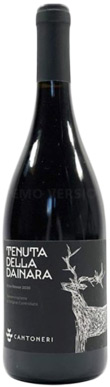
We can expect some contrada bottlings from this new winery in the future, but in 2020 the fruit was all blended into this Rosso. A...
2020
CantoneriEtna
