
Sicily: Sun, sustainability and 11 essential wines
A push towards sustainability is driving change on the fabled wine-growing island of Sicily. Indigenous grape varieties are being rediscovered, and its diverse climate and geology are adding even more excitement to the wines being made today.


For years, Sicily was known for its production of sun-driven, jammy reds and creamy, round, robust whites. On my most recent trip to Sicily in October last year, however, I was blown away by the quality of the wines I encountered.
The sheer complexity of the island’s terroir (see below) means that an article about Sicily should really begin by focusing on the wines from the ‘different Sicilies’. There’s a dizzying array of climatic, geological and cultural features that translates into the kaleidoscope of colours, scents and flavours we can enjoy in our glass.
Scroll down to see tasting notes and scores for 11 wines from Sicily worth seeking out
Reviving a heritage
You’ll encounter the same diversity in the palette of grape varieties that winemakers draw from. In the past, old varieties were abandoned to give space to more productive clones vinified to get more extractive and alcoholic wines suitable for blending.
But today, thanks to the research and protection work put in place by the Consorzio di Tutela Vini DOC Sicilia body, Sicily has rediscovered more than 70 indigenous varieties.
The vine germplasm study, in collaboration with the Sicily ministry of agriculture, University of Palermo and F Paulsen centre, is showing how the key varieties of Lucido (Catarratto), Grillo and Nero d’Avola can be used as a litmus test, clearly expressing the different terroirs of the island. The study has also discovered these indigenous varieties to be much more resistant to climate change than more recent additions.

During my visit to Riofavara winery at Ispica in the southeast, owner Massimo Padova could not contain his joy and turned to me, smiling.
‘They are relic varieties. Those which had disappeared because they did not produce enough in the 1980s. We planted a few vines, taking the grafting propagated at the Palermo Botanical Garden, thanks to the consorzio.’
I tasted some of his wines while he watched me, waiting for a nod of approval. There was no need to tell him anything: my reactions were enough. I was pleasantly surprised by the fragrance and the almost mountainous character of his wines, with their balsamic traits and exciting freshness.
Sustainability push
In addition to having the largest area under vine in all of Italy, Sicily also lays claim to the largest organic vineyard area, with a little more than 30,000ha of its approximately 98,000ha total (data source: Mipaaf) cultivated according to methods of environmental, social and economic sustainability, thanks to Fondazione SOStain Sicilia. This foundation, a joint project by the consorzio and the Assovini Sicilia winemakers’ association, aims to promote the sharing of best practices, and stimulate research and higher education to develop a culture of eco and ethical sustainability.
Sicily is already in itself a garden of organic viticulture. ‘The sustainable vocation of Sicily,’ explains Antonio Rallo, CEO of the historic Donnafugata company and president of the Consorzio Sicilia, ‘is a natural factor thanks to its favourable climatic conditions and soil variety and biodiversity.’
The dry, continental yet ventilated climate favours crops and protects them from disease – three treatments based on sulphur and copper have always been enough to combat powdery and downy mildew. To this natural advantage has been added, in the past 20 years, an institutional policy aimed at the transition to organic viticulture.

SOStain Sicilia is the sustainability programme for Sicilian viticulture promoted by the foundation, with the purpose of certifying the sustainability of the island’s wine industry. The SOStain specifications are based on 10 requirements that member companies must comply with to obtain the certification.
These ‘integrated farming methods’ cover not only cultivation but the entire production cycle, including the prohibition of chemical weeding, the protection of biodiversity, use of eco-friendly and local raw materials, the use of energy-efficient technologies, and the reduction of bottle weight. Members are also required to issue an annual ‘sustainability report’.
Scattered throughout the region, 26 Sicilian wineries have already joined the foundation, representing 4,617ha of certified vineyard area, equivalent to 19 million bottles. ‘It is a project that is gaining great support because it allows companies, from small properties of only 1ha to the largest wineries, to create a system, share and spread good practices to respect the ecosystem,’ says Alberto Tasca, CEO of Tasca d’Almerita and president of the SOStain foundation.
Bright future
The sustainability programme can be an important driver of competitiveness, giving visibility to the Sicilian territory and to its wine companies, and representing an effective tool for local development – as I witnessed at Giasira winery, north of Rosolini.
Owners Isabella and Giovanni Boroli, who decided to move here from the north of Italy, offered a Sicilian welcome: a buffet full of cheeses of all kinds, prickly pears, rustic focaccia and pasta ‘alla Norma’. Sicily manages to transmit its richness and biodiversity through the kitchen as much as through the glass. Afterwards, I tasted samples of Nero d’Avola that were extremely vibrant.
The foundation’s project, plus research carried out by the consorzio, is changing the oenological face of the island, from a marginal region to a protagonist of quality wines. It’s a wine region in collaborative and strategic ferment, guided by the strength of the Grillo, Lucido and Nero d’Avola varieties as ambassadors of its different terroirs.
Although the journey down this path began more than a decade ago, the results are already quite tangible. Among the approximately 250 wines I tasted during my visit, a good percentage displayed precise fruit and good expressiveness. If we take into account that most of the wines are not ‘high-end’ (more than 90% cost between £7 and £15), the results are even more encouraging. Organic and sustainable wines generally cost 10%-20% more than their non-sustainable counterparts, but this should be considered a positive because it allows winemakers to reinvest in further sustainability projects, thus activating a virtuous circle for the benefit of all.
As Tasca says: ‘Sharing means owning together, which I interpret as safeguarding together.’
Sicily: a tour of its terroir
Southeast
Sicily’s southeast is the furthest extent of the African tectonic plate that pushes on the Eurasian plate and emerges from under the sea.
Vines here have their roots in the robust, sandy, loamy carbonate base, giving whites based on Inzolia (Ansonica) or Moscato a mineral character, and reds that are very light, salty and reactive with strong floral notes. Frappato, airy and floral, is often mixed with Nero d’Avola in a classic blend of the only Sicilian DOCG, Cerasuolo di Vittoria.
Northeast
In the northeast, altitudes exceed 1,000 metres with the wines of Etna, the largest active volcano in Europe. To its north lie the metamorphic rocks on whose soils Nerello Mascalese, Nero d’Avola and Nocera grow to give transparent and energetic ruby-red wines.
Western
It’s the western part of the island, however, where 85% of Sicily’s wine is produced and where there are myriad terroirs: the clay hills of the northwest with important chalky and calcareous veins that give structure and generous flavour; the stretches of looser sandy soils of the extreme western tip where once Carricante and Grillo (the backbone of Marsala) were harvested overripe and vinified in an oxidative style, but today appear as whites vinified in a reduced style with strongly mineral and crunchy traits.
Southwest
Down in the southwest, the micro-terroirs of the Menfi area deserve an article all to themselves. On the coast, the scenic Scala dei Turchi (‘Turkish steps’), a bright white, limestone-marl stepped cliff, rises up out of the sea.
Central-western
The central-western area is characterised by a coastal area with sandy limestone terraces that give more saline and savoury wines, and inland areas of more impervious hills where soils with a more significant presence of clay emerge.
Here, Nero d’Avola is typically more structured and powerful than in the southeast, although in recent years the wines have developed a juicier and more contrasted side. Grillo from vineyards of altitude shows a richer profile with almost Sauvignon Blanc-like pyrazine aromas. These are vertical whites, tense, with a strong acid component; but as you near the coastal sands they turn more savoury and almost saline.
Islands
The small islands off the coast of Sicily, volcanic in nature, are known for aromatic white wines that in the past were almost all vinified sweet, but now also as dry wines – and deliver strong gastronomic traits.
See tasting notes and scores for 11 wines from Sicily worth seeking out:
Related content
The new Super-Italians: 12 essential, new-wave Italian wines
Italian-style winemaking in California: the top bottles to seek out
Chianti Classico Gran Selezione: panel tasting results
Tasca d'Almerita, Mozia Grillo, Sicilia, Sicily, Italy, 2020
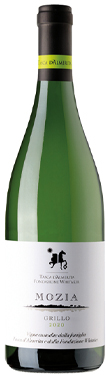

A saline, juicy and vibrant style of Grillo from the tiny Phoenician island of Mozia, off the western tip of Sicily. The nose shows some...
2020
Tasca d'AlmeritaSicilia

Alessandro Di Camporeale, Vigna di Mandranova Grillo, Sicilia, Sicily, Italy, 2020
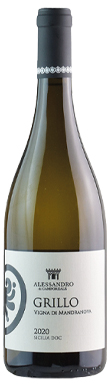
From the high hills of the Belice valley, not too far from Palermo, this organic Grillo is a great example of how the variety can...
2020
Alessandro Di CamporealeSicilia
Cusumano, Lucido, Sicilia, Sicily, Italy, 2020
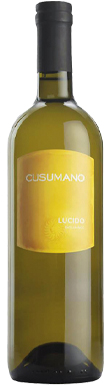
A very floral Lucido – a biotype of the most-cultivated variety in Sicily, Catarratto. The nose is a wonderful combination of gentle honeysuckle, lemon and...
2020
CusumanoSicilia
Donnafugata, Sur Sur, Sicilia, Sicily, Italy, 2020
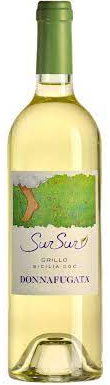
Produced in the southwest, this pale white has a lychee and melon nose opening up to reveal some very pleasant scents of white...
2020
DonnafugataSicilia
Principi di Butera, Carizza Insolia, Sicilia, Sicily, Italy, 2020
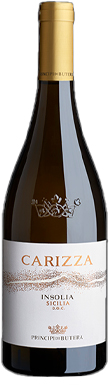
A really generous white from the ancient variety Inzolia (Ansonica) cultivated on the chalky, limestone terroir of the southern-central part of Sicily near Licata. Wildflowers,...
2020
Principi di ButeraSicilia
Casa Grazia, Laetitya Frappato, Sicilia, Sicily, Italy, 2020
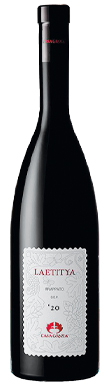
This demonstrates just how Frappato from the southeast (near Gela) can show the elegant and light side of Sicilian reds. It’s a very aromatic, light-bodied...
2020
Casa GraziaSicilia
Salvatore Tamburello, 306 Nero d'Avola, Sicilia, Sicily, Italy, 2020
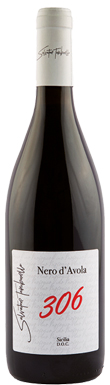
Try this organic Nero d’Avola grown in the eastern part of the island for an intriguingly light and crunchy version of Sicily’s most famous red...
2020
Salvatore TamburelloSicilia
Morgante, Nero d'Avola, Sicilia, Sicily, Italy, 2020
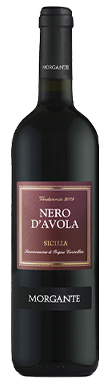
From the southern hills, a few miles from the Valley of the Temples in Agrigento, this Nero d’Avola is fairly structured. Focusing on blueberries and...
2020
MorganteSicilia
Planeta, Nocera, Sicilia, Sicily, Italy, 2018
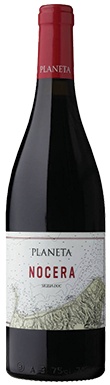
Up at the northeast tip of the island, there’s a little-known variety called Nocera. This has so much complexity – a Mediterranean herb and pomegranate-driven...
2018
PlanetaSicilia
Duca di Salaparuta, Passo delle Mule Nero d'Avola, Sicilia, Sicily, Italy, 2020
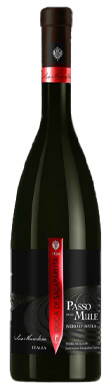
A really approachable Nero d’Avola, contrasting the maturity resulting from very hot days and windy nights with the reactive savouriness possibly provided by the limestone...
2020
Duca di SalaparutaSicilia
Terre di Gratia, 170 Perricone, Sicilia, Sicily, Italy, 2020
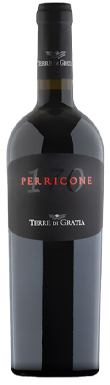
It’s pretty rare to come across Perricone in purezza – it’s an austere, tannic, tough-to-produce variety often blended with Nero d’Avola. This wine, from western...
2020
Terre di GratiaSicilia
