Six Swiss Syrah to convert the most die-hard Rhône lover
You’ve tasted Syrah from the Southern Rhône and the Northern Rhône – but what about the Eastern Rhône? Follow the river back to its source and it takes you to Switzerland, the home of some extraordinary Syrahs that can rival Côte-Rôtie in elegance.


Swiss grape geneticist and author José Vouillamoz was in London in November to host a tasting during which he explained the origins of Syrah, how it arrived in his home country and why it works so well there.
The six exceptional bottles he opened could convert even the most stalwart Rhône-lover.
The origins of Syrah
To start with, we went back, all the way back – to the origins of the Syrah grape.
Vouillamoz says the first known document that mentions the variety comes from the Rhône Valley and dates to 1781.
But where does Syrah come from originally? He dispelled a number of common myths (it’s from Syracuse in Sicily, or Shiraz in Iran…) by explaining the grape’s genetic parentage.
It originated from a spontaneous crossing of Mondeuse Blanche (from Savoie) and Dureza (from the Ardèche). This makes Syrah a child of the Northern Rhône, and, as it happens, ‘a great-grandchild of Pinot,’ says Vouillamoz.
Dureza is likely named after its tough skin (dur means ‘hard’ or ‘tough’ in French). Though nearly extinct today, it has been recently replanted and vinified pure by a handful of inquisitive Rhône vignerons such as Yves Cuilleron and Pascal Jamet.
‘It’s extremely spicy,’ says Vouillamoz, ‘so we understand where the spice of Syrah comes from’.
Mondeuse Blanche has also nearly disappeared; perhaps because it rarely makes exciting wines by itself. But thanks to this variety, we get to enjoy not only Syrah but also Viognier, with whom it also shares a parent-offspring relationship.

From France to Switzerland
Syrah was introduced to Switzerland by an agricultural engineer named Dr Henry Wuilloud (1884-1963).
He visited Maison Jaboulet Vercherre in Tain l’Hermitage in 1921, and took cuttings back with him to his viticultural research station in the Valais.
His first vintage was 1925, which means Switzerland has now been making Syrah for exactly 100 years. (To provide a global perspective, this is not quite as long as Australia or South Africa, but around the same length of time as California, and much longer than New Zealand.)
The Valais is located in the southwest of the country and it’s the largest of the country’s six wine regions.
Today there are 215ha of Syrah in Switzerland, and the Valais is home to 80% of it. Despite its 100-year history, most Syrah vineyards are fairly recent; in 1991, there were only 19ha.
The average age of Swiss Syrah vines today is 23 years, and only 1% of plantings are over 50 years old.
Cool conditions
There are several reasons why Syrah thrives in the Valais. It’s sunny, windy and dry, with just 650mm of rain on average per year.
Soils are varied, but there are large outcrops of granite, schist and gneiss – Syrah-friendly soils also found in Côte-Rôtie and Saint-Joseph.
Alexandre Delétraz of Cave des Amandiers says: ‘We have perfect conditions for Syrah.’
He points to the high elevation vineyards (450m to 650m), which provide fresh conditions that favour high-toned floral and spice aromas. Days are warm but nights are cold – an important factor in producing aromatic wines.
Gilles Besse of Domaine Jean-René Germanier also underlines the long gap between véraison and harvest, typically 60 to 65 days.
He says this relatively extended period produces wines with elegance, ripe tannins and moderate alcohol.
‘We can wait until it’s ripe,’ he says. ‘In November, you still have green leaves, the vineyards are still working.’

Perfume and spice
The Valais is a cool climate extension of the Northern Rhône – and that’s exactly how their Syrahs taste: perfumed, spicy, weightless, graceful.
An appealing aromatic marker of Swiss Syrah is the prevalence of peppercorns, whether black, white or pink.
They don’t have the grip and heft of Cornas, nor the structure and might of Hermitage; they bring to mind Côte-Rôtie in a cool vintage.
The wines we tasted were far from uniform in style though; there is a range of different expressions, all from light to medium in body.
My only gripes are commercial. Firstly, the wines are quite expensive; those we tasted were the same price as decent Côte-Rôtie.
Given their quality, that’s not unreasonable. But it might feel like a barrier for those who haven’t tried the wines before.
Secondly, the Swiss only export 1% of their wines, making them hard to find – but all the wines we tasted are available somewhere in UK retail.
The best option of course is to visit Switzerland – which, on the back of this eye-opening tasting, is something I intend to as soon as possible.
After getting to know the Southern and Northern Rhône, the Eastern Rhône feels like a tantalising new frontier.
Matt’s pick of Swiss Syrah
Related articles
- Expert’s Choice: 18 Swiss reds and whites you need to try
- Decanter Cellar: 16 must-try Syrahs
- Rhône 2024: Vintage report & top wines
Domaine Histoire d'Enfer, L'Enfer de la Patience, Valais, Switzerland, 2017
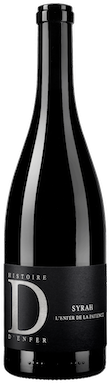

Incredible high-toned nose, with aromas of white pepper, star anise, also fruit, mainly raspberries. Has more weight and concentration than most Swiss Syrahs. Good grip on the palate, then fine tannins and citrus note to finish. Highly perfumed. very long. Exceptional Syrah, so harmonious. The oak is judged very well and works perfectly with the fruit. Young still. Established in 2008 in Sierre. South-facing vineyard, 20-year-old vines, calcareous soils. Whole grape fermentation 12 months in oak barrels, small proportion of new oak. Winemaker is Dr Patrick Regamey who used to work in perfume.
2017
Domaine Histoire d'Enfer

Cave des Amandiers, Syrah, Valais, Switzerland, 2018
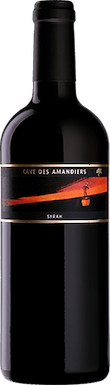
Wild aromas, spicy and sauvage. Nutmeg, then pink peppercorns come with air. There's warmth and generosity of fruit on the palate, and a lovely woody (not oaky) side to the aromas and flavours. Slightly warming alcohol even, which is surprisring for a cool climate region. Good length of fruit and spice. Should age well, but is very good now. Winemaker is Alexandre Delétraz; the vines are located on the Leytron hillside in Les Prix, and in Fully, on the terraces of Les Follatères in Follatères-Fully. Gneiss soils; 70% whole bunch, no new oak.
2018
Cave des Amandiers
Domaine des Muses, Syrah Réserve, Valais, Switzerland, 2013
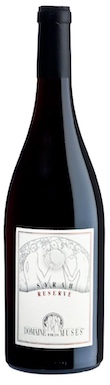
Mature now at 12 years old, with a slightly dusty nose, some paprika, wood smoke, white pepper. Open and smoky on the palate, with only mild acidity. Has a freshness on the finish, and smoked meat flavours. Cottony tannins. Complex, but quite light, so best drunk by itself now. Established in the village of Granges in 1992 by the parents of winemaker Robert Taramarcaz. Fermented and aged in barriques for 18 months.
2013
Domaine des Muses
Domaine Jean-René Germanier, Cayas Syrah du Valais Réserve, Valais, Switzerland, 2020
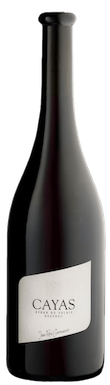
Oak is quite evident on the nose, and it melds together with the fruit. Rounded and generous though still fairly light-bodied. Good acidity; very long, dark chocolate and black pepper. Creamy black cherry on the finish. Fine, elegant, fresh, spicy, ending on cinnamon and orange peel. Great length. An oaked style, so give it some more time to come together. Established in 1896; owner Gilles Besse is nephew of JR Germanier. They own 60ha, and buy grapes for a total of 160ha of grapes processed. Grown primarily on limestone; 24 months in French barrels, 50% new. First vintage 1995. Cayas are small pebbles.
2020
Domaine Jean-René Germanier
Marie-Thérèse Chappaz, Grain Syrah, Valais, Switzerland, 2023
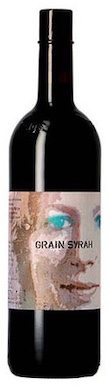
Very much about flowers and spices rather than rich fruits; blueberry aromas, violets, dried rose petals. Light-bodied, very pure, does have some palate presence however and lovely tart blackberry acidity. Very fine, fur-coat tannins on the finish, no greenness. Really all about fragrance and weightless purity. From granite soils in Fully, 14 months in barrel.
2023
Marie-Thérèse Chappaz
Christophe Abbet, Syrah, Valais, Switzerland, 2022
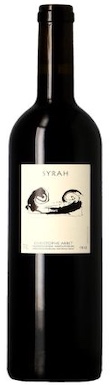
Gorgeous floral and fruity aromas. Black fruits, blackberry. Fuller in body than the other Swiss Syrahs tasted alongside it, this has more palate weight but still good acidity. Juicy, easy-going, generous style with fine tannins that has some roundness to them. Fresh and pure. Established 1985 on 3ha of granite in Martigny.
2022
Christophe Abbet
