
Sonoma Coast’s Flowers Winery: Producer profile and wines to try
Flowers Winery sits outside the quaint town of Healdsburg, nestled among the towering redwoods on Westside Road. At this design-focused oasis, the Flowers team exercises intention in every element of their viticulture and winemaking with an emphasis on expressing the special terroir of their Sonoma Coast sites.


Flowers Winery has been a highly regarded Sonoma brand for over 30 years. But its terroir-driven viticulture, a new range of bottlings that emphasise a sense of place and revamped hospitality spaces meant to reflect a respect for the land, demonstrate the producer’s bold vision for the future.
Scroll down to see tasting notes and scores for nine wines from Flowers Winery
Flowers takes root
‘Wild’, ‘fog-drenched’, ‘forested’, these are just a few words that describe Flowers’ two estate vineyard sites – Camp Meeting Ridge and Sea View Ridge.
Just 3.2 kilometres from the Pacific Ocean on the Sonoma Coast, amid rolling hills and forests, where vineyards had never been planted before, Joan and Walt Flowers made a pioneering decision that would change Sonoma viticulture.
Before their foray into wine, the pair owned Moon Nursery in Pennsylvania – the oldest plant nursery in the United States. Established in 1767 – and owned by the Flowers since 1971 – it is renowned for its high-quality plants and meticulous pruning and growing techniques.
Frequent visits to California to drink Pinot Noir became the catalyst behind the couple’s intention to branch out into wine. The couple saw an ad in a wine magazine for undeveloped land and seized the moment. And so Flowers Vineyards & Winery, now one of Sonoma County’s revered Pinot houses, was born.

Organic viticulture shows the way
Within the greater Sonoma Coast American Viticultural Area (AVA) lies the much smaller AVA of Fort Ross-Seaview. There are only 27 vineyards in the appellation, each with its own particular character. What truly defines the tiny region is its proximity to the ocean and the high elevations – the Flowers estate vineyards sit between 450-550 metres above sea-level.
It is long said that great wine is made in the vineyard, and these features are key to the distinct profile the Flowers coax out of their Pinots.
Respect for the land is another approach that has always been central to the Flowers’ philosophy. Old sheep-grazing pastures became the estate vineyards, in line with an ethos of letting nature have its place alongside the vines.
The Flowers have practiced organic viticulture for the last 15 years, although they were only officially certified in 2020. Likewise, they have gradually introduced some biodynamic principles and practices into their vineyard repertoire.

Flowers terroir: a diversity of soils
The newest addition to Flowers range, are the ‘Site Series’ wines, the product of a long-term partnership with consultants Pedro Parra and Brenna Quigley.
Parra is well known in wine circles for his intensely terroir-focused approach to viticulture and oenology. He’s not a geologist in the technical sense, he holds qualifications on terroir and precision viticulture, but wineries from around the world call on him to help better understand their terroir and bring the fullest expressions of their wines to the fore.
He starts by mapping the entire vineyard site. The device he uses spits back a colour gradient map expression to delineate the differences in various vineyard areas. Parra pointed out a great deal of variability for both the Camp Meeting Ridge and Sea View sites. Based on the mapping, he began digging soil pits to understand what lies beneath. The soil pits allowed him to determine the presence of substrates, as well as root density and structure, to profile the soil’s compositional properties properly.
Quigley, meanwhile – very much a trained geologist – was named Decanter’s Rising Star of 2023 for her work on terroir in California, where she has gained an impressive client portfolio.
Tailoring the winemaking approach
‘Beginning to understand the soils from each polygon on the map was a “lightbulb” moment that helped me to adapt winemaking to soil types,’ says Chantal Forthun, director of winemaking at Flowers Winery.
‘Previously, we tailored farming by block, but the grapes were treated the same when they came into the cellar: we picked at the same ripeness, applied the same extraction techniques, and pressed at the same time. My thinking at the time was that uniformity of the winemaking process by block would allow the vineyard to show its true character,’ she continues.
‘We now specialise our farming and winemaking techniques based on what we know about the soil, to allow each block to reveal its true potential. Every single block has a specific winemaking strategy (i.e. fermentation, vessels, timing) that matches the farming strategy because, from the very beginning of the season, we are wine-growing these blocks to become a very specific wine.’
The fresh geological insight gleaned from Parra and the soil pits not only led to the creation of the Site Series but a radical rethink in how the estate approached the harvesting and vinification of its wines as a whole.

Brenna Quigley in Burgundy, where her work has included providing geological mapping. Credit: Michel Joly
Geological origins of terroir
Quigley has also been integral to Flowers’ relentless pursuit of unearthing its sense of place. She began working with Flowers in 2019 after Forthun decided to ‘bring in a geologist.’ However, her job is different to Parra’s, as she’s tasked with answering questions about what the soil compositions might be and how they might have got there.
After Forthun learnt of Quigley’s specialisation at the intersection of viticulture and geology, she was brought on board. ‘There were geologists and soil scientists, but it was rare to find someone connecting these sciences to wine,’ says Forthun.
Quigley proved to be an invaluable asset to the Flowers team. She noted that the sites sit on a confusing geological terrain called the Franciscan Complex, which was directly related to the formation of the San Andreas Fault. That created subduction zones, where tectonic plates recede back into Earth’s mantle. This has, in turn, not only established coastal ridges but intermingled various soil types into one another in a complex and highly diverse array.
Forthun’s winemaking extends Parra and Quigley’s work
Every decision made in the production process is now laser-focused on emphasising this coastal terroir.
‘At Flowers, the wines are crafted without compromise,’ says Forthun. ‘We aim to make wines that capture the wild beauty and the land and the spirit of the Sonoma Coast.’
One of the ways in which this is done is through the use of native yeasts on a block-by-block basis. Both primary and secondary fermentations are done without the use of inoculation with cultured yeast strains – although this leads to more work and a lot more variance.
‘Each vintage is a little bit different,’ says Forthun. ‘Figuring out where the balance of acidity is for that particular vintage comes in when we begin tasting barrel by barrel. We’re still picking the vineyard separately by block. We’re pressing all the juice separately; all the juice goes separately by block into the barrel.’
This has dictated that more pump-overs (and fewer punch-downs) are employed in the winemaking process. Forthun believes pumping over is gentler on the grapes grown in rockier, more rugged soils. Flowers also made the decision to use larger format vessels for ageing. Instead of 228-litre barriques, about 25% of the wines are instead matured in 500-litre puncheons and 1,000-litre casks, allowing longer ageing and helping to retain fresher flavours in the wine.
The bedrock of the Flowers brand has always been the Sonoma Coast. And this obsessive dive into their soils, the renewed energy behind finding what lies beneath this rugged landscape – between coast and redwood forest – is driving ever greater elegance in these wines. Thirty years on, Flowers Vineyards & Winery continues to flourish.

Flowers: Nine wines to try
Related articles
Sonoma County AVAs: Overview and 10 wines to try
Willamette Valley 2021: Chardonnay report and top-scoring wines
Sonoma Cabernet Sauvignon: Producers, styles & wines to try
Flowers, Camp Meeting Ridge Chardonnay--Almar, California, USA, 2021
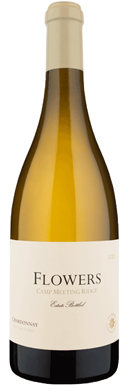

A full-bodied Chardonnay that doesn't disappoint. The lemon zest and pineapple flavors are surrounded by a mineral core and a saline edge. The wine practically...
2021
Flowers

Flowers, Camp Meeting Ridge, Sonoma County, Fort Ross-Seaview, Sonoma Coast, California, USA, 2021
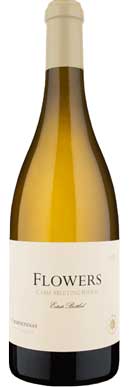
This Chardonnay comes from the winery's estate, Camp Meeting Ridge vineyard, around 457 metres, approximately 3.21 km from the Pacific Ocean. Recommended decanting to get...
2021
FlowersSonoma County
Flowers, Chardonnay, Sonoma Coast, California, USA, 2022
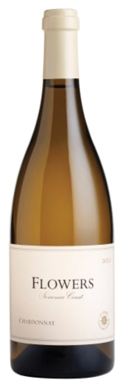
Soaring lemon cream aromatics accented by notes of seaspray, lemongrass and beeswax mark this coastal Chardonnay from Flowers on the Sonoma Coast. The palate is...
2022
FlowersSonoma Coast
Flowers, Chardonnay, Sonoma Coast, Sonoma Coast, California, USA, 2021
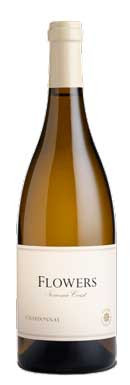
Fragrant lemon oil and lime zest mingle with apricot and crushed almonds. Supple and broad on entry, with silken robes of lemony flavours running the...
2021
FlowersSonoma Coast
Flowers, Sea View Ridge: Pietra, California, USA, 2021
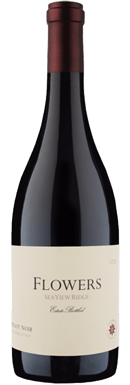
Powerful black and red fruits are dominant with earthy notes of forest floor, mushrooms and damp leaves. There is typicity of the variety here and...
2021
Flowers
Flowers, Seaview Ridge Vineyard, Sonoma Coast, Sonoma Coast, California, USA, 2021
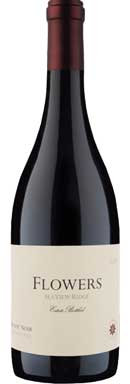
From the Sea View Ridge vineyard at 1,875 feet elevation, roughly 2.89 km from the Pacific Ocean as the crow flies. One of the loveliest...
2021
FlowersSonoma Coast
Flowers, Sea View Ridge: Cielo, California, USA, 2021
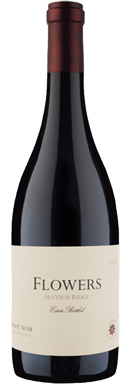
With herbal notes of rosemary and earthy ones of rose petals and tree bark, the more savory character of this wine is unmistakable. But it...
2021
Flowers
Flowers, Pinot Noir, Sonoma Coast, Sonoma Coast, California, USA, 2021
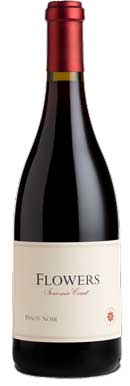
Pure decadence in a glass. Brooding aromas of black cherry liqueur, cola, smoky cedar, and tangy orange peel lift from the glass. Medium to full-bodied,...
2021
FlowersSonoma Coast
Flowers, Pinot Noir, Sonoma Coast, California, USA, 2022
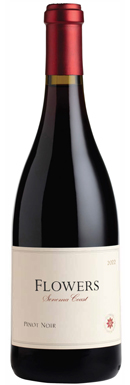
Delicious, fresh, and savoury, this juicy Pinot Noir from the Sonoma Coast has violet and smoky flint aromatics buoyed by fresh red berries and a...
2022
FlowersSonoma Coast
