
South Africa’s Hemel-en-Aarde: A Chardonnay paradise
In just a few decades, this arrestingly beautiful part of South Africa’s south has risen to join the elite of regions reputed as top-quality sources of the world’s best-loved white grape.

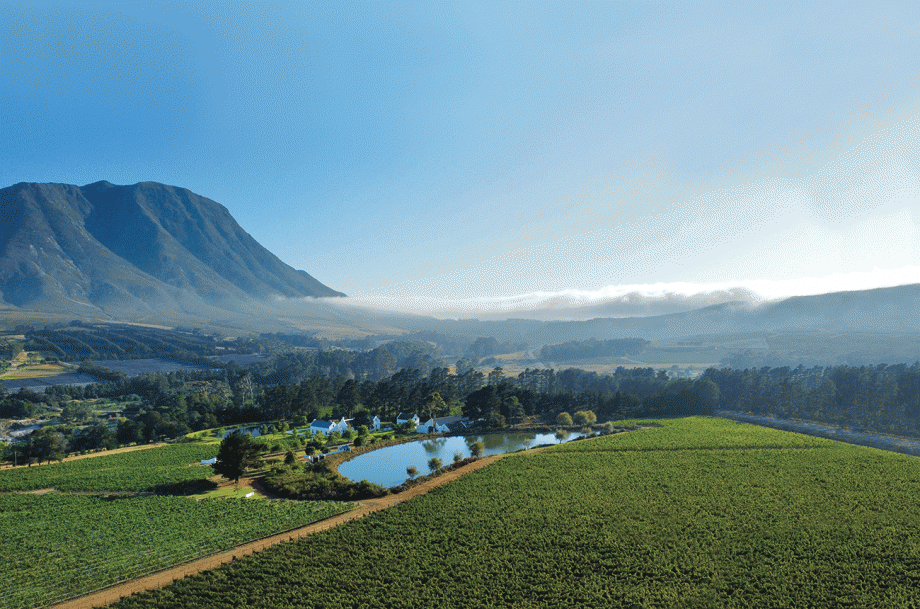
One of the most southerly wine-producing areas in the world, South Africa’s Hemel-en-Aarde Valley has rapidly gained a reputation as the source of striking, high-quality Pinot Noir and Chardonnay wines.
Anthony Hamilton Russell, of Hamilton Russell Vineyards, is one of the region’s leading advocates. ‘I know I am biased,’ he tells me on a recent visit, ‘but, with few exceptions, Hemel-en-Aarde makes the finest Chardonnay in South Africa.’ These wines are for you, he says, ‘if your stylistic preference is for tightness, minerality and a bone-dry sensation without compromising length and texture’.
At Creation Wines, co-owner Jean-Claude Martin agrees: ‘Hemel-en-Aarde produces Chardonnays of great elegance and finesse: haunting, restrained, with acidity and texture lifting them from a broader style.’
Scroll down to see tasting notes and scores for 12 Hemel-en-Aarde Chardonnays
The valley is almost unnervingly beautiful. The name, translated from Afrikaans, means ‘Heaven and Earth’ and is an apt description. Although one of South Africa’s youngest wine-producing areas, Hemel-en-Aarde has already ensured its Chardonnays are on par with those from the Mornington Peninsula, Geelong and Margaret River in Australia; Limarí in Chile and the Uco Valley in Argentina; and Santa Barbara, Sonoma and the Willamette Valley in the US.
Not forgetting the wines of Chablis, the Côte Chalonnaise and Côte d’Or in Burgundy. But seeking to draw comparisons rather misses the point. Each country, each region, has established its own reputation based on the quality of the wines produced and their distinctive styles.
From soil to toil
To understand why Hemel-en-Aarde is a special place, one needs to focus on the region to appreciate the complex web of influencing factors: proximity to the cooling ocean, the age and types of soil, aspect and elevation, all tied together by the influence of winemakers. Terroir is of vital importance here.

More than 400 million years ago, sediments formed under the Agulhas sea and were deposited on the underlying Cape granite rock. The first layers are now designated as Malmesbury shale, followed by Table Mountain sandstone and finishing with Bokkeveld shales on top.
Between 330m and 290m years ago, tectonic movement forced up the Cape Fold mountains (inland, running effectively parallel with South Africa’s southern and western coastlines), and erosion since then has created the intricate geological structures that are major factors in the Western Cape. But given that the valley’s ancient soils date back to the Palaeozoic era (about 540m-252m years ago), winemaking in Hemel-en-Aarde is a very recent development.
Traditional farming involving Dutch settlers was first recorded in 1739, with the valley also providing a trading route from inland areas to the coast at Hermanus (see map, above). The first key development came in 1975 when the late Tim Hamilton Russell (Anthony’s father) created his wine estate after acquiring 170ha in Hemel-en-Aarde. First production was in 1981, with Peter Finlayson acting as winemaker. In October 1981, the area was demarcated as the Walker Bay wine ward, based on the strong cooling maritime influence of the nearby ocean.
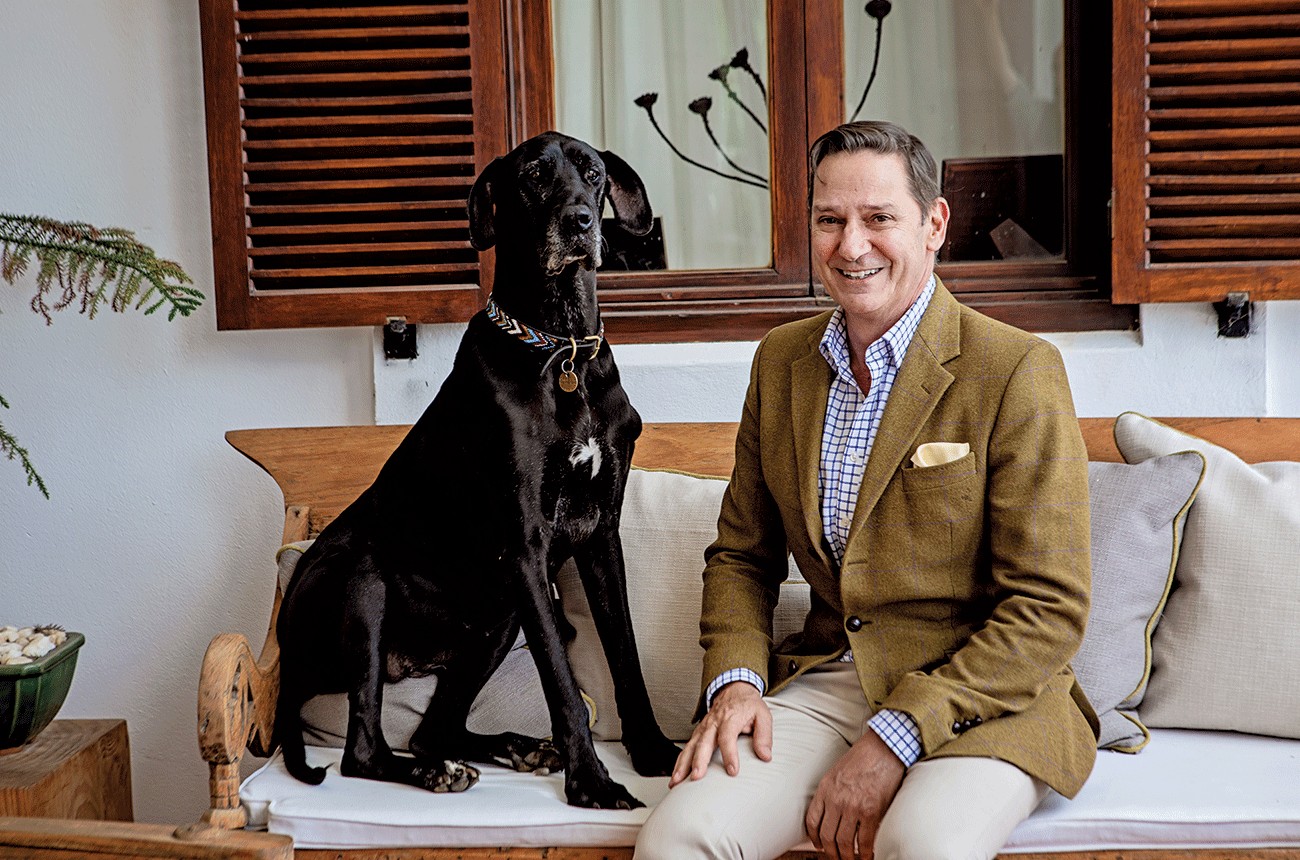
Wine production gradually expanded and today there are more than 20 producers in the valley. In 2003, Anthony Hamilton Russell and Dave Johnson (founder of Newton Johnson Family Vineyards) lobbied to make Walker Bay a wine district, which would allow the creation of more distinct and separate wards within it.
In August 2006, the Hemel-en-Aarde Valley appellation (called a Wine of Origin in South Africa) became official, alongside that of the Upper Hemel-en-Aarde. In June 2009, Hemel-en-Aarde Ridge was also created. Despite the small geographical footprint of Hemel-en-Aarde, there are both similarities and significant differences between its three wards.
Lower valley
When driving northeast up the R320 from the coast, the first ward encountered is Hemel-en-Aarde Valley (Lower Valley, as locals refer to it), home to both Hamilton Russell Vineyards and Bouchard Finlayson. This is the area closest to the ocean, just 2km away, with many vineyards planted between 50m and 100m above sea level.
The majority of the vineyards are planted on Bokkeveld shale-derived soil, combined with high iron- and clay-rich content. The clay is similar to that of Burgundy’s Côte d’Or, although the soils are shallower and stonier. Vines generally face north, ripening earlier than those in the Upper and Ridge areas. In character, the Valley Chardonnays (37% of plantings) are subtly different.
Chris Albrecht, winemaker at Bouchard Finlayson, highlights ‘greater volume and texture’, while Gordon Newton Johnson (Dave Johnson’s son) finds ‘the heavier clay soils produce more stone fruit’ and wines that are ‘slightly sweeter and have a viscous, palate-coating character’. Hamilton Russell believes the Valley wines ‘have the hardest, most mineral spine, with a notably dry, stony finish’. Oak adds subtle extra layers here, with restrained power on the palate combined with the structural components to support extended ageing.
Upper most
Moving up the valley, one reaches the Upper Hemel-en-Aarde, home to Hasher Family Estate, Newton Johnson Family Vineyards, Restless River, Spookfontein and Storm Wines. Soil makeup here is completely different to that of the Lower Valley and Ridge, with 76% decomposed granite together with 8% Table Mountain sandstone. The extra distance from the ocean, combined with greater elevation between 150m-350m, results in subtle changes in style.
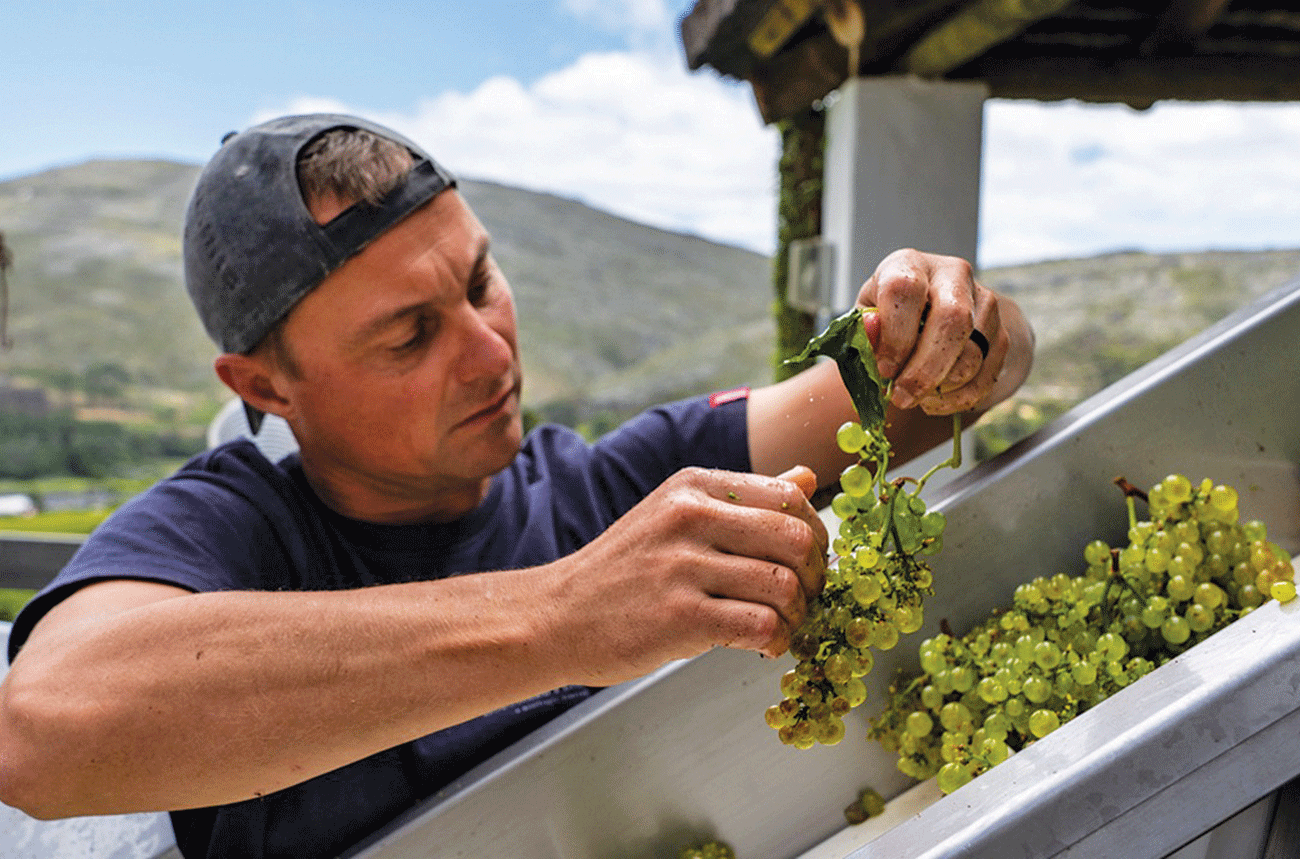
Newton Johnson finds the wines from the Upper Valley ‘a little lighter, with more tension, a fruit profile centred on citrus and lime fruit; less sweet than the other appellations’. Craig Wessels, owner-winemaker at Restless River, believes that the lighter granite soils, combined with the higher altitude, contribute ‘tension, purity and energy – never fruit-driven’. Wessels poetically adds that Chardonnays in the Upper Valley (30% of plantings) possess ‘a salinity and intriguing aromatics, like catching a subtle scent on a breeze’.
In addition to the granitic soils, Frederik Herten, owner of Hasher Family Estate since 2021, emphasises the influence of the sea, located some 5km away: ‘The temperature differences between the land and sea create a thick mist that rolls into the valley, sometimes dropping the temperature by 5°C.’ This phenomenon, similar to that seen in valleys along the Pacific coast, helps to delay ripening.
Atop the ridge
Highest up the valley, one reaches Ridge, the most recent of the region’s wine wards. Key names here are Ataraxia and Creation Wines, with a newer arrival being Tesselaarsdal. Height above sea level ranges from 300m-400m, with similar soil types to those found in the Lower Valley: Bokkeveld shale with shallower topsoil profiles overlying deep clay-rich, stony subsoils.
Kevin Grant, co-owner and winemaker of Ataraxia, highlights the more varied landscape of the Ridge, with undulations and differing aspects all leading to a variation in character between different vineyard sites (Chardonnay 24% of plantings). Grant notes that the ‘spectrum of styles is due to the amphitheatre-like geography, with aspects in every compass direction’.
At Creation, Martin highlights the importance of temperature as a key driver of quality: ‘The cool nights and diurnal range here lead to slow and gentle ripening.’ He describes his Chardonnays as ‘precise, elegant and understated’, and it’s difficult to disagree.
Martin believes the selection of the best rootstock and clonal material is a vital way to further raise quality: his premium Art of Chardonnay 2022 is a blend of five different clones (95/96/548/760/951) on three different rootstocks. Creation is also at the forefront of experimenting with canopy management and row planting direction.
Changes & challenges
This is a radical shift compared to the latter part of the 20th century, when South African vintners were severely limited in their choice of clonal material – much of which was affected by virus. The rapid changes currently being made highlight just how young and dynamic the industry is here.
Other challenges face producers, too, such as a lack of central government support and climate change, the huge variations in rainfall perhaps the biggest issue. Herten told me that in the past three years, rainfall varied from 1,094mm in 2021 to 563mm in 2022, with 1,163mm in 2023. The extra rain of 2021 and 2023 came in heavy storms, with the whole valley particularly ravaged in September 2023.
Although Hemel-en-Aarde producers have gained a well-deserved reputation for their Chardonnay and Pinot Noir, the region is very small in the global context. Since Hamilton Russell was created in 1975, there are now about 20 producers with fewer than 200ha planted to Chardonnay. There are no large-scale wine companies here, so the producers have realised that they need to focus on premium wines, while working together to promote the region.
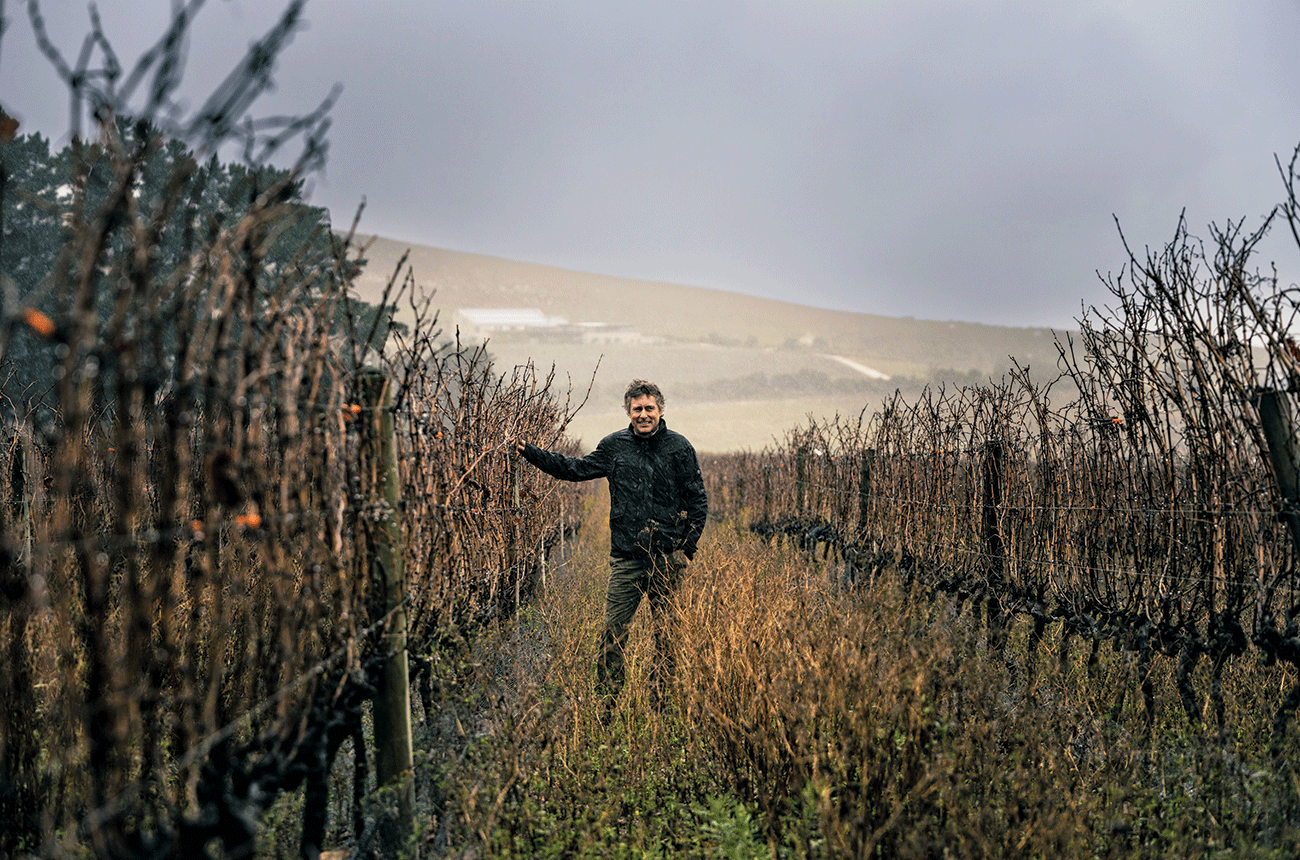
Tim and Anthony Hamilton Russell can be seen as the godfathers of the area, with Peter Finlayson (Bouchard Finlayson), Kevin Grant (Ataraxia) and Hannes Storm (Storm Wines) all spending years honing their skills at Hamilton Russell before setting up separate (but complementary) ventures. Not only are they compelling in their citrus freshness and minerality, the Chardonnays of the Hemel-en-Aarde deliver those extra details that make them stand apart, such as power, intensity, ageability, fragrance, refined oak and salinity.
It’s hard to believe the current-release 2022 wines are only the 42nd vintage produced here. There is certainly huge potential still to come from this exciting South African valley.
See notes and scores for 12 Hemel-en-Aarde Chardonnays
Related articles
- Expert’s Choice: South Africa Cinsault – the 30 wines to try
- Cap Classique: South Africa’s sparkling wine success story
- Blank Bottle: Producer profile plus 13 wines to seek out
Ataraxia, Chardonnay, Hemel-en-Aarde Ridge, Hemel-en-Aarde, South Africa, 2022

Kevin Grant makes some great wines, utilising 'Black' Chardonnay winemaking with deliberate oxidative handling pre-fermentation. Grant feels this adds to the long-term freshness and stability...
2022
AtaraxiaHemel-en-Aarde Ridge

Creation, The Art of Chardonnay, Hemel-en-Aarde Ridge, Hemel-en-Aarde, South Africa, 2022
Pristine Chardonnay with a very cool feel on the palate. Hint of smokiness, vibrant acidity and a powerful saline character add up to a complex,...
2022
CreationHemel-en-Aarde Ridge
Crystallum, Clay Shales Chardonnay, Hemel-en-Aarde Ridge, Hemel-en-Aarde, South Africa, 2022
Powerful, creamy and nutty in character there are notes of tropical fruits, lemon zest, subtle herbal twists and a long, crushed stone-driven finish. An impressive...
2022
CrystallumHemel-en-Aarde Ridge
Hamilton Russell, Chardonnay, Hemel-en-Aarde, South Africa, 2022
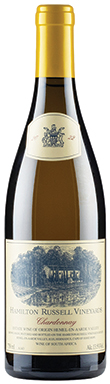
Subtle at first on the nose and palate, this builds with floral aromas and a hint of spice, together with succulent white peach and pear...
2022
Hamilton Russell
Newton Johnson, Family Vineyards Chardonnay, Upper Hemel-en-Aarde Valley, Hemel-en-Aarde, South Africa, 2022
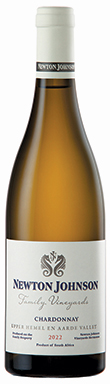
A masterly Chardonnay from Gordon Newton Johnson with notes of ripe lemon and orange zest, subtle oak, masses of density and concentration on the palate...
2022
Newton JohnsonUpper Hemel-en-Aarde Valley
Restless River, Ava Marie Chardonnay, Upper Hemel-en-Aarde Valley, Hemel-en-Aarde, South Africa, 2021
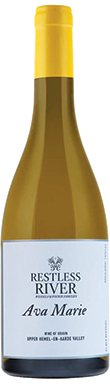
Intense, concentrated, saline, mineral on the palate. Super texture, energy and drive. Pale in colour, oak plays very much a supporting role. Citrus and crisp...
2021
Restless RiverUpper Hemel-en-Aarde Valley
Storm, Ridge Chardonnay, Hemel-en-Aarde Ridge, Hemel-en-Aarde, South Africa, 2022
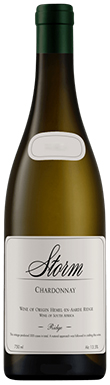
This is a fine example of Chardonnay from the Ridge, combining orange zest and a citrus pithiness to ripe stone-fruit on the palate. Plush and...
2022
StormHemel-en-Aarde Ridge
Storm, Vrede Chardonnay, Hemel-en-Aarde, South Africa, 2022
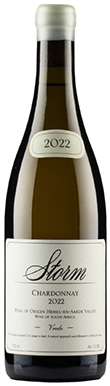
Sappy, fragrant, citrus notes on the nose with white peach and pear fruit on the palate. Fleshy texture but all kept in check with crisp...
2022
Storm
Creation, Reserve Chardonnay, Hemel-en-Aarde Ridge, Hemel-en-Aarde, South Africa, 2022
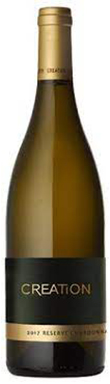
Shows a nutty character interspersed with orange blossom. Reminiscent of Chassagne-Montrachet. Plenty of spice and quite warming on the palate, balanced by bright acidity and...
2022
CreationHemel-en-Aarde Ridge
Tesselaarsdal, Chardonnay, Hemel-en-Aarde Ridge, Hemel-en-Aarde, South Africa, 2022
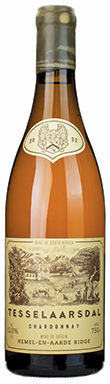
Notes of fresh spice combined with citrus. Subtle oak. Bright and crisp acidity keep the palate super fresh. Berene Sauls' new venture is well worth...
2022
TesselaarsdalHemel-en-Aarde Ridge
Hasher Family Wines, The Marimist Chardonnay, Upper Hemel-en-Aarde Valley, Hemel-en-Aarde, South Africa, 2022
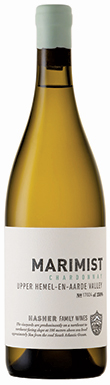
Ripe, generous and adorned with oak characters. Vanilla and butterscotch on the palate. Retains vibrant acidity to keep everything fresh and lively. Would be delicious...
2022
Hasher Family WinesUpper Hemel-en-Aarde Valley
Newton Johnson, Southend Chardonnay, Upper Hemel-en-Aarde Valley, Hemel-en-Aarde, South Africa, 2022
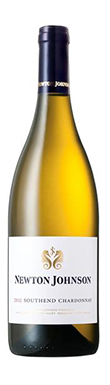
Hardly an 'entry-level' wine, this is a great introduction to the range of high-quality wines being produced at Newton Johnson. From south-facing vineyards with a...
2022
Newton JohnsonUpper Hemel-en-Aarde Valley
