
Top South American Cabernet Franc wines: Panel tasting results


Things are looking bright for South American Cabernet Franc, according to this report on 44 wines tasted by our three-strong expert panel. Published in Decanter's new October 2018 magazine issue, Premium subscribers can get exclusive online access to the full report and tasting notes below.
44 wines tasted, with one rated Outstanding
‘The enthusiasm for South American Cabernet Franc looks likely to continue’, concluded our tasting panel of Paz Levinson, Patricio Tapia & Dirceu Vianna Junior MW
Summary
With quality high, the tasters found notable stylistic differences – although the regional character of Cabernet Franc is yet to fully emerge, says Patricio Tapia…
In 2015 decanter arranged its first-ever panel tasting of South American Cabernet Franc, focussing on bottles from Argentina. The results were amazing. Although the variety was scarce in terms of planted area (around 700ha at that time), the quality and the character of the samples left the tasters very enthusiastic.Three years later, we revisited Cabernet Franc, this time expanding the tasting to cover Chile as well. Although lacking the wow-factor of that pioneering inaugural tasting, the results were very encouraging.
Of the 44 samples tasted, 32 came from Argentina – proof that the country’s winemakers are embracing the variety enthusiastically. They produced an impressive 21 Highly Recommended wines and one Outstanding.
Scroll down to see the top wines from the panel tasting
The tasters felt that quality in general was very high, although there were some negatives, especially when it came to the vegetal notes that can be characteristic of this grape variety.
‘I do understand producers who are afraid of the aggressive vegetal notes that can appear in Cab Franc when it is not fully ripe, but picking too late blurs the varietal expression and makes the wine lose its finesse,’ said Dirceu Vianna Junior MW.
Quick link See all 44 tasting notes & scores from this panel tasting
For sommelier Paz Levinson, the key is that winemakers have a clear idea of the style of Cabernet Franc they wish to produce – and for her, this tasting provided some clues. ‘Higher altitudes can give very fresh examples and a more spicy and herbal profile – a style that’s more Bolgheri in the high-end price bracket and more Loire at entry level.
‘Meanwhile, the regions of Luján de Cuyo and Maipú give a clearer St-Emilion-like profile: more muscular, with higher levels of oak, but a high-quality fruit to support.’
The general feeling was that the robust and more mature style is more common – both in Argentina and Chile – together with alcohols that, although not unbalanced, are at the higher end. It is very likely that this style is a product of winemakers actively seeking to avoid those vegetal notes.
‘I would encourage producers to take a few more risks and search for greater finesse by picking earlier,’ recommended Vianna. ‘This would bring a tension to these wines, decrease alcohol levels and offer those attractive, leafy notes that consumers who understand and like Cab Franc have come to expect.’
If you’re looking for a fresher and lighter style of Cabernet Franc, your best bet is to go for wines from the 2016 vintage, which produced wines with juicy, crunchy acidity in both Chile and Argentina. As for other vintages, Levinson had some recommendations. ‘In Argentina, I love the 2014, the wines are linear, slightly more austere and earthy. We had a great 2015, giving balanced and complex wines,’ she said.
The enthusiasm for South American Cabernet Franc looks likely to continue. There is still much to explore and the grape is showing what it is capable of, but still in a very incipient way. This means it is difficult to talk about styles, but the main lesson of this tasting is that the quality is there.
What remains to be defined is a local character. Will it be the fresh, cool-climate style from vineyards on the coast of Chile or from the heights of Uco Valley? Or will it be the sweetness and opulence of the examples from Luján de Cuyo or Maipú? Or could it even be something in between these two? Whatever emerges, it will be interesting to chart the progress of Cabernet Franc. Watch this space…
The scores
44 wines tasted
Entry criteria: Producers and UK agents were invited to submit their latest releases of single-varietal South American Cabernet Franc (minimum 85%)
Exceptional 0
Outstanding 1
Highly Recommended 24
Recommended 15
Commended 2
Fair 1
Poor 0
Faulty 1
See all 44 wines from this panel tasting
Our tasters each pick their top 3 wines from the tasting:
Paz Levinson
Levinson was the first Argentinian to pass the Court of Master Sommeliers’ advanced sommelier certificate and won the ASI and APAS Best Sommelier of the Americas in
2015. She ranked fourth in the ASI Best Sommelier of the World in 2016. Levinson is currently head sommelier at Virtus in Paris and works between France and Argentina as a consultant and educator.
Fabre Montmayou, Reservado Cabernet Franc, Mendoza 2015
Blueberry and cassis aromas mingle with mint, eucalyptus and lavender. Great tension and freshness. Perfect balance; tannins are ripe but firm, with a great potential. 97/100 Drink 2020-2026
Trapiche, Gran Medalla Cabernet Franc, Mendoza 2014
What a lovely wine! Elegant and energetic, with nervy acidity, good concentration and layers of flavour. Powerful and muscular but without excess; a beautiful expression of the grape. 95 Drink 2018-2024
Andeluna, Pasionado Cabernet Franc, Gualtallary 2014
An Argentinian wine for St-Emilion lovers! A fantastic combination of wild terroir with more disciplined fruit. A very elegant style, thanks to skilled winemaking and the fresh 2014 vintage. 94 Drink 2018-2023
Patricio Tapia
Tapia graduated with a degree in journalism from the Universidad de Chile in Santiago, before attending Bordeaux University to study wine tasting and winemaking. He has written several books, including Wines for Great Occasions, The Wines of Colchagua Valley and TodoVino, as well as his annual Descorchados guide to wines of Argentina, Chile and Uruguay.
Finca Decero, Mini Ediciones Remolinos Vineyard Cabernet Franc, Agrelo 2016
From a cold vintage, this is opulent, with spicy and herbal notes layered over black fruits. Will last for at least five more years in bottle. 94 Drink 2018-2024
Zorzal, Eggo Franco Cabernet Franc, Tupungato 2016
A herbal and juicy Cabernet Franc that’s a very good example of a lighter style from the heights of Gualtallary in the cool Uco Valley. 93 Drink 2018-2023
Valdivieso, Single Vineyard Cabernet Franc, Sagrada Familia 2015
Old vines planted in around 1900 give a concentrated juice that is full of herbal notes, with touches of tobacco, earth and nuts. A wine of great complexity, but at the same time it remains faithful to the varietal character. 92 Drink 2018-2021
Dirceu Vianna Junior MW
Originally from Brazil, Vianna studied forest engineering and law, before moving to London, where he began to work in the wine trade in 1990. In 2008, he became the first South American male to obtain the title of Master of Wine. He is currently the wine director for UK importer Enotria & Coe, as well as a wine writer, educator, technical consultant and competition judge.
Andeluna, Pasionado Cabernet Franc, Gualtallary 2014
Cabernet Franc seems at home in the highlands of Gualtallary. This is harmonious with a sophisticated structure. A delicious example of Cabernet Franc from the New World. Bravo! 94 Drink 2018-2023
Antucura, Single Vineyard Tani Cabernet Franc, Vista Flores 2016
Aromas are exotic, with notes of dark fruit, cedar, cardamom and black pepper, like Syrah. Ripe and juicy with lots of personality and attractive savoury complexity. 95 Drink 2018-2023
Viña Undurraga, TH Cabernet Franc, Maipo 2013
A phenomenal Cabernet Franc that combines the Chilean generosity of fruit with traditional winemaking and the complexity of age. An elegant wine which is ageing gracefully. 92 Drink 2018-2021
About South American Cabernet Franc
Five years ago, a tasting of South American Cabernet Franc would have been something of an eccentricity. Perhaps we would have found good examples, but the number of samples would have been scarce. Today, however, that situation is changing – and fast.
That said, the total number of hectares planted with Cabernet Franc in South America remains small. The biggest plantings can be found in Argentina and Chile, but Cabernet Franc represents just 1.15% of all the varieties planted in Chile; while in Argentina that figure doesn’t even reach 0.5%.
Coming from a small base, growth has nonetheless been significant. In 1996 there were only 17ha of Cabernet Franc planted in Chile; by 2016 plantings had risen to 1,578ha. Similarly in Argentina, only 207ha of the grape were planted in 2000; today that figure stands at 929ha.
Finding a style
These numbers show enthusiasm for Cabernet Franc in both countries, but arguably Argentina has been leading the way. Alejandro Vigil of Catena Zapata, explains the appeal of the grape for Argentinian winemakers: ‘Cabernet Franc gives us the tannin structure that Malbec doesn’t have, and also the herbal notes that you don’t find in Malbec either.’
These structural tannins and more pronounced herbal notes are found especially in cooler areas such as the Uco Valley. Of the total plantings in Argentina, 685ha are in Mendoza – and half of those are in Uco Valley. In this high-altitude, cool-climate area the Argentinian Cab Franc community is finding a new home, making wines that have more in common with the Loire than Bordeaux; tenser acidity, lighter-bodied and more herbal.
But this isn’t the only style of Cabernet Franc being made in Argentina. You can also find more structured and riper wines, especially from the warmer areas in Luján de Cuyo. For the lover of Franc, the diversity that Argentina offers today can be a delicious surprise.
In Chile, the grape is still a secondary player, almost always in the shadow of Cabernet Sauvignon when it comes to blends. A succulent and mature style is still predominant, especially in the warm Central Valley. And although the country has vineyards along its coastline, coastal examples of Chilean Cab Francs are scarce.
Without either the winemaking tradition or the vineyard plantings of Malbec, Carmenere and Cabernet Sauvignon, Franc is nonetheless gradually gaining a space in the South American varietal range. Its herbal aromas and firm structure bring new flavours and textures to the reds from that part of the wine world.
South American Cabernet Franc: the facts
Argentina
Total vineyard 219,260ha
Total vineyard area for Cabernet Franc 929ha
Percentage of total 0.4%
Most widely planted grape Malbec (41,319ha)
Chile
Total vineyard 137,375ha
Total vineyard area for Cabernet Franc 1,578ha
Percentage of total 1.15%
Most widely planted grape Cabernet Sauvignon (42,409ha)
South American Cabernet Franc: know your vintages
Argentina
2017 A long, hot summer, yet a vintage of well-balanced reds.
2016 The coldest vintage in a decade. Fresh, light wines.
2015 A fresh vintage for those who harvested early. Riper reds if not.
2014 Low yields, but high acidity. Keep top wines in your cellar.
2013 The first of a series of cold vintages. Wines high in acidity.
2012 Frost caused low yields, but heat created very ripe reds.
Chile
2017 Hell in Chile. The hot weather caused severe wildfires and the wines show that heat.
2016 Very refined reds if harvested early.
2015 Another warm vintage. Succulent and concentrated reds.
2014 After initial frost, this vintage was moderate to hot.
2013 One of the coolest vintages of the decade. Refined reds.
2012 Warm and slightly humid year. Drink the wines now.
Top South American Cabernet Franc from the panel tasting:
You might also like:
Top Loire Cabernet Franc: Panel tasting results
Exciting Chilean wines: Colchagua producers to watch
Argentina’s wine revolution: the time is ripe for white
Fabre Montmayou, Reservado Cabernet Franc, Mendoza, Argentina, 2015
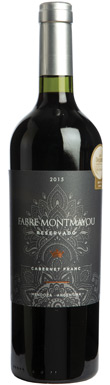
95
Fabre Montmayou was founded in the early 1990s by winemaker Hervé Joyaux Fabre, after he moved to Argentina from his native Bordeaux. Having built his winery in Vistalba (Luján de Cuyo), Fabre set about buying exclusively old-vine vineyards in Mendoza, as well as in Patagonia’s Rio Negro Valley. As the estate’s only bottling of 100% Cabernet Franc, the source of fruit for this wine is Luján de Cuyo in the upper Mendoza Valley. Meticulous sorting is done by hand prior to vinification, in order to select only the very best grapes, with 60% of the wine spending 12 months in French oak. Paz Levinson: Lovely black and blue fruit, with notes of cassis intermingling with touches of mint, eucalyptus, lavender and violet. Not a perfect wine but with huge personality, energy and freshness. Patricio Tapia: Tense and mineral, with a deep layer of red fruit, and structure provided by tannins that are as thick as a wall. This is austere; a really serious example of Cabernet Franc for the cellar. Dirceu Vianna Junior MW: Promising aromas with notes of blueberry, blackberry, violet and sweet spice. Compact and powerful, but tannins are too firm at the moment. Great fruit profile, but the structure requires patience: it has all the ingredients to age well and develop complexity.
2015
Fabre Montmayou
Andeluna, Pasionado Cabernet Franc, Uco Valley, Gualtallary, Mendoza, Argentina, 2014
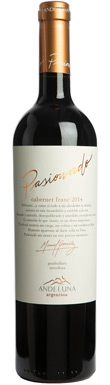

Great typicity here with intense red fruit amid hints of leafiness and sweet spice; ripe and juicy with a sophisticated structure and a persistent finish....
2014
AndelunaUco Valley

Antucura, Single Vineyard Tani Cabernet Franc, Uco Valley, Tunuyán, Mendoza, Argentina, 2016
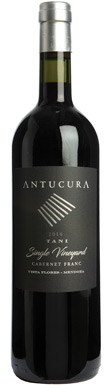
Exotic and lively, with absorbing aromas of black pepper and spice leading to abundant flavours of dark fruit, cardamom and cedar. Persistent, complex and world...
2016
AntucuraUco Valley
Finca Decero, Mini Ediciones Remolinos Vineyard Cabernet Franc, Luján de Cuyo, Agrelo, Mendoza, Argentina, 2016
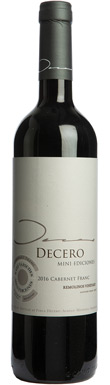
Opulent dark fruit accompanies notes of mocha and exotic spices. Firmly structured but ripe and juicy with an engaging, harmonious finish.
2016
Finca DeceroLuján de Cuyo
Fabre Montmayou, Reservado Cabernet Franc, Mendoza, Argentina, 2016
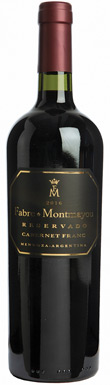
Energetic yet graceful and fine-grained, with an alluring savoury complexity and an intelligent use of oak. Harmonious and precise.
2016
Fabre Montmayou
Viña Cobos, Bramare Chañares Estate Cabernet Franc, Uco Valley, Los Árboles, Mendoza, Argentina, 2015
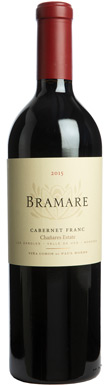
Well-defined and inviting, with sturdy tannins enveloping herbal and spice-infused dark fruit. Full-bodied and persistent yet with no lack of freshness.
2015
Viña CobosUco Valley
Alandes, Cabernet Franc, Mendoza, Argentina, 2015
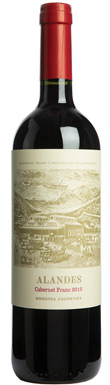
Seductive and perfumed, with aromas of blackberry, violet, chocolate and sweet spice, while refined tannins and harmonious acidity allow for a persistent finish.
2015
Alandes
Trapiche, Gran Medalla Cabernet Franc, Mendoza, Argentina, 2014
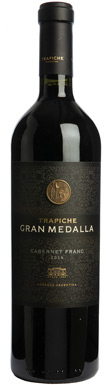
A delightful expression of Cabernet Franc, complex and long, with grippy tannins playing a major role and suggesting a long life ahead.
2014
Trapiche
Undurraga, TH Cabernet Franc, Maipo Valley, Chile, 2013
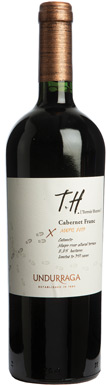
Admirably subtle, elegant and traditional - very Bordeaux in style - and ageing so beautifully, with still bright acidity fuelling a lip-smacking, savoury finish.
2013
Undurraga
Antucura, Barrandica Cabernet Franc, Uco Valley, Tunuyán, Mendoza, Argentina, 2017
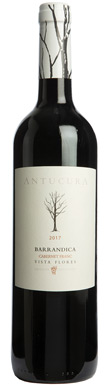
Voluptuous and full of energy, with an intense black fruit character partnering notes of cassis, pepper and eucalyptus - very well put-together.
2017
AntucuraUco Valley
Bodega Atamisque, Serbal Cabernet Franc, Uco Valley, Tupungato, Mendoza, Argentina, 2017
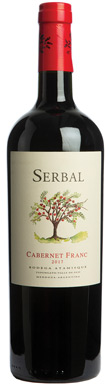
A fantastic example from the mountains, with a beautifully judged ripeness, freshness and use of oak. Savoury, complex and long-lingering.
2017
Bodega AtamisqueUco Valley
Bressia, Monteagrelo Cabernet Franc, Uco Valley, Mendoza, Argentina, 2015
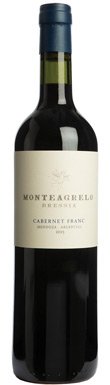
Intensely perfumed nose of juicy forest fruit, violet and black pepper, cool-climate in style, with beautifully sophisticated tannins tapering to a tantalising savoury twist on...
2015
BressiaUco Valley
