
Spain’s driving winemakers: six names to know plus 12 exciting wines to try
Many of Spain’s leading wine talents have taken to their cars, on a mission to seek out and revitalise their home country's vineyards, says David Williams, who offers up six names to know and recommends 12 wines to try.


Measured at 550,990km2, Spain is the largest country in southern Europe, the second largest in the EU and the fourth largest on the European continent. That’s what The Times Atlas of the World tells me anyway.
But a true understanding of the sheer scale of the country only really comes during one of those longer-than-expected car journeys that travellers through Spain know only too well – those moments when you pull back from the intense close-up of your GPS and realise that a day of driving has translated into just a few short inches on your old-fashioned paper map.
Sitting over a coffee in an oasis of aircon in some dusty autopista services, hours of driving still to come before you reach your destination, you can at least picture what life is like for some of Spain’s leading winemakers.
So many are ‘driving winemakers’: men and women for whom a car is every bit as indispensable a piece of winemaking kit as a press or a barrel.
Scroll down to see tasting notes and scores for 12 wines from our six winemakers
The term is a riff on ‘flying winemakers’, those globetrotting consultants who flew in, initially from Australia, in the 1980s and 1990s to administer their off-the-peg, scientifically driven, foolproof remedy for ailing wine producers in Europe: super-ripe fruit, squeaky clean stainless steel, oak staves et al.
But while the stereotypical flying winemaker – a term that has been largely eclipsed over the past couple of decades by the more neutral, less specifically Australian ‘consultant’ – revelled in an intercontinental approach and a life lived in business class, Spanish driving winemakers have, in all senses, been rather more down to earth, confining their travels for the most part to the roads and vineyards of their home country.
In search of terroir
In general, the Spanish driving winemaker has also tended to have a different understanding of their mission, compared to their international airborne counterparts.
Rather than seeking to impose a single winemaking philosophy, style or recipe wherever their travels may take them, they have instead sought to expand Spain’s stylistic range, seeking out new, or (more often) long-neglected old vineyards, with an explicit desire to show off what that piece of land, and its local grape varieties, can do.
As such, they’ve been instrumental in shaping arguably the most significant trend in Spanish wine in the past 20 years: the emergence of a terroir-driven wine culture that makes full use of the country’s diverse growing conditions.
These winemakers have helped end the monopoly that Rioja has had on perceptions of where fine Spanish wine can come from, and have performed a similar role, in microcosm, seeking out unheralded vineyards within the region itself.
The result is a wine scene that is far more connected, far more cosmopolitan, than at any time in its history. Any list of Spain’s best wine producers today would still feature plenty of names that are synonymous with a single place: from Rías Baixas’ Fefiñanes to Rioja’s López de Heredia and Ribera del Duero’s Vega Sicilia.
But, in a way that was once highly unusual, it would also be filled with names that have expanded far beyond their original home, with winemakers who have never been tied down to a single place.
What’s more, the trend for multi-regionality isn’t confined to the kind of restless individuals that the term driving winemaker was invented to describe, out working their far-flung networks of tiny vineyard plots. Many of Spain’s larger wine concerns have become increasingly intrepid, too, developing standalone operations or working with partners in multiple locations.
Six Spanish ‘driving winemakers’ to know

In this article, we’ll look at the places, practices, and wines of six of Spain’s leading multi-site producers, from the smallest to one of the biggest – the driving winemakers who spend their lives exploring the highways and byways of the world’s largest vineyard…
Telmo Rodríguez
The original driving winemaker, Telmo Rodríguez is the individual whose adventurous working practices first inspired the method’s use when he got started in Spain after studying and then working in Bordeaux in the mid-1990s.
But he has always been a little uncomfortable with the term. He feels it implies something formulaic, whereas he and his colleague Pablo Eguzkiza have always striven to make each of the remarkable collection of vineyards they have assembled, under the Compañía de Vinos Telmo Rodríguez umbrella, express its individual character.
Still, there’s no getting around the fact that this restless and hugely influential winemaker has put in some serious mileage over the years. Today, the company has long-term projects in Valdeorras, Galicia (Ladeiras do Xil); on the slopes of the Montes de Málaga, Andalucía (Molina Mountain Wine); in Ribera del Duero (Viñedos de Matallana); Cebreros in Sierra de Gredos (Pegaso Viñas Viejas); and Toro (Gago). It also works with partners in Alicante (Al-Muvedre) and Rueda (Basa Blancos de Rueda).
Given all his wanderings, it’s ironic that some of Rodríguez’s most acclaimed work has been in his home region. Both Compañía de Telmo Rodríguez (the 15ha Bodega Lanzaga) and the family estate Remelluri (to which Rodríguez returned in 2010 to manage with his sister Amaia) have been significant players in the drive to take Rioja away from a négociant model, using only estate-grown fruit for the main lines.
Rodríguez now has an extraordinarily varied palette to play with – the company has about 80ha of vineyards across Spain, divided into 355 plots, containing 43 different grape varieties. And it yields a no-less diverse portfolio of wines.
Even Rodríguez wouldn’t claim that every wine works perfectly in every vintage. But the hit rate is remarkably high, and, for all the commitment to local expression, a signature style is discernible across the portfolio.
Whether he’s working with a co-planted plot of Galician white varieties, or a Mediterranean Monastrell, there’s a precision to Rodríguez’s wines, a purity of fruit expression, an aversion to overripeness, and a fundamental drinkability.
Alvaro Palacios
Complacency is not one of Alvaro Palacios’ sins. A scion of the Rioja winemaking dynasty behind Bodega Palacios Remondo, like his near-contemporary Telmo Rodríguez (above), Palacios took himself off to Bordeaux to broaden his winemaking horizons and ended up spending two years working for a certain Petrus.
Coming back to Spain in the late 1980s, he decided not to go into the family business, instead opting to take a chance on an historic, but obscure, and certainly run-down and remote, wine region in southern Catalonia, where he bought his first vineyard, Finca Dofí, in 1990.
What happened next is part of modern Spanish wine lore. By 1993, Palacios had added another tiny (1.7ha; it’s now closer to 5ha) vineyard, planted between 1910 and 1940 with Garnacha (plus a little Cariñena and a small percentage of white grapes), near the village of Gratallops.
The wine this vineyard produced, L’Ermita, went on to become a standard-bearer for the modern-day revival of Priorat – a cult wine that remains one of Spain’s most sought-after (in other words, expensive) reds, a showcase for that classic Priorat combination of underlying stony minerality, power and garrigue herb-flecked, dark fruit.
Palacios’ achievements in Priorat alone would have earned him his place in history. Just consider the lush, polished Finca Dolfí and L’Ermita single-vineyard wines, plus the aromatic village wine Gratallops, and the two more affordable bottlings below, not to mention considerable input into understanding and mapping of the local terroir. That he’s managed to repeat the trick, a mere eight hours’ drive away on the other side of northern Spain in Bierzo, is nothing short of remarkable.
A joint-venture with his nephew Ricardo Pérez, the Descendientes de J Palacios project has much in common with the Priorat operation. It was formed in the late 1990s, at a time when Bierzo, and its distinctive red grape variety Mencía, was largely regarded as a local workhorse. It is based on recovered old vines and, in a series of superb single-vineyard wines, it shows off the Palacios house style in a Mencía vernacular: a combination of gorgeous fragrance and vivid fruit depth, with enormous ageing potential.
Raúl Pérez

With a permanently mischievous twinkle in his eye, and a long, wispy beard, Raúl Pérez is the unconventionally photogenic face of modern Spanish wine, a hipster favourite from the La Tintorería Vinoteca in Madrid to the natural wine bars of NYC, London or Copenhagen.
While he may be a permanent favourite of picture editors, Pérez’s exalted position in the contemporary Spanish wine scene is most certainly not a triumph of style over substance: the gentle, philosophical hippie façade belies a Stakhanovite work ethic, and a compulsive desire to collaborate. He has a hand in dozens of wines, in dozens of sites, across Spain (and elsewhere) every year.
Pérez is most directly associated with the northwest: Bierzo is the home of Ultreia, his range of Burgundian, or Loire-like Mencía reds (and a similarly fresh and graceful Douro red made in collaboration with Dirk Niepoort) – as well as La Vizcaína, his range of old-vine (50-plus years old) single-vineyard bottlings from vineyards around his home town of Valtuille.
Under the Casto Candaz label he also makes an intensely spicy, herbal Mencía, and a set of hugely characterful low-production whites with Rodrigo Mendez in Ribeira Sacra and Rías Baixas – both over the border into Galicia.
He has a gossamer-light winemaking touch that is essentially pragmatic: when you speak to Pérez at tastings, he’s always keen to stress that there’s no single approach – that he always adapts to whatever it is that the vineyard brings him.
If you wanted to sum up his philosophy, you might say it was natural without being Natural. Oak tends to be larger, older, neutral; he’s happy to have a little extra texture and skin contact in his whites; the reds always come with freshness, fluency, drive, often with whole-bunch fermentations, always with natural yeasts.
And that’s made him a popular choice as a collaborator or consultant for producers all over the country looking to create more expressive wines. He has transported the Pérez approach to Almansa in Castilla-La Mancha (Ternario), Alicante (Sierra Salinas) and the Sierra de Gredos (a joint venture with La Tintorería), among numerous others over a career which has also seen him make wine in Asturias, Mallorca, Portugal, Bordeaux and Chile.
Envínate
A willingness to explore even the most inaccessible parts of Spain and to embrace collaboration: the four winemaking friends behind Envínate are very much in touch with the modern Spanish winemaking zeitgeist.
The group came together while they were studying oenology at university in Alicante. After graduating in 2008, they formed a company that would, for the most part, specialise in wines that bore the imprint of the Atlantic – which explains the rather eccentric (at first glance) focus on two principal regions: Tenerife and Ribeira Sacra, one a volcanic island off the coast of Africa, the other a rugged inland region in Galicia.
Envínate also makes wines in Extremadura, near the border with Portugal in southwest Spain, and (in a rather less Atlantic style) Almansa, Castilla-La Mancha. The four winemakers divide up territories: Torrente is responsible for Lousas in Ribeira Sacra, Táganan is run by Santana in Tenerife, while Ramos and Martínez look after T Amarela in Extremadura and Albahra in Almansa.
In each case, the Envínate bottlings – however small-scale – have helped set the tone for regions that have always been some distance from the vinous mainstream.
Old vines (pre-phylloxera in the case of Tenerife) and unusual, often remote sites are always part of the mix: a 500m-altitude parcel of Tinta Amarela in Extremadura; Listán Negro and other Canary Island varieties planted on cliffs right above the Atlantic in Táganan, Tenerife; Garnacha and Moravia Agria at 800m above sea level in Almansa.
But so, too, is a sensitive winemaking approach, with plenty of whole-bunch fermentation, concrete and neutral oak and natural yeast that favours freshness, wildness and mineral tones (salty, savoury and a touch smoky in some of the Tenerife wines; stony and cooling in some of the Ribeira Sacra offerings).
As with the other winemakers featured in this article, no two Envínate wines are the same, but there’s a discernible winemaking style that means they couldn’t come from anybody else.
Vintae

Back in the 1990s, when the wineries of the New World were sweeping all before them in supermarkets across the UK, it became common for European producers to lament their own wine industries’ inability to provide a very specific type of product. Where were the sort of reasonably priced, good-quality, smartly presented, large-scale wine brands that the Australians and Californians were so good at making?
Enter Vintae, in 2003 or thereabouts. With roots in Rioja, the company started out with López de Haro: a brand that cleverly, and subtly, updated the idea of what a modern Rioja brand should be: the packaging riffed on classic labels (and names) while feeling ‘new’ in a vintage sort of way. Meanwhile, the wine itself dialled down the oak and dialled up the ripe, fresh fruit.
Since then, the company has applied its marketing savvy to various other projects that will be very familiar from a wine merchant near you: Bardos applies the López de Haro trick to Ribera del Duero; Matsu, with its distinctive labels featuring photos of vineyard workers, delivers a smoothly rendered take on the bold intensity of Toro; and Atlantis follows the Atlantic coast with brisk, clean, highly drinkable whites from Galician and Basque grape varieties.
All score highly on the quality-to-value scale, though the Vintae series that is arguably the most exciting from a purely vinous point of view is the Moncayo set of wines the company’s winemaker Raúl Acha has made from very old Garnacha vines across northern Spain: in Aragón, Zaragoza, Priorat, and from Acha’s 115-year-old family plot at 600m in Cárdenas, Rioja.
Torres

Given that Torres is one of the most successful Spanish companies of any kind, and that its biggest brands – Viña Sol, Sangre and Gran Sangre de Toro – are among the most exported and biggest-selling wines in the world, it’s remarkable how the family has retained such high levels of respect among committed oenophiles – people who are, we must admit, rarely averse to a little reverse snobbery.
No less unusual is the way the family has managed to stay relevant in a modern Spanish wine industry that has been completely transformed in the past 20 years.
In part, that’s down to a research and development wing that has kept abreast of modern vinous trends, keeping the wines in tune with changing consumer tastes, but also leading the way in investment in such pressing modern matters as the climate crisis and (not unrelated) the revival of lost local grape varieties.
It’s also been caught up in the cosmopolitan mood that has swept through Spanish wine, and, in the years since the millennium, has overseen a careful, incremental expansion outside its traditional home in the Penedès in Catalonia.
First up, in 2006, was Celeste, a polished, stylish addition to the then booming Ribera del Duero region. Next, in 2007, came Salmos, Torres’ gutsy debut in Priorat; followed, in 2009, by an elegant Rioja, Altos Ibéricos; and, in 2011, a punchily aromatic Rueda Verdejo, Verdeo.
Of course, the company has long had a more far-sighted view of the wine world than most, certainly since Miguel Torres Snr took over the business in the 1960s. The Torres family was one of the first overseas investors in Chilean wine in the late 1970s, and Miguel’s sister, Marimar Torres, has overseen the development of a range of smart Pinot, Chardonnay and Albariño wines in the Russian River in California since the early 1980s.
All the same, the 21st-century embrace of wider Spanish wine regions does feel new, and it has undoubtedly added another dimension to a wine portfolio that already offered something for most palates and pockets.
Twelve Spanish wines from our six ‘driving winemakers’
Related articles
First taste: Alvaro Palacios 2020 new releases
Exclusive review of the new Priorat classification plus 12 wines worth seeking out
Remelluri, Reserva, Rioja, Northern Spain, Spain, 2013
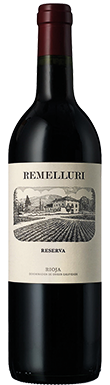

From Telmo Rodriguez’s traditional family seat, this is Rioja at its most luxuriously poised and expressive. Aged for 17 months in oak, it has the...
2013
RemelluriRioja

Telmo Rodriguez, Al-Muvedre, Alicante, Valencia, Spain, 2019
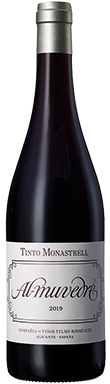
A consistent favourite in the extensive Telmo Rodriguez portfolio, and one of the best-value wines in a country not short on bargains. This 100% Monastrell...
2019
Telmo RodriguezAlicante
Descendientes de J Palacios, Pétalos, Bierzo, Castilla y Léon, Spain, 2019
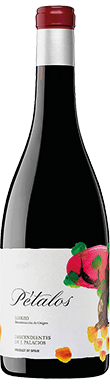
In its combination of violet floral-fragrant prettiness, silkiness of texture and the slight crunchiness of blackcurrant fruit with graphite, Alvaro Palacios’ entry-level Bierzo Mencía invites...
2019
Descendientes de J PalaciosBierzo
Alvaro Palacios, Camins del Priorat, Priorat, Catalonia, Spain, 2019
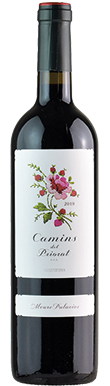
Made in considerably larger quantities than Alvaro Palacios' cult wines L’Ermita and Finca Dolfí, Camins is nonetheless a brilliant and balanced example of the region’s...
2019
Alvaro PalaciosPriorat
Raúl Pérez, Atalier, a cruz das ánimas, Rías Baixas, Galicia, Spain, 2020
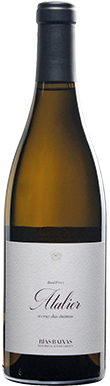
Exporting his talent further to the west of his homeland in Bierzo, Raúl Pérez’s take on Rías Baixas Albariño is electrifying, with a turbo-charge of...
2020
Raúl PérezRías Baixas
Raúl Pérez, Ultreia Saint Jacques, Bierzo, Castilla y Léon, Spain, 2018
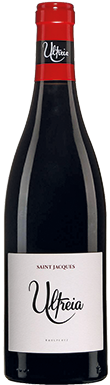
The Ultreia wines represent one of Raúl Pérez’s less heralded skills: making genuinely fine wine from old vines at genuinely accessible prices. This Mencía-based red...
2018
Raúl PérezBierzo
Envínate, Táganan Tinto, Tenerife, Spain, 2019
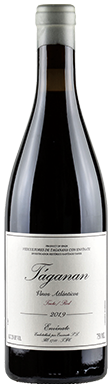
A smörgåsbord of local grape varieties grown on volcanic soils right by the Atlantic, combined to create the very essence of the place – all...
2019
Envínate
Envínate, Albahra, Castilla-La Mancha, Spain, 2019
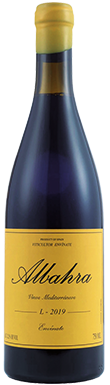
A blend of little-known Moravia Agria (me neither) and Garnacha Tintorera (aka Alicante Bouschet) grown at 800m in the obscure southeastern DO Almansa, this wine...
2019
Envínate
López de Haro, Blanco, Rioja, Northern Spain, Spain, 2020
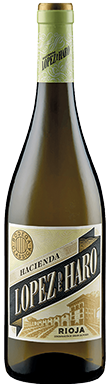
A typically skilful example of modern winemaking from Vintae’s stylishly reliable and affordable Rioja brand, this 100% Viura (some of it from very old vines)...
2020
López de HaroRioja
Proyecto Garnachas de España, La Garnacha Salvaje del Moncayo, Vino de la Tierra de Ribera del Queiles, Northern Spain, Spain, 2019
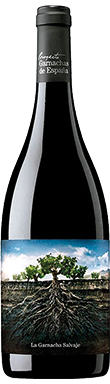
From old bush vines on the Moncayo Massif where Aragón meets Navarra, this is juicy red-fruit, light, floral-fragrant, refreshing and spicy Garnacha in the currently...
2019
Proyecto Garnachas de EspañaVino de la Tierra de Ribera del Queiles
Miguel Torres, Salmos, Priorat, Catalonia, Spain, 2017
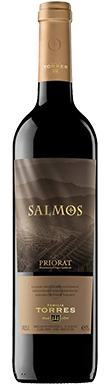
A beginner’s guide to Priorat? Well it’s certainly relatively accessible in price. But there’s no stinting on dark fruit power, dusky tannin, dusty herbs and...
2017
Miguel TorresPriorat
Miguel Torres, Celeste, Pago del Cielo, Ribera del Duero, Castilla y Léon, Spain, 2018
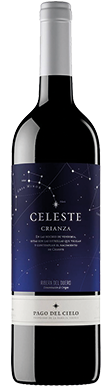
Torres’ Ribera del Duero project is, like so much in the Catalan giant’s range, a model of consistency. Polished and deep; dark, mulberry flavour, with...
2018
Miguel TorresRibera del Duero
