
Spotlight: Pinot Noir’s new grand cru status in Alsace
The announcement that two grands crus in Alsace, Kirchberg de Barr and Hengst, will be able to award the prestigious term to its Pinot Noir wines represents a noteworthy development in this world-renowned region.


Big news coming out of Alsace! From the 2022 vintage, two of its 51 grands crus will be authorised to label their Pinot Noir red wines as grand cru, in addition to the existing white wines permitted. This is a significant development in a region which, since 1975, has only awarded grand cru status to its white wines made from Riesling, Gewurztraminer, Muscat, Pinot Gris and Sylvaner (the last recently added).
The process of approving this status, which culminated in a decree of May last year, has had a long gestation. Originally mooted in 2000, the application was only filed by the AVA (Alsace Viticultural Association) in 2016 and it wasn’t until 2019 that the INAO (Institut National des Appellations d’Origine) accepted the submission, and it took a further three years for the two specific sites to be named and approved.
The audition
The precise identity of the submissions has been kept secret, but it is thought that there were only three grand cru terroirs in the final running: Kirchberg de Barr in the Bas-Rhin village of Barr, Hengst in the Haut-Rhin village of Wintzenheim, and Vorbourg in the villages of Rouffach and Westhalten.
Anecdotally it is thought that Vorbourg, despite a long history of growing Pinot Noir, did not meet the consistency criteria in the final blind tasting, itself one of the key components of the INAO’s final decision. Kirchberg de Barr and Hengst were both triumphant.
As of the 2021 harvest, the grands crus of Alsace in total represent 5.2% of the vineyard area and produce only 3.25% of the region’s wine. Pinot Noir is increasingly fashionable in the region, however, and now accounts for 11.2% of the vines and 10.3% of the wine production.

Given that the area dedicated to Pinot Noir in both Hengst and Kirchberg de Barr is small, within already relatively small grands crus, there is clearly a lot more potential for further promotions beyond these two areas.
While the grand cru submission process is not disclosed, it can be safely assumed that other sites in addition to Vorbourg will be putting in an application in the coming years.
The successful terroirs
Hengst and Kirchberg de Barr share similar soils dominated by marl and limestone (there is a little more sandstone in Hengst), relatively steep aspects (Hengst rises from 270m to 360m over just 53ha, for example) and south and south-easterly exposures.
Both possess a history of growing Pinot Noir which stretches back to the monasteries of the 15th century and even beyond that. Both are well ventilated and both benefit from the fact that Alsace has the lowest rainfall in Europe.
Hengst actually means ‘stallion’, which may give some idea of the power of its Pinot Noirs. The red wines in both villages are wonderfully textured, combining structure and finesse in a fashion which may surprise some.

Both terroirs also have long-established Pinot Noir producers including Boeckel and Domaine Hering in Kirchberg de Barr, and Domaine Saint-Rémy, Albert Mann and Domaine Barmès-Buecher in Hengst.
Sophie Barmès at Domaine Barmès-Beucher is a passionate advocate of Pinot Noir. ‘The Grand Cru Hengst is synonymous with constancy and there are many vines, including ours, which are over 60 years old,’ she says. ‘For several decades, a handful of winemakers have had faith in this terroir which gives birth to great red wines that are powerful, structured and complex.’
It is hard to disagree with this. Strict stipulations which encompass planting densities, clones and yields (the maximum yield of 40hl/ha is lower than the 50hl/ha for the whites in the same villages, for example), all underline seriousness of intent.
This is an important development in the history of Alsace, its relatively modest start born out of a desire to have secure foundations in place, upon which to build Pinot Noir’s standing and reputation in the region.
Six grand cru-worthy Alsace Pinot Noirs:
The six wines below are from the Hengst and Kirchberg de Barr Grand Cru vineyard areas, from vintages that pre-date the 2022 regulations, and were tasted by Natalie Earl.
Related content
(Re)Discovering Pinot Noir: 12 great bottles to try from around the world
Discover Alsace: from traditional timber-framed architecture to modern sophistication
German Grosses Gewächs: Top 2021 whites and 2020 reds
Leipp Leininger, K Pinot Noir, Alsace, France, 2018
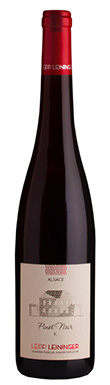

Inviting ripe berry aromas, showing such plushness, richness and endearing blackberry, cherry and bramble notes. Incredibly juicy in the mouth, with flowing, luminous fruit and...
2018
Leipp Leininger

Wunsch et Mann, Equus Pinot Noir, Alsace, France, 2019
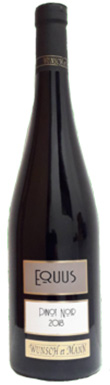
Potpourri and dried lavender characters are effortlessly elevated from the glass in a lifted, aerial impression, before tumbling back down to more earthy tones. The...
2019
Wunsch et Mann
Domaine Barmès-Buecher, Vieilles Vignes Pinot Noir, Alsace, France, 2020
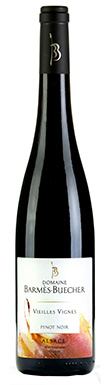
A delicate expression which ebbs and flows between florals and succulent red and black berries, maintaining good poise. There's good concentration of both blackberry and...
2020
Domaine Barmès-Buecher
Domaine Hering, Cuvée du Chat Noir Pinot Noir, Alsace, France, 2020
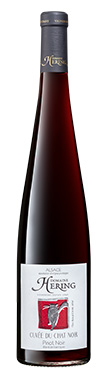
Deep purple in colour, somewhat surprising for a Pinot. Black cherry yoghurt aromas pop forth, it's a bold and intense wine. The palate is rich...
2020
Domaine Hering
Vincent Stoeffler, Cuvee XXC Pinot Noir, Alsace, France, 2019
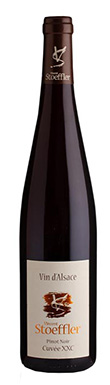
First aromas portray quite a rubbery, funky impression, not unpleasant but markedly savoury instead of fruity. The palate comes alive with the electric acidity and...
2019
Vincent Stoeffler
Boeckel, K Pinot Noir, Alsace, France, 2020
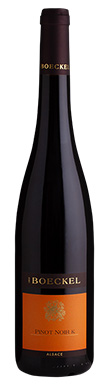
Some intense, sulphurous reduction on the nose initially masks much of the fruit character, coming down on the meaty, savoury side of Pinot. The palate,...
2020
Boeckel
