
Taurasi: Feudistudi – A tale of terroirs
James Button reports on an intriguing Feudi di San Gregorio Taurasi tasting, based on exhaustive work over two decades...


In the 1920s, the Irpinia region in Campania was the third-biggest wine producer in Italy by volume. Today, it barely registers on the chart in 40th position.
The decline in production over the course of the 20th century can largely be put down to three factors: the late arrival of Phylloxera, post-war poverty, and major earthquakes in 1930 and 1980. As many left the countryside or sought other forms of income following the devastation of their vines, production drastically decreased.
Happily, Irpinia is in a much better place today, yet it still produces just a fraction of what it used to. The establishment in the 1970s of the region’s three DOCs, later to become DOCGs, of Taurasi, Greco di Tufo and Fiano di Avellino had coincided with the first large-scale surveys of Irpinia’s terroir.
Feudi di San Gregorio Taurasi vertical
Feudi San Gregorio quietly initiated the ‘FeudiStudi’ project 20 years ago, believing it was time to re-evaluate these initial findings and research in more depth individual site characteristics.
With the help of growers across Irpinia, Feudi San Gregorio has surveyed thousands of plots across 700 vineyard sites. The results are to be released in a new two-volume book, ‘FeudiStudi: Irpinia’s Wines and Vineyards’.
Best read with a glass of Taurasi in your hand over a few evenings, the first volume gives an overview of the region. The much longer second volume takes the reader through the Taurasi and Irpinia Campi Taurasini areas, sector by sector, commune by commune, identifying the most characterful sites and recording important details including soil, exposure, altitude and size. A useful reference, for sure.
The aim is to demonstrate the sites producing above-average fruit as well as the wines most expressive of their terroir throughout the appellation, not just at Feudi San Gregorio. In this respect, it’s reminiscent of the groundbreaking work by Alessandro Masnaghetti in Barolo and Barbaresco.
During a recent virtual tasting with director Antonio Capaldo and head of production, Pierpaulo Sirch, Capaldo pointed out that traditionally the estate has blended its various parcels, which he put down to ‘simplification for commercial reasons’. He cited other producers’ ‘great crus’ and ‘consumers’ increasing awareness of terroir as drivers behind the FeudiStudi project. The project, led by Capaldo, Sirch, and journalist Paolo De Cristofaro, has resulted in the annual release since 2011 of a small number of plot-specific Aglianico wines from the Taurasi DOCG – the subjects of the tasting – as well as Greco di Tufo and Fiano di Avellino.
Irpinia
Situated inland from Naples, on a plateau surrounded by mountains, Irpinia doesn’t experience a typical Mediterranean climate.
It rains for an average of 150 days of the year, with levels of rainfall more in line with the northern regions of Italy. The accumulation of water running down from the mountains has formed rivers and lakes that create a humid environment. Aglianico forms compact bunches of medium to small berries. Combined with not especially thick skins and the high humidity environment, the grapes are susceptible to diseases such as oidium and botrytis. Traditional pergola training lifts the vines away from moisture on the ground and exposes the tight bunches to airflow. Aglianico is a vigorous variety and it requires a lot of work during the growing season to ensure the health of the grapes and keep excessive growth under control.
Temperatures rarely exceed 30C, with the average summertime temperature hovering in the mid- to high-20s. By September, diurnal temperature variations can reach a significant 20C difference between day and night, which helps the grapes to retain aromatic compounds and acidity.
An increase in average temperatures in recent years has helped the Aglianico grapes reach full ripeness earlier than in the past. This has been aided by the gradual replacement in vineyards of pergola-trained vines for densely planted, espalier-trained, earlier ripening clones. Despite this, the Aglianico harvest in Irpinia takes place from mid-October through to early- or mid-November, making it one of the last grape harvests in Europe to be completed every year.
The FeudiStudi wines
The two best Aglianico sites identified from the Feudi vineyards have been bottled annually since 2011 in small numbers: Rosamilia and Candriano. Both sites are in the commune of Castelfranci in the southeastern zone of the DOCG, covering around 89ha. Close to the Picentini mountains, it is cooler, wetter and windier here than in any other part of the DOCG. Altitudes range from 374 to 725 metres above sea level. The main hillside the vines are planted on faces west towards the Calore Valley, which forms the western border of the commune. It is possible to find an abundance of ancient vines in this part of the Taurasi DOCG, a clone known as ‘horse’s tail’ which features looser bunches of small berries extremely rich in anthocyanins and tannins
Rosamilia (0.46ha)
- In the vineyard of Vallicelli (100ha) towards the north of the commune of Castelfranci
- 645-658 metres above sea level on a gentle slope
- The highest of all Feudi San Gregorio’s sites
- Clay-chalk
- 60-year-old vines, radial trained
- Western exposure
- Typified by high acidity and less obviously rich, more feminine in character
Candriano (0.61ha)
- In the vineyard of Baiano (225ha) towards the south of the commune of Castelfranci. Baiano is divided into Baiano Alto and Baiano Basso. Candriano is located in Baiano Alto
- The last area to be harvested
- 598-633 metres above sea level
- Clay mixed with marine sand and limestone fragments
- 18-23-year-old vines, mainly espalier trained – typified by its minerality and saline elements and dense tannins
- Southwest exposure
- Typified by a darker, denser style
In the winery, both wines are treated the same in order to highlight the differences in terroir; they mature for 12-18 months in 20hL French oak barrels and small Slavonian oak barriques, then spend a further 24 to 36 months in bottle before release.
Tasting the FeudiStudi Taurasis:
You might also like:
Top wines from Campania DOCGs
Best Campania wines from southern Italy: What to look for
Aglianico at its best: Feudi di San Gregorio Taurasi vertical
Feudi di San Gregorio, Feudistudi Rosamilia, Taurasi, Campania, Italy, 2016
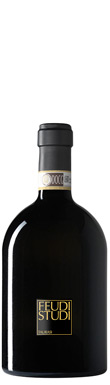

Fluctuating spring conditions saw an April heatwave followed by cold temperatures which brought snow to the highest hills. Harsh frosts led to the loss of...
2016
Feudi di San GregorioTaurasi

Feudi di San Gregorio, Feudistudi Candriano, Taurasi, Campania, Italy, 2016
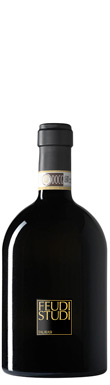
The 2016 vintage was characterised by snow and frosts in the highest sites at the end of April, reducing the crop by up to 60%....
2016
Feudi di San GregorioTaurasi
Feudi di San Gregorio, Feudistudi Rosamilia, Taurasi, Campania, Italy, 2014
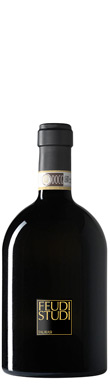
A warm, early spring was followed in 2014 by a variable May to September, characterised by temperature fluctuations and wet, humid conditions. Sunny dry spells...
2014
Feudi di San GregorioTaurasi
Feudi di San Gregorio, Feudistudi Candriano, Taurasi, Campania, Italy, 2014
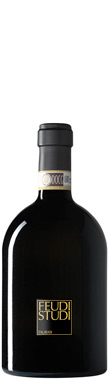
2014 isn't a highly rated vintage for Taurasi, but low yields seem to have preserved the quality of the Candriano bottling. Quite firm with super-fine...
2014
Feudi di San GregorioTaurasi
Feudi di San Gregorio, Feudistudi Rosamilia, Taurasi, Campania, Italy, 2012
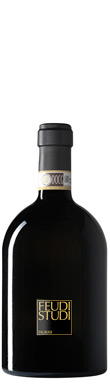
The coldest winter in Campania since 1985 was followed by a March heatwave and an Easter cold spell. Mid-June to September was devoid of rain...
2012
Feudi di San GregorioTaurasi
Feudi di San Gregorio, Feudistudi Candriano, Taurasi, Campania, Italy, 2012
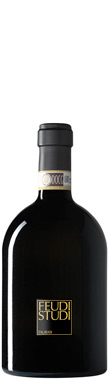
Intense heat and lack of rain didn't bother the older vines here. There's perhaps surprisingly a herbaceous touch to the aroma, but the soft, finely...
2012
Feudi di San GregorioTaurasi
