
The heroic winemakers of Isola del Giglio
Layne Randolph visits Giglio island off the Tuscan coast where, buffeted by winds and under the unyielding sun, Ansonica vines hanging on to steep, rocky outcrops are being reimagined by a new influx of winemakers.


Giglio Island, just 11 miles off the Tuscan coast, has a winemaking history as enduring as its ancient stone terraces, some of which are believed to date back to the Stone Age.
Its prominence continued through Etruscan and Roman times, and even Florence’s Medici family championed the island’s Ansonica wine.
Today, that legacy is kept alive by a group of fiercely dedicated winemakers who continue growing Ansonica despite gruelling conditions – what the Italians call ‘viticultura eroica‘, or heroic viticulture.
See below for six heroic wines from Giglio
The island is essentially a small mountain in the middle of the Tyrrenhian Sea, with some small clusters of population centred around areas such as the small village at the marina, and the historic centre in Giglio Castello, a medieval castle at the island’s peak. From the castle, sweeping views of a land specked with vines descend to the sea in every direction.
The Ansonica grape (locally known as ‘Ansonaco’) has learned to thrive here against fierce winds, salty air and sun-scorched earth to produce small, concentrated bunches of exceptional quality, although limited in yield. The plants are grown low to the ground as alberello (bush vines), allowing them to effectively resist both wind and drought.
Francesco Carfagna of Altura Vigneto is a kind of ‘godfather’ of Giglio’s wine industry. He was instrumental in reviving the island’s wine culture after it nearly died off in the late 20th century. His journey began in the late 1990s when he restored a vineyard on the Capel Rosso promontory, where the Ansonica grape had flourished for centuries.
But by 1996, only 10 to 13 hectares of cultivated vineyard had remained, worked by a handful of dedicated vignerons who Francesco calls ‘the irreducible [unyielding, diehard] ones’. They preserved the precious genetic heritage of the old plants and passed on ancient viticulture and winemaking methods.
‘The old masters who never abandoned the land,’ he reflects, ‘are the reason we’re here today.’
Francesco’s version of white Ansonica is the hallmark of Giglio wine. It is deep amber in colour and tannic due to the purely traditional winemaking techniques he employs: extended time on stems and skins, no chemical intervention, and no fining or filtration, yielding a singular wine prized by connoisseurs for its purity, complexity and distinct character.
It’s this winemaking tradition that Francesco emphasises is critical to getting a real sense of Giglio’s terroir.
Harsh conditions
In recent years, Giglio has seen an influx of winemakers eager to carry the torch for a new generation. Oenologist Cosimo Casini works with one of the island’s most treacherous vineyards to produce Tenuta Isola nel Giglio’s Scoglio Nero.
Accessed by hiking down the steep, rocky hill to the sprawling vineyard of spindly vines surrounded by ancient stone walls and ruins, those stone structures and the uneven terrain make mechanisation impossible, so workers use hoes and spades to work the earth.
Lacking in soil and water, the vines’ roots need to grow deep into the hematite and granitic rock-laden soil, so constant care is needed to break up the hard earth.
‘We’ve had to rediscover ancient methods, using dry stone aqueducts to capture the little rain that falls, ensuring we have water for the vines,’ Cosimo explains, adding, ‘The Ansonica grape thrives under these harsh conditions, but it requires constant care.’
‘In the past, even though this vineyard was known for its quality fruit, it was abandoned because of its difficulty. [During harvest], we haul fruit crates up the hill – sometimes as many as 15 times a day,’ he adds.
It’s the kind of labour that mules once performed. The vines are spaced less than a metre apart, and pruned short. With fewer bunches but more concentration, Scoglio Nero unsurprisingly expresses the exceptional quality that can emerge from Herculean efforts.
Cantina Parasole’s Milena Danei is Giglio’s only female oenologist. She carefully ties the vines to cane poles, protecting the delicate buds and leaves from being ravaged by the island winds.
After working around the world with renowned winemakers including Angelo Gaja, Milena returned to her family’s three small vineyards on the island, acquiring more plots to produce 3,000+ bottles of exquisite Strulli Ansonaco.
‘I try to make fine and elegant wines,’ she says, ‘shortening the macerations [compared to traditional methods] and destemming the grapes.’ With her expertise, she is a driving force in the revival of modern Giglio winemaking.
Like Milena, Fiesole-based winemaker Bibi Graetz recognised Giglio’s potential and began buying grapes from the island in 2003, eventually moving his operations there in 2015. He has a quaint bar in Castello Giglio, where guests can taste his elegant Ansonica white wines, Colore Bianco and Testamatta Bianca.

Keeping the legacy alive
Arriving around the same time as Bibi, Simone Ghelli and Desy Francini purchased small plots on the island in 2013 to produce one wine under the Cantina Castellari label, Calzo della Vignia Ansonaco.
Their son, Lapo travels from mainland Tuscany to tend the vineyard, staying in one of the small stone buildings (capannelli) that dot the island.
They are often situated near palmenti, large basins carved into stone in the ground in which grapes were once pressed – archaic evidence of the island’s viticultural heritage.
On the terrace of Francesco’s capannello overlooking the sea, Francesco, Cosimo, Milena, Lapo, and Nede of the Bibi Graetz team gather for an alfresco lunch of cioppino and wild asparagus risotto.
The table is lined with precious Ansonica bottles, which are poured freely despite their extremely low production.
The wines reflect both the shared history and diversity of their makers. Each plays a part in keeping Giglio’s winemaking legacy alive, and their efforts are not just commendable; they are heroic.
Giglio island’s wines: Six to try
Related articles
- The lesser-known Tuscany: 12 hidden gems to discover
- Restaurants by the sea in Italy: 10 to try
- Brunello di Montalcino 2020: Vintage report and 20 top picks
Fontuccia, Caperrosso, Costa Toscana, Tuscany, Italy, 2023
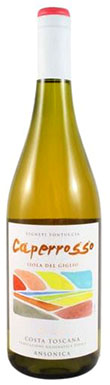

Brothers Giovanni and Simone Rossi founded Fontuccia in 2000, and this is their flagship wine. The dark golden colour of this white wine belies its...
2023
FontucciaCosta Toscana

Tenuta Isola nel Giglio, Scoglio Nero, Toscana, Tuscany, Italy, 2021
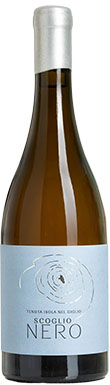
Right from the outset, an intense bouquet of camomile, white flowers and pineapple fills the senses. This golden beauty is a full-bodied wine with soft...
2021
Tenuta Isola nel GiglioToscana
Altura Vigneto, Dorato, Toscana, Tuscany, Italy, 2022
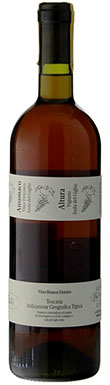
With its stunning deep amber, almost copper, hue, this full-bodied white stands apart – a tribute to Francesco's commitment to the island's time-honoured tradition of extended...
2022
Altura VignetoToscana
Bibi Graetz, Colore Bianco, Toscana, Tuscany, Italy, 2023
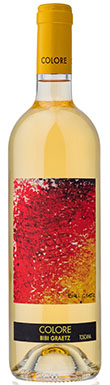
Colore has a medium to full body and a distinctive sense of the Mediterranean, with fragrant herbs and salty sea air. In the mouth, lemon...
2023
Bibi GraetzToscana
Cantina Parasole, Strulli, Toscana, Tuscany, Italy, 2022
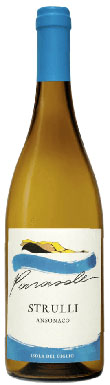
This sunny yellow wine bursts with aromas of apricot, apricot, and more apricot, alongside hints of citrus and honey. The palate marries green tea-like tannins...
2022
Cantina ParasoleToscana
Castellari, Calzo delle Vignia, Toscana, Tuscany, Italy, 2020
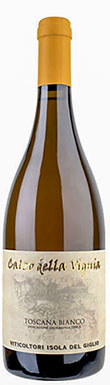
Castellari’s singular wine, fermented and macerated on the skins for four to five months, aged in barrel for six months, then bottle-aged for two years,...
2020
CastellariToscana
