
The renaissance of St-Émilion’s Château Laroque
With massale-selected Merlots on optimal soils, Château Laroque is a shining light among St-Émilion’s increasingly exciting Grands Crus Classés milieu. Panos Kakaviatos finds out why.


Ever since St-Émilion turned away from the so-called ‘Parkerised’ style of viticulture and winemaking, the region has become a prime hunting ground for drinkers seeking a delicious Bordeaux bargain.
Scores of superb Grands Crus Classés ranging in price between £30 to about £45 a bottle offer excellent value for money.
Rather than being oaky, over-ripe and over extracted, most of the 71 Grands Crus Classés today reflect freshness, wet stone minerality and brighter ripeness from quality limestone and clay soils.
But one of the top St-Émilion Grands Crus Classés – Château Laroque – had never been a ‘Parker Darling’.
Scroll down for a mini-vertical of Château Laroque
Less than a decade ago, it flew under the radar, with a classical style of winemaking that was sometimes rustic, but never overdone or big.
From 1982 to 2014, estate director Bruno Sainson crafted refined wines that reflected the impressive terroir of St-Émilion’s largest château.
Thanks to his guidance, Château Laroque – which had been famous in the 19th century – re-emerged to the rank of Grand Cru Classé in 1996.
Reaping the rewards
Château Laroque has gained increased recognition in recent years, with critics worldwide heaping justified praise upon it.
As the taste for extracted, overripe styles has receded, demand for wines like Château Laroque have risen.
Secondly, rather than doubling down on the classicism, in 2015 the owners – the Beaumartin family – hired enologist David Suire to add precision and smoother tannins to an existing classical style, elevating quality.
In his first year, Suire worked with Sainson to understand the estate, while contributing his valuable experience with Premier Grand Cru Classé neighbours Château Beauséjour Duffau-Lagarrosse and Château Larcis Ducasse.
Molasse and Merlot
The estate has long been renowned for its soil. Laroque itself takes its name from the local limestone. Early in his new tenure, Suire oversaw a soil study to improve site selection and vine management.
The study confirmed the estate’s outstanding terroir, revealing different ‘climats’ (small vineyard areas), which has led to much more refined decision making when it comes to managing and harvesting the various plots of Merlot.
The team made hundreds of excavations in 2015 to redefine plot selections, revealing the purest expression of soil types.
Immediately surrounding the château, the plateau’s limestone rock comes close to the surface as it does with Clos Fourtet and Château Canon, creating chestnut-coloured clay topsoil.
Towards the east lies a layer of red clay and Agenais molasse (layers of clay and gravel), like that found at Château Pavie Macquin and Troplong-Mondot.
The east-facing clay terraces, like the west-facing slopes, are made up of Fronsac molasse (limestone-clay-sandstone), the same as found at Ausone and Tertre Rôteboeuf.
A small part of the vineyard lies in the plain, made up of brown soils derived from the erosion of limestone outcrops, the production of which does not go into the first wine.
Greater selection
The estate has also been more careful in harvest selection for the first wine, compared to the Sainson era.
For example, Suire uses only the heart of the press wine to always ensure the best quality juice. The estate today has no less than three labels, with up to half of the harvest used for the grand vin.
The estate also now emphasises massale selections of Merlot, using genetic stock from a subset of Merlot clones that were planted in the wake of the devastating 1956 frost.
Readers may notice that the latest blends are nearly 100% Merlot. Many in St-Émilion are advocating replacing Merlot with Cabernet Franc in response to climate change.
But Château Laroque’s massale-selected Merlots ripen more slowly than the clones planted throughout the region in the 1970s and 1980s. These slower-maturing Merlots help counter climate change and are ideal for the limestone and clay terroir of the estate, Suire says.
Indeed, even as alcohol levels rise, freshness stays high thanks to low pH levels at Château Laroque.
In addition, Suire has been lowering the percentage of new oak from around 50% to 25% in the most recent vintages.
His team also has been increasing the use of larger oak vessels for ageing – up to 9,000-litre oak casks – which better integrate tannins and yield more subtle aromatics, he says.

Importers taking notice
‘We follow the estate, which has been one of the great deals and – up until 2021 – always sold out en primeur,’ says Phil Bernstein of Washington D.C. importer MacArthur Beverages.
‘The 2018 was the first vintage that really blew up for USA sales-wise and the 2019 even more.’
Bernstein praises Suire: ‘The wine has improved dramatically with David at the helm, and I find it to be very serious for the price – a wine that should age well,’ he explains.
Château Laroque’s success is reflected through its wide distribution. Despite its being the largest estate in the appellation, ‘it is still relatively tough to get an allocation,’ Bernstein points out.
Historical setting
Château Laroque’s 12th century tower flaunts its nine centuries of history. Flanked by a more recently built Baroque façade, the estate sits prominently on a limestone plateau south of the village of St-Christophe-des-Bardes.
With its dry moats, it still resembles the stronghold it was during the 100 Years War, defending the western approaches to St-Émilion.
Château Laroque has been owned by several families over these many centuries and was used for multiple agricultural purposes.
But in the 19th century, Maurice Dufaure de Rochefort, an enthusiast of St-Émilion wines, focused on vine-growing, at a time when Bordeaux wines were achieving international acclaim.
By the end of that century, Château Laroque was producing 300,000 bottles per year. The de Rochefort family also constructed the elegant façade adjacent to the surviving medieval tower, which led to the moniker ‘the Versailles of St-Émilion’.
The 19th century proved a golden age for Château Laroque. Sadly, however, phylloxera, bankruptcy in World War I and the Great Depression reduced the vineyard to only six hectares, and the estate was left abandoned.
The first generation of the Beaumartin family acquired the six hectares under vine, plus 78 hectares of woodland in 1935.
Initially, the family looked upon Château Laroque as a vacation home, but, after the 1956 frost, the second generation cut down the trees and planted vines.
The estate has undergone a renaissance in the 20th century, first under Sainson and now continuing under Suire.
The next chapter of this historic estate is well underway.

About Chateau Laroque
Established in the 12th century.
Size of estate: 84 hectares with 61ha under vine
Owners: The Beaumartin Family
Winemaker and managing director: David Suire
Plantings: 94% Merlot, 6% Cabernet Franc
First wine: 45-50% of the annual production
Second wine: Les Tours de Laroque, made from younger vines on the limestone plateau
Third label: Chateau Peymouton, made from more clay-based soils, in a lighter and fruity style for restaurants.
Certifications: HVE since 2018.
Château Laroque: 2005-2020
Wines are listed in vintage order – oldest to youngest
Related articles
- Bordeaux 2014 revisited 10 years on
- Expert’s choice: Fronsac & Canon-Fronsac
- Left and Right Bank Bordeaux: What is the difference?
Château Laroque, Les Tours de Laroque, St-Émilion Grand Cru Classé, Bordeaux, France, 2019
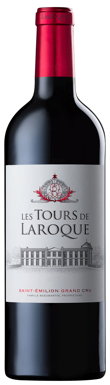

Lovely damson and wet stone aromas and flavours, the palate exudes airy elegance and refined tannin in a light bodied wine that however leads to...
2019
Château LaroqueSt-Émilion Grand Cru Classé

Château Laroque, Château Laroque, St-Émilion Grand Cru Classé, Bordeaux, France, 2005
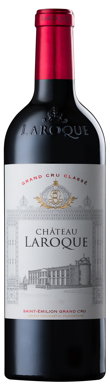
At almost 20 years old, it displays a brick rim, with aromas that seem slightly faded as compared to the 2010. The aromas and flavours...
2005
Château LaroqueSt-Émilion Grand Cru Classé
Château Laroque, Château Laroque, St-Émilion Grand Cru Classé, Bordeaux, France, 2010
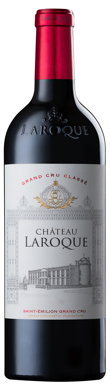
With aromas that display again a bit of meaty rusticity, the palate however displays impressive structure and density especially when compared to the 2014 vintage....
2010
Château LaroqueSt-Émilion Grand Cru Classé
Château Laroque, Château Laroque, St-Émilion Grand Cru Classé, Bordeaux, France, 2014
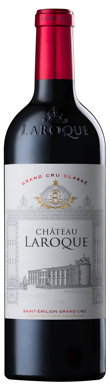
This final vintage under the direction of Bruno Sainson shows cool blue fruit and floral aspects but also more obvious beef blood. I like the...
2014
Château LaroqueSt-Émilion Grand Cru Classé
Château Laroque, Château Laroque, St-Émilion Grand Cru Classé, Bordeaux, France, 2015
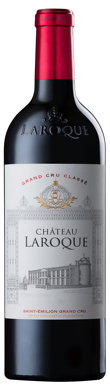
Complex bouquet of cool blue and candied fruit, orange peel, and butcher’s meat. The palate is concentrated and rather elegant, leading to a finish marked...
2015
Château LaroqueSt-Émilion Grand Cru Classé
Château Laroque, Château Laroque, St-Émilion Grand Cru Classé, Bordeaux, France, 2016
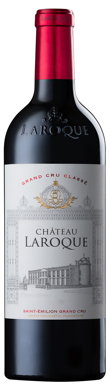
Compared to the 2015, the wine exudes more mint and crushed herb freshness, plus brighter ripe fruit (blueberry, blackberry, cherry). The palate seems light on...
2016
Château LaroqueSt-Émilion Grand Cru Classé
Château Laroque, Château Laroque, St-Émilion Grand Cru Classé, Bordeaux, France, 2017
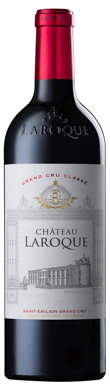
More approachable than the 2016, bursting with obvious ripe blackberry and plum fruit, but it lacks the depth and underlying power of the 2016 vintage,...
2017
Château LaroqueSt-Émilion Grand Cru Classé
Château Laroque, Château Laroque, St-Émilion Grand Cru Classé, Bordeaux, France, 2018
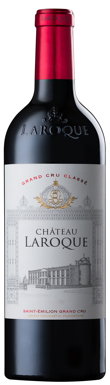
Wonderful combination of aristocratic elegance – rather airy and light – with the opulent, ripe dark fruit typical of the hot vintage, leaving an impression...
2018
Château LaroqueSt-Émilion Grand Cru Classé
Château Laroque, Château Laroque, St-Émilion Grand Cru Classé, Bordeaux, France, 2019
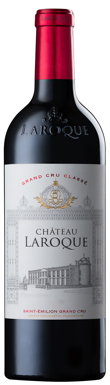
A bit aloof compared to the 2018, with a lower pH. 'We had cooler nights this vintage,' Suire confirms. The 2019 conveys superior fruit brightness:...
2019
Château LaroqueSt-Émilion Grand Cru Classé
Château Laroque, Château Laroque, St-Émilion Grand Cru Classé, Bordeaux, France, 2020
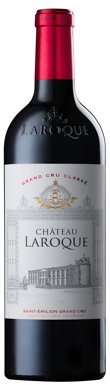
This vintage seems to combine aspects of the 2018 with the 2019, and with the lowest pH since the 2016 vintage. It exudes violets, rich...
2020
Château LaroqueSt-Émilion Grand Cru Classé
