
The wines of Southwest France: a buyer’s guide
Andy Howard MW takes a deep dive into the wines of Southwest France, looking at the key appellations and producers, and highlighting 10 top bottles to try.


The southwest is a beautiful region of France, much loved by visitors from many countries and one seeming to hold even greater affection for those from the UK and Ireland.
Yet, despite the region’s relative proximity and popularity as a tourist destination, the wines of the Southwest have a low profile back home – a great pity given the region’s cornucopia of terroirs, huge range of unusual grape varieties and wine styles, and inspirational winemakers.
Scroll down to check out Andy Howard’s top 10 wines of Southwest France
In a recent article, leading wine writer and judge Andrew Jefford posed some questions. ‘What is France’s greatest undiscovered wine region? Where do you find the greatest value for money in French wine? Where would you look around France to find potential fine wine quality at affordable prices? Three questions from me and the same answer to each: Southwest France.’

So, what is it that makes the southwest such a rich source of alternative, great value and high-quality wines? Essentially the southwest is a region shaped by both similarity and diversity. Similarities include the influence of the maritime climate driven from the Atlantic Ocean; the unremittingly beautiful countryside ranging from the foothills of the Pyrenees to the limestone Causses of the Tarn, Dordogne and Lot; the influence of major, westward flowing rivers; and historical factors – most importantly the legacy of the Romans, the influence of the Church, trade and the effects of phylloxera.
Another unifying factor is the presence of rare, often unique, grape varieties. Only found in Southwest France are Prunelart, Duras, Len de l’El, Lauzet, Camaralet, Verdanel, and Raffiat de Moncade, with Ondenc, Negrette, Arrufiac, Petit Manseng and Abouriou on the ‘almost’ exclusive list. The Agence de Développement Économique Région Occitanie (AD’OCC) describes the southwest as ‘a reservoir of diversity with over 300 varieties of grape, 120 of which are indigenous’.
Diversity is seen in the varying size of the region’s appellations. Bergerac, Gaillac, Cahors and Madiran are the largest, whilst Irouléguy and Marcillac are a tenth of the size. Even smaller (and hardly ever seen in France, let alone the UK) are the tiny appellations of Saint-Sardos, Côtes du Millau, Entraygues-Le-Fel and Estaing – the last two covering just 18ha and 14ha.
Underlying rock structure and soils also contribute to the variety of styles in the southwest, with iron oxide rich soils in Marcillac (Aveyron), limestone influences in the Dordogne, Lot and Tarn, and red sandstone in the Pyrenees.
The southwest can be roughly divided into seven parts – the hilly areas of the Aveyron (Marcillac), the Tarn (Gaillac), Toulousain (Fronton), the Lot (Cahors), Dordogne (Bergerac), Gascony (Saint-Mont/Madiran/Pacherenc du Vic-Bilh), and the Pyrenees (Irouléguy/Jurançon).
Around the regions
Marcillac is a small (c.200ha) AOP and produces distinctive, individual wines. Located in the Aveyron, close to Rodez, almost 90% of production is red wine from the Braucol grape (also known as Pinenc in Gascony and Fer Servadou in other areas). Although found through much of the southwest, here it is known as Mansois, where it thrives on iron-oxide rich soils (rougiers) with spicy, liquorice and blackcurrant notes, allied with firm tannins and a slightly wild edge.
Gaillac, a significant appellation in terms of area (2,500ha) with annual production close to 40 million bottles, is one of France’s most ancient vineyards, with evidence of a thriving wine-trade dating back to the second-century BC. Red wine accounts for around 60% of production, with white and rosé 25% and 15%. Gaillac has an impressive range of appellations covering red, rosé and dry whites (the latter with the additional, higher, designation of Gaillac Premières Cotes); the slightly spritzy Perlé, excellent sweet wines ranging from doux to moelleux; a carbonic maceration Gamay Primeur sold in November; and two sparkling wines – Méthode Traditionelle and what used to be known as Méthode Gaillacoise (now Ancestrale). The latter, like Clairette de Die in Limoux, is produced by a single fermentation in bottle, with less pressure, lower alcohol and more sweetness than twice-fermented sparkling.

The Gaillac vignoble splits into three main zones, with the Premières Cotes on steep slopes to the north of the Tarn, above which lies the limestone dominated plateau leading towards the famous hill-top town of Cordes. The other significant area is the left bank where alluvial deposits dominate with graves, a pebbly soil mixed with clay on a chalky subsoil. The finest producer here is Domaine Rotier, with Alain Rotier being one of the key winemakers driving the rise in quality of one of Gaillac’s exclusive varieties – Len de l’El (aka Loin de l’Oeil).
Gaillac is a hunting-ground for a large number of the Southwest’s unique varieties. Like Len de l’El, Verdanel is an exclusive white grape with tiny production, whilst Ondenc (with small plantings in Australia) produces very fine sweet wines such as Domaine Plageoles Vin d’Autun. The red Duras and Prunelard (or Prunelart) are only found in Gaillac, with the latter of interest being one of the parents of Malbec.
An hour north-west of Gaillac lies Cahors, an important appellation which has only started to fully recover in the past few decades from the ravages of phylloxera. Only reds are permitted within the AOP with Malbec (known locally as Auxerrois or Côt) being the key variety, supported by Merlot and Tannat. Cahors was renowned for its ‘black’ wine in the past but this was a misnomer as that wine was actually a heated, concentrated, distilled wine of dubious quality.
Today there is an increasing number of high-quality domaines ranging from older, established producers (Clos Triguedina/Château du Cèdre) to relative newcomers to the area (Château Chambert/Château Lagrézette). Cahors wines are deep in colour with intriguing violet and herbal aromas and spicy, meaty notes on the palate. Malbec here is very different to that found in Mendoza, with many producers adapting their style to benefit from the Malbec ‘brand’ through better management of tannins and extracting more ripeness of fruit, whilst still retaining the wilder, individual, side of Malbec from the Causses.
An hour south of Cahors, heading towards Toulouse, one enters the territory of another intriguing grape – Negrette. This area is the Toulousain and its primary appellation Fronton. Like Gaillac, winemaking in Fronton dates back to Roman times. Negrette is reputed to have been brought to the area from Cyprus by the Knights of Saint John, although more recent studies suggest it is related to Auxerrois. The grape is proving highly successful as a dark coloured, fruit-driven, early-drinking red which retains plenty of floral notes and supple juiciness. Negrette is also leading a rapidly developing rosé sector, very popular in the bars of Toulouse.
Covering around 13,000ha and with 13 appellations, the extended Bergerac vineyard is by some way the largest wine region in the southwest. Perhaps due to its proximity and historical trading links Bergerac seems more orientated to Bordeaux, often being (incorrectly) viewed as a satellite appellation. It is true that grape varieties are more closely aligned with Bordeaux, with Cabernet Sauvignon, Merlot, Sauvignon Blanc and Sémillon much more common than other Southwest vineyards, but there is plenty to interest the wine-enthusiast here.
Bergerac is a source of great value, good quality dry wines, with Pécharmant a specific, high-quality red wine AOP to the east of the region, benefiting from a mineral-rich subsoil. Bergerac is perhaps most well-known for its wonderful sweet wines, from Haut-Montravel, Rosette, Saussignac and Monbazillac. Unlike many other Southwest vineyards, botrytis thrives here, often yielding stunning results and some amazing sweet wine values.
Gascony is the large region situated south of Bordeaux, west of Toulouse and stretching as far south as the Pyrenees. It is the source for the single biggest IGP in the southwest – Côtes de Gascogne – which covers over 13,500ha with 85% of production dry white wines based around Ugni Blanc, Colombard and Gros Manseng. Gascony is also home to some important appellations – Saint Mont, Madiran and Pacherenc du Vic-Bilh.
Names to look out for:
Marcillac
Domaine du Cros, Domaine Matha
Gaillac
Robert Plageoles, Domaine de Brin, Domaine Rotier, L’Enclos des Rozes, Domaine d’Escausses
Cahors
Château du Cèdre, Clos Triguedina, Château de Lagrézette, Clos de Gamot
Fronton
Vinovalie
Bergerac/Pecharmant
Domaine de l’Ancienne Cure, Château Tours de Gendres, Château de Tiregand
Monbazillac/Saussignac
Tirecul-La-Gravière
Saint-Mont
Producteurs Plaimont
Madiran/Pacerenc du Vic-Bilh
Château Montus/Bouscassé, Château D’Aydie, Domaine Capmartin, Lafite-Teston, Domaine du Crampilh
Irouléguy
Domaine Ilarria, Domaine Arretxea
Jurançon
Domaine Cauhapé, Clos Lapèyre

Saint Mont is an AOP producing very distinctive wines, with many UK supermarkets stocking a blend made by Producteurs Plaimont. This significant, quality-focussed co-operative has been responsible for putting many of the wines of Southwest France on the map, with much of this down to the vision and leadership of André Dubosc. Saint Mont only came about through the drive of Dubosc, achieving AOP status in 2011 for red, white and rosé wines, mostly using blends of unusual varieties, and all offering great value. Arrufiac is a key component of many of the best whites, adding delicate aromas and finesse to Gros Manseng and Petit Courbu, with reds dominated by Pinenc (Fer Servadou) along with Tannat, both Cabernets and Merlot.
André Dubosc may have put Gascony and Saint Mont on the viticultural map but another individual – Alain Brumont (Chateau Bouscassé/Montus) – did the same for Madiran. This is one of the southwest’s most intriguing wines – dominated by Tannat and with a reputation for full-bodied wines capable of (and sometimes needing) long ageing. Cabernet Sauvignon and Franc are used in most blends with the latter’s fruitiness perhaps a better foil for Tannat than the more austere Sauvignon. Despite their vin de garde reputation, modern Madiran’s are often approachable in their youth, displaying intriguing floral notes and rounded tannins. As well as the Brumont wines, excellent Madiran is produced by Chateau d’Aydie, Domaine Capmartin and Labranche-Laffont.
Pacherenc du Vic-Bilh is a white-only wine appellation covering the same area as Madiran. Traditionally the wines were sweet (and of high quality) but today there is also a dry white AOP labelled as Pacherenc Sec. Much of the character and quality of both sweet and dry whites is down to the grape varieties – Arrufiac, Gros Manseng and Petit Manseng. The latter has thick skins and can remain on the vine until late in the Autumn, encouraging the production of fine sweet wines.
Further south, one approaches the wines of the Basque country and the Pyrenees. Irouléguy is primarily a red wine produced from Tannat, Cabernet Sauvignon and Franc, and today covers 230ha. Soils here are reddish sandstone, mixed with alluvial deposits washed down from the mountains. Low-yields and manual labour in the vineyard add to the price of the wines, but they are worth seeking out for their individuality. Top producers include Domaine Ilarria and Arretxea.
Jurançon is located south of Pau and produces sweet and dry whites based around Gros Manseng, Petit Manseng, Petit Courbu and two rare varieties – Lauzet and Camaralet. Jurançon produces high-quality wines – with the rulers of Béarn the first in France to introduce the concept of ‘cru’ to designate quality in the C13. The climate here is unusual with wet springs enabling water reserves to replenish, with combining with long, dry summers and autumn allowing for the development of fine vendanges tardives sweet wines. As with Pacherenc, dry Jurançon wines must be labelled ‘Sec’. Domaine Cauhapé and Clos Lapèyre are two of the leading producers.
It’s simply impossible to characterise and describe the wines of the southwest as one, given the variety of unusual grapes, diverse terroirs and dynamic producers all adding to a pot-pourri of wines which really emphasise a ‘sense of place’. Individuality is the key, with consumers best option being to explore as many different areas as possible. Unfortunately, with the exception of Bergerac, Côtes de Gascogne and Saint-Mont, relatively few wines are available outside their local areas but, if you get the opportunity to search them out, you won’t be disappointed.
Andy Howard MW’s 10 best wines of southwest France
Related content:
2021 harvest update: France looking at historically small crop
Bordeaux wine tour: Travel secrets of the local experts
Travel guide: Luberon & Ventoux
Château du Cèdre, Cahors, Southwest France, France, 2018
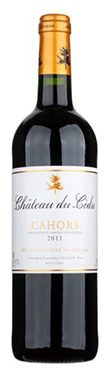

In 1956 the Verhaeghe family first planted grapes in Cahors. In the past two decades brothers Pascal and Jean-Marc have driven the estate to new...
2018
Château du CèdreCahors

Producteurs Plaimont, Le Faite, Saint-Mont, Southwest France, France, 2016
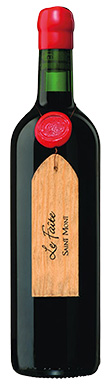
Over the past 10 years, Producteurs Plaimont has confirmed its reputation as one of the powerhouses of French wine-production, yet still proceeds to drive the...
2016
Producteurs PlaimontSaint-Mont
Domaine Ilarria, Irouléguy, Southwest France, France, 2018
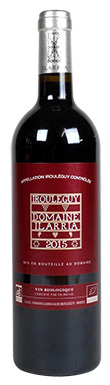
Domaine Ilarria is one of Irouléguy's leading producers. Exhibiting great aromatics this Tannat and Cabernet Sauvignon blend has soaring floral notes, combined with spicy red...
2018
Domaine IlarriaIrouléguy
Domaine Rotier, Renaissance, Gaillac, Southwest France, France, 2019
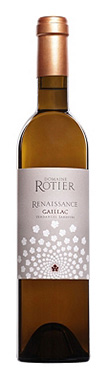
Alain Rotier is a leading Gaillac producer, and the best on the left-bank of the Tarn. On the domaine's gravel soils he focuses on organic...
2019
Domaine RotierGaillac
Château de Tiregand, Pécharmant, Southwest France, France, 2018
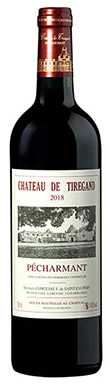
Tiregand is a leading producer in the red-only Bergerac AOP of Pecharmant. Located in the east of Bergerac, the soil here is sand and gravel...
2018
Château de TiregandPécharmant
Domaine Jean-Luc Matha, Cuvée Laïris, Marcillac, Southwest France, France, 2016
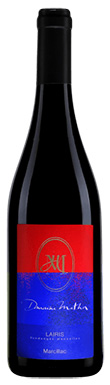
A real 'wine of the land'. Jean-Luc Matha has worked his 16ha estate for 35 years. Organic and biodynamic since 2016, Cuvée Laïris is 100%...
2016
Domaine Jean-Luc MathaMarcillac
Château d'Aydie, Odé d'Aydie, Madiran, Southwest France, France, 2016
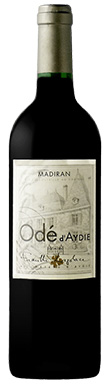
Frederic Laplace was one of the driving forces behind Madiran gaining AOP status in 1948. Chateau d'Aydie remains one of the top producers with 49ha...
2016
Château d'AydieMadiran
Château Tirecul La Gravière, Les Pins, Monbazillac, Southwest France, France, 2020
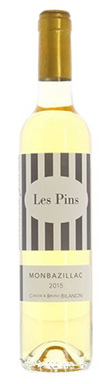
The estate was created by Claudie and Bruno Bilancini in 1992 and covers 10ha on limestone and moisture-retaining clay soils. Muscadelle is Tirecul's speciality with...
2020
Château Tirecul La GravièreMonbazillac
Domaine l'Ancienne Cure, Jour de Fruit, Bergerac, Southwest France, France, 2019
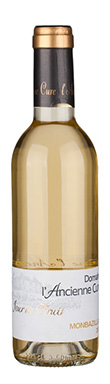
Christian Roche is the fifth-generation winemaker at this family-owned, 50ha estate south of Bergerac. L'Ancienne Cure has been certified organic since 2012. A fine dry...
2019
Domaine l'Ancienne CureBergerac
Domaine Cauhapé, Ballet d'Octobre, Jurançon, Southwest France, France, 2019
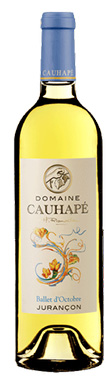
Domaine Cauhapé, a 40ha estate, is generally regarded as the finest producer in Jurançon. Winemaker Henri Ramonteau is a master of both dry and sweet...
2019
Domaine CauhapéJurançon
