
Three Barolo producers having a breakout moment
The best time to have started buying Barolo was 20 years ago but here Jason Tesauro highlights three wineries in the Barolo region you may not have heard of...yet.


Southwest of Alba toward Barolo lies Roddi, a tiny village known for The Path of Poetry and Truffle Dog University, where canines train to hunt the local white and black gold.
Barolo, poetry, and truffles share more than proximity – each takes time to compose and even more to comprehend.
The following aren’t legacy estates with showpiece cantinas – they’re bootstrapped farmers with dirt under their nails and, more importantly, brilliant terroir underfoot. This is Barolo’s real wealth.
These emerging artisans occupy less than 1% of the planted area, but their wines brim with Piedmont’s coveted somewhereness that drives prices and promotes legends.
Roccheviberti

The inevitable latecomer
Claudio Viberti’s father farmed Nebbiolo at the precipice of ‘rocche’, sheer white limestone cliffs between Monforte and Barolo, yet sold the fruit and never bottled under the Viberti name. The family strong-armed a young Claudio into oenology school, but he pursued another path.
In 2002, the land beckoned and the son returned. By then in his early 40s, it took a few years to get his bearings. ‘About five years ago,’ says Claudio, ‘I found my groove and the wines that this land wants to produce. Word-of-mouth is spreading.’
The dramatic sites are precious crus known for perfume, backbone, and ageable elegance – his father’s Rocche di Castiglione grapes were sold to grand houses. In this unique micro-zone, quality is damn near inevitable.
I witnessed a restaurateur from Alba’s exceptional Osteria dei Sognatori load cases and cases into the back of a vintage Fiat. Tourists drink labels, locals drink delights, and even answering to a consorzio with strict parameters, there’s room to take a creative turn.
20,000 bottles; 3.5 hectares; roccheviberti.it
Prandi

The insistent throwback
Family politics and primogeniture conspired to sideline Cristina Marello Prandi. Italian tradition favours firstborn sons – women are the last resort.
Still, Prandi’s hands wouldn’t be pried from where her great-grandfather founded the winery in 1856 on a ridge above the iconic Cannubi hill. In the late-1980s, her uncle transitioned to wine in bulk and thus no Prandi labels emerged as Barolo went global.
Thanks to dogged persistence and dirt-first agronomy, Cristina finally owns part of those vineyards overlooking her home village. ‘Barolo, for me, is my town and then my wine,’ she explains.
When friends and classmates left for adventures abroad, she stayed put. ‘I never tried to escape. My land is my study and my study is my experience.’
Imagine a young Jane Goodall dedicated to grapes instead of chimps. Wunderkind Prandi takes a similarly intuitive, holistic approach – a new expression of old beliefs in soil stewardship and agricultural diversity.
Prandi’s instinct and quiet wildness show in the purity of her wines. ‘We are organic since always. We don’t have a to-do list. There’s no recipe.’
25,000 bottles; 4 hectares; cristinaprandi.com
Cascina Bongiovanni

The committed family
It starts with a balance of labour: Marina Giordano and daughter Sara face the public and deal with trade. The men grow grapes and make wine.
Davide Mozzone might be neurodivergent; his son, Luca, certainly is. Marina sees this as a factor in their success: while others court applause, they pour savant-level focus into their cellar and famed sites of Castiglione Falletto, Serralunga and Monforte.
In generations past, the Bongiovanni family worked for nobiles and sold grapes grown for volume. ‘But when times changed,’ says Mazzone, ‘the only choice became to aim for quality.’ That’s when they shifted to expression, complexity, and ripening seeds.
‘It takes the plants 30 or 40 years to find equilibrium. And you only get 40 or 50 vintages as a winegrower.’ Thirty-three vintages in, Mozzone and his vines reflect a profound harmony, and their portfolio spans Nebbiolo’s full spectrum.
‘We produce something for the table everyday, and for the culture later. Drinkability and ageability – what if you can have both?’ he asks.
Their Barolo is rich reward for those with and without the patience to wait decades.
50,000 bottles; 7 hectares; cascinabongiovanni.it
Italy newsletter
Get the best recommendations, vintage analysis, regional and cultural insights and more delivered to your inbox once a month, helping you to stay up-to-date with the latest in Italian wine.
Breakout Barolo: Six wines to try from these up-and-comers
Related articles
- Cool Barolo: The sites and techniques driving fresher styles in Piedmont
- ‘On its release, it seemed outright futuristic.’ They’ve done it once, now could Gaja do it again for Piedmont’s whites?
- Langhe Nebbiolo and Nebbiolo d’Alba: These 25 bottles prove it’s not all about Barolo
Roccheviberti, Barolo Rocche di Castiglione, Castiglione Falletto, Piedmont, Italy, 2020
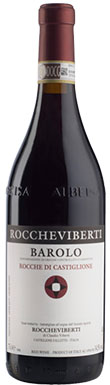

The striking ombre of a bright, candy apple red core transitions to orange and then translucent at the rim. Notes of cooked red and black...
2020
RocchevibertiBarolo Rocche di Castiglione

Roccheviberti, Nebbiolo, Langhe, Piedmont, Italy, 2022
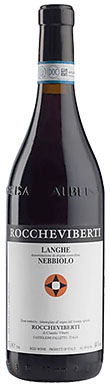
A blend of three crus, this is a ‘baby Barolo’ with ample and wonderful power minus the deeper colour. Rose petals, wild strawberry candies, pepper...
2022
RocchevibertiLanghe
Prandi, Barolo, Piedmont, Italy, 2021
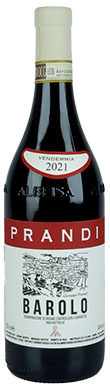
A traditional field-blend of three sites crushed together and macerated for 45 days. The deep core has beautiful clarity and gorgeous perfume, with herbs and...
2021
PrandiBarolo
Prandi, Dolcetto d'Alba, Piedmont, Italy, 2024
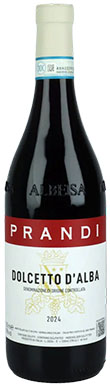
A snappy and al dente entry point into the Barolo zone. Higher-elevation vines and fermentation in concrete with native yeasts gives a well balanced and...
2024
PrandiDolcetto d'Alba
Cascina Bongiovanni, Pernanno, Barolo, Castiglione Falletto, Piedmont, Italy, 2021
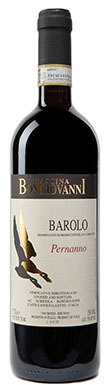
Garnet hues yield to orange near a bright and pinkish onion-skin rim. Aroma of roses, liquorice and bloody rare beef are joined by touches of...
2021
Cascina BongiovanniBarolo
Cascina Bongiovanni, Nebbiolo, Langhe, Piedmont, Italy, 2023
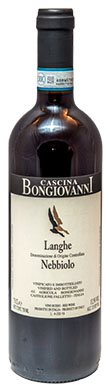
Deep red colour shines with flecks of brick. A perfumed, delicate, young, and fresh wine that’s juicy and inviting. Notes of currant, fig and cherry...
2023
Cascina BongiovanniLanghe
