
Top mature Rioja from our panel tasting


There can be great value on offer in Rioja if you know where to look. See which of the 95 mature Rioja wines in this Decanter panel tasting came out on top, and read an introduction by Pedro Ballesteros Torres MW plus results analysis led by tasting director Christelle Guibert.
Back in the 1850s, the Marquises of Riscal and Murrieta brought Bordeaux know-how on how to age wine to Rioja. The results were so spectacular that Rioja became a recognised fine wine region in less than 20 years.
Quick Link: See all 95 wines from this panel tasting
This is why, until recently, Rioja categorised its quality wines according to ageing time (crianza, reserva and gran reserva), rather than by geographic origin or brand.Nobody knows why those wines have that capacity. Some say it’s because of classic Rioja viticulture, on bush vines with no chemicals.Others speak of traditional winemaking methods, exposing the wines early to oxygenation and then to long periods in old barrels. Finally, some experts talk of exceptional terroirs. But it is also worthy of note that both red and white Rioja wines share this capacity for lengthy ageing.
Scroll down for the results
Easy access
In the 1990s, most (but not all!) wineries followed a programme of replacing old American oak barrels with newer ones, often of French oak, and reducing ageing periods.
The market took enthusiastically to those new styles, with fruit that was much more vibrant, and abundant tannins. However, some experts predicted that the new-wave Riojas would not age as well as their classic siblings.
This tasting includes some of those new-wave wines, and they defy that early criticism.
Wine lovers can find examples of mature Rioja in the form of classic wines that have been aged in oak for a very long time, or post-modern wines made with short ageing in French oak, and all sorts of styles in between.
Some producers keep impressive botelleros, where the bottles rest until the producer decides the wine is ready to drink. Others sell the young wine à la bordelaise, charging the consumer with the effort and the benefit of ageing it in bottle.
It’s not difficult to find old Rioja in the market. Until recently, Spanish people used to offer older wines as a gift of distinction. There was a market for this kind of wine which now seems to be re-emerging.
In addition, the Rioja wine region has never suffered any military invasion: wineries were able to retain stocks undisturbed and release them when matured. There is probably no other wine region in the world with such stocks of old wines. Maybe Rioja is the best entry point into the world of fine old wines.

Event: Taste top Spanish wines at Decanter’s Spain & Portugal Fine Wine Encounter on 24 February in London
The scores
95 wines tasted
Entry criteria: producers and UK agents were invited to submit mature red Rioja wines from the 2010 vintage or older
Exceptional 0
Outstanding 7
Highly Recommended 41
Recommended 44
Commended 1
Fair 2
Poor 0
Faulty 0
The results
Copy below by Christelle Guibert, Decanter tasting director.
There’s exciting stylistic variation in these ready-aged reds. Taste around, find a producer whose approach you like, and enjoy superb value.
View all 95 wines from this panel tasting
The judges were presented with 95 wines across 15 vintages, from 2010 going all the way back to 1978. With more than 55% of the wines below £25, Rioja has a very strong case for being the best value red wine.
Sarah Jane Evans MW pointed out: ‘So often we are drinking wines that were made last year, but these wines give so much pleasure from those extra years’. There’s certainly no region with a better offering of old vintages straight off the shelf.
This though could be about to change as, according to Pedro Ballesteros Torres MW, production of the classic gran reserva style is dwindling. ‘You have to invest a huge amount in order to produce a classic gran reserva – you cannot expect the new generation to wait 10 or 15 years to release a wine. This explains the increase in modern styles of Rioja, with no indication of ageing.’
Evans agreed, adding: ‘Gran reserva may be seen as the old person’s drink, but they are outstanding wines. They are a kind of hidden secret, a bit like how Sherry was regarded in the past.’
During the tasting, there was much discussion on the topic of discerning stylistic differences. ‘It’s really hard,’ said Pierre Mansour. ‘Wine styles revealed more about the winemakers’ and producers’ philosophy than whether a wine was a reserva, a gran reserva or even one with no age requirements. There were 2010 wines that looked and tasted quite young, while others showed much more maturity, so it’s very much a producer- influenced approach.’
Ballesteros Torres said: ‘In the past, if you were not able to sell your crianza, you could sell it as reserva. Changes to legislation mean things have changed, but what is shocking is that we had a lot of gran reserva wines that look like a reserva. The wines are very good, but you are completely lost.’
Indeed, some of the gran reservas in the tasting had been aged for 72 months, while others had been aged for just 24-36 months. Ballesteros Torres recalled when ‘a reserva was 24 months and the gran reservas were much more oxidised. But it is changing, and this is a new style.’
Mansour reiterated: ‘It’s a bit like Burgundy: you follow the producer, depending on what style you prefer – and that’s what makes Rioja so exciting.’
This winemaker-led approach meant that over a wide range of vintages our experts found it very difficult to generalise. In Rioja, as in Burgundy, so much depends on how the producers choose to make the wines.
Evans remarked: ‘You could say a good producer would always produce a good wine. There are different styles, and consumers will fall in love with one kind of producer or another.’ The panel found the tasting exciting, with the best wines offering real pleasure.
Mansour described them as ‘gorgeous, gentle, mellow and silky when fully mature, and with this incredible fresh acidity and vigour.’
In terms of grape varieties, Evans had a preference for the blends: ‘As a consumer, you don’t have to worry what the blend is: producers have thought about what they have in their vineyard and what they do with it’.
Ballesteros Torres added: ‘Garnacha was the grape variety of Rioja Alta traditionally, but it was grubbed up in order to plant Tempranillo. However there are a few producers now producing lovely single-varietal Garnacha.’
All concluded that Rioja is one region where you can buy a normal bottle of wine and find it ready to drink and likely to be delicious, but there are also wines that can be kept in the cellar for even longer.
Our tasters each pick their top 3 from the tasting
Pedro Ballesteros Torres MW
Ballesteros Torres is a DWWA Regional co-Chair for Spain. He studied in Jerez, Burgundy, Napa and Bordeaux, and has a masters in viticulture and oenology. He is a columnist for Vino y Gastronomía and Planeta Vino magazines, and is on the council of the Institute of Masters of Wine, as well as the governing board of the Spanish Tasters’ Union.
La Rioja Alta, 890, Gran Reserva 2005
The most precise picture of what a classic top-quality gran reserva should be: a benchmark style. Simply great – one of those rare inimitable wines. A must for wine connoisseurs. 96 Drink 2018-2030
Bodegas Palacio, Glorioso, Gran Reserva 1978
Take it as an aesthetic pleasure as much as a delicate drink; give it time to fix in your memory, even when the liquid is no longer there. A wine of endless appeal. 95 Drink 2018-2022
Ramón Bilbao, Mirto, 1999
When some top Rioja producers replaced the classic long maturation processes with shorter French oak ageing, and selected riper fruit for their top wines, many critics felt the wines would go downhill quickly. Mirto is a living example of a new-age Rioja that ages gracefully and has long-term potential. 95 Drink 2018-2024
Sarah Jane Evans MW
Evans is co-Chair of the Decanter World Wine Awards. An awarded journalist and author, she was knighted into the Gran Orden de Caballeros del Vino for services to Spanish wine in 2010, and she held the role of chair of the Institute of Masters of Wine from 2014 to 2016. Her new book The Wines of Northern Spain (£30, Infinite Ideas), will be published in April 2018.
La Rioja Alta, 890, Gran Reserva 2005
It would be unfair to call 890 textbook Rioja – the pleasure it gives surpasses anything you could find in a textbook. A glorious blend of truffles and red fruits with velvety tannins. Utterly memorable. 96 Drink 2018-2030
Bodegas Palacio, Glorioso, Gran Reserva 1978
When so many wines are made today and drunk tomorrow (more or less), this is an indulgent joy to demonstrate the pleasures and longevity of fine mature Rioja. 95 Drink 2018-2022
Sierra Cantabria, Amancio, 2008
Named after the great-grandfather of the current Eguren generation, this is a vibrant, forthright style, full of flavour and sweet spices. Beautifully elegant, plenty of years ahead. 94 Drink 2018-2026
Pierre Mansour
Mansour has worked in the wine trade fsince 1995. In 2000 he began overseeing tastings and events for The Wine Society, before becoming a buyer in 2004 sourcing wines from Australia, New Zealand and North America. Since 2014, he has been buying manager for the company, currently buying Champagne, Spanish wines and Sherry.
Bodegas Perica, Oro, Reserva 2010
A modern expression from a bodega I have not come across before. Layered with black fruit, spicy new oak and chunky yet ripe tannins: impressive and voluptuous. 96 Drink 2018-2033
Bodegas Palacio, Glorioso, Gran Reserva 1978
A delight and a treat, this is graceful and mellow with savoury flavours supported by surprising freshness. A perfect example of a fully mature red wine. 95 Drink 2018-2022
Contino, Reserva 2010
Still the original single-vineyard wine from Rioja, the 2010 sits comfortably between modern and traditional. Real clarity, a generous, layered palate perfectly supported by high-quality tannins. Long, and very impressive. 93 Drink 2018-2023
Rioja: the facts
Production figures for the Rioja DOCa (2016)
Area under vine 63,593ha (red grapes 57,998ha)
Grape production 442m kg
Wine production 317.83m litres
Varieties Tempranillo 79.68%, Garnacha 7.12%, Mazuelo 1.99%, Graciano 1.86%, Viura (white) 6.48% Oak barrels 1,326,000
Rioja: know your vintages
2010 Great vintage. The best wines are suited to long cellaring
2009 Very hot, saved by late rains. The best are great, but most not likely to last long
2008 Cool, with lots of rain. top wines are elegant. Particularly suited for gran reservas
2007 Cold, late year preceded by long, slow ripening. Lower alcohols and good freshness. Drink soon
2006 The drought became worse. average year, some good wines
2005 An excellent vintage, although more marked by drought
2004 Widely considered excellent; great capacity to age
Older Up to 1964, if kept in good conditions many vintages may well be excellent. then 1970, ’75, ’81 and ’82 are generally the vintages to try, up until 1994 and 1995, the renaissance vintages, and 2001, the dream vintage
The top rated mature Rioja from the panel tasting:
La Rioja Alta, 890, Rioja, Northern Spain, Spain, 2005
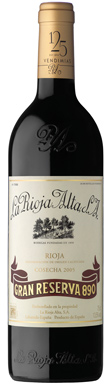

Founded in 1890 as a consortium of five families, La Rioja Alta is an integral part of Haro’s Barrio de la Estación district, with its...
2005
La Rioja AltaRioja

Bodegas Perica, Oro, Rioja, Northern Spain, Spain, 2010
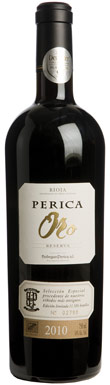
This Rioja exudes seriousness; it is smoky and even exotic with chalky ripe tannins coating your mouth. Perhaps a tad too acidic, but the outburst...
2010
Bodegas PericaRioja
CVNE, Imperial, Rioja, Northern Spain, Spain, 2009
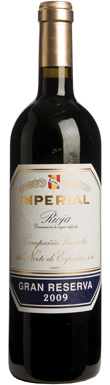
Imperial was first bottled in 1920 and has gained a reputation as one of the best known wines of Rioja. The name traces its origins...
2009
CVNERioja
La Rioja Alta, 904, Rioja, Northern Spain, Spain, 1997
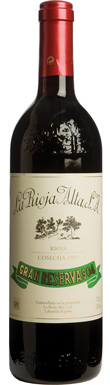
This vintage of La Rioja Alta’s 904 highlights its difference as a producer. A ‘good’ rated vintage didn’t stop this quality-conscious winery from producing a...
1997
La Rioja AltaRioja
Bodegas Ramón Bilbao, Mirto, Rioja, Northern Spain, Spain, 1999
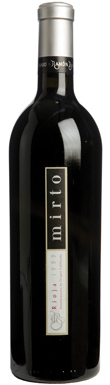
Although Rodolfo has not yet withdrawn from the formal DOCa Classification, he does not cleave to the hierarchy formalised by the Crianza/Reserva/ Gran Reserva triptych,...
1999
Bodegas Ramón BilbaoRioja
Bodegas de la Marquesa, Valserrano Gran Reserva, Rioja, Northern Spain, Spain, 2010
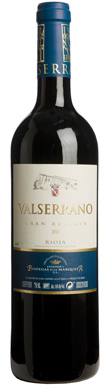
91
Refined cedar aromas, while the palate is energetic and juicy, building to a fine rasp of youthful tannins. Long and persuasive, with all the ingredients to age well.
2010
Bodegas de la MarquesaRioja
