
Around Spain in 10 Garnachas
Happy in Spain’s often testing rural terrain, this once unfavoured red variety is enjoying a surge in popularity among growers and critics alike, as regional authenticity finds increasing favour. David Williams selects his 10 top producers and their wines of the moment.


The story of Garnacha in Spain over the past century is a classic of the rise-and-fall genre. We might start it among the worried wine-growers in turn-of-the-20th-century Rioja. Phylloxera had finally arrived in the region, having first been recorded in Spain’s south in the mid-1870s, and it brought to an end a period when Rioja – and many other parts of northern Spain – had enjoyed a vinous export boom, as the French (and other drinkers of French wine) looked south to find vineyards to replace their own phylloxera-ravaged vines. Now that the plague had taken them too, Rioja’s growers were replanting.
Garnacha, so hardy and generously productive, was there for them. Elsewhere in Spain, other producers were making similar decisions in their vineyards. And so, in the first seven decades of the 20th century, Garnacha became the default choice of the Spanish wine-grower. It was a variety that could cope with the extremes of heat, wind and dust of the summers experienced in so many of Spain’s main growing areas. Thin of skin but tough of character, an early budder and a late ripener, it could, in bush-vine form, cope without irrigation even in the driest of places, and still provide grapes that yielded wines of great juicy sweetness, high alcohol and easy tannin.
‘Today, Garnacha is very much back, as arguably Spain’s most exciting indigenous red grape variety’
As popular as it became for growers, Garnacha had never enjoyed the same recognition from consumers, if only because so few of them even knew they were drinking it. It was generally hidden in blends, and rarely appeared on wine labels. And as the new wave of quality-minded Spanish winemakers began to make their way in the heady post-Franco days of the 1980s, Garnacha fell from favour: the area covered by the variety fell from more than 170,000ha in 1980 to 63,000ha in the mid-2010s (Source: Robinson & Harding, The Oxford Companion to Wine), replaced by the newly fashionable international varieties and – for the producers looking to grab some of Rioja’s stardust – Tempranillo.
But the seeds of Garnacha’s modern-day recovery were already being sown in the years of its decline. In its original northeastern heartland in Aragón – birthplace of Garnacha – and in Priorat in Catalonia, producers began to reassess what was possible from the variety, and to realise what a precious resource the very old, often abandoned bush-vine vineyards of the variety were. It’s a process that has been repeated in the early 21st century by winemakers exploring the Sierra de Gredos mountains around Madrid.
Today, Garnacha is very much back, as arguably Spain’s most exciting indigenous red grape variety. In one mode, it makes some of the best-value red wines in the world in an exuberantly fruity, juicy style. At the other extreme, it makes gloriously light and ethereal, terroir-revealing styles that have seen it dubbed ‘the Pinot Noir of the south’. Between those poles, you’ll find a multiplicity of styles that take you through some of Spain’s most thrilling vinous terrain.
Bodegas Borsão – Campo de Borja
‘The empire of Garnacha.’ ‘The heartland of Garnacha.’ Slightly corny PR lines, perhaps, but you can understand why both the region and the producer of the first wine on this tour of Iberian Garnacha might have adopted them.
Just to the west of the city of Zaragoza, Campo de Borja is right in the heart of the province of Aragón in northeast Spain – ampelographers believe Garnacha originated here. And the variety retains a disproportionate grip on the local vineyards today: more than two-thirds of the total 7,500ha of vines in the Campo de Borja DO are devoted to Garnacha; between them, the 375 member wine-growers of the Borsão cooperative have a third of them.
Given the imperial scale of their production, what’s always been remarkable about Bodegas Borsão (and Campo de Borja more generally) is the consistent quality of its Garnacha wines – and their prices. Like producers in other Spanish wine categories that have been undervalued in recent history, such as Cava and Sherry, Borsão’s line-up of supermarket own-labels regularly competes for unofficial titles of the world’s best-value wines, while the straight Garnacha it produces under its own name consistently offers a remarkable level of gushing, brambly fruitiness per pound.
El Escocés Volante, La Multa – Catatayud
Another Aragón DO with a claim on the ‘empire of Garnacha’ title, Calatayud provides precisely the kind of tough terrain in which Garnacha seems to take a kind of perverse pleasure in thriving: windy, arid, hot. That makes for a rich and powerful style, but not, in the right hands, overbearingly so. Many of the frequently very old (50 years-plus) vineyards are planted at altitudes of up to 800m on the slopes of the Sierra de la Virgen mountains, and the wide variation in day- and night-time temperatures here allows for wines that balance concentration and intensity with freshness and lift.
Certainly, that’s the case with the many Garnachas produced in the region by Norrel Robertson, the Scottish Master of Wine and Calatayud resident behind the El Escocés Volante (‘The Flying Scotsman’) label. Robertson works with growers throughout the region to unearth blocks of promising old-vine Garnacha, which he turns into one of the most consistent Spanish ranges around. It includes the exuberant La Multa, which hails from vines planted on red clay over chalky soils at altitudes between 700m and 800m in the Ribota Valley.
Proyecto Garnachas, La Garnacha Salvaje del Moncayo – Ribera del Queiles
Founded in 1999 by entrepreneur José Miguel Arambarri, Vintae is one of Europe’s most enterprising larger producers. Its range of smartly packaged wines includes the reliable modern Rioja brand López de Haro, the brand Matsu from Toro (also known as ‘that Spanish brand at Majestic with the photos of guys in hats on the labels’) and a roving, multi-regional tribute to the subject of this article, Proyecto Garnachas.
The range currently takes in six Garnacha wines: four from various sites around Aragón, one from the village of Cardenas in La Rioja and one from Priorat in Catalonia. Each is distinguished by the venerable age of the vines (up to 100 years old) and by a light-touch winemaking philosophy that aims for (and generally achieves) freshness, naturalness and gentle extraction – and, particularly in the case of La Salvaje, remarkable value.
Viña Zorzal – Navarra
Producers in Navarra have sometimes struggled to have their voices heard above those of the noisy neighbours in Rioja. Their strongest claim to fame has taken the form of appealingly full-flavoured but balanced rosés. But when it comes to reds, a somewhat scattergun approach based, over the past couple of decades, on Tempranillo and an array of international varieties has brought a reputation for so-so competence rather than thrilling wines with a distinct sense of place.
That the Navarra region is capable of much more is abundantly clear to anyone who tastes the wines of Zorzal. Founded 30 years ago by winemaker Antonio Sanz and now run by his sons Iñaki, Xabier and Mikel, Zorzal originally captured attention with its vivid Graciano. But it has gone on to become a leader of the local renaissance of Garnacha, a variety that accounted for 90% of Navarra’s vineyard as recently as 1980, but has since dwindled to about 25%.
The key for Zorzal, as with so much great modern Spanish Garnacha, is vine age: in vineyards planted at around 500m altitude in the village of Fitero, Zorzal has bush vines that range up to a remarkable 115 years old. Since the mid-2010s, this is where the brothers have been making Malayeto and Corral de los Altos, a pair of astonishingly pure and fragrant single-parcel Garnachas that have quickly established themselves, alongside fellow Navarra Garnacha maestros Domaines Lupier, as among the best in Spain.
Bodegas Aldonia, 100 – Rioja
Rioja is all but synonymous with Tempranillo. With just shy of 88% of the local vineyard, it’s a region-to-grape variety bond that’s every bit as strong as Malbec and Mendoza, or Burgundy and Pinot Noir. But it’s not the only red grape in town. The majority of Riojas are blends of Tempranillo with small proportions of one or all of the colour-giving Mazuelo (aka Carignan); the perfume-and-structure-bringing Graciano; or the fleshy, red-fruit-juicy Garnacha. Each of those bit-part players has been given a starring role in their own varietal wines, but it’s the last of the trio, Garnacha, that is arguably making the most striking wines of the bunch.
There’s a certain irony in that. Whereas in parts of Aragón and Navarra, native Garnacha has been edged out by Tempranillo and international varieties, in Rioja, Garnacha is the relatively new kid on the block. It arrived in the region only in the wake of phylloxera in the early 20th century, prized, as elsewhere, for its hardiness and vigour, rather than its qualitative potential. Today, it accounts for about 7% of the total Rioja vineyard, concentrated in the warm, dry eastern Rioja Oriental sub-region, home to Garnacha specialist Aldonia’s vineyards. It’s a fourth-generation family firm that used to sell its grapes to the local co-op until the current generation, brothers Mario and Iván Santos, built a winery to make their own elegant Garnacha-based wines from their 16ha of vineyards. The undoubted highlight of their efforts is a 100% Garnacha, Aldonia 100, based on 100-year-old vines planted at 800m altitude.
Familia Nin Ortiz, Nit de Nin Coma d’en Romeu – Priorat
The revival of Priorat by a fraternal band of committed and intrepid young winemakers in the late 1980s and early 1990s is one of the great romantic stories of modern Spanish wine. But this tiny Catalonian region – it has less than 2,000ha in total – has moved on from the somewhat caricatured wave of big and bruising Parker-pleasing wines that followed the original founders.
A new wave of producers has been making wines of much greater finesse and expression, without sacrificing their essential depth and Mediterranean warmth. Among the best of new Priorat is the husband-and-wife team of Carles Ortiz and Ester Nin, a grower and winemaker who met in 2007 and combined their talents and vineyards to create Familia Nin Ortiz. The vineyard holdings conform to a classic idea of Priorat: vertiginously steep terraces, with restored old vines of Garnacha and Carignan on the region’s famous llicorella slate soils.
The methods are very 21st century: biodynamic in the vineyard, and then verging on natural in the cellar, with a range of different winemaking vessels from concrete to amphorae to, in the case of their stellar single-vineyard 100% Grenache, neutral 600-litre oak foudres.

Acústic Celler, Auditori Vinyes Velles Magiques de Garnatxa – Montsant
Encircling Priorat in the rugged south of Catalonia, Monstant may not (yet) have quite the same international reputation as its neighbour, or the same number of highly priced wines from superstar cult producers. But its facility with Garnacha is no less impressive – and, for now at least, the wines are somewhat more attractively priced. One Montsant producer verging on the cultish is Acústic Celler. As the name of his venture suggests, since 2004 Albert Jané Ubeda has been producing wines without crass winemaking ‘amplification’, from a patchwork of small vineyard sites (Carignan as well as Garnacha) in Montsant, also making his way into Priorat with superb results.
The Montsant vines range between 30 and 105 years old, and are planted in stubbornly poor stony soils. Among his most treasured spots are those planted between 1920 and 1940 that he uses for his uncompromisingly brilliant 100% Garnatxa (to use the Catalan spelling), which he ages in a mix of new and used French oak for a year.
Daniel Jiménez-Landi, Las Uvas de la Ira – Mentrida
Garnacha – and Grenache – is justly famous for being able to turn on that gushing stream of rich fruitiness and produce wines of epic scale and depth in the driest, dustiest, hottest and windiest conditions, from Châteauneuf-du-Pape to the Barossa. But in recent years, an increasing number of winemakers have been focusing on its ability to create something altogether more subtle, slinky and pretty – a style that is neatly summed up by the phrase ‘Pinot Noir of the south’.
In Spain, the undisputed king of this new Burgundian style of Garnacha is Daniel Jiménez-Landi. Having started his winemaking career at the family firm in Méntrida, Jiménez-Landi branched out on his own in the 2010s.
The wines he made under his own eponymous label and as part of Comando G – his collaboration with fellow winemaker Fernando García – have been instrumental in raising the profile of the Gredos region.
Currently not an official DO, Gredos follows the mountain range of the same name across a series of valleys and takes in three regions (Vino de la Tierra de Castilla, DO Vinos de Madrid and DO Méntrida) and a patchwork of high-altitude, old Garnacha vines, many of them abandoned (or merely producing rustic table wines) until recently. Landi himself works a fragmented 7ha of 60- to 80-year-old vines to produce his gloriously ethereal wines, all herb, earth and silky, nimble tannin.

4 Monos, GR10 – Vinos de Madrid
A second essential stop in the Sierra de Gredos takes us to the four monkeys (4 Monos): four friends who met while hiking in the mountains on the very trail (the GR10) that lends its name to their entry-level bottling. The four went on to buy 5ha of vineyards in the Gredos, with two members – husband-and-wife duo Javier García and Laura Robles – taking on the responsibility for winemaking and vineyard tending and sourcing.
A classic boutique garagiste outfit, the Monos have become increasingly professionalised. With their own 5ha now supplemented by grapes sourced from an additional 5ha owned by partner growers, they make a range of arrestingly pure Garnachas (plus a no-less-wonderful white from the local Albillo variety) from sites ranging in altitude between 800m and 1,000m above sea level. The resulting wines have a distinct Gredos, whole-bunch signature of Burgundian lightness and silkiness, red fruit and flashes of wild herb.
Bodega Mustiguillo, La Garnacha de Mustiguillo – Valencia
Neither the region nor the producer at the last stop on this Garnacha trail are strongly associated with Garnacha. Indeed, Toni Sarrión, the owner, winemaker and general driving force at Mustiguillo, is renowned for the work he’s done in raising expectations about what the local red grape variety Bobal can do.
But in his vineyards high up in the hills (800m) above the Mediterranean, Sarrión has a small plot of bush-vine, dry-farmed Garnacha, planted, amid a sea of Bobal, in the 1970s on sandy-chalky soils over limestone. He knew then that they were capable of making something rather special. Handpicked and fermented in 80hl oak tanks with 20% whole stem included, the resulting wine is a distinctive expression of a beautiful place, and yet another example of Garnacha’s sun-loving adaptability.
David Williams is a widely published wine writer, author and judge, who lives in Spain. He is a founding member of The Wine Gang.
David Williams’ top 10 Garnachas
Família Nin-Ortiz, Nit de Nin, Priorat, Catalonia, Spain, 2017
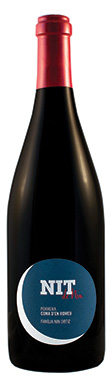

Brilliantly natural Priorat that doesn’t stint on the savoury-meaty intensity and complex, brooding dark-fruit and olive-tapenade flavours. It has inner life and energy, too, with...
2017
Família Nin-OrtizPriorat

Acústic Celler, Auditori Vinyes Velles Magiques de Garnatxa, Montsant, Catalonia, Spain, 2016
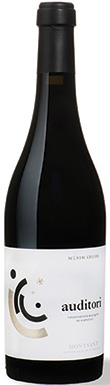
Vines up to 100 years old. A powerful and evocative red with an arresting seam of freshness, finely textured tannins and herb-inflected raspberry, blackberry and...
2016
Acústic CellerMontsant
Daniel Gómez Jiménez-Landi, Las Uvas de la Ira, Méntrida, Spain, 2017
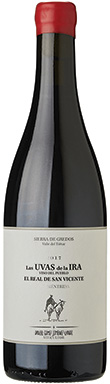
The name translates as ‘the grapes of wrath’, but they produce something wildly beautiful here, with a windswept mix of dried earthiness and vermouth-like bitterness...
2017
Daniel Gómez Jiménez-Landi
4 Monos, GR10, Madrid, Spain, 2016
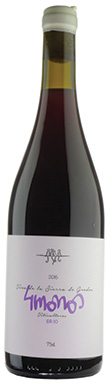
Lithe, even light in feel, but with enormous personality and depth – a quintessential modern Spanish Garnacha (blended with 12% Cariñena and 3% Syrah). Delightful...
2016
4 Monos
Mustiguillo, La Garnacha de Mustiguillo, Valencia, Spain, 2017
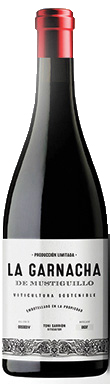
Fluent, almost graceful in feel but with real depth and complexity, this old-vine southeastern take on Garnacha opens with a fragrant, floral nose leading to...
2017
Mustiguillo
El Escocés Volante, La Multa Garnacha, Calatayud, Spain, 2017
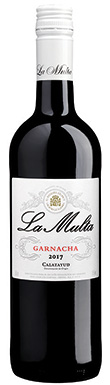
One of many superb – and superbly priced – Garnacha bottlings from the flying Scotsman, Norrel Robertson MW, this wine is soft and generous in...
2017
El Escocés Volante
Aldonia, 100, Rioja, Northern Spain, Spain, 2016
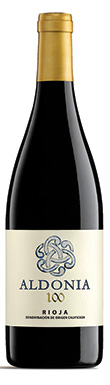
A very different take on Rioja, this 100% Garnacha is all about the pure and very pretty raspberry fruit presented with subtle herbal freshness, slick,...
2016
AldoniaRioja
Proyecto Garnachas, La Garnacha Salvaje del Moncayo, Aragón, Spain, 2017
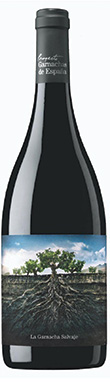
Wild by name and wild by nature, this splendid old-vine Garnacha has a real sense of mountain freshness and scrubland herbiness to go with its...
2017
Proyecto Garnachas
Viña Zorzal, Garnacha, Navarra, Spain, 2018
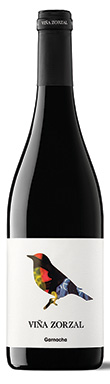
Bright and beautiful Garnacha in unoaked, uninhibitedly fruit-driven mode, with finger-staining bright berry fruitiness and a soft and supple palate that scores very highly on...
2018
Viña Zorzal
Borsão, Garnacha, Campo de Borja, Spain, 2018
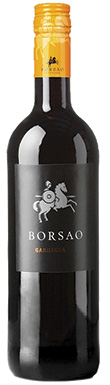
Year in, year out, one of the best-value reds around – a classic, no-fuss, fruit-forward Garnacha with tumble out-the-glass, vivid brambly fruit, a touch of...
2018
Borsão
