
Top Stellenbosch Cabernet Sauvignon: Panel tasting results


Thirty-five wines were 'highly recommended' by our expert panel following this blind tasting. See the full report, and tasting notes for all wines, below.
64 Stellenbosch Cabernet Sauvignon wines tasted, with 35 Highly Recommended by our panel of Tim Atkin MW, John Hoskins MW and Greg Sherwood MW
The summary
Go straight to the wines
A solid performance, if not exciting. Although these wines didn’t quite live up to our judges’ high expectations, there is good value to be found, says Tim Atkin MW…
Even professional, palate-hardened tasters look forward to some events more than others. It’s no exaggeration to say that the panel approached this range of Stellenbosch Cabernets with lip-smacking excitement.
The reason: the 2015 vintage, widely touted as the greatest red wine harvest since 2009, was heavily represented, with 33 of the 64 Cabernet Sauvignon and Cabernet-dominated wines on show. Greg Sherwood MW and I had tasted a number of these wines sighted in the Cape and were convinced we were in for a treat.
For some reason, it didn’t quite work out that way. It may have been the sweltering weather – a London day that had more in common with the Swartland than Stellenbosch – or maybe it was just our overwrought sense of anticipation. We found a handful of very good wines and a bigger number of good ones, but the tasting didn’t shoot the lights out the way we imagined.
What went wrong? John Hoskins MW wondered whether we were tasting some wines, especially the 2015s, at the wrong moment in their evolution, caught between the end of a primary fruit stage and the beginning of significant bottle development, between infancy and pimply adolescence as it were.
Sherwood rightly pointed out that we were also missing some of the country’s very top wines – Paul Sauer from Kanonkop, Delaire Graff’s Laurence Graff Reserve, Rust en Vrede’s Single Vineyard bottling, Stark-Condé’s Oude Nektar, Tokara’s Telos, Thelema’s Rabelais and Vergelegen’s V – to name a handful of personal favourites – were all not submitted.
Our criticisms were overripeness, verging on oxidation in some cases, a heavy hand with oak, some brettanomyces and lack of freshness. But maybe we were being a little harsh. Concentration and fruit weight are part of South Africa’s appeal. We shouldn’t expect these wines to taste like Bordeaux. Talking of which, they generally offer considerably better value than wines from the Gironde – one of our 35 Highly Recommended wines retails above £60, but eight can be bought for less than £16, putting them in cru bourgeois or generic Bordeaux territory, price wise. Also on the plus side, very few wines showed the effects of leafroll virus (a combination of overripe and underripe characters).
We may not have found any exceptional wines on this occasion, but the next tier down included a number of famous Stellenbosch Cabernet producers, such as Boekenhoutskloof, Delaire Graff, Glenelly, Hartenberg, Jordan, Rustenberg, Stark-Condé, Thelema, Waterford and Warwick, as well as a few unfamiliar names (at least to me) in Asara, De Kleine Wijn Koöp, Lyngrove, Pella, Super Single Vineyards and Rainbow’s End.
The 2015 vintage had the biggest number of wines in the tasting, but the year that over-performed was arguably 2014, a much cooler, less widely praised vintage that made fresher, lighter wines. There were fewer 2016s in the line-up, largely because many of the Cabernets from that torrid year have yet to be released.
Was there a recognisable Stellenbosch style? Not really. It’s such a big and diverse area, with so much Cabernet in the ground and marked differences in terroir, that this was always going to be a heterogeneous tasting. It was a good one too though, at least in parts. But we all agreed that South Africa’s whites are the country’s stronger suit.
See all of the wines in this Stellenbosch Cabernet tasting here
The overall scores:
64 wines tasted
Entry criteria: producers and UK agents were invited to submit their latest release Cabernet Sauvignon reds (85% minimum), with a UK retail price of at least £12
Exceptional 0
Outstanding 0
Highly Recommended 35
Recommended 19
Commended 3
Fair 6
Poor 0
Faulty 1
Our tasters each pick their top 3 wines from the tasting:
Tim Atkin MW
An award-winning writer, photographer, broadcaster and taster, Atkin became a Master of Wine in 2001. His website, timatkin.com, includes an in-depth annual report on the South African wine scene. He has been writing about the Cape since 1991 and is regarded as a leading commentators on its wines.
KWV, The Mentors 2014
KWV now boasts one of the best viticultural and winemaking teams in the industry. Like the rest of The Mentors range, this is a high-end and small-batch. 2014 wasn’t the easiest vintage, so the quality is noteworthy. 96 Drink 2019-2024
Waterford Estate 2015
Top young winemaker Mark Le Roux works with the experienced Kevin Arnold. Their Bordeaux blend includes small amounts of Merlot, Petit Verdot and Cabernet Franc. By the standards of the Helderberg, this is graceful and very well balanced. 96 Drink 2019-2025
Le Riche, Reserve 2015
Christo Le Riche makes this wine with fruit from three Stellenbosch sub-regions. A structured, ageworthy expression of the wonderful 2015 vintage. 94 Drink 2019-2028
John Hoskins MW
Hoskins was born into a family of hoteliers but studied English literature before wine drew him into the family business. In 1994 he became the first person in the restaurant industry to become a Master of Wine. He owns The Old Bridge hotel and restaurant in Cambridgeshire, which also includes an on-site wine shop.
Stark Condé, Three Pines, Jonkershoek Valley 2015
A cooler site, and the inclusion of Petit Verdot and Merlot helped to make this one of the best 2015s we tried. Freshness and elegance were (for once) to the fore. 93 Drink 2019-2027
Rustenberg, Peter Barlow 2015
I was delighted to see that I had given a good mark to this young Peter Barlow. It’s always a wine that starts slowly, but is built to last for at least 20 years. Just don’t touch it until 2020 at the earliest. 92 Drink 2019-2022
Waterkloof, Circumstance 2015
Biodynamic Cabernet at under 14% alcohol and costing less than £20 – what’s not to love? This was also one of the most vibrant, lively and genuinely exciting wines in the whole tasting. 92 Drink 2019-2025
Greg Sherwood MW
Sherwood completed his MW qualification in 2007 and as the senior buyer for fine wines at Handford Wines, he has extensive tasting experience. He is a regular judge at DWWA, SA Top 100, Nederburg Wine Auction and WOSA World Sommelier Awards, and writes the popular fine wine blog www.gregsherwoodmw.com.
Oldenburg Vineyards, Reserve, Banghoek 2015
This elegantly herbaceous style is wonderfully Old World in character. Definitely a Stellenbosch star to watch now that genius Nic van Aarde is joining the winery from Warwick. May the magic continue! 94 Drink 2019-2025
Thelema Mountain Vineyards 2015
Thelema is an undisputed heavyweight champion of pure, single-varietal Cabernet Sauvignon in the Cape. This wonderfully aromatic expression may be a little tight on purchase, but it will certainly reward ageing – one not to be missed. 93 Drink 2019-2025
Le Riche, Reserve 2015
Father and son Etienne and Christo le Riche deliver benchmark Cabernet Sauvignons with a superb, ageworthy track record. The Reserve is an icon wine in waiting. 92 Drink 2019-2024
About Stellenbosch Cabernet Sauvignon
Syrah may be trendier, Cinsault more historic, Pinotage more distinctive, but most informed observers would agree that Cabernet Sauvignon is the Cape’s most distinguished red grape. It’s also the most planted, occupying 11% of the country’s vineyards, behind Chenin Blanc and Colombard, but ahead of all the other reds.
The variety is grown all over South Africa, but one region stands out for the quality and range of its Cabernet Sauvignons and Bordeaux style blends: Stellenbosch. The country’s second-oldest wine region grows plenty of other grapes too, but Cabernet is its flagship, partly thanks to its association with famous estates such as Kanonkop, Meerlust, Rustenberg and Vergelegen, but also because of the quality and diversity of what it produces in this painterly, mountainous area.
In this way, Stellenbosch is South Africa’s equivalent of the Napa or Maipo Valleys. Without Cabernet, Stellenbosch wouldn’t be Stellenbosch. And without Stellenbosch, South Africa wouldn’t be South Africa.
Multiple identities
Stellenbosch likes to present a generic image, not least where Cabernet Sauvignon is concerned – there’s even a self-appointed group called the Stellenbosch Cabernet Collective – but it’s a big region, with 15,252ha in total, and 3,002ha of that planted to Cabernet, not all of which is equally well suited to the variety.
In other words, there is more than one Stellenbosch, and there is more than one Stellenbosch Cabernet Sauvignon. It’s not just a question of house style – De Toren and Reyneke are next door to each other, but produce very different red wines – it’s also a question of soil, altitude, aspect and proximity to the cool breezes of False Bay.
Other crucial factors are blending – Cabernet is paired with the other four Bordeaux varieties (Merlot, Cabernet Franc, Petit Verdot and Malbec) as well as Pinotage and Cinsault – picking dates, the age of a vineyard (most are young) and the amount of leafroll disease they contain. Late-season varieties like Cabernet Sauvignon are much more affected by the virus than early-ripening ones.
Officially, Stellenbosch is a district made up of seven wards but the legislation doesn’t reflect reality. The Helderberg makes some of the region’s best Cabernets, as does Stellenbosch Kloof, but neither is a ward. To do justice to Stellenbosch’s sub-regions, Faure, Firgrove and Somerset West should also be included.
That’s arguably the next stage for Stellenbosch: to move beyond a generic message to one that names its best vineyards. When it does, you can be sure that a significant percentage will be planted with Cabernet.
South African Cabs: the facts
Cabernet planted 10,360ha (SA total all varieties 95,545ha), divided principally between Stellenbosch (3,002ha), Paarl (2,394ha), Swartland (1,864ha), Robertson (1,272ha), Breedekloof (705ha) and Olifants River (472ha)
Stellenbosch wards Banghoek, Bottelary, Devon Valley, Jonkershoek, Papegaaiberg, Polkadraai Hills and Simonsberg-Stellenbosch
Principal Stellenbosch soil types Sandstone (produces more structured wines); decomposed granite (lighter, more focused wines)
Stellenbosch Cabernet Sauvignon: know your vintages
2016 A tricky year marked by hot, dry conditions and drought. Picking dates were very important, but the top wines are very good
2015 Superb wines built for long ageing. One of the Cape’s best ever vintages, with near-perfect growing conditions
2014 A cooler and wetter year that, at its best, produced elegant ‘European-style’ Cabs. Pick and choose your producer with care 2013 A very late harvest this year gave the biggest ever crop in South Africa. Generally well-balanced wines, ageing well
2012 Lack of water, especially during flowering, reduced crop levels, but quality is generally good to very good. Drinking well now
2011 A vintage of climatic fluctuations – the leading producers tended to cope best with the variable conditions
Top wines from the panel tasting:
More recently published articles that you may like:
Rioja renegades: 10 producers writing their own rules
Château Prieuré-Lichine: New reviews show a gear shift
KWV, The Mentors Cabernet Sauvignon, Stellenbosch, South Africa, 2014
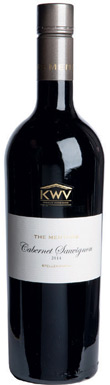

Ripe, opulent and showy yet lively and fresher than most, offering fine textural balance and finesse against a backdrop of finely-polished tannins. Long, classy and...
2014
KWV

Waterford Estate, Cabernet Sauvignon, Stellenbosch, South Africa, 2015
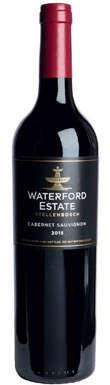
This 49ha estate is located between the Simonsberg and Helderberg mountains. A fine Cape Cabernet; restrained yet intense, with blackcurrant leaf on the nose and...
2015
Waterford Estate
Strydom, Rex Cabernet Sauvignon, Stellenbosch, South Africa, 2014
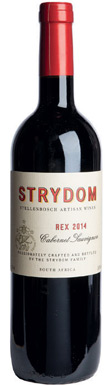
Spicy and serious yet leafy and refreshing, this bristles with vibrant blackcurrant fruit, uplifting acidity and polished tannins — deep and complex, yet elegant.
2014
Strydom
Stark-Conde, Three Pines Cabernet Sauvignon, Jonkershoek Valley, Stellenbosch, South Africa, 2015
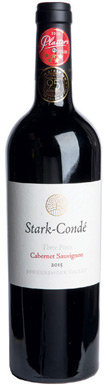
Plush yet finely-poised, a super-ripe nose leads to an expansive but harmonious palate with subtle oak encircling herbal-toned black fruit. Impressive and classically proportioned.
2015
Stark-CondeJonkershoek Valley
Waterkloof, Circumstance Cabernet Sauvignon, Stellenbosch, South Africa, 2015
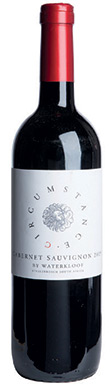
Rich, opulent nose of exotic fruit, loganberry and fleshy plums. Finely knit and fleshy with plenty of crème de cassis purity, piquant tannins and a...
2015
Waterkloof
Le Riche Reserve, Cabernet Sauvignon, Stellenbosch, South Africa
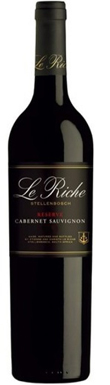
93
According to Etienne Le Riche, this is one of his greatest Cabernet Sauvignons, which might explain why it was John Platter’s Red Wine of the Year in 2005. Terrific elegance and definition here, with flavours of grilled meat, cassis, licquorice, graphite and tobacco. Beautifully evolved undergrowth notes and ripe sweet tannins. A blend of Cabernet fruit from Firgrove, and Jonkershoek this was made in classical open top concrete fermenters. Ready now, but plenty of life and pleasure still to come. A corker of a Cabernet.
Le Riche Reserve
Warwick Estate, The Blue Lady, Stellenbosch, South Africa, 2015
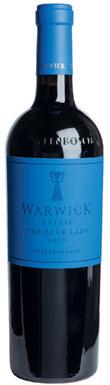
Intriguing, multi-layered nose of violet, crème de cassis, blueberry and black cherry. Palate has impressive focus, with pristine fruit and wonderful textural harmony; class in...
2015
Warwick Estate
