
Versatility of Vermentino: top dry white picks from across Italy
One of Italy’s wealth of dry whites, Vermentino can really conjure up the Mediterranean, and on your table it’s the perfect foil for fish, seafood and light pasta dishes of all kinds. Richard Baudains tours its Italian homelands and recommends 10 top wines to try.


Winemakers enjoy working with Vermentino. It is a very complete variety which delivers aroma, fruit flavour, body and structure. It is a wine of immediate appeal, but at the same time it has a slightly elusive complexity that keeps you coming back to it.
Vermentino is a fish wine par excellence. It is a dream partner to oysters and raw shellfish in general, and sails along next to squid and octopus dishes. It connects with the local food of its places of origin, so for instance it is a superb wine to drink with a basil-laden Genovese pasta al pesto, while the more robust wines can even handle the tomato-based fish soups of the coast.
Scroll down to see Richard Baudains’ tasting notes and scores for 10 top Italian Vermentinos
So if you are looking for a highly versatile alternative to the international whites for your next fish supper, Vermentino could be the one. And a footnote: with a little searching, you can even find a sparkling version for the aperitif.
Versatile Vermentino
This is a naturally vigorous variety, and if heavily cropped it makes very simple wines, but even in these light and ephemeral styles it maintains an easy-drinking attraction.
Depending on the zone of origin and the producers’ harvesting choices, its aromas may be herbaceous, or sweet and floral, or they may recall Mediterranean scrub. The fruit range goes from the more citrussy to ripe and peachy, and in warmer areas to full-on tropical.
The common denominator, perceptible to a greater or lesser degree according to the region, is the minerally, saline note which marks out Vermentino from other white varieties.
Alcohol levels can be generous, but they are balanced by acidity which gives the palate a succulent, juicy quality. Drinking the current vintage is fine, but with an extra year in the bottle the best wines have greater focus, and older wines often develop a petrolly, Riesling-like quality.
Winemakers tend to agree about the basic approach to vinification. Cold skin-contact is widely used to intensify aroma, and ageing on the fine lees is also standard practice. Where opinions differ is on the use of oak.
Consultant Lorenzo Landi, who makes Vermentino in the Maremma and in Sardinia, feels that oak clashes with the varietal aromas rather than complementing them, and other leading winemakers such as Luca d’Attoma and Emiliano Falsini hold the same view.
There are, however, high-profile Tuscan Vermentinos that ferment and/or age in oak. The top-of-the-range wines from the ColleMassari group, where Maurizio Castelli consults, have more than a lick of oak about them, and Leonardo Salustri ages part of his exceptional Inès in barriques (he bottles it in magnum, and only in the best vintages).
In Sardinia, Capichera claims to have been the first to introduce barrique ageing to its Vermentino – a late-harvest selection – and other producers of late-harvest wines have also adopted the practice with, it has to be said, successful results.
In Italy today, Vermentino appears in 28 DOCs and innumerable IGTs up and down the country, but production is limited and rather random outside the long-established homes of the variety: Sardinia, Tuscany and Liguria.
Sardinia
In Sardinia, plantings of Vermentino have exploded, long since overtaking the production of red wine on the island and today representing an estimated 70% of the total surface area planted to the variety in Italy.
At the top of the quality pyramid is Vermentino di Gallura, Italy’s only DOCG for the variety, which extends for 1,300ha in the far northeast corner of the island.
The critical mass, on the other hand, is constituted by the region-wide DOC Vermentino di Sardegna, which, thanks also to generous permitted yields of up to 160 quintals per hectare (equivalent to about 112hl/ha), turns out more than double the quantities of the DOCG.
Those numbers, however, may lead to false assumptions, because while the DOC is generally the entry level, producers such as Argiolas, Santadi and Sella e Mosca make top-of-the-range wines that combine quantity with quality.
The fascination, however, lies in Gallura for its unique terroir. The top soils are sandy, which explains why, here and there, ungrafted vines can still be found, as the sand gives natural protection against the phylloxera bug. But underneath, Gallura is one of those rare places where vineyards grow on granite bedrock.
The Mediterranean climate matches the needs of Vermentino to a tee. It is dry and sunny, with the heat of the summer mitigated by more or less constant northerly winds, and day-night temperature excursions, which can reach up to 20°C during the run-up to the harvest in late September.
The wines of Gallura are the most refined of Italy’s Vermentinos. They are complex but not overstated on the nose, with aromas that are more floral than herby, and ripe but not overpowering fruit.
The DOCG stipulates a minimum 13% alcohol for Superiore wines (in Liguria, the DOCs require 11% for the same category), but this is balanced by bright acidity. The salty, mineral note which is the hallmark of the variety is present, but without the harshness of some of the wines on the mainland. Gallura has some of Italy’s most expensive Vermentinos, but the prices are more than justified by the quality.
Tuscany
Tuscany has also seen a boom. Between 2010 and 2015, the period of the last official regional assessment, plantings of Vermentino almost doubled and since then have continued to grow rapidly along the Tuscan coast.
Bolgheri is the denomination in which the variety is most widely exploited, where, in the wake of Antinori’s Guado al Tasso example, the vast majority of producers include a Vermentino in their ranges.
Nearly two-thirds of all the Vermentino bottled in the region comes under the umbrella IGTs of Toscana or the only slightly more specific Costa Toscana, which makes it difficult to pin down a sense of place.
The fresh, minerally wines of Candia dei Colli Apuani are certainly terroir driven, and the soft and gently aromatic Vermentinos from the low sandy hills of the Colline Lucchesi also have a terroir signature. Bolgheri wines are more diverse, and individual house styles here begin to play an important role, but generally the key note is bright, fresh fruit.
As a rule of thumb, as you travel south along the Tuscan coast and into the Maremma, the climategets warmer and the soils more compact, making for a full-on Mediterranean style with rich fruit and considerably more structure. As in other regions, Tuscan Vermentino is principally monovarietal, but there are exceptions: Michele Satta’s innovative Costa di Giulia, for instance, is a Vermentino/Sauvignon cuvée. We will undoubtedly be seeing more of these blends in the future since a new modification to the Maremma DOC has introduced dual-variety labelling.
Vermentino: a variety with history
The Italian national grapevine register notes that few varieties have so many real or presumed synonyms as Vermentino, which is testimony to its long-standing presence around the Mediterranean basin.
The most widely accepted theory about its origins is that in or around the 14th century it travelled from Spain to Provence and Corsica, and from there to Liguria, the Tuscan coast and Sardinia, although in what order is not clear.
Vermentino needs quite specific habitats: it is a late-budding variety, so is vulnerable to the frosts of inland areas, and its thin skins make it susceptible to mould. To keep healthy it needs a mild spring, lots of sunlight and good ventilation. It is resistant to heat and drought stress and so does fine in deep, sandy soils, and it has the great attribute of maintaining good acidity and aroma with even advanced ripeness, favouring – among other things – late-harvest wines. For all these reasons, it has found a natural home over the centuries in the coastal regions of the Mediterranean.
Know your vintages:
2020: Due to be released in mid-2021. First signs are of an excellent vintage, with good structure and aroma. Drink on release, but will definitely improve.
2019: Small vintage but good quality everywhere; possibly the best vintage of the decade in Sardinia. Excellent body, fruit and aroma. Drink or keep.
2018: A difficult vintage for growers, but the wines of Tuscany and Sardinia are showing well. Good body and concentration. Drink or keep.
2017: The heatwave vintage did not favour white wines, which tend to lack freshness and aroma. Drink up or avoid.
2016: Favourable weather at all the right moments. Good to very good wines everywhere. Should be showing some evolution but drinking well.
Liguria
The first thing to know about Liguria, along the northwest coast, is that it is small. Although wine plays a key role in the local economy, the industry is Lilliputian; as of 2020, only Valle d’Aosta, in the far northwest, makes less wine. The regional agricultural office guesstimates the total annual production to be a mere 4.5 million bottles (by contrast, DOC Soave production in Veneto exceeded 50 million bottles in 2018).
Quality can be excellent, but availability outside the region is limited. Vineyard ownership is divided among numerous small family wineries, few of which are structured for export. Add to this the demand from a thriving tourist industry, and it is clear why little Ligurian wine reaches the outside world.
Vermentino and its genetic twin Pigato account for the lion’s share of the region’s white wine production, with the key DOCs lying along the crescent-shaped Ligurian coastline. The Riviera Ligure di Ponente, with its spectacular terraced vineyards, stretches west from Genova to the French border, while the minuscule Colline di Levanto and the Colli di Luni, which spills over into neighbouring Tuscany, lie to the east.
The Ligurian style is delicately aromatic, citrussy and mineral. Wines from the slightly cooler Riviera and Colline di Levante are a bit lighter and fresher, often with a grassy note or a wet-straw nuance that recalls Chenin Blanc. Those from the Colli di Luni, on the other hand, have more structure and greater aromatic intensity, and benefit from some bottle age.
Baudains’ pick: 10 top Italian Vermentinos
You may also like:
Vino Nobile di Montepulciano 2018 and Riserva 2017: vintage report and top wines
Best Italian white wines for summer
Southern Italy: The 12 native grapes to know about
Capichera, Isola dei Nuraghi, Sardinia, Italy, 2018
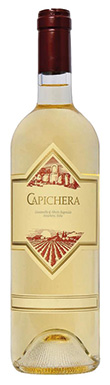

Despite the IGT label, Capichera’s top Vermentino is sourced entirely from its own vineyards in Gallura, which it has been largely instrumental in establishing as...
2018
Capichera

Surrau, Sciala Vendemmia Tardiva, Vermentino di Gallura, Sardinia, Italy, 2018
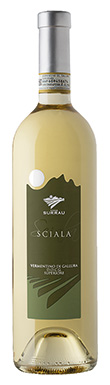
Beppe Caviola is the consultant winemaker at this dynamic modern winery, which makes some of the most impressive wines in the Vermentino di Gallura DOCG....
2018
SurrauVermentino di Gallura
Antonio Camillo, Vermentino, Tuscany, Italy, 2019
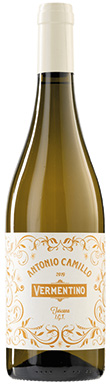
Former roaming consultant and now highly respected artisan producer in his own right, Antonio Camillo works exclusively with native varieties from small plots of old...
2019
Antonio Camillo
Cantina del Vermentino, Arakena Vendemmia Tardiva, Vermentino di Gallura, Superiore, Sardinia, Italy, 2018
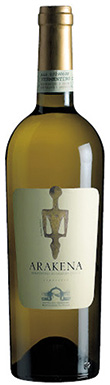
This highly regarded cooperative is the region’s biggest Vermentino producer, sourcing its fruit from nearly 500ha of DOCG vineyards. The limited production late-harvest selection has...
2018
Cantina del VermentinoVermentino di Gallura
Grattamacco, Vermentino, Bolgheri, Tuscany, Italy, 2019
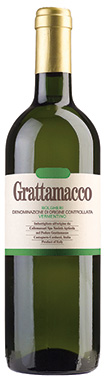
A prestigious property from the ColleMassari group better known for its great reds, Grattamacco is located on low hills with calcareous marl soils – unusual...
2019
GrattamaccoBolgheri
Laura Aschero, Riviera Ligure di Ponente, Liguria, Italy, 2019
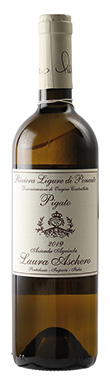
The Ashero family owns 5ha of terraced vineyards on prime sites overlooking the sea on Liguria’s western coast, exclusively dedicated to Vermentino and Pigato. The...
2019
Laura Aschero
Cantine Lunae Bosoni, Etichetta Nera, Colli di Luni, Liguria, Italy, 2019
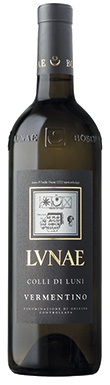
This third-generation family estate is large by Ligurian standards and makes an extensive range of Vermentinos. The Etichetta Nera is a vineyard selection from the...
2019
Cantine Lunae BosoniColli di Luni
Terenzuola, Fosso di Corsano, Colli di Luni, Liguria, Italy, 2019
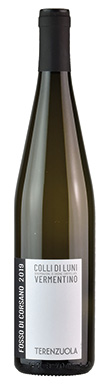
The Apuan Alps, famous for their marble, are home to steep vineyards on chalk overlooking the sea. Here, Vermentino is the main grape variety. Among...
2019
TerenzuolaColli di Luni
Collemassari, Irisse, Montecucco, Tuscany, Montecucco, Tuscany, Italy, 2019
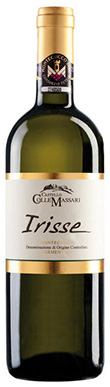
Owned by ex-industrialist Claudio Tipa, the high-powered ColleMassari estate has put Montecucco on the map with its range of modern, organically grown wines. Irisse is...
2019
CollemassariMontecucco
Poggio al Tesoro, Solosole, Bolgheri, Tuscany, Italy, 2019
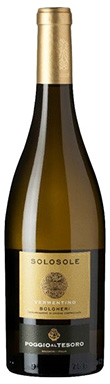
From the Tuscan property of the Allegrini family of Valpolicella, this Vermentino comes from the Sondraie vineyard, better known for the estate’s top red. The...
2019
Poggio al TesoroBolgheri
