
Abruzzo’s Trebbiano: Breaking the mould
Trebbiano Abruzzese offers a refreshing, high quality take on Trebbiano as we think we know it...


It’s fair to say that Trebbiano is not a glamorous grape. Widely planted throughout most of Italy, its reputation is one of a ‘workhorse’ variety with a largely neutral aroma and flavour profile. So how is it possible that one of Italy’s greatest white wines – Valentini’s Trebbiano d’Abruzzo – is also made from this variety?
The short answer is that it isn’t: to understand the gulf between Trebbiano’s reputation and its potential, we must understand that ‘Trebbiano’ is not one but a group of mostly unrelated grapes, tied together by similar characteristics rather than DNA, including Trebbiano Romagnolo, Trebbiano Giallo, Trebbiano di Soave (genetically identical to Verdicchio) and Trebbiano Toscana.
The principal variety in this group is Trebbiano Toscana. As the name suggests, its heartland is Tuscany, along with the other central Italian regions of Lazio, Umbria, Le Marche, and Abruzzo. Trebbiano Toscana is also grown further afield. It’s known as Ugni Blanc in France, where it is a key component of Cognac as well as a popular blending variety and is found as far away as Australia and California. Its high-yielding nature and good acidity has made it perfect for mass-production blends and value single-varietal wines. In Italy, it is a permitted variety in dozens of DOCs. Unfortunately, its use in these scenarios has not helped its reputation, and it is widely regarded (correctly or not) as a characterless variety.
Trebbiano d’Abruzzo
In Abruzzo, another Trebbiano can be found: Trebbiano Abruzzese. Here, on the Adriatic coast, this floral and fruity variety produces wines which differ stylistically from the largely neutral Toscana variety, capable of reflecting terroir and responding positively to various winemaking techniques.
Abruzzo has approximately 9,000 hectares of Trebbiano vines planted (compared to approximately 17,000ha for Montepulciano), with only 12ha declared as Bombino Bianco (see below).
The Trebbiano d’Abruzzo DOC was established in 1972, four years after the Montepulciano d’Abruzzo DOC. Wines labelled as such must contain a minimum of 85% Trebbiano Abruzzese and/or Trebbiano Toscana, or alternatively Bombino Bianco, which some growers believe is the same variety as Trebbiano Abruzzesse. Other varieties permitted include Cococciola, Passerina and Malvasia. In reality, many wines in the DOC are made with Abruzzese as a very high proportion of the blend, if not 100%.
Winemaking
Like most wine regions, winemaking methods vary from producer to producer, but Trebbiano d’Abruzzo – whether fermented in stainless steel, amphora or oak – almost always spends time on its lees and undergoes partial or full malolactic fermentation.
The resulting wines, especially those made from low-yielding vines, can be textured and complex, with delightfully bright acidity and delicious flavours including green apples, stone fruits and tangy citrus – a combination that ensures the best examples will age well for a number of years.
The wines below are some top picks from the Trebbiano d’Abruzzo DOC, and we encourage you to track the top examples down as they not only offer fantastic value for money but will improve with age and are great with food.
Tasting Trebbiano d’Abruzzo:
Francesco Cirelli, Trebbiano d’Abruzzo, Abruzzo, Italy, 2018
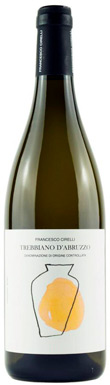

Fermented and aged in clay amphorae, where this wine spends 12 months before bottling, there's a distinct 'wildness' to the aromas of terracotta, meadow flowers,...
2018
Francesco CirelliTrebbiano d’Abruzzo

Rosarubra, Trebbiano d’Abruzzo, Abruzzo, Italy, 2019
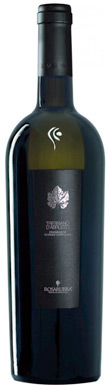
This wine is made from a biodynamically farmed and certified vineyard at 450m above sea level in Pietranico, Pescara. Matured for six months in stainless...
2019
RosarubraTrebbiano d’Abruzzo
La Valentina, Spelt, Trebbiano d’Abruzzo, Superiore, Abruzzo, Italy, 2018
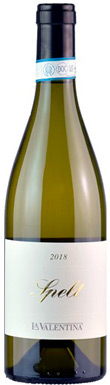
This is only the second vintage of Spelt, a selection from 3ha of 30-40-year-old vines at 150-250m above sea level in Pescara. It's fermented then...
2018
La ValentinaTrebbiano d’Abruzzo
Fattoria Nicodemi, Notàri, Trebbiano d’Abruzzo, Superiore, Abruzzo, Italy, 2017
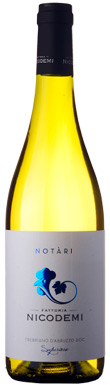
First produced in 2004 from a then 40-year-old vineyard at 300m in the Teramo hills, facing northeast. The aromas combine gentle honey and white floral...
2017
Fattoria NicodemiTrebbiano d’Abruzzo
Centorame, Castellum Vetus, Trebbiano d’Abruzzo, Abruzzo, Italy, 2017
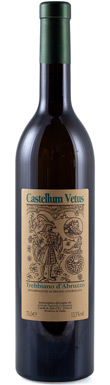
A herby, lemony and slightly peachy aroma is followed in the mouth by intense and tangy lime-inflected stone fruits, with a creamy texture and high...
2017
CentorameTrebbiano d’Abruzzo
Cantine Torri, Bakán, Trebbiano d’Abruzzo, Abruzzo, Italy, 2019
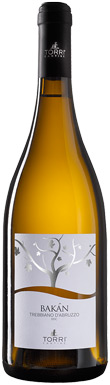
From 30-year-old vines at 290m above sea level in Martinsicuro, this wine displays wafts of tropical fruits combined with fresh green apple. The focused, steely,...
2019
Cantine TorriTrebbiano d’Abruzzo
Cascina Del Colle, Duca Minimo, Trebbiano d’Abruzzo, Abruzzo, Italy, 2019
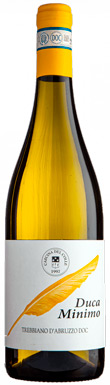
Aromas of hay, pineapple, peach and apple are followed by a tangy palate with sweet stone fruits, pineapple, green apple, yellow plum a saline lick....
2019
Cascina Del ColleTrebbiano d’Abruzzo
Paride D'Angelo, Trebbiano d’Abruzzo, Abruzzo, Italy, 2019
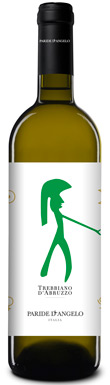
From 40-year-old vines, this Trebbiano d'Abruzzo has a creamy nose from six months on the lees with batonnage. Similarly, in the mouth it is noticeably...
2019
Paride D'AngeloTrebbiano d’Abruzzo
Bosco, Trebbiano d’Abruzzo, Superiore, Abruzzo, Italy, 2019
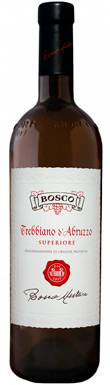
From a south- southeast-facing site at 450m in Nocciano, Pescara, this Trebbiano d'Abruzzo Superiore has a subtle nose of apple, stone fruit and a hint...
2019
BoscoTrebbiano d’Abruzzo
Tenuta Ulisse, Trebbiano d’Abruzzo, Abruzzo, Italy, 2019
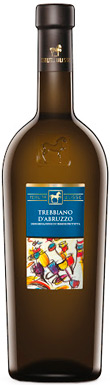
Aged for four months in stainless steel, this Trebbiano d'Abruzzo displays a steely, minerally aroma filled out with notes of green apple and white flowers....
2019
Tenuta UlisseTrebbiano d’Abruzzo
Velenosi, Prope, Trebbiano d’Abruzzo, Abruzzo, Italy, 2019
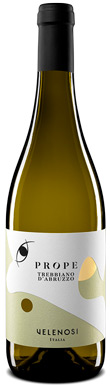
Vinified and matured in temperature-controlled cement, this has an aromatic, floral nose with green apple and herb notes. It's quite full-bodied, creamy and appley in...
2019
VelenosiTrebbiano d’Abruzzo
