
Valle d’Aosta – the soulful Italian region aficionados shouldn’t overlook
Tucked away in the mountains along the borders with France and Switzerland, Valle d'Aosta is one of Italy's smallest and most overlooked wine regions – and it's an absolute gem.


If Italian wine aficionados were to lay claim to their favourite wine regions in Italy, areas like Piedmont, Tuscany, Sicily and Veneto would easily roll off their tongue.
Yet some of the most character-driven, soulful, and terroir-expressive wines in Italy are produced in Aosta, a region which borders Switzerland to the north and France to the northwest.
Charming, authentic and picturesque, Aosta is Italy’s smallest wine region and as a result, it is also one of its least known. Tucked under the Pennine Alps, between Mont Blanc and the Matterhorn, this small but glorious area has 400 hectares planted with vines.
Compared with neighbouring Piedmont which has around 43,000ha, it’s easy to see how this gem of a wine region is often overlooked.
Italy newsletter: Sign up today
Get the best recommendations, vintage analysis, regional and cultural insights and more delivered to your inbox once a month, helping you to stay up-to-date with the latest in Italian wine.

Aosta’s rich history
Despite its relative obscurity, Aosta has had a rich history. Though viticulture in the region dates back to the Bronze Age, it was the Romans who first cultivated specialised vineyards, from about the 1st century AD.
During the Middle Ages, Aosta came under the rule of the prosperous and powerful Kingdom of Savoy, which fostered the creation of terraced vineyards and vine propagation, while building the region’s many striking and enduring castles.
Italy unified in 1861 ending much of the Savoyard influence and a series of events common in European vineyard history took hold.
Nicolas Ottin of Ottin Vini explains: ‘At the end of the 19th century, before Phylloxera, there were 4,000ha in Aosta. But by the 1970s, there were almost no vines left. Phylloxera plus the aftermath of two World Wars and Aosta’s challenging growing conditions forced many people to abandon their vineyards.’
But the arrival of the Institut Agricole Régional in 1951 changed the region’s fortunes. By the 1980s, the institute’s work – combined with renewed local pride and improved economic conditions – sparked a renaissance in Aosta’s winemaking.
All this culminated in the creation of the DOC in 1971, which was revised in 1986.
Aosta’s viticultural landscape

Despite its cooler climate – a natural fit with white wine production – red wines are abundant in Aosta, comprising around 65% of the total production. Nicola Abbrescia, president of CERVIM, the Centre for Research, Environmental Sustainability and Advancement of Mountain Viticulture, explains: ‘This was a poor region so red wine was drunk for nourishment.’
Aosta’s wine region is divided into three major sections, encompassing seven different sub-regions, which run northwest to southeast and are divided by the Dora Baltea River.
The terraced banks on the northern side (‘the right bank’) are home to the majority of the vineyards and face predominantly southwest. Vineyards planted on the southern side (‘the left bank’) are generally more rolling or on plateaus, and face mostly northeast.
With its close proximity to the Alps, it is unsurprising that this land was sculpted by glaciers over the centuries. Morainic rock debris and sand are the dominant soils on the well-draining slopes, though there are also small pockets of limestone in the Central and Lower Valleys alongside some clay and gravel in the most southern zones.
These poor soils are capable of creating wines with notable minerality.
Though the entire area falls under Vallée d’Aoste DOC or Valle d’Aosta DOC – a reminder of its bilingual French-Italian heritage – producers can include the sub-regions on the label.
In addition, a number of sub-regions can produce ‘Supérieur’ bottlings, a higher quality category which have stricter regulations for production.
The Upper Valley
The Upper Valley lies southeast of the ski resort of Courmayeur and begins with the sub-region Morgex et de La Salle, named after two villages.
This area has the highest altitude and vines are generally planted at between 900-1,300 metres. It is planted more or less exclusively with Prié Blanc, a fresh and vibrant indigenous white grape that produces mostly light-bodied still and sparkling wines with some occasional ice wines.
Interestingly, there has never been Phylloxera in this zone, so the vines are planted on their own rootstocks, making them among the oldest in the region.
The Central Valley
The Central Valley is the region’s largest and is the home to Petit Rouge, an old Aostan variety which can produce notably fruity yet deep, medium-full bodied wines. It is also the most planted variety in Aosta, comprising around 25% of the vineyard land.
Enfer d’Arvier is the first sub-region of the Central Valley. It is named after the dramatic amphitheatre-shaped, terraced hillside which can get very hot during the summer…hence its rather forbidding name ‘Enfer’ (‘Hell’).
Just south of Arvier lies Torrette, which produces some of the region’s grandest red wines.
Also located within the Central Valley, the sub-regions of Nus and Chambave can produce red wines – but they are generally more famous for their whites.
Malvoisie in Nus can be dry or a sweet ‘passito’ dessert wine from dried grapes. Moscato in Chambave takes on a wonderfully savoury character of wild herbs and pronounced salinity in addition to its telltale notes of apricot, peach and lemongrass.
The Lower Valley
In the Lower Valley lie the sub-regions of Arnad-Montjovet and Donnas. Here, Nebbiolo, which is locally called ‘Picotendro’ or ‘Picoutener’, reigns supreme.
However, it is not like the Nebbiolo of the Langhe: this clone of Nebbiolo has adapted to the harsher, colder growing conditions and as a result produces perfumed wines, high in acidity and with a certain lacy, ethereal quality.
International, indigenous & rare

Within the Valley it’s also possible to find other indigenous red varieties such as Fumin, Prëmetta, Vuillermin and Vien de Nus which feature mostly in blends, though some pure bottlings can be found.
International transplants such as Pinot Noir, Pinot Gris, Chardonnay, Gamay, Merlot and Petite Arvine from Valais, Switzerland have also had great success.
Rare, almost extinct varieties are also slowly making a comeback. Didier Gerbelle of Aymavilles has been seeking out and propagating some of these, such as Le Blanc Comun, Oriou Gris and Neyret.
‘I actually found three vines of Le Blanc Comun in my grandmother’s garden. They are the offspring of Prié Blanc and the vines were 100 years old. With Prié Blanc, it is the only white indigenous variety in Aosta, though it is not recognised by the Italian government. It is important to protect our heritage,’ he says.
Though Aosta is incredibly rich in history and tradition, producers are also forward thinking. Nicolas Bovard, the young and dynamic president of the new Aosta consorzio firmly states: ‘We are very proud of our heritage, but we also fully embrace respectful innovation, and our wines reflect this.’
Few regions reward curiosity like Aosta. It’s a land of stark contrasts and delicate balances, while offering warmth, generosity, beauty, tradition and innovation – as well as some of Italy’s most delicious and distinctive wines.
Aosta Valley: Eight to try
Related articles
- Can mountain ageing take Valtellina’s wines to new heights?
- Frontier Spirit: The pioneer winemakers of northern Italy
- Cowbells all around: Hiking in the Südtirol
La Crotta di Vegneron, Mines Muscat, Valle d’Aosta, Chambave, Valle d’Aosta, Italy, 2023
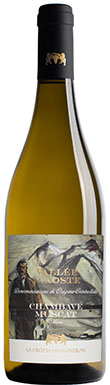

This beautiful 2023 Chambave Muscat delivers a beautifully refined palate of white peach, lemongrass and pronounced salinity. La Crotta di Vegneron is one of the...
2023
La Crotta di VegneronValle d’Aosta

Lo Triolet, Amonpère Pinot Gris, Valle d’Aosta, Valle d’Aosta, Italy, 2022
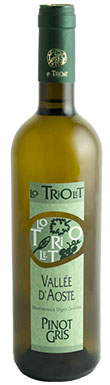
Burgundian in style, this 2022 glides and expands onto the palate with notes of tarte tatin, pear compote, acacia and brioche. There's lots of elegance...
2022
Lo TrioletValle d’Aosta
Azienda Agricola Rosset Terroir, Petite Arvine, Valle d’Aosta, Valle d’Aosta, Italy, 2023
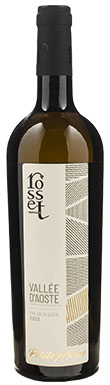
From vines in Montjovet, this beautifully lacy white is more mineral than fruity, with a precise and chiselled core of peach, lime, pink Himalayan salt...
2023
Azienda Agricola Rosset TerroirValle d’Aosta
Ermes Pavese, Valle d’Aosta, Blanc de Morgex et de La Salle, Valle d’Aosta, Italy, 2023
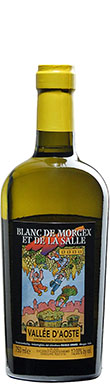
This charming family-run estate is located in the most northerly part of Aosta's viticultural zone, Morgex, an area known for its native white variety, Prié...
2023
Ermes PaveseValle d’Aosta
Ottin, Torrette Supérieur, Valle d’Aosta, Valle d’Aosta, Italy, 2023
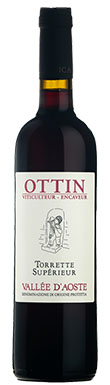
Ample and rich on the nose with aromatic notes of red and black plums, black pepper, and what Italians call 'balsamico' or 'balsam-like' notes, which...
2023
OttinValle d’Aosta
Azienda Agricola Pianta Grossa, Georgos, Valle d’Aosta, Donnas, Valle d’Aosta, Italy, 2021
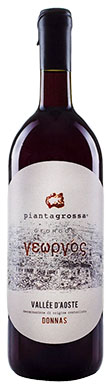
In Donnas, the southern area of Aosta, Nebbiolo rules supreme – the region is closer to neighbouring wine regions like Carema DOC in Alto Piemonte than...
2021
Azienda Agricola Pianta GrossaValle d’Aosta
Taema, R.E.M. X Pinot Nero, Valle d’Aosta, Valle d’Aosta, Italy, 2022
Created in 2012, Taema is a boutique winery which operates in the historic Mulino della Ressaz, a 17th century mill in the heart of Aosta...
2022
TaemaValle d’Aosta
Grosjean, Fumin, Valle d’Aosta, Valle d’Aosta, Italy, 2023
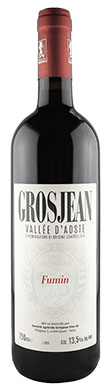
Clearly youthful, this displays lifted acidity, fine tannins, and notes of damson plum, crunchy black cherry and blueberry. Fumin is one of the indigenous red...
2023
GrosjeanValle d’Aosta
