
Valpolicella Ripasso and Ripasso-style reds: Panel tasting results
Ripasso wines have rapidly taken market share in the Veneto region. Our panel put 93 to the test and discovered that consumer appeal doesn't always translate to personality or balance...


Aldo Fiordelli, Andrew Jefford and Michael Garner tasted 93 wines with 14 highly recommended.
Entry criteria: Producers and UK agents were invited to submit wines from the 2014, 2015, 2016 or 2017 vintages, priced from £12 up, to include wines from Valpolicella Ripasso DOC (including Classico, Valpantena and Superiore versions), and wines from the Rosso Veronese and Rosso del Veneto categories made with at least a proportion of semi-dried grapes, and which are based on the classic Valpolicella varieties.
The verdict
There were some wines in this line-up of 93 that earned high individual scores from our judges, suggesting that there is plenty of potential for Veneto’s ripasso and ripasso-style red wines.
However, Michael Garner kicked off the discussion afterwards by asking: ‘What is the real identity that Ripasso has? There is a lot of variation, and a lot of confusion as to what constitutes a classic ripasso.’
Andrew Jefford added: ‘It’s rather strange to have a whole wine category which is based on production methods and not any kind of zoning of origin, and where estates are not specifying the production method in exact terms on the wine labels. That is rather anomalous.’
Scroll down to see top wine tasting notes & scores
Garner was also disappointed that it wasn’t possible to include the (non-ripasso) Valpolicella Superiore category in this one-day tasting, since ‘a huge proportion of those wines are also made using some percentage of dried grapes’.
Despite the consternation, our judges did find some examples which impressed: ‘Ripasso Classico was certainly the most exciting category,’ said Jefford. ‘I scored 15 of these wines at 90 points and above. But it was very much up and down.’
Aldo Fiordelli also found the tasting something of a mixed bag: ‘Even among the Classicos, we would expect something more. They were mostly from 2016, which was a good vintage, and there should be a bit more balance between extraction and fruit in most of these wines.’
Jefford contended that quality has suffered due to the rising popularity of these styles: ‘It seems to me that the category has been so comprehensively industrialised that there were a lot of wines here with no craft to them at all, thrown together to have this appeal with lots of oak and lots of sweetness, but lacking in purity and finesse.’
The other two judges agreed with Jefford’s analysis, although Garner added: ‘Ripasso has its upside too, which is that its wines are a little fleshier than Valpolicella, which can often be fairly lean and astringent – and yet it’s a bit more versatile than amarone, which is kind of difficult to match with food, so ripasso remains a useful weapon in the armoury of Veronese reds overall.
‘Ripasso is a very popular wine and its importance in the landscape of Veronese reds is at its highest peak ever now,’ Garner continued.
Our judges all acknowledged that there is little requirement for lengthy cellaring of ripasso wines. ‘It’s a style that actually isn’t that suitable for ageing for very long, and is usually best enjoyed within two or three years of the vintage,’ Garner confirmed. Jefford suggested how producers could move forward: ‘I think the region needs to address some of these quality issues that we’ve bumped up against here; otherwise I think consumers will come to the category with high expectations and come away disappointed.’
Fiordelli summed up the judging panel’s thoughts on the day’s tasting: ‘I am a bit surprised, if not disappointed,’ he confessed, ‘mostly because, in terms of balance if not in terms of concentration or complexity, one would expect a bit more from these wines. We didn’t find any super-Valpolicella and we didn’t find any baby-amarone either. The category seems to be stuck in the middle with a lack of identity, despite its commercial appeal.’
Discussion copy by James Button.
See all wines from the panel tasting here
The scores
93 wines tasted
Exceptional 0
Outstanding 0
Highly Recommended 14
Recommended 44
Commended 34
Fair 1
Poor 0
Faulty 0
About Valpolicella Ripasso and Ripasso-style reds
Ripasso wines have rapidly taken market share in the Veneto region, and the style was granted its own DOC in 2010. But, asks Michael Garner, are the wines quality-driven, or just a marketing ploy?
Veronese winemakers seem to have hit the jackpot with Valpolicella Ripasso. Made with indigenous grape varieties (Corvina, Corvinone, Rondinella et al) and using a highly individual production technique, ripasso has found instant favour with consumers who, moreover, are prepared to pay a good price for it. Yet dig a little deeper and all is not quite as rosy as appearances might suggest.
What is ripasso?
The ripasso technique involves macerating or refermenting young Valpolicella on the lees of recioto or amarone, both being made from semi-dried grapes – this was originally conceived in the region as a way for producers to recycle this by-product. Masi winemaker Nino Franceschetti used the sugar-rich lees left over from making amarone to produce Campofiorin in 1964. The wine’s success soon led others to follow suit, and the rest is history.
The length of the Ripasso period determines the final character of the wine: if it spends just a couple of days on the lees, a fruitier, more approachable wine is the result; longer contact of up to two weeks can give rise to a much weightier and more nuanced style – though at the same time, the risk of off-aromas becomes much greater. For this reason, the fruitier version of ripasso is often the safer bet.

In recognition of its rise in popularity, ripasso was granted its own DOC in 2010 for production in all three constituent areas of Valpolicella – Classico, Valpantena and the remaining DOC Valpolicella area (also known as Valpolicella Orientale locally). By the middle of the decade, it already accounted for 45% of the total production of red wine in the area. Indeed, the style has proven such a winner that some winemakers seek to replicate its characteristics using an alternative method, incorporating a proportion of grapes with a short period of appassimento (drying) in a wine.
And herein lies the root of the problem: the red wines of Verona are in serious danger of becoming defined by the use of dried grapes. The threat to Valpolicella and Valpolicella Superiore, when made entirely from fresh grapes, has become a very real one, and indeed these wine styles already represent less than 30% of the area’s total production.
Valpolicella: The facts
Total area (2019): 8,300ha under vine, to the north and east of the city of Verona
Geography: A series of north- to south-running valleys, from Lessinia to the Adige river
Production (2019): 272 producers; 30m bottles of ripasso from total of 64m bottles of Valpolicella DOC and DOCG
Valpolicella: Know your vintages
2019: Variable, but highly promising wines from well-exposed hillside sites. Early signs suggest the best wines have great balance. 4/5 (for now)
2018: A cooler vintage giving a spicy, fresh fruit style with good acidity. Needs two to three years. 4/5
2017: A warm vintage of limited quantities. The wines are maturing well and can be drunk now. 3/5
2016: A cooler year that produced wines of great balance and style. Drink now or keep for two to three years. 3/5
2015: A hot year producing ripe and forward wines. Drinking well now. 4/5
2014: A cool, wet year. Drink up! 2/5
In response, a growing number of producers are insisting that it is no longer necessary to ‘enrich’ wines with these techniques, particularly since increasingly hot summers seem almost to guarantee a crop of ripe fruit entirely capable of delivering fuller-bodied wines that do not require the ‘boost’ of either ripasso or appassimento.
At its best, the ripasso style can be very convincing. It’s easy to like and to appreciate: the defining features of richness, softness and velvety texture offer wine lovers a glimpse of the aromas and flavours of amarone, yet at a fraction of the cost.
Rarely wines to keep, most examples of ripasso are best within a few years of vintage.
Valpolicella Ripasso and Ripasso-style reds: Top scorers
See all wines from the panel tasting here
The judges
Aldo Fiordelli
A certified sommelier since 2003, Fiordelli is a widely published Italian journalist, wine writer and author, and a DWWA judge. On the editorial board of L’Espresso restaurant and wine guide, he also writes for Civiltà del Bere, Italy’s oldest Italian wine magazine. He bacame a Chevalier de l’Ordre des Coteaux de Champagne in 2017.
Andrew Jefford
Jefford has been writing about wine since the 1980s, authoring numerous books and winning many awards. He is a contributing editor to Decanter magazine, and is one of three Co-Chairs overseeing judging at the Decanter World Wine Awards. He lives with his family near Montpellier in France.
Michael Garner
Garner has worked in the wine business for 40 years, mostly specialising in the wines of Italy. He is co-owner of Italian wine specialist Tria Wines, and is a DWWA Regional Chair for northern Italy. Garner is author of Amarone and the Fine Wines of Verona, and co-author of Barolo: Tar and Roses.
Bertani, Valpolicella, Ripasso Classico Superiore, Veneto, Italy, 2016
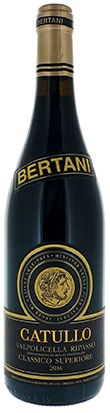

Mouthwateringly pure cherry fruit, complex peppery mint and tobacco, with fine-milled tannins and a delicious rich bitterness on the finish.
2016
BertaniValpolicella

Dal Cero, Valpolicella, Ripasso Superiore, Veneto, Italy, 2016
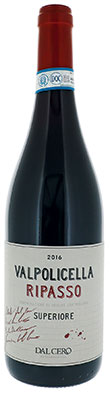
Lashings of fresh and dried red fruits underpinned by a creamy oak core, crunchy tannins and a savoury finish.
2016
Dal CeroValpolicella
Monte del Frà, Valpolicella, Ripasso Classico Superiore, Veneto, Italy, 2016
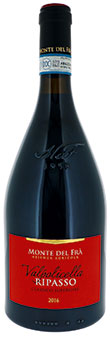
91
Subtle, sweet clove, anise and nutmeg, creamy vanilla and red orchard fruits. Ample, soft and velvety with a long toasty finish.
2016
Monte del FràValpolicella
Rubinelli Vajol, Valpolicella, Ripasso Classico Superiore, Veneto, Italy, 2015
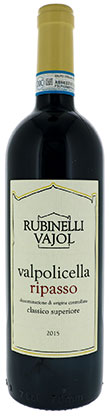
91
An opulence of mature, succulent fruit and peppery spice; soft and rewarding with a lush silky texture and tannins.
2015
Rubinelli VajolValpolicella
Buglioni, Il Bugiardo, Valpolicella, Ripasso Classico Superiore, Veneto, Italy, 2016

A sombre, brooding beast packed with dried fruits, savoury spice and a mineral stone edge balanced by a refined, elegant structure.
2016
BuglioniValpolicella
Tommasi, Valpolicella, Ripasso Classico Superiore, Veneto, Italy, 2017
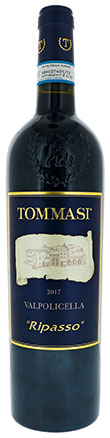
A breadth of cherries, cooked plums and prunes, offset by a charm of Indian spice and an oaky tannic core.
2017
TommasiValpolicella
Salvaterra, Valpolicella, Ripasso Classico Superiore, Veneto, Italy, 2016
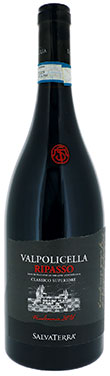
A classic, well-defined style with plentiful red fruit and spice; firm, ripe tannins and a touch of umami.
2016
SalvaterraValpolicella
Torre D'Orti, Valpolicella, Ripasso Superiore, Veneto, Italy, 2017
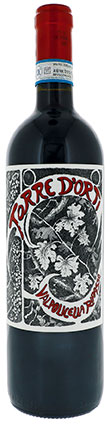
Enchanting cherry blossom, damson and cassis; ripe and rounded with a lively, crunchy energetic core and a warming finish.
2017
Torre D'OrtiValpolicella
Fattori, Col de la Bastia, Valpolicella, Ripasso Superiore, Veneto, Italy, 2017
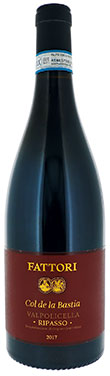
90
A beautiful crunch of youth with fresh cherry and decadent dark chocolate flavours; poised, elegant and a joy to drink.
2017
FattoriValpolicella
Farina, Montecorna, Valpolicella, Ripasso Classico Superiore, Veneto, Italy, 2017
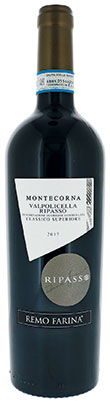
Melt in the mouth autumnal apples, juicy plums, mouthwatering cherries and warming nuts with a lick of pepper.
2017
FarinaValpolicella
Tenuta Sant'Antonio, Monti Garbi, Valpolicella, Ripasso Superiore, Veneto, Italy, 2017
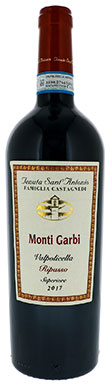
90
A delicious drive of juicy dark fruit, polished chocolate, liquorice and tar; intense and concentrated with long, savoury finish.
2017
Tenuta Sant'AntonioValpolicella
Aldegheri, Santambrogio, Valpolicella, Ripasso Classico Superiore, Veneto, Italy, 2016
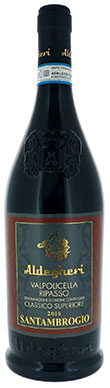
A wealth of blackberry, sloe and liquorice topped off with balsamic notes; plush, plump and juicy with a peppery finish.
2016
AldegheriValpolicella
Corteforte, Podere Bertarole, Valpolicella, Ripasso Classico Superiore, Veneto, Italy, 2017
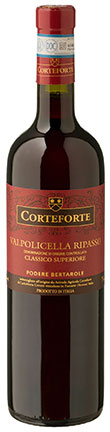
90
Splendid violet florals and youthful cherry fruit, with well-constructed oak, fresh tannins and a bitter twist on the finish.
2017
CorteforteValpolicella
Fasoli Gino, Valpo, Valpolicella, Ripasso Superiore, Veneto, Italy, 2014
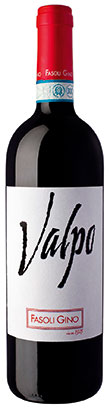
Full of power; a statuesque, muscular style packed with dried prunes, pecans and lush toasty notes. Long and enduring.
2014
Fasoli GinoValpolicella
