Vasse Felix: profile and verticals of Tom Cullity and Heytesbury
More than 50 years on from when Dr Tom Cullity planted his first vines at Vasse Felix in Western Australia's Margaret River region, the Cabernet-Malbec blend named in his honour and the equivalent top-tier Heytesbury Chardonnay stand among Australia's best. Sarah Ahmed charts the estate's history and tastes a nine-wine vertical of these two flagships.
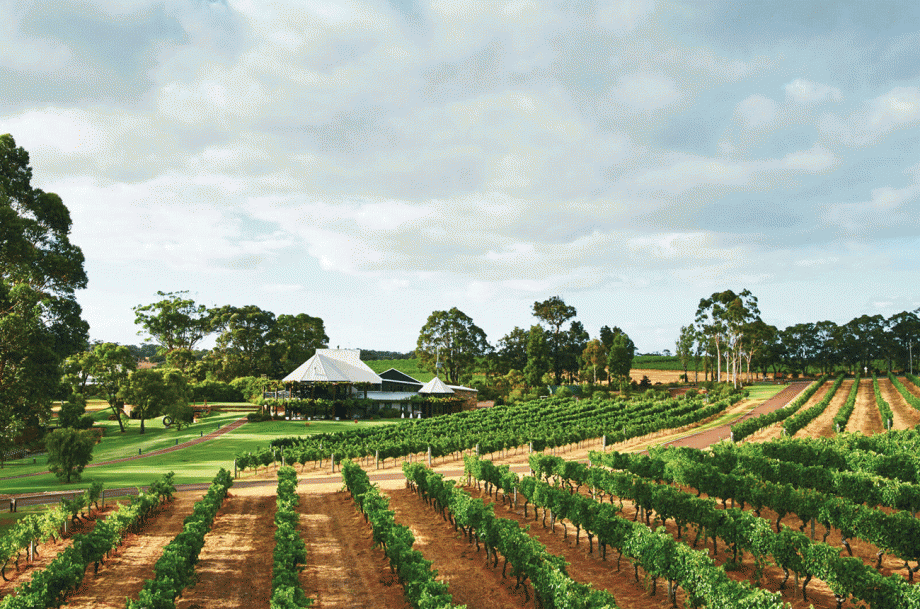
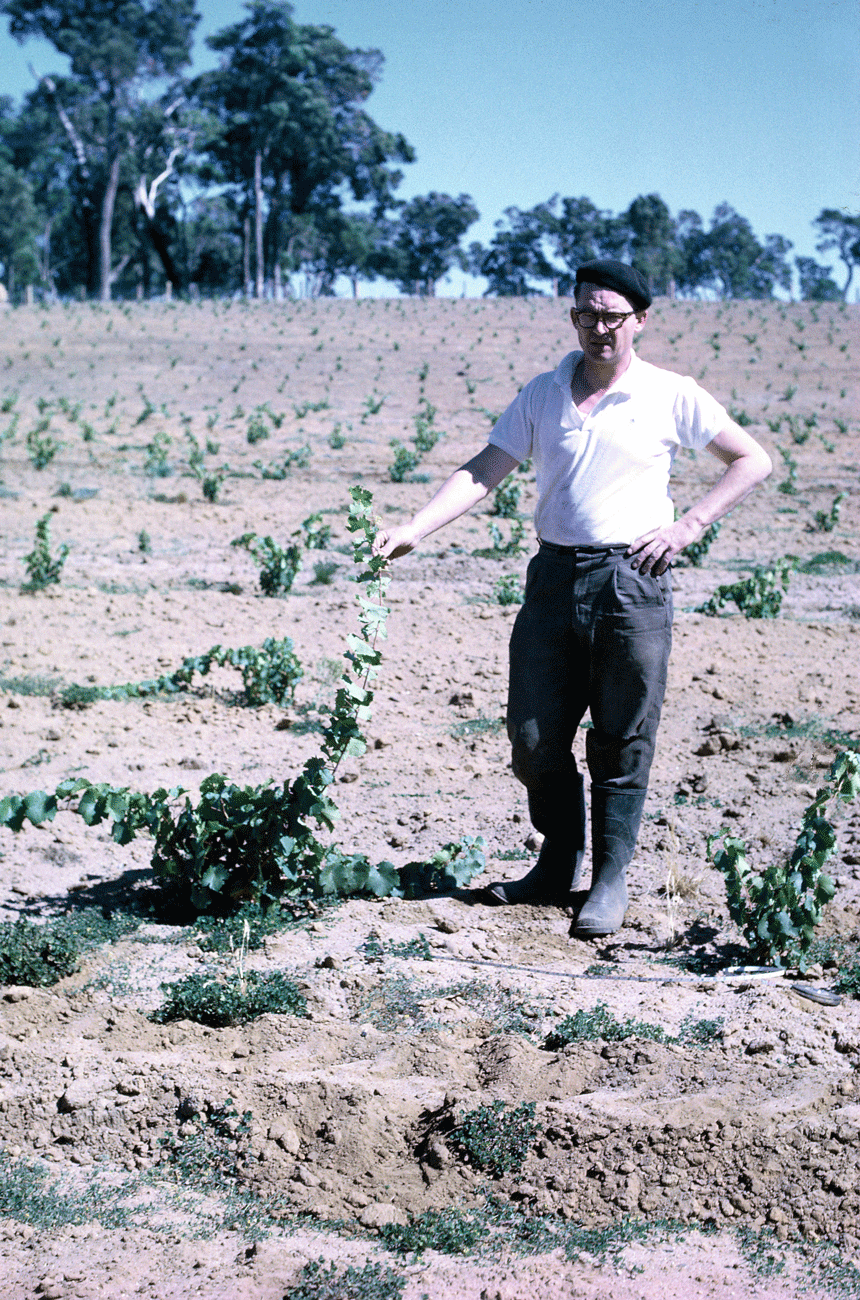
How many doctors does it take to found a wine region? The answer is three in the case of Margaret River in Western Australia, whose pioneering vignerons included Thomas (Tom) Cullity of Vasse Felix, Kevin Cullen (Cullen Wines) and Bill Pannell (Moss Wood).
In 1967, just 4km from the Indian Ocean on the Wilyabrup ridge, Cullity planted Margaret River’s first vines that successfully went into commercial production. They included Cabernet Sauvignon, which put Margaret River on the map, as well as Malbec (the only other Bordeaux variety then available), Shiraz and Riesling.
Scroll down for a nine-wine vertical of Vasse Felix
Tom Cullity Cabernet blend and Heytesbury Chardonnay
Vasse Felix: the facts
FOUNDED 1967
PROPRIETOR Paul Holmes à Court
ANNUAL PRODUCTION 120,000-150,000 cases of 12
VINEYARDS 341ha
Home (Wilyabrup) – 52ha, gravel loam over clay
Boodjidup (Wallcliffe) – 112ha, gravel/sandy loam
Karridale (Karridale) – 30ha, sandy loam over calcium clay
Adams Road (Carbunup) – 147ha, deep red to sandy loam, some gravel and clay
KEY VARIETIES Cabernet Sauvignon, Malbec, Petit Verdot, Chardonnay, Shiraz, Sauvignon Blanc, Semillon
Forty years later, following a lunch with Cullity in 2007, Vasse Felix’s owner Paul Holmes à Court felt moved to mark the pioneer’s legacy. Trials to make a new flagship red named after the Perth cardiologist began with old-vine Shiraz. Then old-vine Cabernet Sauvignon blended with Petit Verdot, a relative newcomer to Margaret River. Trials screeched to a halt when chief winemaker Virginia Willcock vinified a small parcel from Cullity’s original Malbec plantings. ‘It gave me goosebumps all over,’ she recalls.
Coinciding with the 50th anniversary of Cullity’s original plantings (which form the backbone of Tom Cullity Cabernet Sauvignon-Malbec), the inaugural 2013 vintage was released in 2017. ‘Like old boys, these old vines have seen it all before,’ says Willcock, remarking on their consistency of bunch weight, berry size and ‘plumpness of fruit with the most fine-boned tannins’. All loud and clear thumbprints in the vertical.
A Margaret River thumbprint
What makes them special? The Bordeaux comparisons are hard to ignore. Cullity was influenced by Dr John Gladstones’ seminal 1965 and 1966 reports about Margaret River’s quality potential for wine. Gladstones’ analysis was rooted in strong similarities to Bordeaux: the equable maritime climate and well-drained gravel, with adequate clay to support the growth of Margaret River’s vertiginous native Marri trees.
Having visited Bordeaux in 1961 (tasting 1959 Mouton Rothschild from barrel), Cullity selected a propitious knoll, with 800mm of gravel loam over clay. ‘It was all about drainage, because that’s how they grow in Bordeaux,’ says Willcock. Gravel loam drains in spring, keeping yields low, but clay provides enough moisture for these dry-grown blocks to ripen.
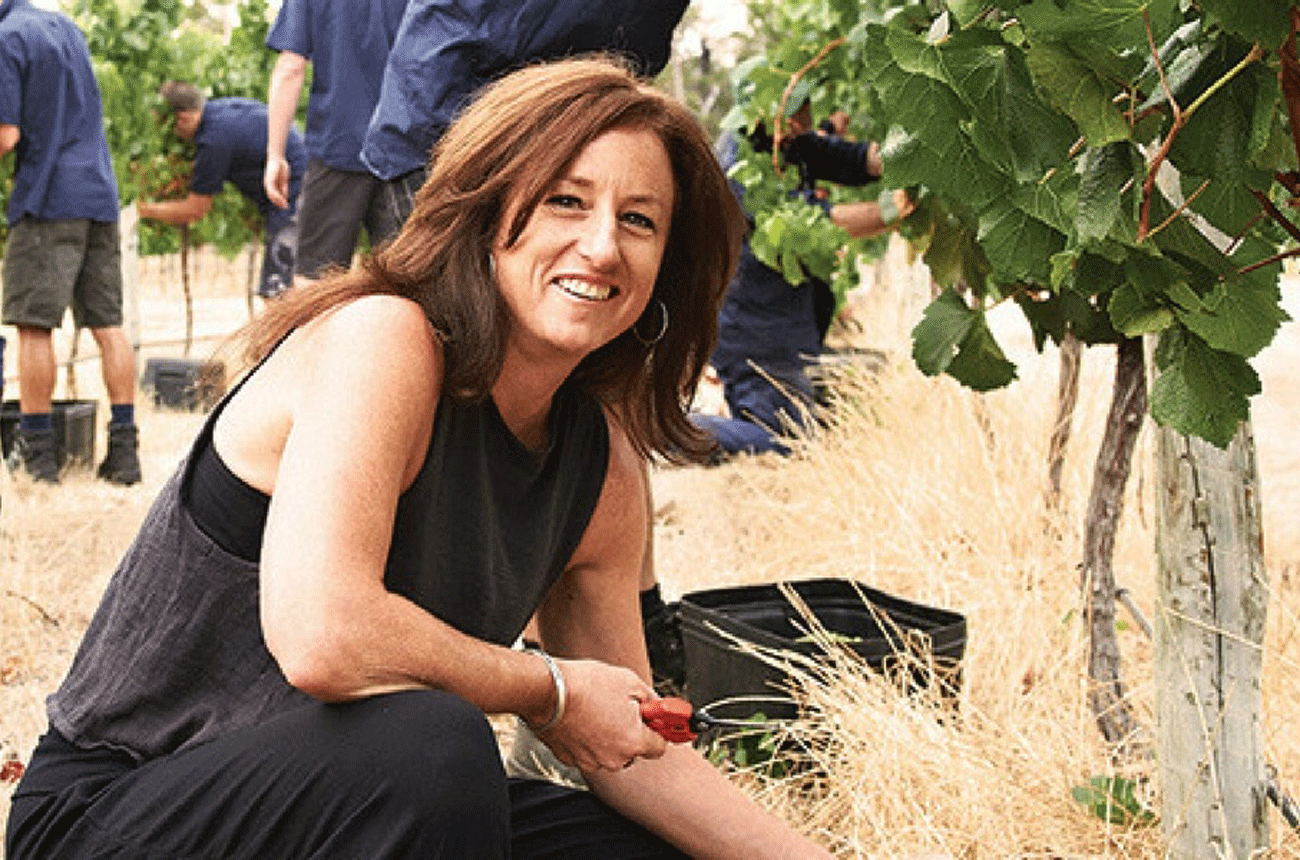
However, ‘We don’t make Cabernet like Bordeaux,’ she asserts. ‘We’ve forged our own path and style.’ After all, Margaret River is warmer and drier, with Indian summers in classic years. Hardly a disadvantage, as it contributes to immersive, fine-grained tannins and Malbec’s ripe, plump fruit.
The maritime climate produces fine-tuned, mid-weight wines with balanced acidity that age gracefully, but are broachable young (even top wines). Western Australia’s signature ‘Houghton’ clonal material has a bearing too. Margaret River’s winemakers describe it as light and juicy, fragrant and herbal, with fine powdery tannins, elegance and finesse.
For Willcock, Margaret River’s olfactory imprint – the scent of forest and ocean – is just as important. She always finds traces of Western Australian peppermint tree (Agonis flexuosa) in Tom Cullity. Kelp, bitter chocolate, dried roses, sage and ironstone gravel notes are also common regional traits and add savoury nuance.
Solids success
Willcock’s self-confessed ‘savoury tooth’ has been a huge factor in the success of a variety overlooked by Cullity (who sold Vasse Felix in 1984) and his successors, David and Anne Gregg. Having acquired the estate in 1987, the Holmes à Court family introduced Chardonnay, producing the first wine in 1990. By 1996, a Reserve (re-christened Heytesbury in 1997) emerged. In tune with the times, the best barrel selection was, says Willcock, ‘stylistically quite big’.
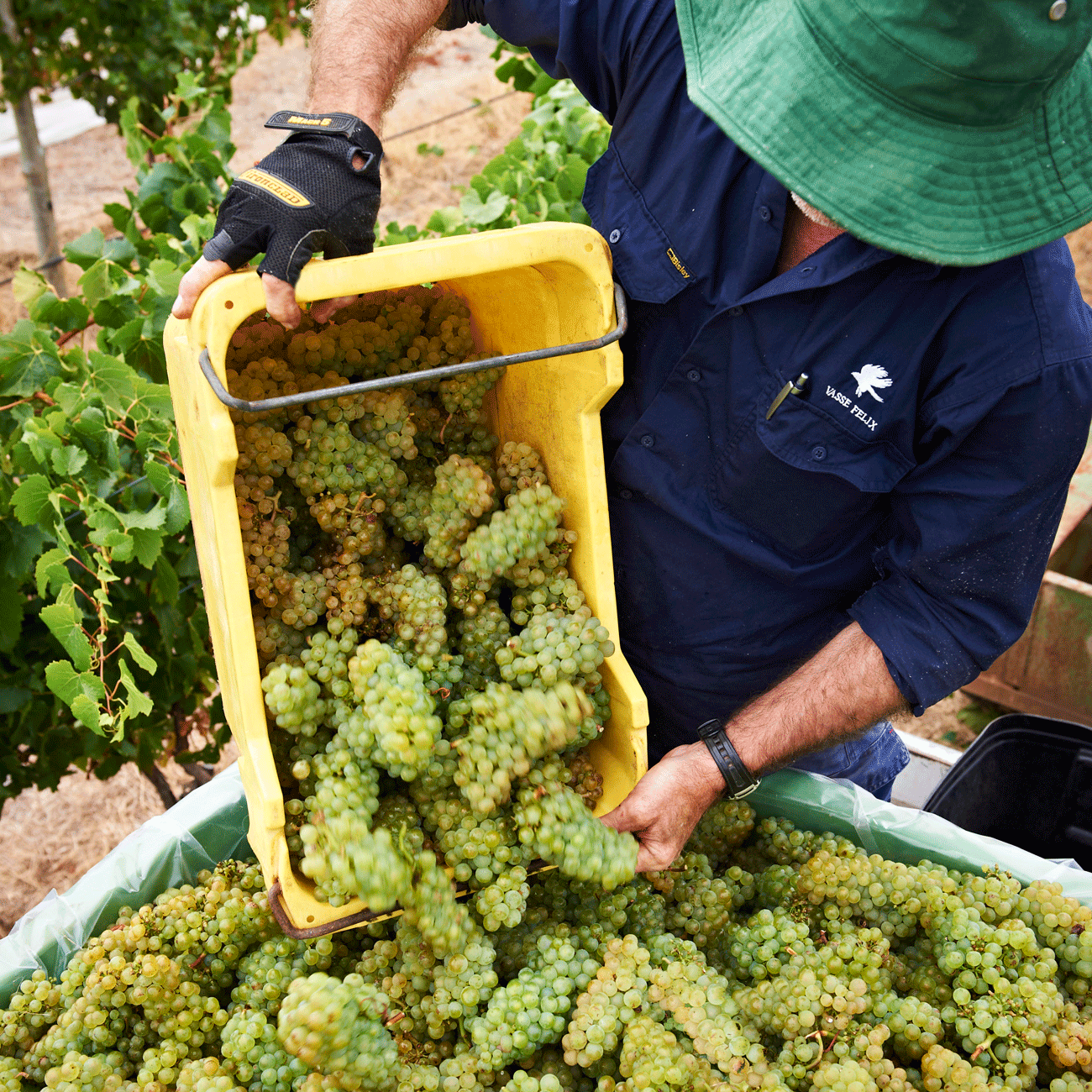
She joined Vasse Felix in 2006, catapulting it into Australia’s top tier of Chardonnay producers with a funkier, textural style. Winning 11 trophies, the 2010 Heytesbury became one of Australia’s most awarded Chardonnays.
Willcock, who Holmes à Court notes is more likely ‘to beg for forgiveness than ask for permission’, drew from Burgundian traditions that were, for many years, anathema in Australia. Naturally fermenting Heytesbury on full solids (with no settling), pressing straight to barrel and lees-ageing adds character, expressing a different dimension of the Gin Gin Chardonnay clone. This Western Australian heritage clone is renowned for great acid retention, phenolic skins and al dente ripeness. Only a handful of cooler, east-facing blocks on clay-driven soils can combine Heytesbury’s charismatic blend of funk, texture and tension so precisely, says Willcock.
Moving on up
Holmes à Court, who became sole owner of Vasse Felix in 2008, is keen to identify more Heytesbury ‘Grand Cru’ sites. Following intensive viticultural investment, there is surely scope. Under Holmes à Court’s tenure (his late father, Robert, was Australia’s first billionaire), Vasse Felix has acquired more land under vine – 341ha – than any other Margaret River producer.
The goal is not about being the biggest, asserts Holmes à Court. ‘With the backing of family resources’, it is to raise Margaret River’s profile and position Vasse Felix as the leader. Today the estate’s four vineyards account for 90% of production, up from 60% in 2007. Save for 27ha of young vines and land earmarked for future plantings, they were certified organic in 2020 and 2021.
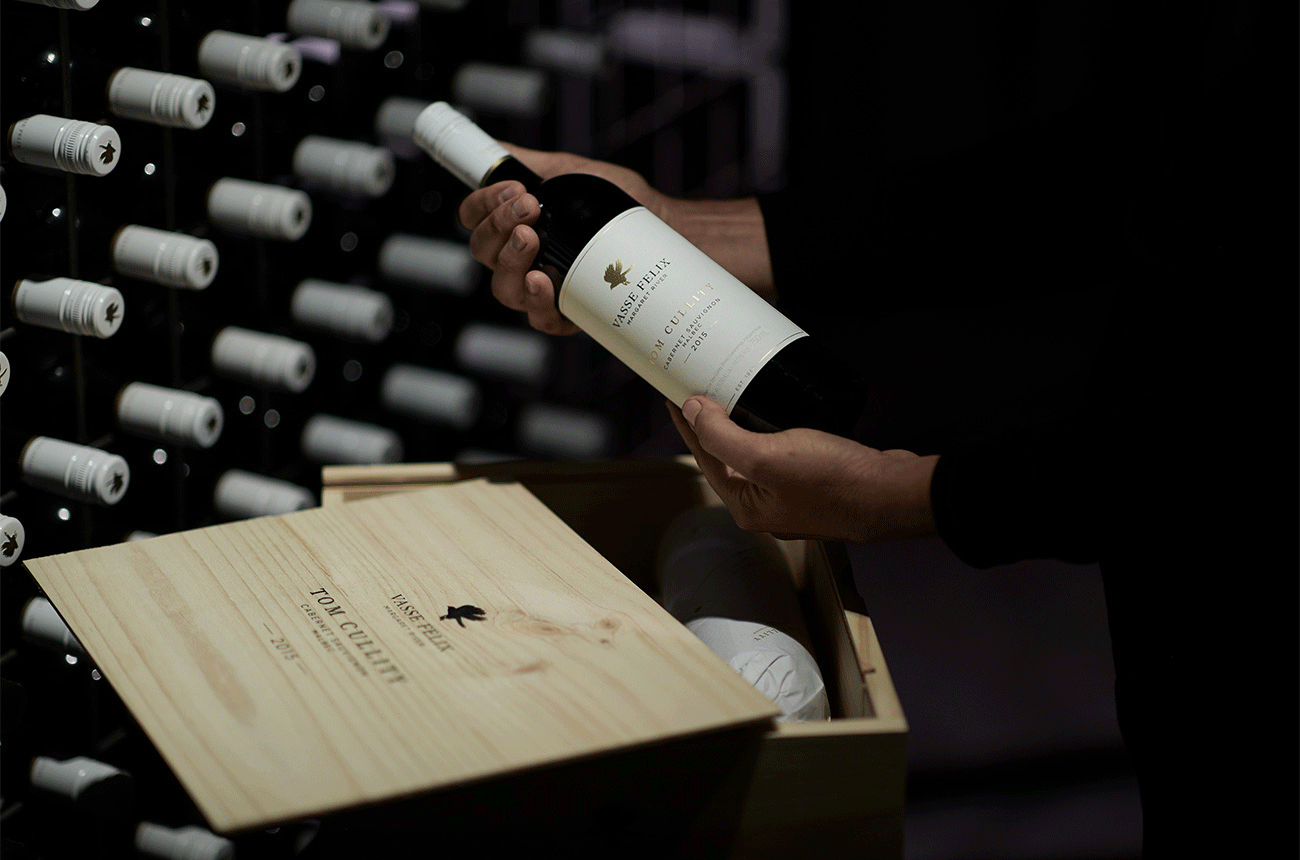
Vasse Felix’s Home Vineyard, on prime gravelly clay soils in Wilyabrup, now incorporates Arlewood Estate’s former vineyard and the Gibraltar vineyard, planted in 2007. Principally for white wines and Idée Fixe (a new sparkling wine), the family planted two vineyards in Margaret River’s cooler southerly reaches of Wallcliffe and Karridale. Another further inland, on Carbunup’s richer soils, was planted for the entry-level Classics Collection and excellent-value, widely available Filius label.
For Willcock, having the right varieties and clones in the right place, and now organic cultivation, sets the pathway for purity of expression across Vasse Felix’s four-tier range (Icon, Premier, Filius and Classic Collection). ‘The quality of fruit, not me, refines it. It’s a winemaker redundancy policy,’ she jokes.
Vasse Felix verticals
By extension, you could say that Margaret River’s enviably consistent vintages are a viticulturist’s redundancy policy. Despite similar sourcing, winemaking, varietal make up and climate data across seven vintages, each wine in the vertical of three Heytesbury and five Tom Cullity bottles was different.
Willcock speculates that the climate data omits ‘feels like’ factors, such as humidity and wind chill. Surrounded by Geographe Bay, the Indian and Southern Oceans, cooling winds and humidity levels are key influences in Margaret River.
The vertical also illustrated another phenomenon: the distinction between odd and even years for reds. The odd years have more savouriness and plushness while, for Willcock, even years have ‘more pointed fruit and tannin concentration’.
It will be interesting to see if this continues over the next 50 years of Vasse Felix’s evolution.
Vasse Felix: Tom Cullity Cabernet blend and Heytesbury Chardonnay
Related content
Cullen: new releases and back vintages from this flagship Margaret River estate
Leeuwin Estate: producer profile and 12 wines tasted
Cape Mentelle: 50 years of Margaret River Cabernet
Vasse Felix, Tom Cullity Cabernet Sauvignon-Malbec, Margaret River, Western Australia, Australia, 2018

A deep, rich, sensual nose and attack reflects a long, dry, warm Indian summer which extended the ripening period. Reveals dark chocolate, balsamic and delicious vibrato cigar box layers to the plush blackcurrant, black and blue berry fruit. Green coffee bean, sage, terracotta, cooler graphite and cut-finger nuances build. Dynamic, lacy tannins and mineral acidity contain and extend the fruit on a long, brooding finish.
2018
Vasse FelixMargaret River

Vasse Felix, Tom Cullity, Margaret River, Wilyabrup, Western Australia, Australia, 2017
Deep, intense nose of ink, violets, bitter chocolate and coriander seed. Peppermint, sandalwood, cigar box, graphite and garrigue herbs unfurl on an expressive attack – and linger. Following the driest April since 1982, the tannins are paper-fine, ripe and plentiful. Like sap rising, the cocoa-dusted blackberry and cherry fruit slowly permeates the palate. Elegant and precise, with a long, tapering mineral and bitter chocolate finish.
2017
Vasse FelixMargaret River
Vasse Felix, Tom Cullity, Margaret River, Wilyabrup, Western Australia, Australia, 2016
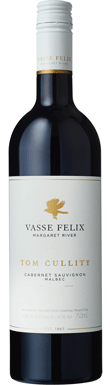
Dark, brooding aromas of bitter chocolate, cedar and kelp. Striated with blackcurrant, sour red cherry and plum fruit, immersive, pithy tannins impart terrific structure and tension to the palate. Denser fruitcake flavours contrast with delicate dried rose and peppermint. Graphite and gravel minerals plus deep-seated grape and oak-derived spice (cardamom, liquorice, cassia bark and cedar) makes for compellingly back-palate resonance.
2016
Vasse FelixMargaret River
Vasse Felix, Tom Cullity, Margaret River, Wilyabrup, Western Australia, Australia, 2015
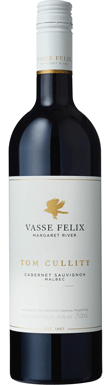
Savoury characters (as opposed to the fruit) are dialled up a notch – surprising in a low-yielding vintage. Tobacco pouch and warm iron join the signature bitter chocolate, dried rose, sage, baking powder and peppermint riffs. Cedar-edged sweet red berry fruit, succulent plum and fine, papery tannins make for a soft graphite finish. Introspective.
2015
Vasse FelixMargaret River
Vasse Felix, Tom Cullity, Margaret River, Wilyabrup, Western Australia, Australia, 2014
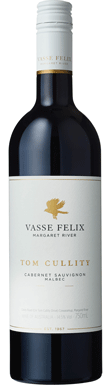
Relatively restrained, the aromas of pencil shavings and intense, bitter chocolate allude to the cloak of fine tannins that initially obscures the fruit. A beam of sour cherry, fresh blackcurrant and cassis soon shines through; notes of moss, peppermint, dried rose, kelp, ironstone, balsamic, cedar and anise lend voice. Dynamic tannins and sluicing acidity make for great precision, persistence and poise, leading to an elegant finish.
2014
Vasse FelixMargaret River
Vasse Felix, Tom Cullity, Margaret River, Wilyabrup, Western Australia, Australia, 2013
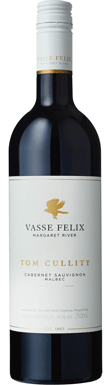
The inaugural release retains a youthfully vibrant, juicy core of violet-edged cherry and fleshier plum fruit, but the overall demeanour is savoury and supple, with pronounced bitter chocolate, cedar, baking spices, warm terracotta and balsamic aromas and flavours. Lifted mint, sage, dried rose and bay leaf hints emerge with time in the glass. Suffused with fine but expansive tannins, this mid-weight, complex Cabernet blend finishes long, with balanced acidity.
2013
Vasse FelixMargaret River
Vasse Felix, Heytesbury Chardonnay, Margaret River, Western Australia, Australia, 2019
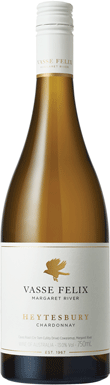
Young, but not a hair out of place, despite the knife-edge tension. This is a remarkably taut, focused, yet nuanced Chardonnay, with lifted lime zest, twangy lemongrass, sencha tea, struck match and powder puff phenolics. A ripe, lemony backbone of acidity, ever so gently spun with savoury lees (a suggestion of mushroom), seamlessly absorbs the lightly toasted hazelnut oak (61% new). Delicate and intense; exceptionally refined.
2019
Vasse FelixMargaret River
Vasse Felix, Heytesbury Chardonnay, Margaret River, Western Australia, Australia, 2018
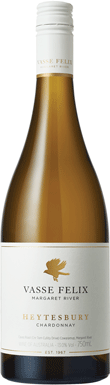
A blend of fruit from the cool, inland Gnarawary vineyard, planted in 1997, and Vasse Felix's Home vineyard (2007) just 4km from the ocean. Winemaker Virginia Willcock let this vintage go through 90% malolactic fermentation, but there's no buttery notes, just a softening of the acidity, which remains brisk. The barrel fermentation (42% new) and lees stirring is judicious, contributing an exotic spicy depth and voluptuous texture that accentuates the green apple, pear crumble and crunchy nectarine flavours. Gorgeous!
2018
Vasse FelixMargaret River
Vasse Felix, Heytesbury Chardonnay, Margaret River, Western Australia, Australia, 2017
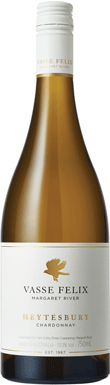
A leaner style in a cooler year, with less fruit weight, funk and texture. Normally hand picked and whole-bunch pressed, 52% was machine harvested, extracting additional flavour from the skins. Flinty, zesty, toasty nose, with steely grapefruit and green pineapple to the firm, focused palate. With a deft touch of nougat sweetness, the oak balances and enhances, bringing structure and nutty, spicy lift and resonance to the finish.
2017
Vasse FelixMargaret River
