
Vérité: Sonoma micro-lot wines
Yohan Castaing takes a look at the terroir-led wines of Vérité, and tastes several vintages of each of the three flagship wines; La Joie, La Muse and Le Le Désir. Clare Tooley MW also provides recent tasting notes for the 2008 bottling of each wine.


Kellogg Estate in Knights Valley : 20-year-old vines on average, on gravelly, volcanic soil at 170 and 300 metres. Warm days, cool nights, and a southwest exposure make this prime terroir for ripening Cabernet Sauvignon and Merlot.
Scroll down to see tasting notes and scores for a selection of Vérité wines
Alexander Mountain Estate, located in Alexander Valley at 300 to 740 metres. Varied soils of volcanic origin suitable for Cabernet Franc and Petit Verdot in addition to Cabernet Sauvignon and Merlot. Vines are between 10 and 25 years old.
Vérité Vale in the Chalk Hill area: The soils here have higher clay content, with Merlot, Cabernet-Sauvignon and Petit Verdot vines between nine and 25 years old.
Jackson Park in the small Bennet Valley AVA: 10-year-old vines planted at 200-300 metres on pebbly volcanic soils with some clay, on which Merlot thrives. Hot days and very cool nights.
If truth be told, the vast Sonoma wine region has long been overshadowed by the Napa Valley. Certainly, its greater terroir diversity makes it less easy to peg into a category of regional and stylistic identity.For the Bordeaux-blend ‘micro-cru’ wines from Verité, it’s this complex diversity of soil types and hillsides with varying orientations, as well as a significant day-night temperature shift, that are the cornerstones of their singular character and stellar quality.
Vérité factbox:
Owned by Jackson Family Wines.
First vintage 1998
Grape varieties Merlot, Cabernet-Sauvignon, Cabernet Franc, Petit Verdot and Malbec.
Wines
La Joie is a Médoc-like, Cabernet-Sauvignon-dominant wine. Finely-etched and elegant with subtle length.
La Muse, Merlot-dominant, is more in a Pomerol style. Fleshy and mellow with poised berry fruit.
Le Désir showcases Cabernet Franc. Stands out for the quality of its tannins and floral finish that’s light on its feet.
Grape sources Four sectors of Sonoma:
The tasting
A vertical tasting of Vérité’s three wines in Paris, to celebrate its 20th anniversary, took place in the presence of winemakers Pierre and Monique Seillan, and their two children, Hélène and Nicolas.
‘With Verité, we wish to listen to and respect the message from the soil and craft a truthful expression of the diverse Sonoma sites in a way that combines the traditions of the old world and the potential of the new world,’ said French-born Pierre. The estate’s name in French boldly says it all.
The terroir
The four appellations providing the grapes benefit from the distinctive climate of this region, where the cooling winds blowing eastward from the Pacific Ocean keep at bay the heat generated during the day by the ardent California sun, while also influencing the cool nights.
Gradual ripening of the Bordeaux varieties is the main advantage here compared to the Napa Valley, allowing them to retain acidity, producing wines with freshness and elegance. As noted by Hélène Seillan, in charge of winemaking alongside her father since 2012, ‘The cooling winds enable us to lengthen hangtime without paying the price of excessive concentration.’
Of the four appellations providing grapes for Vérité, Chalk Hill bears a name that’s understandably appealing to wine connoisseurs, but in fact the light-coloured soil doesn’t contain that much of it, sharing with the three others volcanic soils, albeit a variant with white ash and sandy loam. All four terroirs have soil types that allow the grapes to retain their natural acidity, giving the wines thrust and a vertical structure on the palate that augurs a remarkable capacity for ageing.
The wines are in general rich and velvety but have finesse, focus and freshness, thus encapsulating the Sonoma style at its best. They demand at least ten years to blossom and have the potential for staying the distance for up to 50 years.
Tasting notes and scores for a selection of Vérité wines
You may also like:
Cobb Wines: Playing the ‘Pinot Noir long-game’
Top Sonoma red wines for the cellar
Mount Eden Vineyards: Comparing the Cabernets 1990-2000
Top California Cabernet 2015 wines: Full vintage report
Vérité, La Joie, Sonoma County, California, USA, 1998
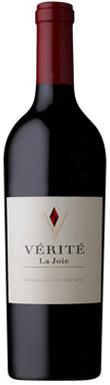

This, the first vintage of this wine, was a tricky year, with El Nino downpours marring the growing season. There's considerable evolution in colour. The...
1998
VéritéSonoma County

Vérité, La Joie, Sonoma County, California, USA, 2002
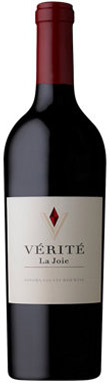
A spicy, mint-infused aromatic framework for its lovely bouquet of black currant and berry fruits. It's an impressive, densely-fruited wine elevated by superb tannic structure...
2002
VéritéSonoma County
Vérité, La Joie, Sonoma County, California, USA, 2005
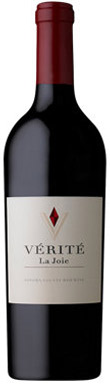
The nose is fully ripe, with sweet, delectable blackcurrant fruit. Blackcurrants and blackberries dominate the palate, and the oak is still evident. However, the...
2005
VéritéSonoma County
Vérité, La Joie, Sonoma County, California, USA, 2007
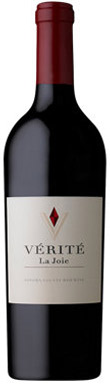
This comes from a vintage that brings together all the elements that showcase the potential of Sonoma terroirs. The wine is made from a blend...
2007
VéritéSonoma County
Vérité, La Joie, Sonoma County, California, USA, 2008
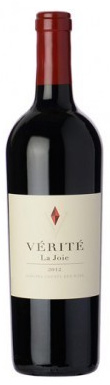
With time, this Cabernet is now beginning to reveal its cornucopia of autumn fruits on the nose; black currants, plum, figs, red and blue berries....
2008
VéritéSonoma County
Vérité, La Muse, Sonoma County, California, USA, 1998
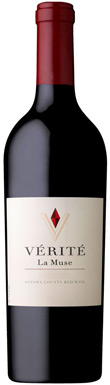
Another remarkable wine from the complicated inaugural vintage of Vérité. A blend of 90% Merlot and 10% Cabernet Sauvignon, it spent 13 months in new...
1998
VéritéSonoma County
Vérité, La Muse, Sonoma County, California, USA, 2002
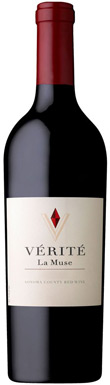
The complex nose expresses subtle spice and mint notes on a foundation of ripe black raspberry. 93% Merlot and 7% Cabernet Franc. It has all...
2002
VéritéSonoma County
Vérité, La Muse, Sonoma County, California, USA, 2005
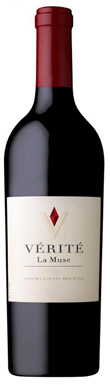
<p>There's great depth of colour here, with very little sign of maturity. The rich black-fruits nose is also showing some evolution, and there's a slight...
2005
VéritéSonoma County
Vérité, La Muse, Sonoma County, California, USA, 2007
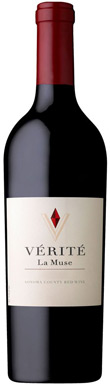
A blend of 85% Merlot, 10% Cabernet Franc and 5% Malbec, this has spent 16 months in new oak barrels. It's full-bodied yet finesse-driven, with...
2007
VéritéSonoma County
Vérité, La Muse, Sonoma County, California, USA, 2008
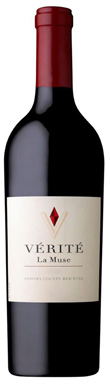
Immediately on the nose, there is a beautiful freshness, more of the classic Merlot leafiness, like freshly picked berries. The texture is plush, silky, packed...
2008
VéritéSonoma County
Vérité, Désir, Sonoma County, California, USA, 2002
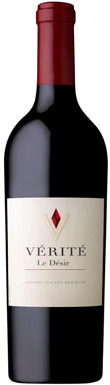
Attractively aromatic, this has ripe dark fruit scents with a touch of smokiness. The sumptuous mouthfeel is energised by exemplary Cabernet Franc freshness, while the...
2002
VéritéSonoma County
Vérité, Désir, Sonoma County, California, USA, 2005
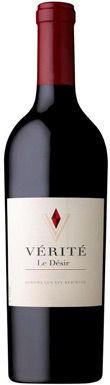
<p>This has a complex nose with some earthy, hot-stone elements as well as smoked meat and kirsch characteristics. The tannins are finely-etched, effortlessly supporting the...
2005
VéritéSonoma County
Vérité, Désir, Sonoma County, California, USA, 2007
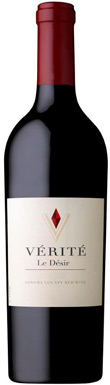
A superb Cabernet Franc character, with multi-layered aromatic complexity packed with black fruits and noble spices. The palate gives the sensation of caressing cashmere, so...
2007
VéritéSonoma County
Vérité, Désir, Sonoma County, California, USA, 2015
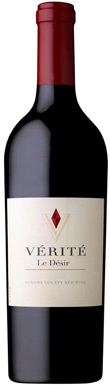
This has a light touch of toasty oak on the nose and perfectly integrated albeit perceptible tannins on the palate at this stage, a bit...
2015
VéritéSonoma County
