
Why Gioia del Colle is Italy’s best region for Primitivo you need to know about
Richard Baudains makes the case for the Primitivos of Gioia del Colle DOC in Puglia, which fly in the face of its reputation for warm and jammy wines.


It gets pretty warm in Puglia in June. I am at Gioia del Colle, in the centre of the region, exactly halfway between the Adriatic and the Ionian seas, and by mid-morning the temperatures are already above 30°c.
By the evening, however, I am reaching for a jacket. Gioia del Colle is on the high plateau of the Murgia, 400m above sea level, and at these elevations, night-day temperature variations through the summer can be as much as 20°c.
The other is the soil. The Murgia is a Karst plateau – basically a massive block of limestone tunnelled by underground streams, on which sit thin, red ferrous topsoils.
Put these two features together, and you have the perfect conditions for Gioia del Colle’s focus grape – Primitivo.
Subscribe today to read all Decanter Premium articles
Primitivo
Gioia del Colle has a viable claim to be the original home of Puglia’s best-known variety. Towards the end of the 18th century, a local cleric and amateur botanist by the name of Franceso Filippo Indellicato noted that in the jumble of unselected varieties of the vineyards of the period, there was one which, despite flowering after all the others, ripened first.
He took cuttings of the variety, which he called ‘Primativo’ from the Latin ‘prima’, and started to reproduce it, in what was for the period an innovative experiment in specialised monoculture.
From this beginning, the variety spread through Gioia del Colle and the neighbouring communes, and only much later down to the Salento peninsular, to what is the today the area of the Manduria DOC.
Primitivo suits the climate at Gioia del Colle, firstly because late flowering means it avoids any risk of frost, and secondly because the temperature excursions in the run up to the harvest slow down ripening, making for the accumulation of aromatic substances and the preservation of acidity to balance the naturally generous sugar levels.
Add to this the impact of the lean, calcareous soils which restrain the vigorous nature of the variety and give a tangy quality to the wines, and you have the typical taste profile of a Gioia del Colle Primitivo; bright fruit aromas on the nose, a juicy palate with fine tannins and a dry minerally finish.
It is rare here to encounter the perhaps more familiar, soft, jammy style of Primitivo which is typical of the flat lands along the coast.
Gioia del Colle today
The producers’ consorzio puts the current annual production of Primitivo from the 400ha of the Gioia del Colle DOC zone at around 500,000 bottles a year.
Vine growing has ancient roots in the region, but specialised viticulture is relatively recent. The Gioia del Colle DOC dates from 1987, and the producers’ consorzio itself was only founded in 2000.
At a rough head count, there are between 60 and 70 producers of Gioia del Colle Primitivo; for the most part small- to medium-size family-owned estates. There are some longer established growers amongst their numbers, but also a number of much newer wineries.
Estates like Polvanera and Pietraventosa have well-established reputations, but others are much less well known. I went to visit two producers with very different stories, one long-established, one up-and-coming in the fast track – but both representative of a fascinating terroir.
Fatalone
Pasquale Petrera is the fifth-generation grower at the site of the Fatalone estate in Gioia del Colle. The winery was the first to bottle Gioia del Colle Primitvo when the DOC came out in 1987, and Pasquale can still present vertical tastings of every single vintage since that date.
The estate is certified organic, and the cellar is completely energy-autonomous, with zero CO2 emissions. The 12ha of vineyard, all but one hectare of which are planted with Primitivo, encircle the winery on one of the highest points of the DOC, at 390 metres above sea level.
The average age of the vines is 35 years, and the training system a modified version of the traditional ‘alberello’ or ‘gobelet’.
Pasquale (who speaks impeccable English – his wife is American) defines himself as an artisan, but the cellar has a number of sophisticated refinements, including the use of hospital surgery-standard UV-C lamps to maintain hygiene.
The wines ferment with indigenous yeasts without added sulphites but at strictly controlled temperatures, and they age in 750l Slavonian oak barrels in a highly controlled environment to the sound of classical and new age music.
When I appear a little bemused at this, Pasquale explains that the vibrations of the sound waves stimulate the activity of the microorganisms in the wine. Hmmm…
Fatalone produce a vigorous dry IGP Rosato called Teres, and two DOCs: the white-label Primitivo and the gold-label Primitivo Riserva. The former ages for six months in wood, and the latter for 12 months in wood. Interestingly, they both hit the market at the same time.
I had a slight preference for the version with less wood. ‘Never over-ripe and never over-extracted’, is Pasquale’s description of the style – and it fits. The wines have very precise fruit and a splendid natural energy on the palate.
Giovanni Aiello
Giovanni Aiello was born and raised in the countryside in Puglia. He studied viticulture and enology in two of Italy’s leading research centres and worked in France, California and Australia before returning to Puglia to create his own wines.
Sourcing grapes from small plots of old vines in the area around Castellana Grotte and Putignano, his first wines were made in 2015, in a garage.
He moved into temporary rented cellars later, but lacked a place of his own, with the space to grow and experiment. He finally found it in the middle of the vines at Putignano: spacious cellars built in 1857, at a time of flourishing wine production in Gioia del Colle.
These splendid examples of 19th century rural architecture, after a chequered history, had fallen into disuse, so he renovated and equipped them and moved in, in 2021.
The ecclectic Aiello makes three wines from the native white Verdecca. Chakra Verde 2024 is floral-citrussy with a minerally bite. Chakra Blu 2023 is everything you could want from an ancestrale-style frizzante; fresh with a hint of mature lees, delicately creamy on the palate, crisp and dry.
Chakra Essenza 2023 is a wine of complexity and depth, from a vineyard of alberello-trained Verdecca planted in 1916 and still lovingly cared for by its owners, a married couple in their 90s.
There are two versions of Gioia del Colle Primitvio. The Chakra Selezione Oro comes from 80-year-old vines, and with 40 days of maceration and 30 months of oak-ageing is the senior partner. Chakra Rosso is a toothsome, earlier drinking introduction to the denomination.
Giovanni writes that ‘Chakra’ represents the fusion of the energies of man and the elements of earth and air. If the name is ancient and mystical, the wines are modern and real world; precise, engaging expressions of a terroir with a strong identity, but with an element of poetry.
Giovanni produces 55,000 bottles and each bottle has its own individually crafted label, made in the cellar using an ingenious system of hand painting inspired by Australian aborigine art.
Below is my top 10 selection of the current vintages of Gioia del Colle Primitivo, tasted during three days of estate visits and sit-down tastings at the Radici del Sud event in Bari, in June this year.
Richard’s 10 Gioia del Colle Primitivo picks:
Related articles
- Regional profile: Puglia and 12 top wines to try
- The Puglia travel guide for wine lovers
- Tormaresca Bocca di Lupo: Antinori’s Puglian outpost
Giovanni Aiello, Chakra Selezione Oro Primitivo Riserva, Gioia del Colle, Puglia, Italy, 2021
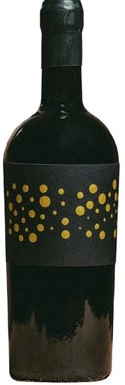

Dense, rich purple-ruby in shade, this top of the range selection is still at an early stage of its evolution, but already complex on the...
2021
Giovanni AielloGioia del Colle

Pietraventosa, Primitivo Riserva, Gioia del Colle, Puglia, Italy, 2019
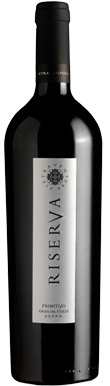
A Riserva with a freshness of juicy, blackberry fruit on the nose which belies its age. Great energy at the front of the palate and...
2019
PietraventosaGioia del Colle
Plantamura, Etichetta Nera Primitivo, Gioia del Colle, Puglia, Italy, 2021
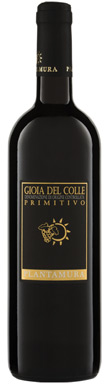
Lovely freshness in the violet and wild berry aromas follows through on the bright, vibrant palate, where you can find refined tannins, firm acidity and...
2021
PlantamuraGioia del Colle
Tenuta Viglione, Marpione Primitivo Riserva, Gioia del Colle, Puglia, Italy, 2021
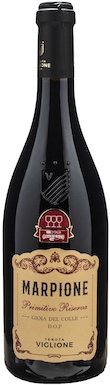
An array of aromas, from the typical dark berries of the variety through sweet herbs, mint and orange zest, introduce a palate which opens soft...
2021
Tenuta ViglioneGioia del Colle
Masseria Ninni, Camilà Primitivo, Gioia del Colle, Puglia, Italy, 2022
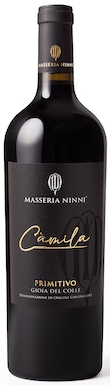
The nose has delicate wild herbs and violets, and a whiff of iodine. On the palate it is firm and dry, with tight tannins and...
2022
Masseria NinniGioia del Colle
Fatalone, Primitivo, Gioia del Colle, Puglia, Italy, 2022
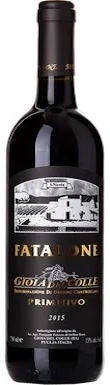
Pasquale Petrera’s Primitivo is rich and complex on the nose, with carob, sesame and a hint of toasted almonds alongside the dark fruit. The palate...
2022
FataloneGioia del Colle
Vigna Liponti, Nasciddò Primitivo, Gioia del Colle, Puglia, Italy, 2019
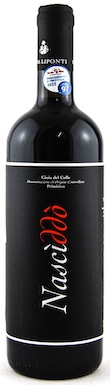
Immediate, spontaneous freshness on the nose leads to a palate with great intensity of fresh berry fruits, soft natural tannins, an agile character, and a...
2019
Vigna LipontiGioia del Colle
Giovanni Aiello, Chakra Rosso Primitivo, Gioia del Colle, Puglia, Italy, 2022
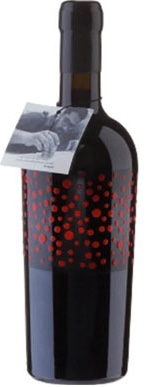
Fresh black cherries on the nose, with a touch of mint and spices at the side. On the palate this has a punchy impact and...
2022
Giovanni AielloGioia del Colle
Curtomartino, Terracava Primitivo, Gioia del Colle, Puglia, Italy, 2023
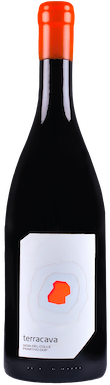
A very youthful shade with violet borders anticipates an intense, fruit-driven nose of crushed blackberries, and a palate with a broad chalky texture and a...
2023
CurtomartinoGioia del Colle
Centovignali, Pentimone Primitivo Riserva, Gioia del Colle, Puglia, Italy, 2021
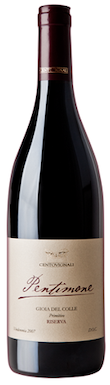
Ripe fruit aromas with a hint of fleshy strawberry introduce a big, richly-textured wine with dense, chewy tannins that still need a little time to...
2021
CentovignaliGioia del Colle
