Top wine trends for 2021: countries, varieties and styles worth exploring
What will be the wine trends for 2021? From what seemed an endlessly cloudy 2020, Dirceu Vianna Jr MW discovers some silver linings that will take us through this year and beyond, covering exciting wine styles, grape varieties and regions to explore and delight in.


Most people are glad to leave memories of 2020 behind; to wave goodbye to one of the most challenging years in our lifetime. But amid seemingly endless clouds, there were silver linings.
The Covid-19 global pandemic presented us with an amazing opportunity to learn, adapt and demonstrate resilience both as individuals and professionals.
Scroll down for Dirceu Vianna Jr MW’s tasting notes on wine trends for 2021
It was no different for the wine industry. Many businesses have thrived, while others suffered irreparable damage – especially in the hospitality sector – as well as those in wine regions also affected by natural disasters, such as in the USA and Australia.
A new year brings new hope, positivity, and an opportunity to start afresh. However turning a page in the calendar does not necessarily mean that everything we went through last year will instantly change too.
The seismic shifts that began in 2020 will continue to develop in our wine trends for 2021. Many changes we had to make are now already ingrained and will become habits.
Embracing change amid uncertainty
New wines have made headlines, such as Prosecco rosé, but arguably the biggest changes to our wine consumption over the past 12 months have been buying wine online, favouring local producers and finding alternatives to glass-bottle packaging.
Countries, regions and brands that were able to adapt rapidly to new forms of communication last year reaped the benefits. In 2021, producers will need to demonstrate creativity to overcome the increasing saturated digital channels to carry on building lasting relationships with consumers.
As uncertainty hangs over the future of much of the wine trade, most businesses are likely to stop, cut or postpone investments in marketing, advertising, market insight and consumer interaction to reduce expenses.
That is a mistake. Those wine producers, companies and regions willing to go against the grain and invest are more likely to create new trends and benefit in the long run.
While we wait for a return to some semblance of normality and dream of travelling again, wine brings us relief and the hope of a prosperous new year.
One thing that we know for certain and starts here: 2021 will be filled with delicious and interesting wines. Here are 10 wine trends for 2021 I predict will be the ones to watch.
Wine trends for 2021
Albariño/Alvarinho

Albariño is an exciting variety. Originally from the northwest part of Spain, it is also planted in several regions of Portugal. It has even recently been allowed into the Bordeaux appellation.
In the New World, plantings are spreading fast – in Australia, New Zealand, South Africa, Chile, Argentina, Brazil, Uruguay and the United States.
Albariño yields well, can resist disease and is adaptable to different terroirs. In the cellar it lends itself to different techniques, including skin contact, lees ageing and also responds well to oak.
Styles can vary from lighter-weight, low-alcohol (11%) wines with delicate citrus fruit flavours to those that are richer and creamier, carrying more alcohol (13%) and an abundance of tropical fruit.
Whatever the style, the wines are expressive, versatile with food, boast sublime freshness and can age gracefully. For all these reasons, plantings will continue to increase rapidly around the world, gaining Albariño continued popularity in 2021 and beyond.
Criolla

Criolla, known in other parts of the world as País, Uva Negra and Mission, was the most planted variety in Argentina between 1600 and 1850.
But more than 10,000ha of Criolla has been lost since the turn of the century. This is due to the demise in local consumption, the influx of European varieties, and the unsuitable migration of plantings from eastern Mendoza to cooler, higher-altitude spots in the west.
Concerned with the loss of genetic material, Argentina’s National Agriculture Technology Institute has been researching and mapping out old Criolla vineyards. In addition, a growing number of producers such as Catena, Trapiche (El Esteco) and Mauricio Lorca have been exploring Criolla to good effect.
The best examples are fragrant and light-bodied, with moderate levels of alcohol and wonderful freshness – precisely what today’s wine drinkers are looking for.
Croatia

Croatia has a rich winemaking history. Wine production on the Dalmatian islands of Hvar, Korčula and Vis stretches back more than 2,500 years.
In recent decades, production has been shifting from cooperatives to the hands of quality-focused individuals.
Aside from an ideal climate, multiplicity of soils and diversity of terroir, the country has several interesting white varieties such as Graševina, Malvazija Istarska, Pošip and Grk as well as reds like Crljenak Kaštelanski and Plavac Mali alongside international varieties.
These wines have a strong sense of identity and there are several exciting producers to be discovered, such as Rizman, Krauthaker, Stina, Kozlović, Matošević and Volarević among many others.
Jo Ahearne, a British Master of Wine, started to make wine on the Island of Hvar in 2014. By sourcing unique local grapes and employing low-intervention techniques she manages to achieve wines of real character and distinction.
Portugal

Portuguese wines boast an amazing combination of quality and consistency. The country’s abundance of indigenous varieties offers an enviable uniqueness that is not easily surpassed.
But the dominance of small producers and unusual grape varieties mean many of the wines need to be sold by smaller independent retailers and through bar and restaurant wine lists – which has posed a challenge in recent times.
Nevertheless, Portugal also has medium and large producers making exciting wines, offering consumers excellent value for money in all price points through bigger merchants and high-street retailers.
In addition, creative marketing strategies by Wines of Portugal has enabled the country to increase its total export volumes by 4.9% last year. There is a sense of excitement that the success will be repeated in 2021.
Slovenian whites

Following in the steps of its neighbours in Eastern Europe, Slovenia has been making excellent wines for years, but little gets exported and the country is yet to receive the recognition it deserves.
There are three main wine-producing regions: Posavje (on the border with Croatia), Podravje (bordering Hungary) and Primorska (located across the border from Friuli in Italy). The latter is the one that justifies special mention.
The beautiful countryside of Primorska, with its gentle rolling hills reminiscent of Tuscany, provide different exposures to vineyards planted on friable soils, particularly in the sub-region of Goriška Brda.
Its proximity to the Alps and Adriatic ensure cooler nights, which enable producers to achieve white wines of wonderful aromatic expression underpinned by racy freshness.
There are many noteworthy producers here, such as Sčurek, Simčič, Gašper, Edi Simčič and Movia, all making remarkable white wines, particularly with the late-ripening variety of Rebula (aka Ribolla Gialla in Italy).
Austrian reds

Wines of Austria did a brilliant job adapting to new challenges in 2020 by hosting webinars and hybrid tastings, and looks set to continue this into 2021.
The country’s overall standard of wine quality is high. Areas such as Kamptal, Kremstal and Wachau are well known and established, especially for whites. But there are also interesting red wines to be discovered further afield, in areas such as Neusiedlersee, historically famous for its sweet wines.
Zweigelt, Austria’s most planted red grape, is often misunderstood. The variety is adaptable to different terroirs, it is versatile in terms of winemaking and capable of offering a wide range of styles. When yields are effectively managed by diligent producers, Zweigelt is a truly exciting wine.
Contrary to what many critics and textbooks affirm, Zweigelt can age well, and is also a versatile food companion that deserves better recognition.
New South American terroirs

The pursuit of cooler spots to combat the effects of climate have led South America’s wine producers to explore progressively marginal regions. Plantings have been moving further south yielding several interesting wines on both sides of the Andes.
In Chile, look out for exciting wines coming out of Traiguén, at 38°S in Malleco, Araucanía – the country’s southernmost appellation, parallel to Argentina’s Patagonia. Here Francisco Baettig, one of Chile’s most celebrated winemakers, has his own project: Baettig Wines. And, under winemaker Viviana Navarrete, Tayu 1865 is a new collaboration between Viña San Pedro Tarapacá and the local Mapuche community in Buchahueico.
In Argentina, some of the best wines from new terroirs are coming from the Otronia project, which claims to be the southernmost vineyard in the world – at 45’33°S in the Sarmiento, Chubut. Here, winemaker Juan Pablo Murgia and his team brave difficult conditions – lack of rain, frost and high winds – to craft world class Pinot Noir and Chardonnay.
Changing perceptions in Spain

From traditional single-vineyard Rioja and prestige Cava to emerging regions such as Bierzo, Gredos and the Canary Islands, Spain has so many interesting producers and exciting varieties to explore.
There is an increasing appetite for experimentation here, along with a real determination to make elegant wines with a sense of place.
Elías López Montero masterminded the Ulterior Project, aiming to battle climate change and alter the perception that La Mancha – an area often dismissed for being too hot and dry – can produce high-quality wines.
Here, Montero uses varieties such as Tinto Velasco, Malvasia de Sitges, Moravia Agria, Albillo Real and Albillo Mayor, among others, to craft fresh, terroir-driven wines.
Similarly, with another project, Bodegas Verum, he aims to challenge the belief that Airén, one of the world’s most widely planted varieties with dubious quality credentials – is capable of producing high-quality wines.
Orange wines

The role of wine is to give pleasure. This isn’t achieved by any form of extreme intervention or relying excessively on science.
Unnecessary additions, overdone extraction and excessive oak gets in the way of terroir. This route often results in homogenised wines devoid of character; wines that taste like they could come from anywhere.
But a pleasurable wine is equally rarely achieved by a hands-off approach that relies on doing nothing; hoping for the best by letting nature take its course. This is lazy winemaking and often leads to faulty wines.
Good wines are achieved by having in-depth scientific knowledge of the winemaking process and applying a supportive role and intervening when it becomes essential to protect and enhance the quality of the fruit.
There is little doubt that orange wines will continue as one of the wine trends for 2021 and beyond. However if the aim is to gain a broader audience, producers must ensure their wines are clean, consistent, devoid of faults and ultimately give the pleasure consumers are seeking.
Low alcohol
There is nothing new about the trend towards lower-alcohol wines. In all corners of the world producers have been moving towards styles that are lighter, more refreshing and easier to drink.
When this quest is not well executed it can result in wines that are excessively lean, hollow, vegetal and insipid. But when skilfully done, the results can be electrifying.
This is even more impressive when it can be achieved in areas that are renowned for arid and hot conditions – like Portugal’s Douro Valley.
Niepoort is curious; unafraid to experiment or push boundaries. He has gained knowledge and experience learning on the job in Portugal and abroad and his wines are among the country’s most exciting.
Forget spinning cones and other technologies that remove alcohol or dilute wines to achieve a lighter style. Look to these innovative producers – or cooler regions that naturally produce lower-alcohol wines, such as German Riesling, English Bacchus or a host of European sparklings.
Wine trends for 2021: the bottles to buy
You might also like…
The year that was: wine news stories of 2020
Andrew Jefford: ‘The jolts of 2020 have been an education’
Most read wine news stories of 2020
Niepoort, Coche, Douro Valley, Portugal, 2018
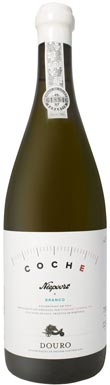

Serve this wine blind to your friends and watch their surprised faces as you reveal its origin. It's a wonderful lean, tight, complex and precise wine bursting with citrus fruits, flinty mineral notes and a savoury edge. Arguably Portugal's finest white wine and certainly world class.
2018
Niepoort

Otronia, III & VI, Patagonia, Argentina, 2017
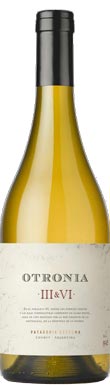
Well-defined, pure and intense aromas of peach, nectarine, guava, crème brûlée, lemongrass and sweet spices jump out of the glass. On the palate it displays excellent concentration of fruit, a wonderful creamy texture, integrated oak, mouthwatering freshness and a long finish.
2017
Otronia
Quinta de Soalheiro, Granit, Vinho Verde, Monção e Melgaço, Vinho Verde, Portugal, 2019
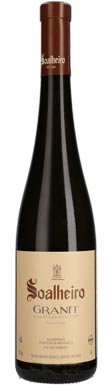
A beautiful example of Alvarinho, originating from parcels planted in granitic soils at 300m, highlighting elegance, minerality and freshness. Notes of grapefruit, fresh dough and tropical fruit as well as floral and savoury notes enhance the sense of class and complexity.
2019
Quinta de SoalheiroVinho Verde
Ahearne, Wild Skins, Hvar, Dalmatia, Croatia, 2017
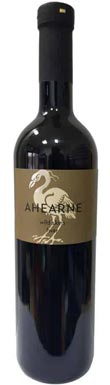
A skilfully made blend of three indigenous varieties: Kuc, Bogdanuša and Pošip. Aromas of ripe yellow fruits, hay, butterscotch, toffee apple, honey and wild herbs. On the palate it is dry, displaying attractive savoury notes, refreshing acidity and a tight, grippy texture typical of this style
2017
AhearneHvar
Bodegas Verum, Las Tinadas Airén de Pie Franco, Castilla-La Mancha, Spain, 2018
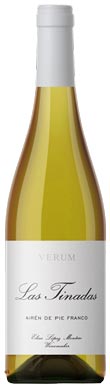
The Airén in Las Tinadas vineyard is from ungrafted bush vines planted more 70 years ago; this wine shows what this humble grape can achieve. Aromas of honeysuckle, fresh dough and lemon skin. The savoury, fresh palate is beautifully textured, the result of long ageing in old clay amphoras.
2018
Bodegas Verum
Esporão, Private Selection, Alentejo, Portugal, 2018
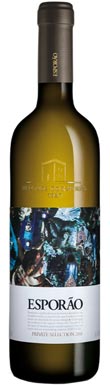
Youthful, overt and attractive with notes of caramelised yellow fruits like peaches and nectarines, along with vanilla pods, fresh biscuits and sweet spices. On the palate it shows great concentration of fruit, a creamy texture, integrated oaky notes and underpinning freshness.
2018
Esporão
Gasper, Selekcija, Goriska Brda, Slovenia, 2016
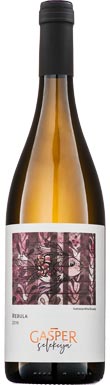
This wonderful example of Rebula reveals aromas of peach, apple, ripe star fruit, biscuits, a hint of ginger and floral notes. On the palate it is weighty and precise, exhibiting exceptional purity of fruit and beautifully soft texture, followed by a long, elegant and refreshing finish.
2016
Gasper
Luis Felipe Edwards, Macerao Naranjo Orange, Itata Valley, Chile, 2020
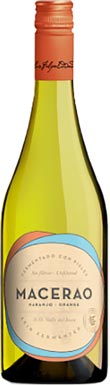
An exceptionally good example of orange wine at a bargain price. Made from 60-year-old Moscatel de Alexandria bush vines, it has an intense perfume of orange peel, dried apricots, quince and florals. The characterful, rich, creamy palate is offset by a tight grippy structure and balancing freshness.
2020
Luis Felipe Edwards
Artisan Wines, Zweigelt Reserve, Neusiedlersee, Burgenland, Austria, 2018
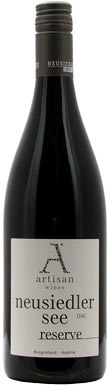
Attractive, inviting and very complex nose displaying lifted ripe cherries, blackberries, fine herbs, fruitcake, chocolate, sweet spices, earth and black olives. The layered palate shows amazing purity of fruit, refined silky tannins, balancing freshness and great persistence.
2018
Artisan WinesNeusiedlersee
Catena, La Marchigiana Criolla Chica, Mendoza, Argentina, 2019
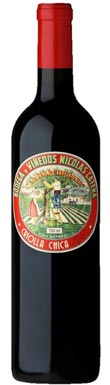
There's nothing pretentious about this wine – it's a pale-coloured, light-bodied, fun red that's dangerously easy to drink. Vibrant aromas of fresh ripe raspberries, redcurrant and cherries follow on to the elegant, supple and refreshing palate.
2019
Catena
