The beauty of balance: Get to know equal-parts cocktails
Mixing a drink in exactly equal measures is one of the easiest ways to make a cocktail. But what makes these even ratio drinks so delicious – and enduring? Alicia Miller speaks to top bartenders to find out, with recipes to try at home.


If you’ve ever shaken, stirred – or in any other way served up – a cocktail, you probably have a grasp on the key formats. There’s the Golden Ratio in drinks like the Margarita: two parts spirit, one part sweet and one part sour. Then there’s highball classics like the Moscow Mule, with roughly two parts spirit to five parts mixer. And among a slew of other options there’s the iconic Negroni, Corpse Reviver No2 or Blood & Sand – all made of precisely equivalent measures.
Successful cocktails made of equal parts – whether 1:1, 1:1:1, or 1:1:1:1 – are few and far between, but when they work, they really work. What exactly makes them so special, and how can you create your own at home? I spoke to leading bartenders to find out…
Equal Parts, a cocktail icon

Erik Lorincz of Kwãnt Mayfair
There’s clearly a certain magic to an equal parts cocktail. ‘It’s the idea of someone discovering how beautiful supporting ingredients work together,’ says Erik Lorincz, co-owner of Kwãnt Mayfair in London.
‘When I first read about the Negroni I didn’t want to try it – it just sounded like a lot of booze. But when I tasted it there was something more behind it; the balance between the sweet vermouth, bittersweet Campari and gin.’ In short, these are cocktails that are definitely more than the sum of their parts.
Carina Soto, bar director of the aptly named Equal Parts bar in London’s Hackney, says the appeal lies not only in how the elements work together, but the fact that no single one of them is dominant. This is a relatively rare thing given that we speak about most cocktails being ‘based’ in one kind of alcohol or another. ‘It’s the different layers of flavour. It is not about one specific ingredient or profile but about the result of all these layers.’
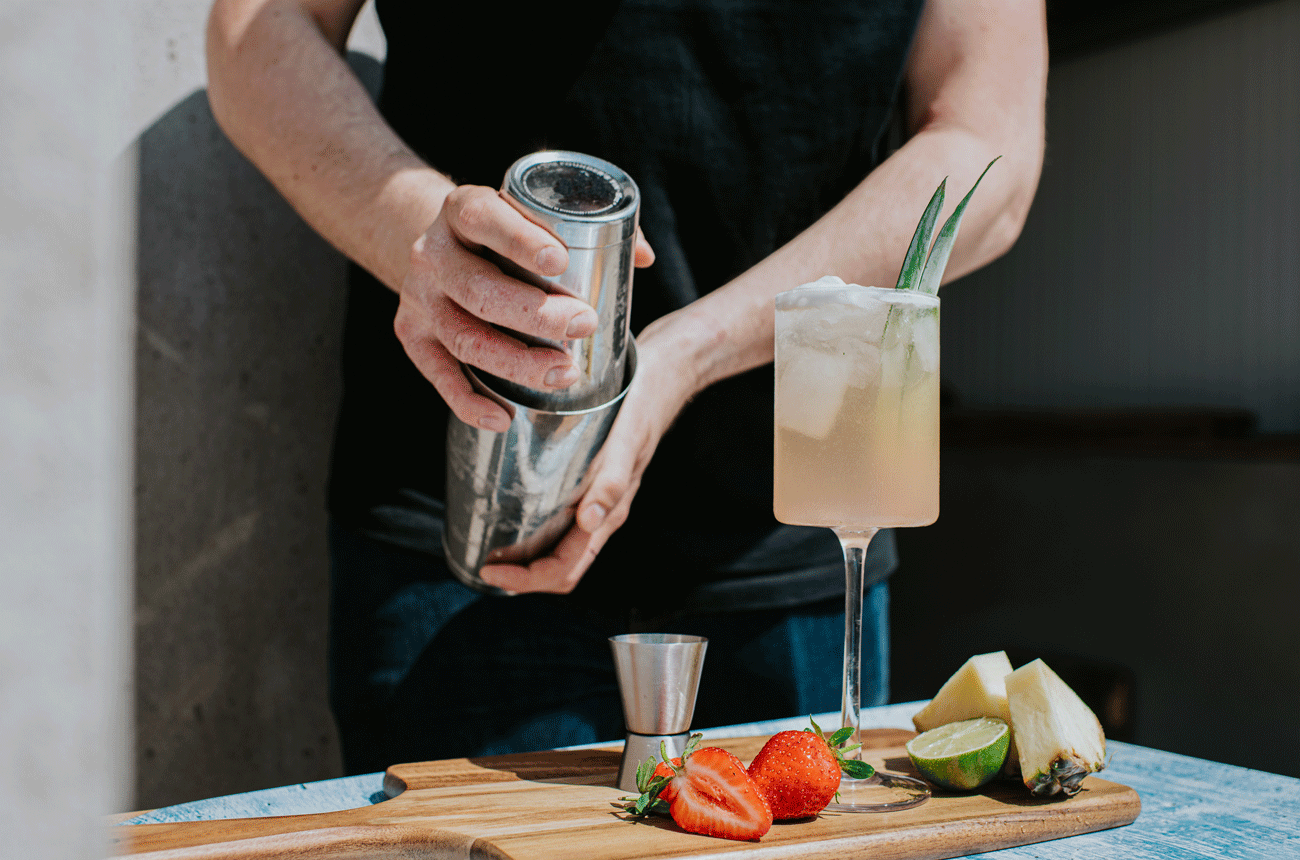
Marc Sarton du Jonchay, co-founder of another Hackney bar, Circle13, has a more practical take on the popularity. ‘People remember cocktails that they cannot mess up. Equal parts cocktails are the prime template for that, as all you have to do is remember the ingredients. You don’t even need a jigger to make it, just a utensil to measure equal parts.’
Breaking down the equal parts components

Carina Soto, bar director of Equal Parts
Of course the template behind every equal parts cocktail is the same – but the variations are infinite. The Paper Plane, for example, is bourbon, Aperol, Amaro Nonino Quintessentia and lemon. The Last Word features gin, Green Chartreuse, maraschino liqueur and lime. Getting the combination right isn’t simple – but what are some of the rules for success?
Soto points out that as well as the obvious balance between sweet, bitter and dry elements the overall drink abv is a driver. ‘The Negroni is generally between 21-25% abv dependent on the ingredients you choose to prepare it,’ she explains. Lorincz agrees that you need to think about overall abv but notes it’s also important to pay attention to specific flavour elements, as it can lead to some unexpectedly delicious combinations.
‘When I was at the Savoy I made an equal parts cocktail which used mezcal and Cognac. They were both high abv but with very different flavour profiles, and actually the smoke and peatiness supported each other,’ he says.
Lorincz finds that equal parts cocktails are often most successful in the dark spirits category. Sarton du Jonchay thinks sours tend to work best, as they include a big acid component to stand up to the equally large measure of booze.
Making your own equal parts creation

Mixing cocktails at home
It’s not easy to create a new equal parts drink masterpiece – life-long bartenders are still working on crafting such perfection. Sarton du Jonchay puts his hand up as someone who is still chasing ‘the dream’ of nailing his own equal parts serve, and not through lack of trying.
But that doesn’t mean you can’t explore and see what you discover. The more you get to know the bottles you’re working with, the more you’ll understand the harmony that exists between different ingredients and feel confident experimenting.
‘I always tell people to start with the existing recipes and identify what they like about them,’ says Soto. ‘Play slowly, replacing one or two ingredients.’ She recommends not using more than four individual elements to achieve balance and says not to forget you need to consider the impact of ice dilution.
Balancing the building blocks

Marc Sarton du Jonchay (right) and Monty Quaia, co-owners of Circle13
Sarton du Jonchay suggests thinking about the elements in terms of blocks. ‘It’s all about balance between the blocks: sour, sweetener and spirit.’ The blocks have a minimum of one ingredient, but can be composed of several. ‘When we look at all the equal parts sours,’ he says, ‘the sweetener block is almost always two ingredients.’
He also points out that cocktail definitions vary, and ultimately you should drink what you like. ‘Even though the Negroni’s original recipe is equal parts, it doesn’t have to be. Technically the cocktail belongs in the Martini family – a cocktail balancing aromatised wine and spirit – and in this family there are no real rules about ratios,’ he explains.
‘As a matter of fact, there is a strong debate within the bartending community around whether the traditional Negroni is balanced or not. Many bars around the world change the spec for their house Negronis, cutting down the Campari or upping the vermouth to reach what they consider a more balanced cocktail.’
In short, the classic equal parts cocktails may be icons – but that doesn’t make them immovable. It just means you’ve all the more reason to find a way to make them your own.
Equal Parts recipes to try at home
Norman Conquest

Created by Erik Lorincz
Ingredients: 25ml Calvados, 25ml bourbon or Scotch, 25ml sweet vermouth
Glass: Rocks
Garnish: Orange slice
Method: Stir all ingredients with ice and serve in a rocks glass filled with ice.
Naked and Famous

Created by Joaquín Simó at Death & Co, recommended by Carina Soto
Ingredients: 25ml mezcal, 25ml Yellow Chartreuse, 25ml Aperol, 25ml fresh lime juice
Glass: Coupe
Garnish: Lime slice
Method: Shake with ice and double-strain into a coupe.
Equal Parts Martini

Recommended by Marc Sarton du Jonchay
Ingredients: 50ml gin or vodka, 50ml dry vermouth
Glass: Martini
Garnish: Lemon twist or olives
Method: Stir with ice and strain into a Martini glass.
The Final Ward

Recommended by Marc Sarton du Jonchay
Ingredients: 25ml rye, 25ml Green Chartreuse, 25ml maraschino liqueur, 25ml lemon juice
Glass: Coupe
Garnish: Lemon twist
Method: Shake all ingredients with ice and strain into a chilled glass.
Related articles
Cocktails: Your home bar basics
Daisies: The cocktail category you never knew you loved

Rise of the Dirty Martini: Why it's popular and how to make one
