Jefford on Monday: Savoie – the hunt for greatness


Andrew Jefford leaves no pebble unturned...
What is Savoie’s greatest wine?
The question is a fascinating and complicated one – and it’s not easy to answer. Savoie is better at exporting its vines (20 to 30 million plants are grown each year by Savoie nurserymen) than its wines, most of which are consumed in the region by thirsty skiers and hikers. ‘We regard any wine which gets beyond Lyon as an export,’ joked grower Philippe Ravier.
I took a close look at the Jacquère-based wines of Savoie back in February. They account for around half of the region’s production, and make a deliciously refreshing, slaking white wine, but you’d struggle to find any grower or local wine connoisseur who’d actually go so far as to make a case for Jacquère’s greatness — as opposed to its simple and delicious goodness.
Prior to phylloxera, when the region had 10,000ha of vines, most of them planted with red varieties rather than the 2,077 ha of principally white varieties it has today, Savoie’s most celebrated wines might well have been based on Mondeuse (which still occupies 12 to 15 per cent of the vineyards), or perhaps even the much rarer Persan.
Gamay was widely planted in Savoie in the past and remains so today, but generally performs a quenching, Jacquère-like role as a red. Pinot is a relatively recent arrival, little grown, and a long way short of its peer-group heights. Extend your reach to IGP Vin des Allobroges, and you can bring in rarer red varieties still, such as the juicy though light Douce Noir and the pungent, cherry-and-redcurrant flavoured Etraire de l’Adui.
Let me be frank, though: I don’t think Savoie’s greatest wine is red. Mondeuse is a naturally prolific producer, so it requires noble self-sacrifice on the part of its creator to discipline it into seriousness of intent (the AOP regulations allow 67 hl/ha for Vin de Savoie Mondeuse, yet 45 hl/ha is the maximum possible yield for a high quality wine from this variety). The results can be dark, fresh and crunchy, with bright fruit and floral notes in youth, but they never really have the structure or the concentration to break through into ‘fine red’ territory, or to merit ageing.
Having tried the Persan of nurseryman-producer Benoît Grisard, the Persan-based Cuvée Octavie of Adrien Berlioz at Domaine du Cellier des Cray and Jean-François Quénard’s ‘Les 2 Jean’ Persan, I’d say that this variety can certainly match the quality of Mondeuse while mimicking its fresh, light and lively style. It doesn’t seem to exceed it, though, nor do the wines have the charm of Mondeuse.
Where next? Chardonnay doesn’t acquire burgundian amplitude here, and the Chasselas of Ripaille and the other little Lac Léman crus can have buttery charm if they go through malo Swiss-style (like the wine of Ch de Ripaille itself, the major producer hereabouts and the sole producer of Ripaille) and light, grassy appleskin zest if they don’t, but never much vinous drive. Gringet and Molette both end up in slender sparkling-wine blends.
Savoie is one of the few places where you can get a taste of one of Syrah’s parents, the Mondeuse Blanche – a more impressive variety than either Gringet or Molette, though if you were tasting it blind you might guess it a parent of Viognier rather than Syrah: it tends to have an exotic apricot-like perfume.
That leaves just two varieties, both of which can furnish wines which at least aspire to greatness. One is an immigrant, albeit from just down the Rhône valley; the other a native. The immigrant is Roussanne; the native Altesse.
Anyone taking the ‘Express’ from Paris to Milan will be familiar with the Roussanne’s favourite terroir in Savoie; the train languidly wends its way past the scree slopes of the Combe de Savoie on its way past Chambéry before dawdling down through the Alps.
Roussanne loves the generous ripening it gets on these steep, south- and southwest-facing slopes of limestone rubble, and rewards all the effort they imply with wines of lusciousness and perfume, but relieved and lifted by the fresh, springlike acidity which is Savoie’s legacy, too. (Almonds and even olive trees flourish here.)
Roussanne occupies about four per cent of total Savoie plantings; it’s limited, in effect, to those very warm, very well-exposed sites, and would not ripen fully elsewhere. You will find ordinary Savoie AOP wines labeled Roussanne, but the finest from the Combe de Savoie have their own appellation of Chignin-Bergeron, Bergeron being an old Savoyard name for Roussanne. Was it brought here by shepherds or bergers coming up the Rhône? Perhaps – but locals say that the more likely origin of the name is the grape’s resemblance when ripe and freckled to the Bergeron variety of apricot, France’s most popular.
While we are on the topic of names, a colossal hazard that wine students have to confront is that the local name of Altesse is actually Roussette, and Roussette and Roussanne are all too easy to confuse. (Confusing but not illogical: both varieties tends to acquire a russet speckling as they ripen.)
The principal appellation for Altesse-based wines in Savoie is Roussette de Savoie (with or without its four cru names of Frangy, Marestel, Monterminod and Monthoux). Altesse is more widely planted than the Roussanne, with around 10% of the total Savoie vineyard area – the fourth most widely planted variety here after Jacquère, Gamay and Mondeuse, though much of it is blended rather than being made as a varietal wine.
I find it a less consistent variety than Roussanne, and its character less easy to configure; ambition, too, sometimes means that it is oak-lavished, and its delicate personality smothered. It seems to be at its best in the three crus of Jongieux, Marestel and Monthoux, sited in steep, west and southwest-facing vineyards on the back slopes of the Mont du Chat, looking out over the tumbling infant Rhône.
Here it can acquire impressive depth, finesse and nuance, with hints of walnut- and-honey richness but also a floral lift to it, too, as well as sustained acidity and a sappy core; you could almost mistake it for a Savennières.
Altesse runs to fat less evidently than Roussanne, and my feeling is that most Savoyards rate it slightly higher (indeed Maxim Dancoine of L’Aitonnement claims it is one of ‘the three finest white grape varieties in the world’). It’s also locally believed to be the best local wine for ageing, and aged examples can acquire a waxy note. But you may have to taste through a lot of lesser examples before finally seeing the light with Altesse – whereas Roussanne sings out more easily.
Here, anyway, are some notes on our two finalists. Altesse won by a short head on my scorecard, with seven wines making the cut, but it was the closest of battles.
Savoie: the hunt for greatness
Chevallier-Bernard, Roussette de Savoie Marestel, Savoie, France, 2016
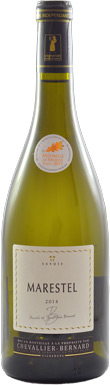

This wine, grown on the magnificently steep slope of Marestel, is silver-gold in colour with precise floral and crystallised fruit aromas. It’s full-bodied, but that...
2016
Chevallier-BernardRoussette de Savoie Marestel

Domaine du Cellier des Cray, Cuvée Albinum, Chignin-Bergeron, Savoie, France, 2015
Adrien Berlioz has a small organic domain of 6ha or so – but he makes 17 different wines (every parcel is fermented and bottled separately)...
2015
Domaine du Cellier des CrayChignin-Bergeron
François Carrel, La Marété, Roussette de Savoie Marestel, Savoie, France, 2016
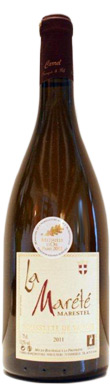
Another outstanding Altesse from the sheer slope of Marestel, this time on a red-soiled part of the vineyard which M.Carrel says helps bring extra richness...
2016
François CarrelRoussette de Savoie Marestel
André & Michel Quenard, Les Terrasses, Chignin-Bergeron, Savoie, France, 2016
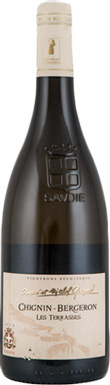
This wine comes from an extremely steep parcel where work is only possible thanks to terracing. The vines are deep-rooted, and the brightness of the...
2016
André & Michel QuenardChignin-Bergeron
Jean-François Quénard, Anne Sophie, Roussette de Savoie, Savoie, France, 2015
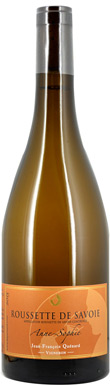
This Altesse is grown in the limestones of the Chignin alongside Quénard’s Roussanne. Half has blocked malo and is aged in tank, while the other...
2015
Jean-François QuénardRoussette de Savoie
Pascal & Annick Quenard, Cuvée Noé, Chignin-Bergeron, Savoie, France, 2015
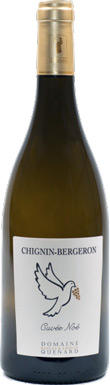
This special cuvée is picked in two separate passages, when the grapes have acquired their distinctive flecking at the end of the season. Gold in...
2015
Pascal & Annick QuenardChignin-Bergeron
Philippe & Sylvain Ravier, Les Amandiers, Chignin-Bergeron, Savoie, France, 2016
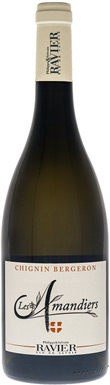
Full yellow in colour, though entirely unoaked, this Roussanne is delicately scented with fruit-tree blossom, almond and honey notes, which emerge after some time in...
2016
Philippe & Sylvain RavierChignin-Bergeron
Cave de Chautagne, Cuvée Excéption, Vin de Savoie Chautagne, Savoie, France, 2017
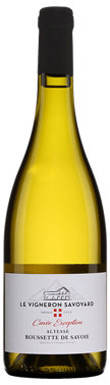
Chautagne, lying between Jongieux and Seyssel, is something of a threatened cru, as the housing pressure from nearby Geneva is intense. But there are fine...
2017
Cave de ChautagneVin de Savoie Chautagne
La Cave du Prieuré, La Favresse, Roussette de Savoie Marestel, Savoie, France, 2011
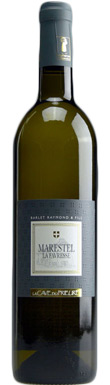
A conversation wine with over seven years’ age, having begun life with 12 months in casks formerly used for Guigal’s Condrieu. It's full gold in...
2011
La Cave du PrieuréRoussette de Savoie Marestel
Domaine Dupasquier, Roussette de Savoie Marestel, Savoie, France, 2012
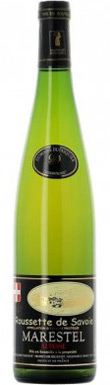
Readers who want to discover the ageing potential of Altesse should seek out wines from Dupasquier, whose wines are not only given around a year...
2012
Domaine DupasquierRoussette de Savoie Marestel
Claude Quenard, Chignin-Bergeron, Savoie, France, 2015
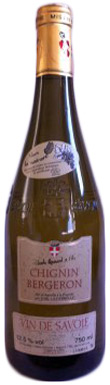
This organic and biodynamic domain has produced a mid-gold wine in 2015, with very charming, comely scents. Sweet balsam fragrances are backed up by a...
2015
Claude QuenardChignin-Bergeron
Philippe & Sylvain Ravier, Altesse, Roussette de Savoie, Savoie, France, 2016
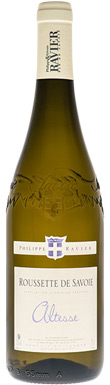
This clean, delicate Altesse is grown in the ruins of the 1248 Mont Granier collapse, alongside the Ravier family’s Apremont wines. A sweet scent of...
2016
Philippe & Sylvain RavierRoussette de Savoie
